Understanding communities Normal Social Studies Worksheets for Ages 6-9
4 filtered results
-
From - To
Discover engaging Social Studies worksheets designed for ages 6-9 to help young learners understand communities. Our expertly crafted printables bring concepts to life, showing kids the different roles and relationships within a community. These worksheets deepen their knowledge while honing vital learning skills. Through fun activities and thought-provoking exercises, children can explore how communities function, promote cooperation, and build a sense of belonging. Perfect for classroom use or homeschooling, these resources promote critical thinking and engagement, making Social Studies both enjoyable and educational. Explore our Understanding Communities worksheets to nurture young minds and cultivate informed community members.
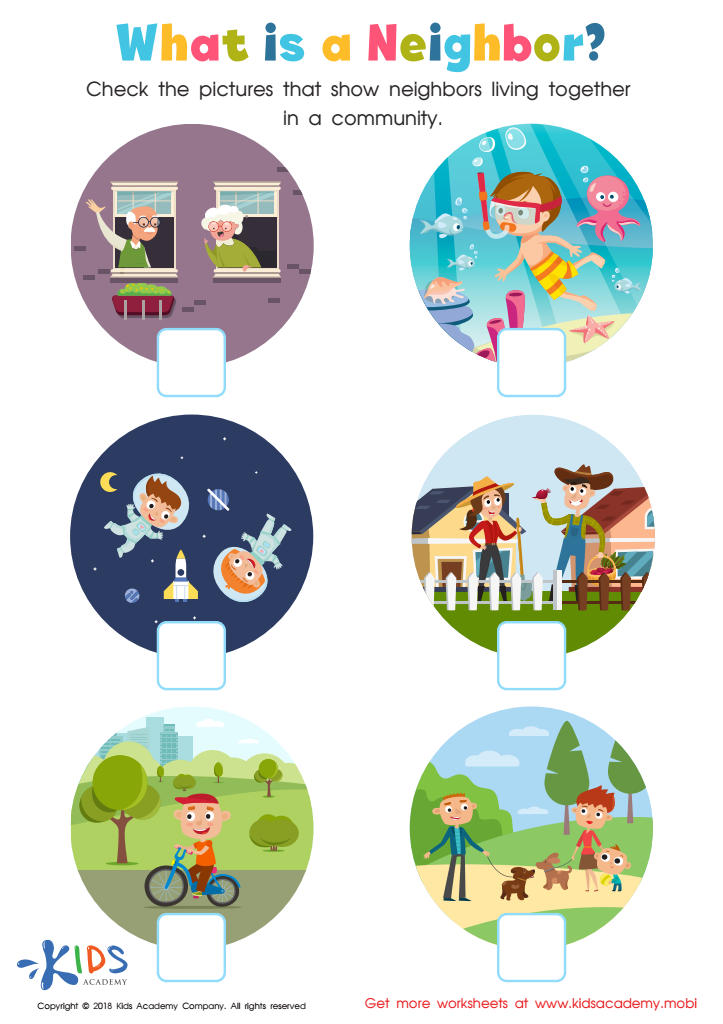
What is a neighbor Worksheet
 Assign to My Students
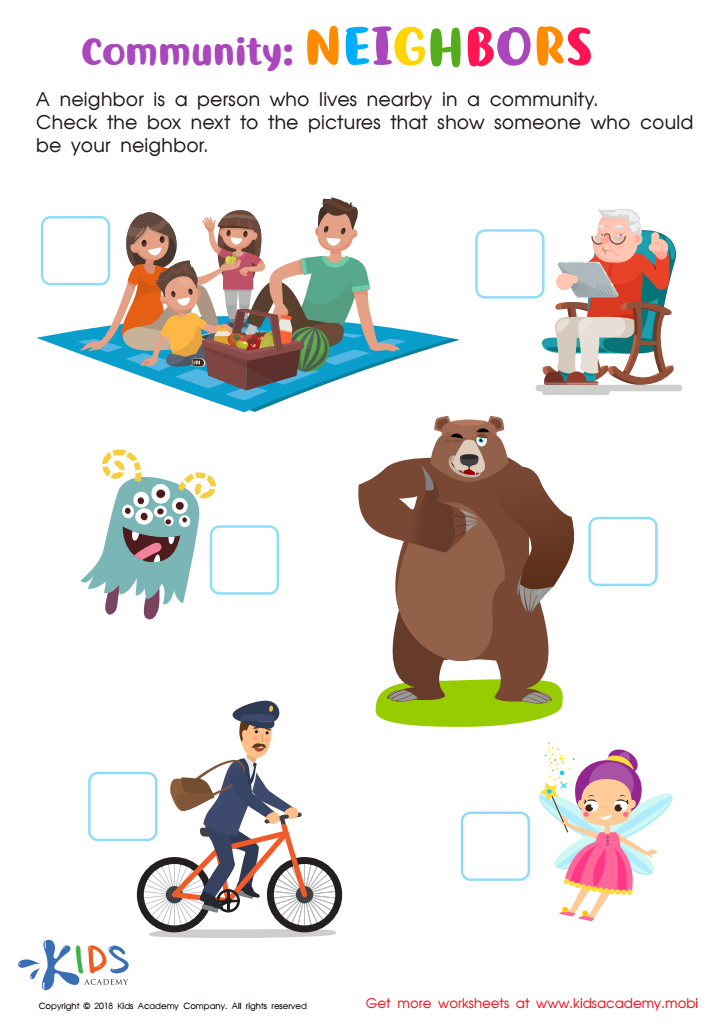
Community: Neighbors Worksheet
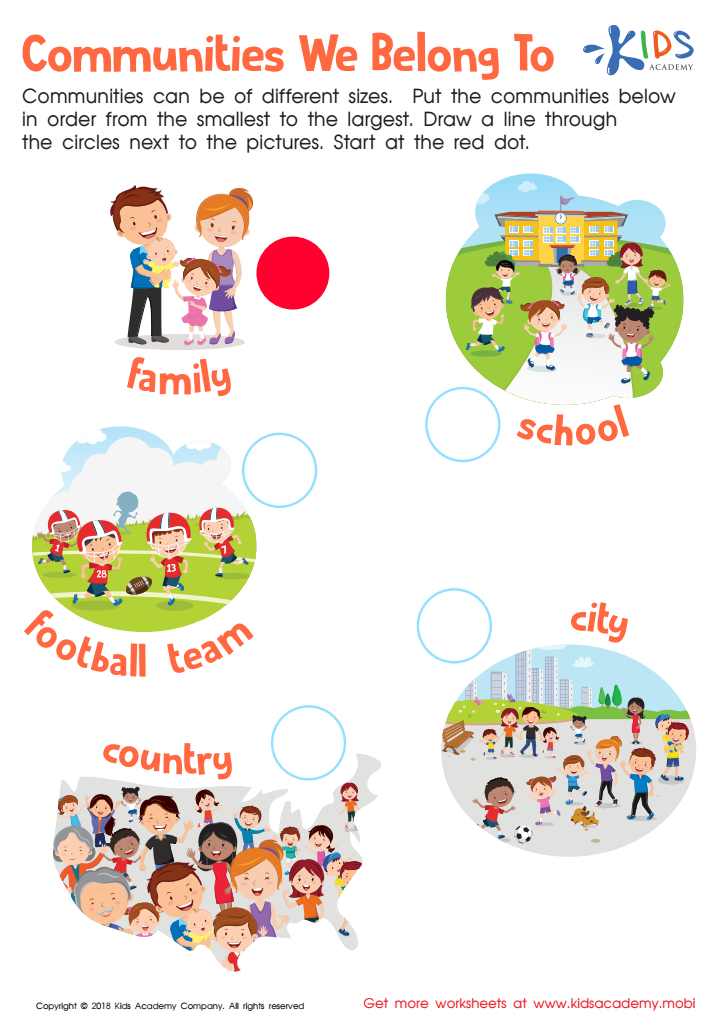
Communities We Belong to Worksheet
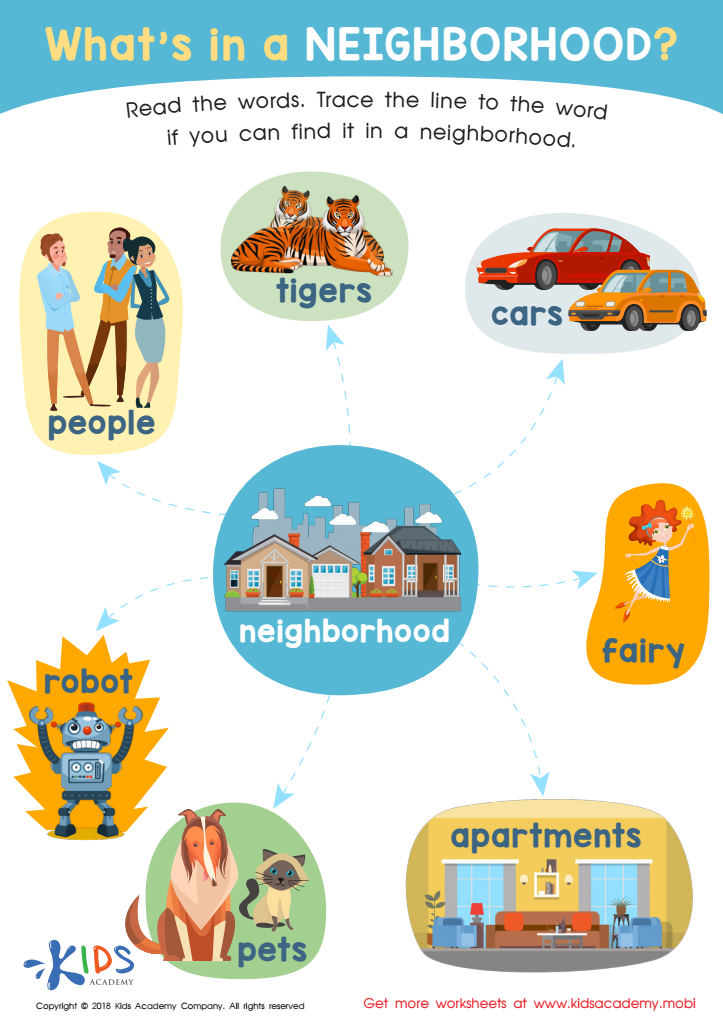
What's in a Neighborhood? Worksheet







Understanding communities through social studies is essential for children aged 6-9 as it lays the foundation for becoming informed and active citizens. At this critical stage, children start to recognize themselves as part of the larger world. Parents and teachers play vital roles in nurturing this understanding by emphasizing the importance of community, diversity, and social dynamics.
First, comprehending communities fosters empathy and respect. When children learn about different cultures, traditions, and lifestyles, they develop a more inclusive perspective. This understanding helps combat stereotypes and prejudices, promoting a more harmonious society.
Second, social studies education enhances critical thinking and problem-solving skills. Through exploring local and global communities, children learn to ask questions, gather information, and make connections. These skills are not only crucial for academic success but also for everyday decision-making and conflicts.
Moreover, learning about communities helps children understand their roles and responsibilities as members of society. They begin to appreciate the significance of rules, teamwork, and civic participation. This awareness encourages them to contribute positively, whether through helping a neighbor or participating in community projects.
In essence, when parents and teachers prioritize social studies, they equip children with the knowledge and skills to navigate and enrich their communities, fostering a generation that is both knowledgeable and compassionate.








