Vowel Recognition Normal Writing Worksheets for Ages 6-9
3 filtered results
Difficulty Level
Grade
Age
-
From - To
Subject
Activity
Standards
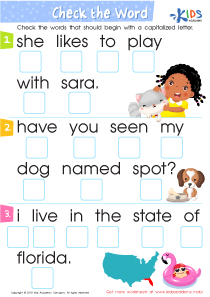
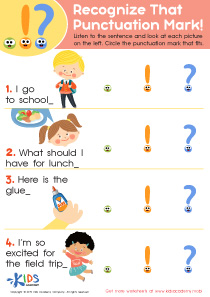
Enhance your child's reading and writing skills with our "Vowel Recognition Normal Writing Worksheets for Ages 6-9"! These engaging activities focus on helping young learners identify and use vowels in various contexts, thereby boosting their phonetic awareness and literacy. Each worksheet is designed with age-appropriate exercises including fun-filled activities like matching, filling in the blanks, and word sorting. Perfect for classroom use or at-home practice, our resources make mastering vowels an enjoyable journey for kids. Support your child's educational journey with these expertly crafted worksheets catered to improving critical early language skills.
Favorites
With answer key
Interactive
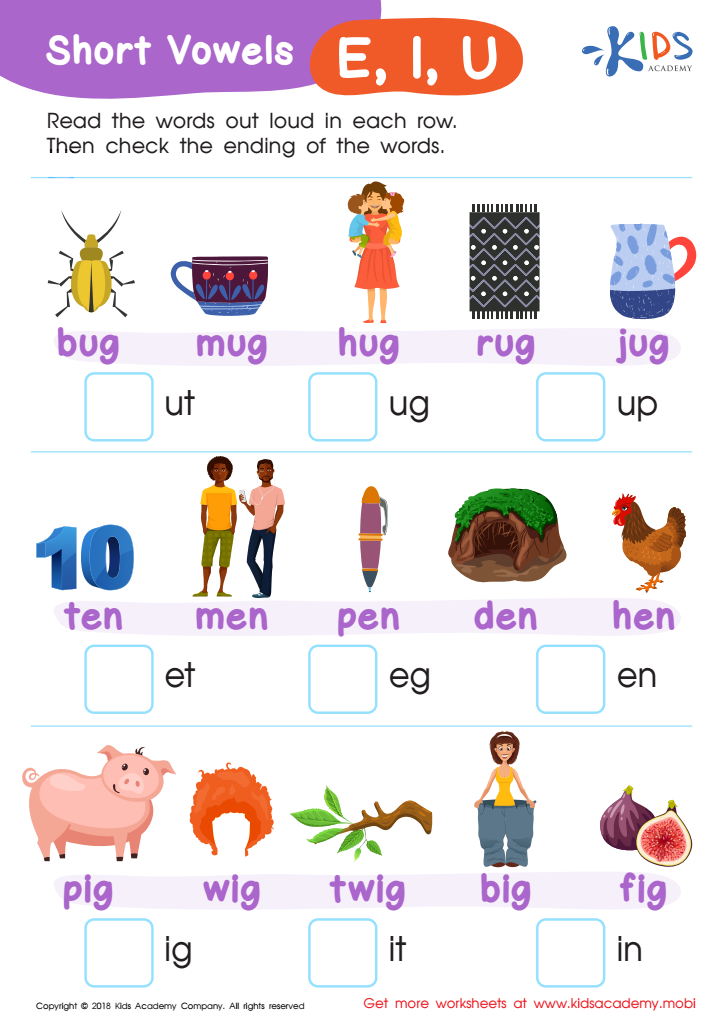
Short Vowels /e/, /i/, and /u/ Worksheet
Your emergent reader can have fun while practicing their short vowel sounds with this free, brightly colored worksheet. They'll identify one-syllable words by their pictures, then match the correct ending for each. They'll gain an understanding of how short vowel sounds vary in closed syllables with different endings, without even realizing it!
 Assign to My Students
Short Vowels /e/, /i/, and /u/ Worksheet
Worksheet
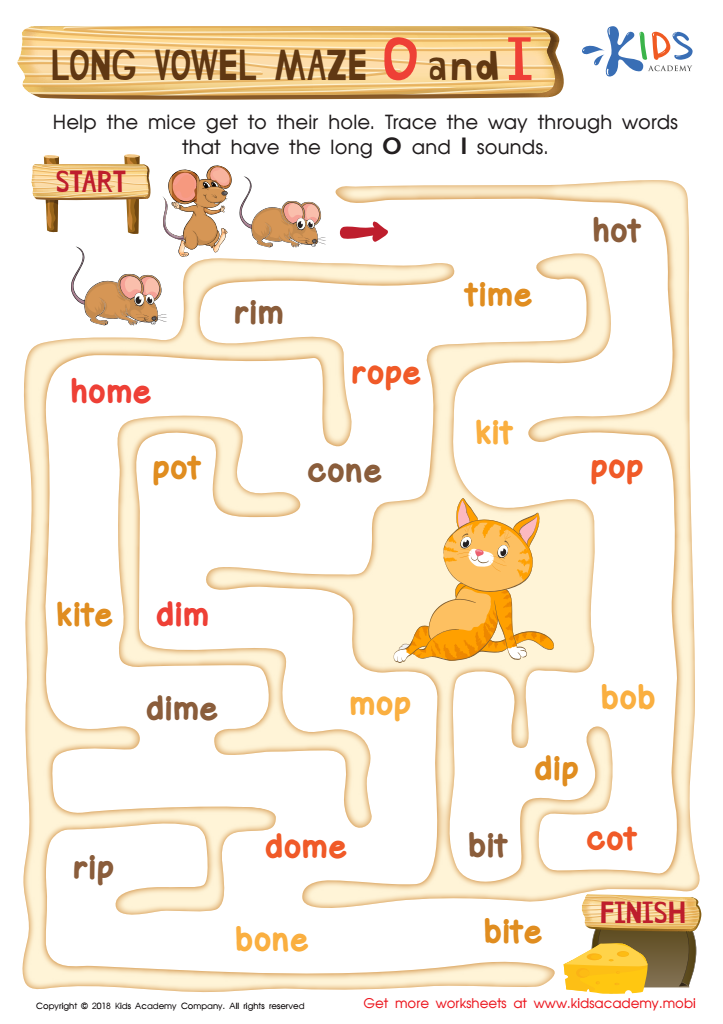
Long Vowel Maze /o/ and /i/ Worksheet
Help your new readers have fun and build their sight word vocabulary! Guide the mice to their prize cheese by having them trace the route on the worksheet, using words with the long o and long i sounds. But watch out for the kitty!
Long Vowel Maze /o/ and /i/ Worksheet
Worksheet
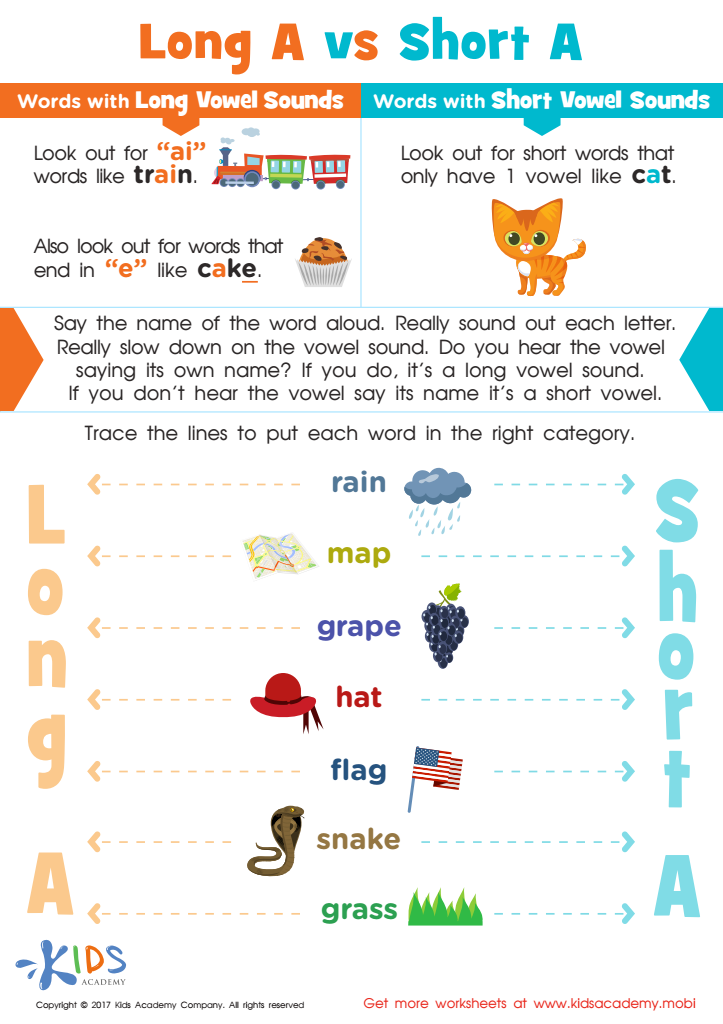
Long and Short Vowel A Spelling Worksheet
Help your child learn tricky spellings by focusing on vowel sounds. Read about each one, see examples and work through the long and short vowel A worksheet. Your child will be able to sound out words to determine if the vowel is long or short.
Long and Short Vowel A Spelling Worksheet
Worksheet
Join Kids Academy for Free
Who is primarily going to use this learning content?








Vowel recognition is foundational for literacy development in children aged 6-9, a critical period known for substantial linguistic growth. Teaching proper vowel recognition is crucial because vowels are the core components of syllables, words, and whole sentences. Mastering vowel sounds allows children to decode words efficiently, leading to improved reading and spelling skills. For instance, understanding the difference between short vowel sounds (like in "cat") and long vowel sounds (like in "cake") ensures kids can distinguish between similarly spelled words. This recognition supports reading comprehension, a critical skill that underpins all academic learning.
Moreover, having normal writing abilities involves skillfully integrating vowels within words, thereby promoting clear and accurate communication. When children consistently place vowels correctly, their writing becomes more understandable to others. Teachers and parents have a vested interest in this area because literacy impacts broader educational success and self-confidence. Fluent readers and clear writers are more likely to enjoy academic experiences, stay engaged in the classroom, and perform better across subjects. Finally, fostering these skills early can prevent future struggles with more complex reading and writing tasks, setting a strong foundation for lifelong learning and effective communication. Thus, focusing on vowel recognition and normal writing at this stage promises immediate and long-term educational benefits.