
Letter tracing skills Normal ABC Letters Worksheets for 6-Year-Olds
3 filtered results
Difficulty Level
Grade
Age
-
From - To
Subject
Activity
Standards
Boost your child’s writing skills with our engaging Letter Tracing Skills worksheets, specifically designed for 6-year-olds! These fun and interactive worksheets feature the normal ABC letters, providing children with the opportunity to practice their letter formation and enhance their fine motor skills. Each worksheet is crafted to make learning enjoyable, helping early learners build confidence in their writing abilities. As they trace each letter, kids will also develop important pre-reading skills. Explore our diverse collection of printable worksheets and set your child on the path to literacy with this essential foundational activity. Perfect for home or classroom learning!
Favorites
With answer key
Interactive

Letter C Tracing Page
Trace and write the letter 'C'! Put the pencil at the red dot then follow the lines – the capital letter first then the lowercase one. Cats love it and so will you! Get more free printables to practice tracing and writing.
Letter C Tracing Page
Worksheet







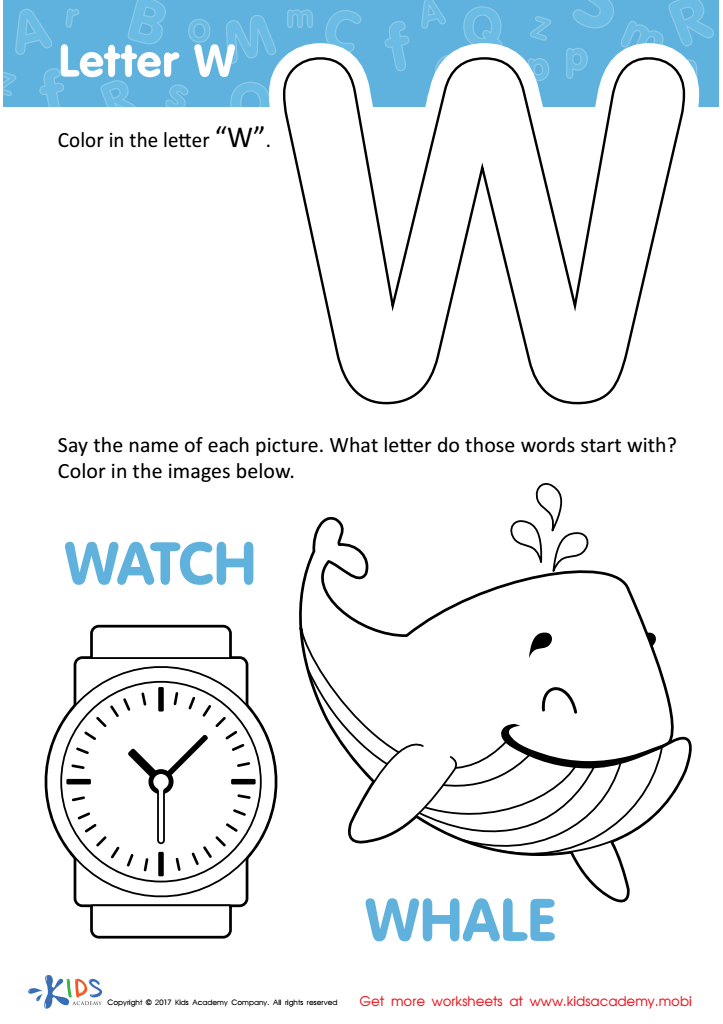
Letter W Coloring Sheet
Let your child have fun with this letter "W" coloring page! They can use their imagination to color the whale and discover the letter and its sound. Give them a helping hand to make it a whale of a time!
Download (PDF)
 Assign to My Students
Assign to My Students
Letter W Coloring Sheet
Worksheet
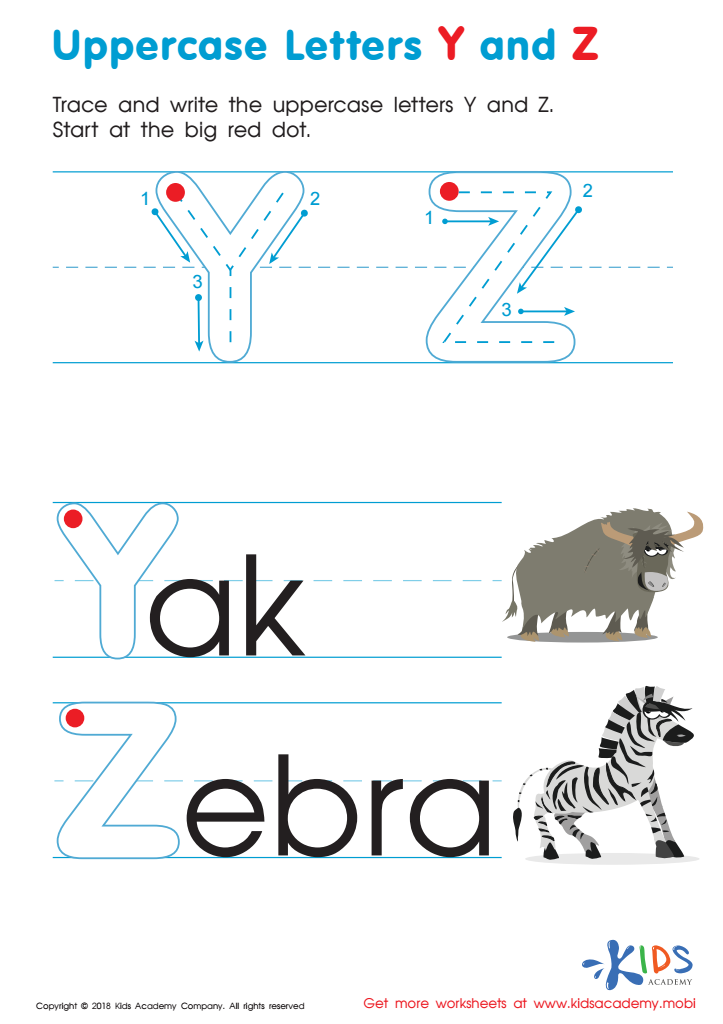
Uppercase Letters Y Z Worksheet
Help your child learn their ABCs with this fun tracing activity! They must trace and write Y and Z in uppercase form, starting from the red dot. Kids will love the fun images for extra engagement. Guiding their hand carefully will help them practice and perfect their writing skills.
Uppercase Letters Y Z Worksheet
Worksheet
Join Kids Academy for Free
Who is primarily going to use this learning content?






Letter tracing skills are vital for 6-year-olds as they serve as the foundation for literacy and writing development. At this age, children are at an optimal stage for learning to write, and tracing letters helps them develop fine motor skills, which are crucial for holding a pencil and forming letters correctly. By engaging in letter tracing, children reinforce their understanding of letter shapes, formations, and sounds, enhancing their ability to read and write independently.
Moreover, letter tracing activities boost children's confidence as they see their efforts translate into tangible results—a neatly formed letter. This positive reinforcement encourages a love for learning and establishes an early literacy routine. Parents and teachers play a crucial role in this developmental stage by providing consistent opportunities for practice and support.
Additionally, letter tracing can be a fun and interactive activity that fosters child engagement. Using colorful materials and creative techniques can transform a basic skill into an enjoyable experience, making learning more appealing. Ultimately, by prioritizing letter tracing and related activities, parents and teachers help set children on the path to successful communication skills, promoting cognitive development and readiness for future academic challenges.







