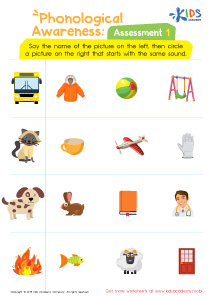
Vocabulary enhancement Normal Consonants Worksheets for 6-Year-Olds
5 filtered results
Difficulty Level
Grade
Age
-
From - To
Subject
Activity
Standards
Enhance your 6-year-old's vocabulary with our engaging Normal Consonants Worksheets! Tailored for young learners, these worksheets introduce essential consonant sounds and support vocabulary expansion in a fun and interactive way. Each activity is designed to strengthen phonetic awareness while encouraging correct pronunciation and word formation. Children will enjoy exploring various words alongside colorful visuals, making learning both enjoyable and effective. Perfect for home or classroom use, these resources are ideal for developing foundational literacy skills. Boost your child's confidence in language arts with our specially crafted worksheets, ensuring they build a strong vocabulary as they grow. Fun learning starts here!
Favorites
With answer key
Interactive
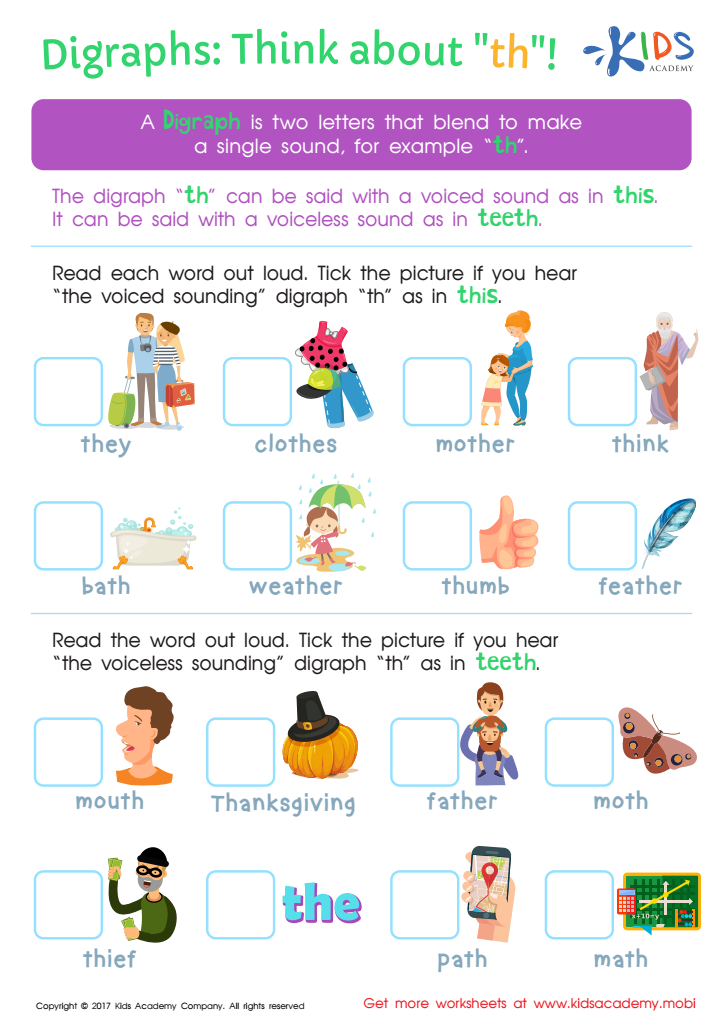
Digraphs: Think About "th" Worksheet
Help your child master phonics with this illustrated digraph Th printable worksheet. It will help recognize "Th" words, differentiate voiced and voiceless sounds and understand key concepts. Use similar words while they work to reap its full benefits!
 Assign to My Students
Digraphs: Think About "th" Worksheet
Worksheet
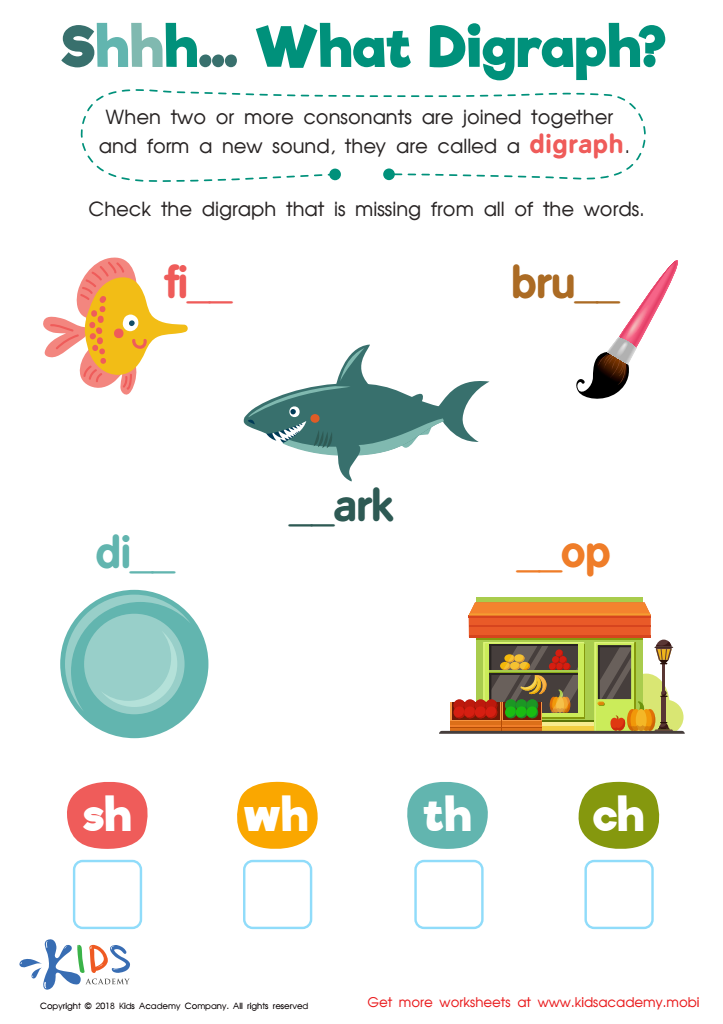
Shhh... What Digraph? Worksheet
Phonetics sounds can be combined to create a new sound - like a digraph. A great example is the /sh/ sound. Words like 'brush' and 'fish' can be heard. Ask your child to provide more examples. Look at the pictures in the PDF and see if they can identify the objects. Additionally, help them find the digraph missing from each word.
Shhh... What Digraph? Worksheet
Worksheet
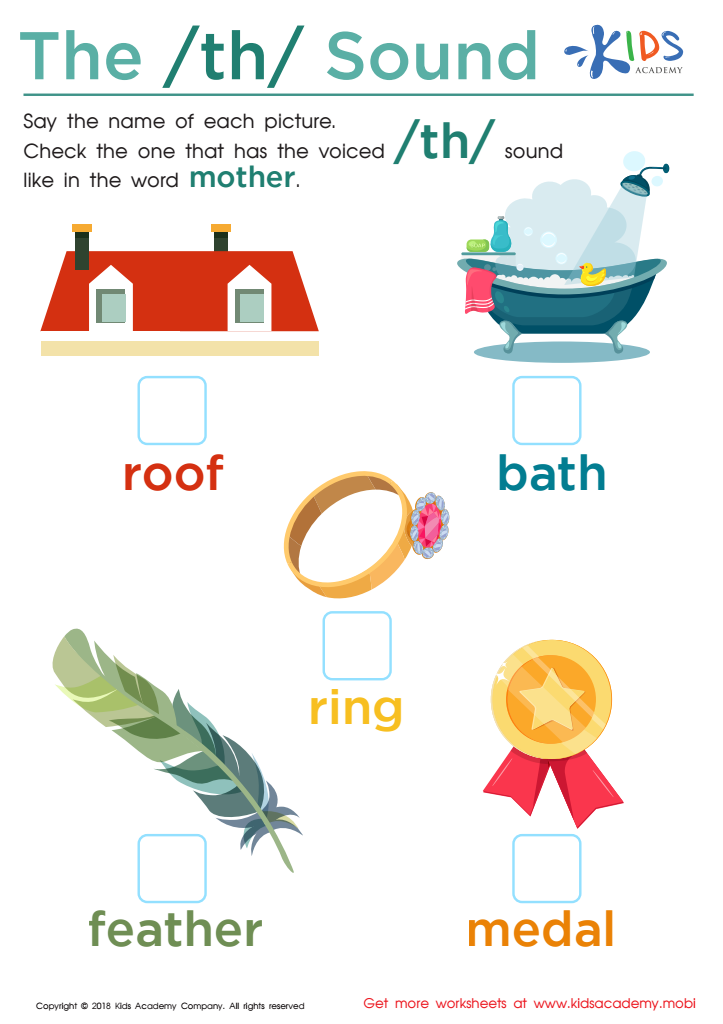
The /th/ Sound Worksheet
Confuse your students no more: have them use this worksheet to understand the /th/ sound and its two variants. With pictures, ask them to say the name of each one. Help them identify the voiced /th/ sound, like in 'mother', by having them say it aloud. Download the pdf to get started.
The /th/ Sound Worksheet
Worksheet
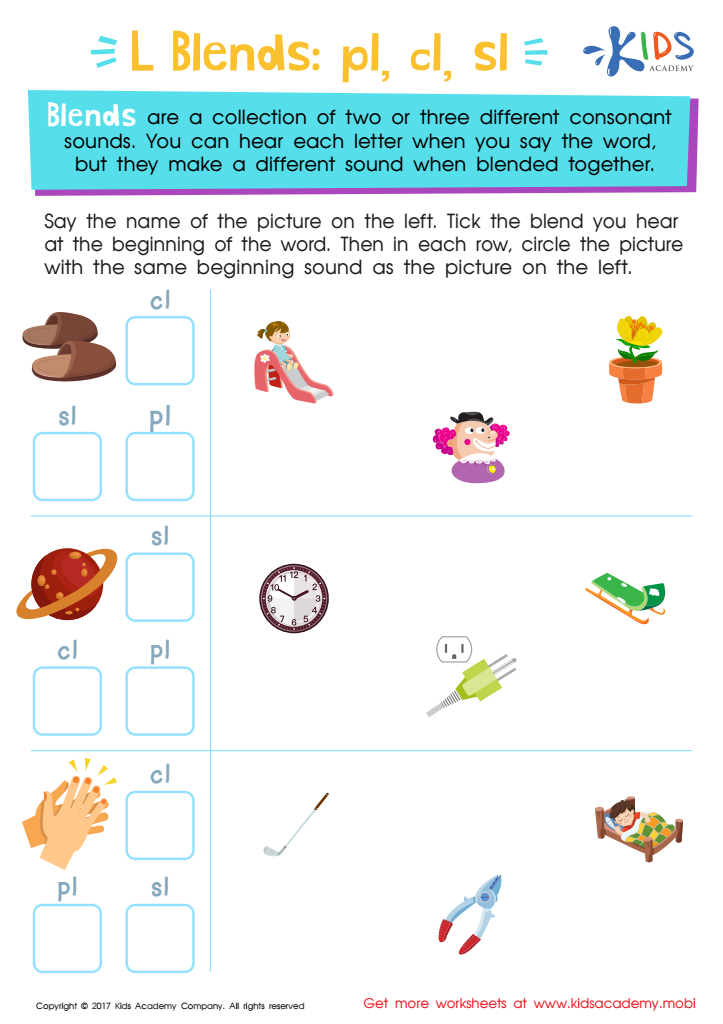
L Blends: "Pl", "Cl" and "Sl" Printable
This printable worksheet will help your child recognize and identify the Pl, Cl, and Sl consonant blends, sound them out, and identify them in print. Improve your child's reading and writing skills with fun and colorful phonics practice!
L Blends: "Pl", "Cl" and "Sl" Printable
Worksheet
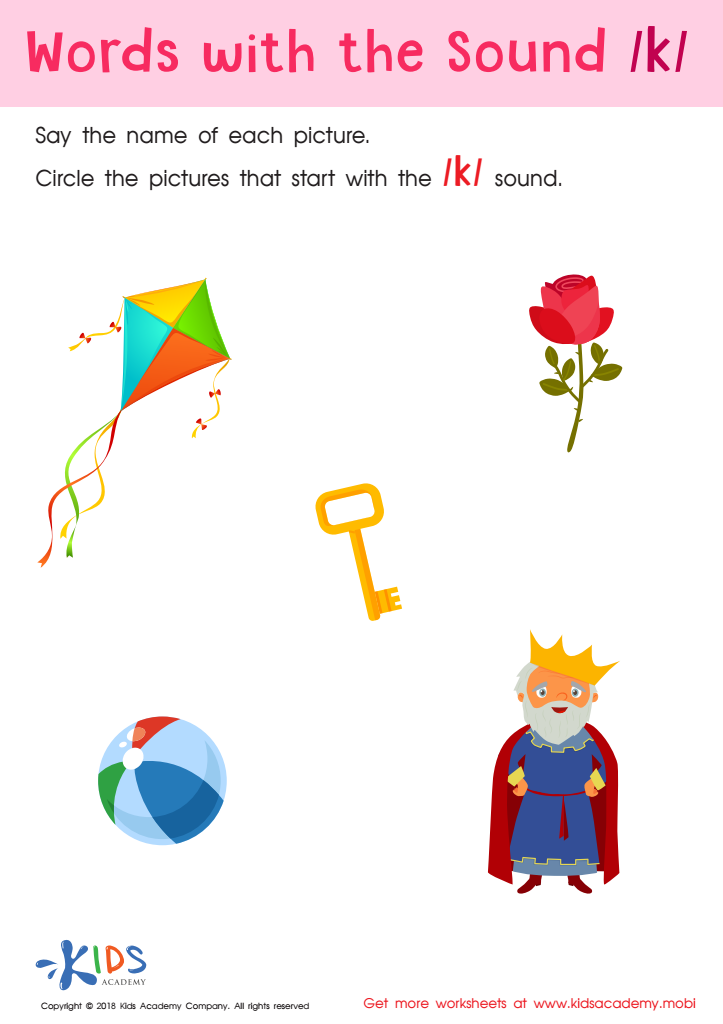
Words with sound k Reading Worksheet
Help your preschooler master the hard "k" sound with this fun worksheet from Kids Academy! Ask your child to say each picture aloud and circle only the pictures that start with "k". This early reading exercise will boost phonics skills and is sure to be loved by your little learner!
Words with sound k Reading Worksheet
Worksheet
Join Kids Academy for Free
Who is primarily going to use this learning content?



Vocabulary enhancement for 6-year-olds, particularly focusing on normal consonants, is crucial for several reasons. At this developmental stage, children are rapidly acquiring language skills that form the foundation for effective communication. A robust vocabulary facilitates better reading comprehension, writing ability, and oral expressions—essential skills for academic success and social interactions.
Focusing on consonants specifically helps children pronounce and recognize sounds accurately, which is vital in phonics and early literacy. Correct consonant pronunciation also aids in distinguishing between similar-sounding words, minimizing confusion in communication and comprehension. This attention to detail can enhance their reading fluency and motivate them to explore new words, thereby enriching their expressive capabilities.
Moreover, vocabulary skills have long-lasting implications; a strong linguistic foundation in early childhood often leads to better performance in higher education levels. It equips children with the tools they need to engage with various subjects and ideas critically.
For parents and teachers, nurturing these skills creates a more confident learner, promoting a positive attitude toward reading and language. Engaging children in playful and interactive learning experiences centered around consonants will not only make learning enjoyable but also lay the groundwork for lifelong learning and literacy.