
Handwriting improvement Normal Alphabet Worksheets for 6-Year-Olds
6 filtered results
Difficulty Level
Grade
Age
-
From - To
Subject
Activity
Standards
Enhance your child's handwriting skills with our engaging "Handwriting Improvement Normal Alphabet Worksheets" designed specifically for 6-year-olds. These worksheets provide a fun and interactive way for young learners to practice forming each letter of the alphabet, both uppercase and lowercase. With varied exercises including tracing, connecting dots, and writing prompts, children can build confidence and proficiency in their writing abilities. Our worksheets are perfect for classroom or home activities, promoting fine motor skills and reinforcing letter recognition. Let your child embark on a creative journey as they improve their handwriting and enjoy learning! Start their handwriting adventure today!
Favorites
With answer key
Interactive
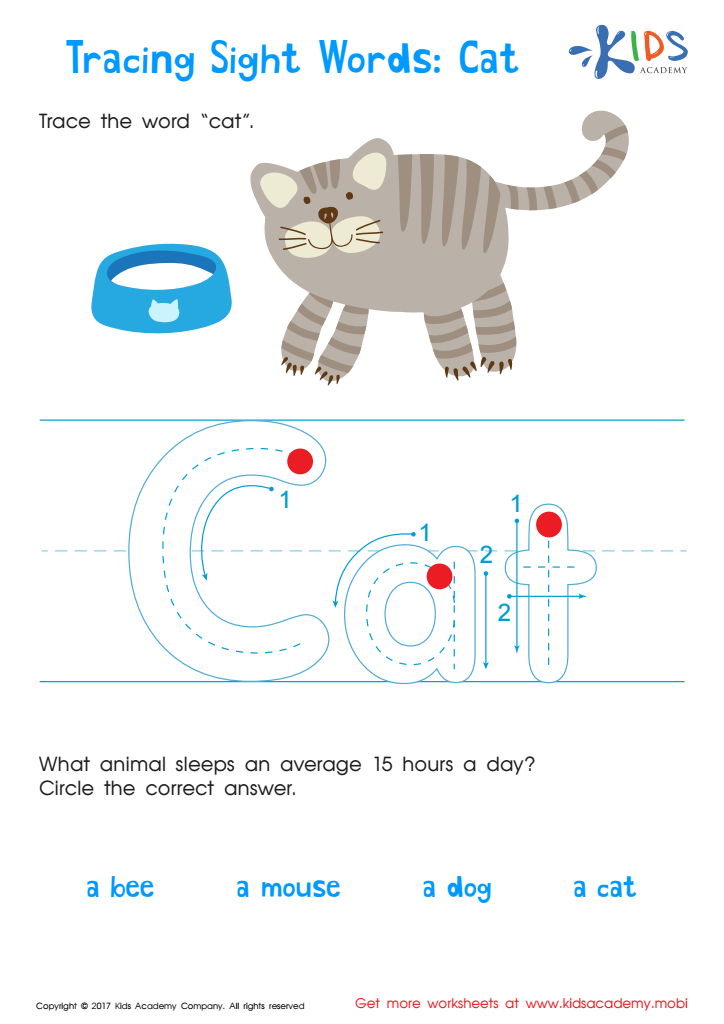
Cat Printable Sight Words Worksheet
Encourage your child's literacy with this fun sight words worksheet: cat PDF! It helps build a solid foundation for reading, featuring activities such as reading and tracing the word cat, and finding it amongst other sight words. With its cute cat, Kids Academy makes learning to read a delight!
 Assign to My Students
Cat Printable Sight Words Worksheet
Worksheet
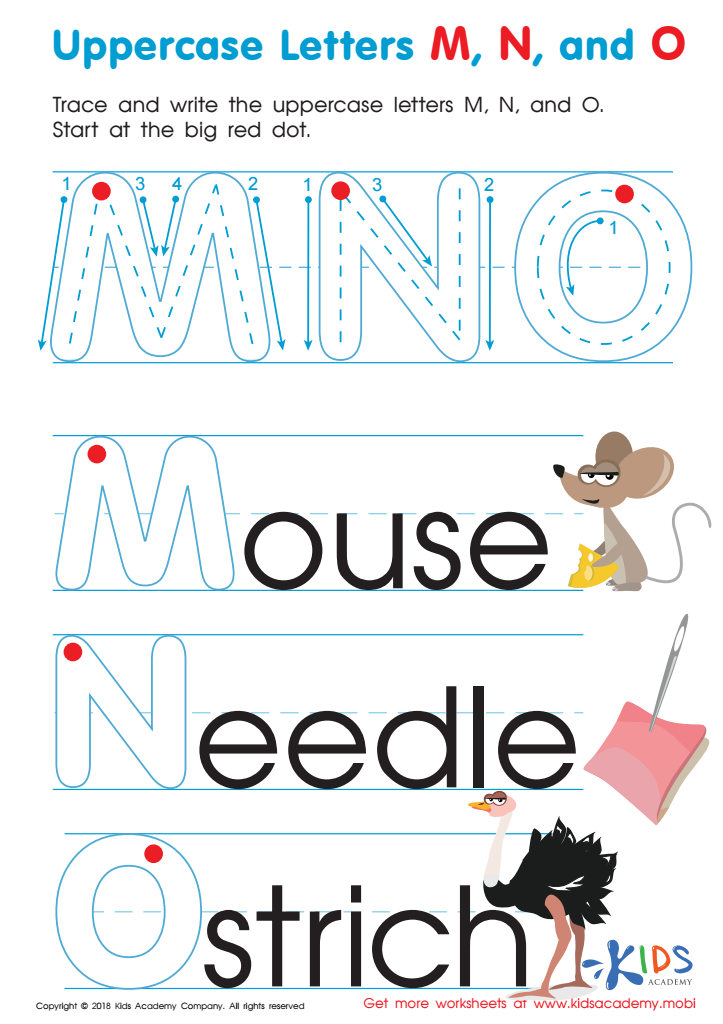
Uppercase Letters M, N, and O Worksheet
Download our easy-to-understand worksheet to help kids write M and N with ease! They'll trace dotted lines and follow arrows as they fill in the letters using a big red dot as a guide. The cute graphics will help them remember sounds too! Get your child writing quickly and confidently with this fun activity.
Uppercase Letters M, N, and O Worksheet
Worksheet
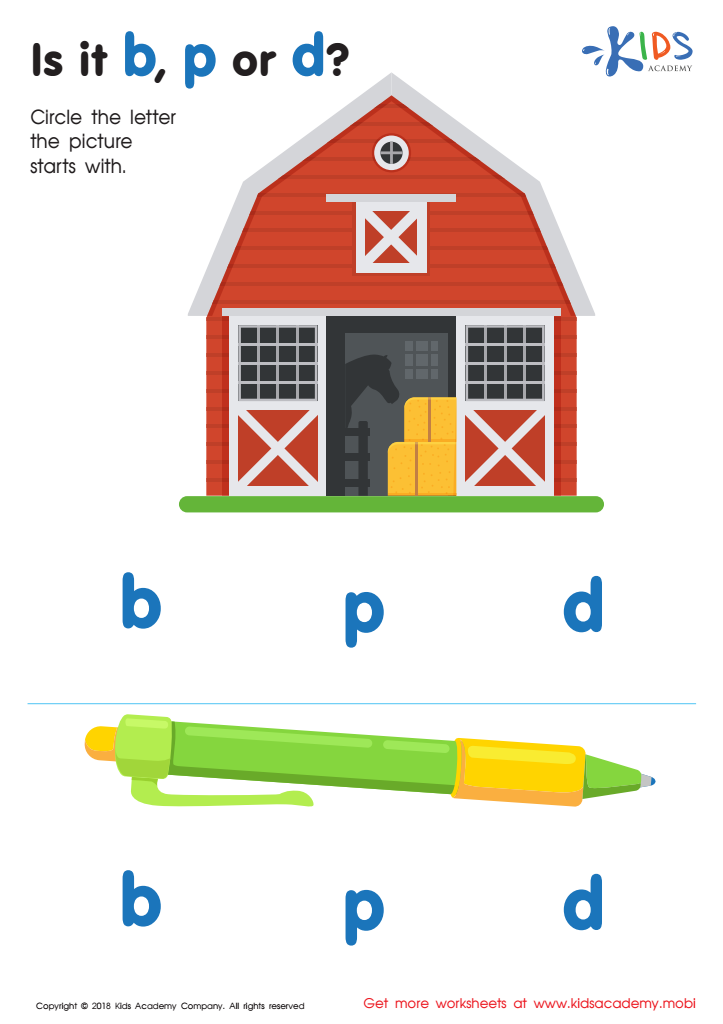
Is it b, p or d? Worksheet
Test your child's identification skills with this worksheet. They must identify the image and then circle the letter it begins with: 'b', 'p', or 'd' (e.g. an image of the sun would mean they circle 's').
Is it b, p or d? Worksheet
Worksheet
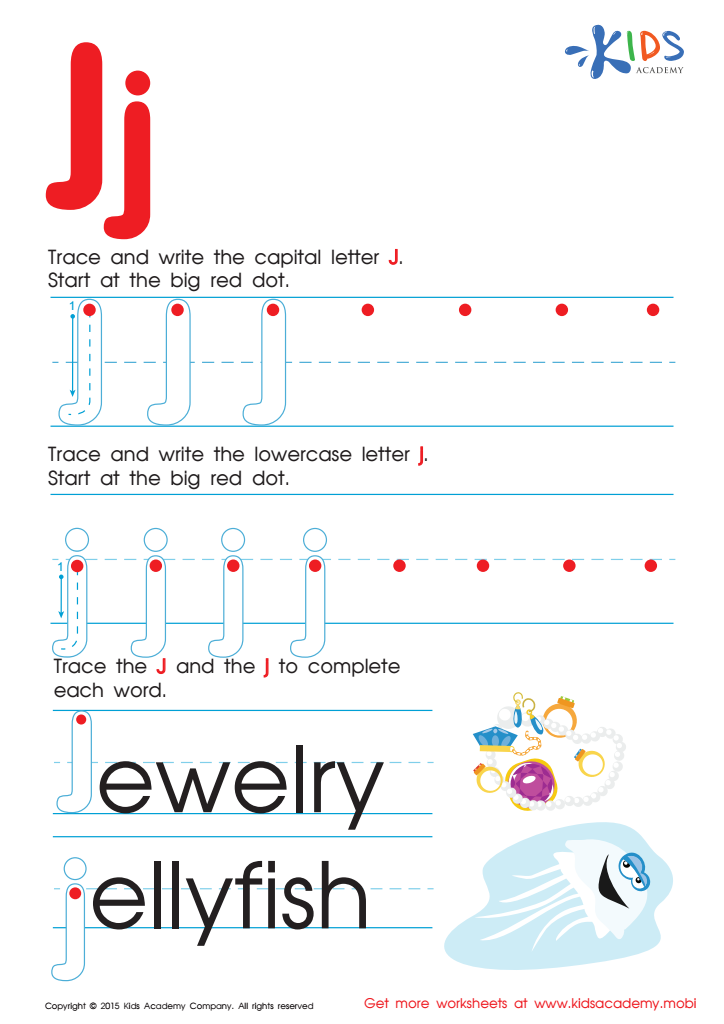
Letter J Tracing Page
Trace and write the letter "J" with our ABC worksheet - start at the big red dot! Have fun completing words like jewelry, jellyfish and more. Check out our kindergarten activities for more alphabet practice.
Letter J Tracing Page
Worksheet

Letter B Tracing Page
Ready to learn the Alphabet? Put your pencil on the red dot and trace & write both capital & lowercase "B". Then have a look at the pictures. Catch the bee, cross the bridge & write the letters to complete the words. More ABC worksheets for kindergarten available!
Letter B Tracing Page
Worksheet
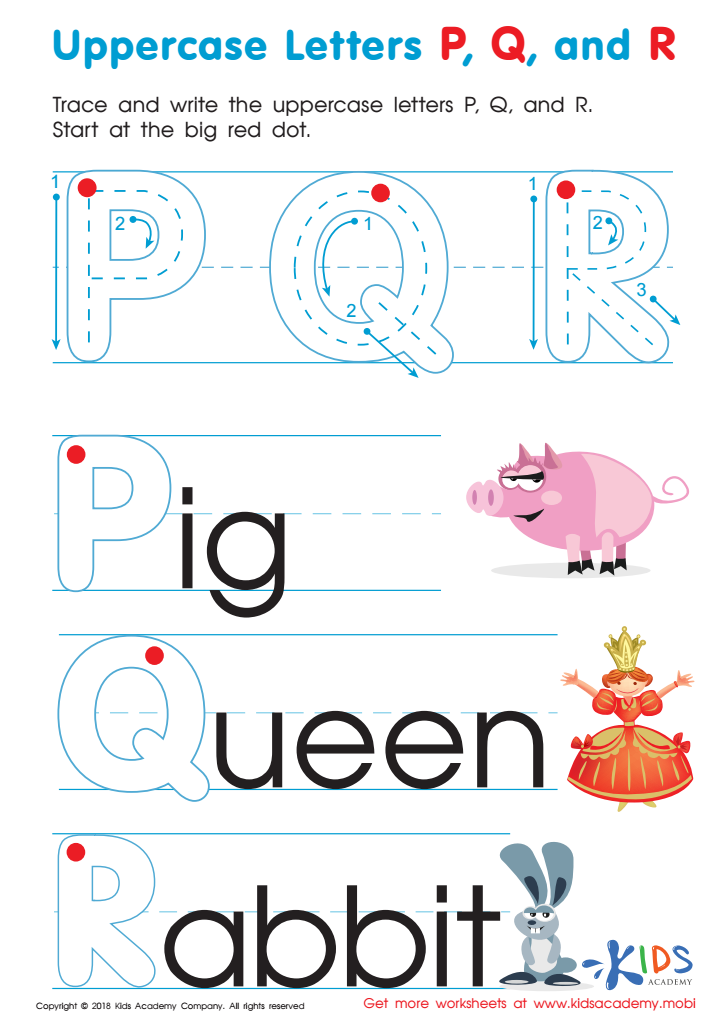
Uppercase Letters P, Q, and R Worksheet
Cute images of a pig, queen and rabbit make it fun to learn letter sounds. Follow the arrows to learn the strokes, then trace each letter from the big red dot. Perfect for kids to learn how to read and write P, Q, and R!
Uppercase Letters P, Q, and R Worksheet
Worksheet
Join Kids Academy for Free
Who is primarily going to use this learning content?




Handwriting improvement is a crucial aspect of a 6-year-old's education. At this age, children are developing essential fine motor skills, and improving their handwriting can significantly boost their overall academic performance. Parents and teachers should care about this skill because neat handwriting fosters confidence in young learners. When children take pride in their writing, they are more likely to engage actively in classroom activities, express their thoughts clearly, and excel in assignments.
Additionally, clear handwriting is linked to effective communication. It enhances a child's ability to convey ideas, enabling them to participate in discussions and share their knowledge with peers. As academic demands increase in later grades, the ability to write clearly becomes even more critical. Cultivating good handwriting habits early on helps set the foundation for future learning.
Moreover, handwriting can positively impact cognitive development. The physical act of writing engages both the brain and muscles, and studies have shown that it can enhance reading and spelling abilities. Therefore, when parents and teachers prioritize handwriting improvement, they contribute to a child's comprehensive development. By fostering these skills, they empower children to succeed in school and build a strong foundation for lifelong learning.







