Visual discrimination skills Normal Alphabet Worksheets for 6-Year-Olds
5 filtered results
-
From - To
Enhance your child's visual discrimination skills with our engaging Normal Alphabet Worksheets designed for 6-year-olds. These worksheets provide a fun and interactive way for young learners to identify, compare, and categorize letters. By focusing on distinguishing between similar shapes and forms, children will sharpen their observational skills, which are essential for reading and writing success. Each worksheet offers a variety of activities, such as letter matching, sorting, and visual identification, ensuring a comprehensive learning experience. Perfect for both classroom and at-home use, these printable resources foster confidence and excitement in early literacy. Start your child's journey to mastering the alphabet today!
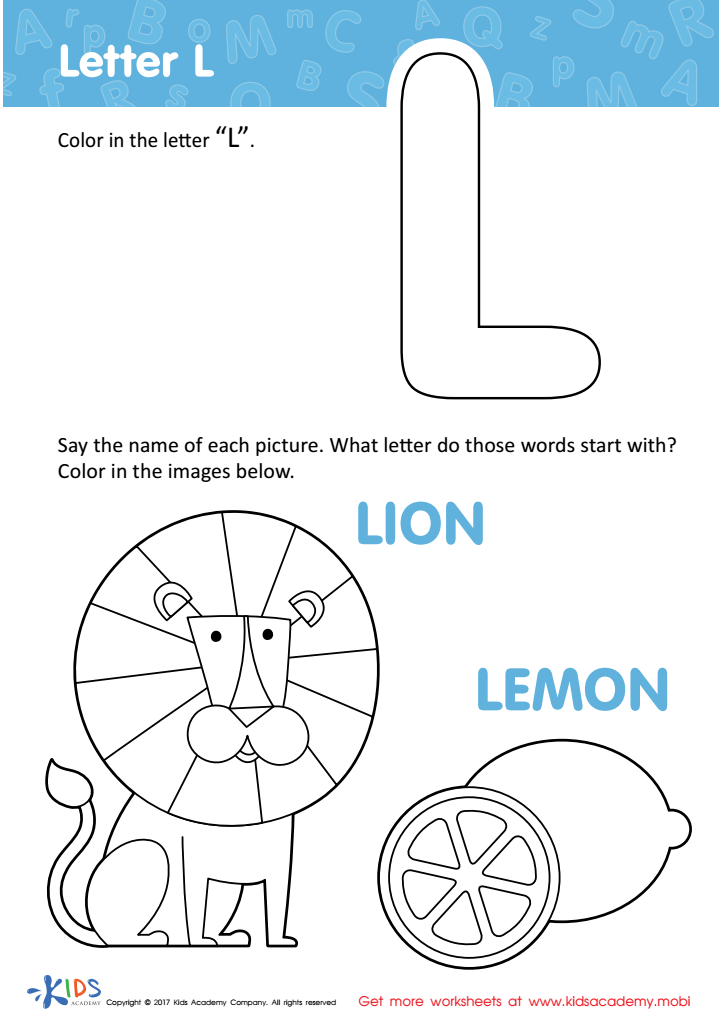
Letter L Coloring Sheet
 Assign to My Students
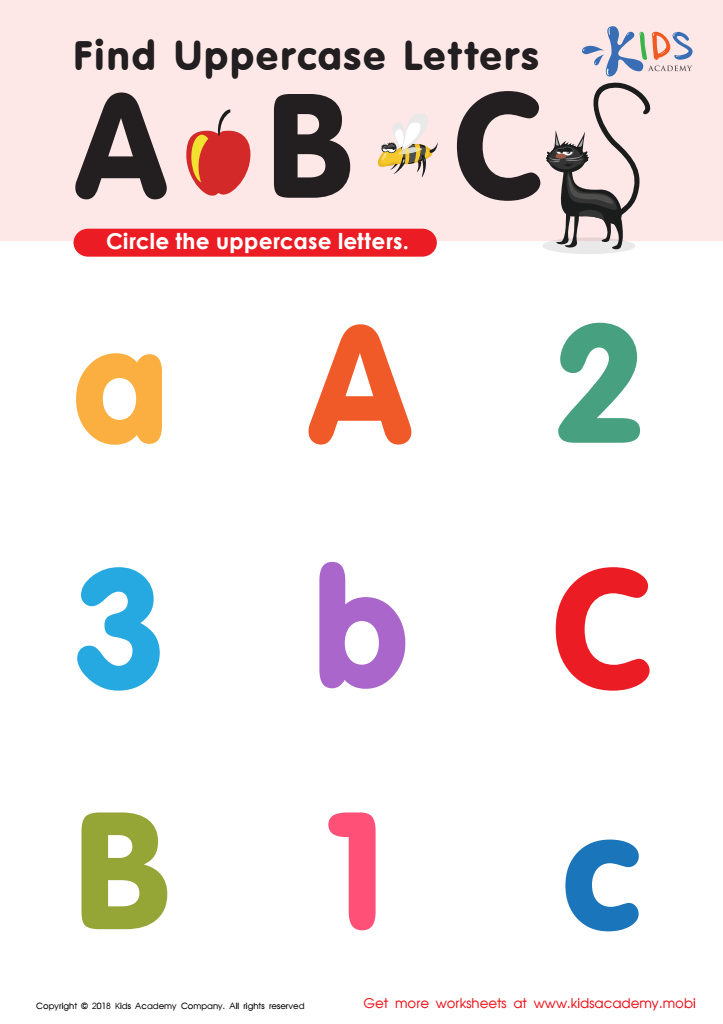
Find Uppercase Letters A, B, and C Worksheet
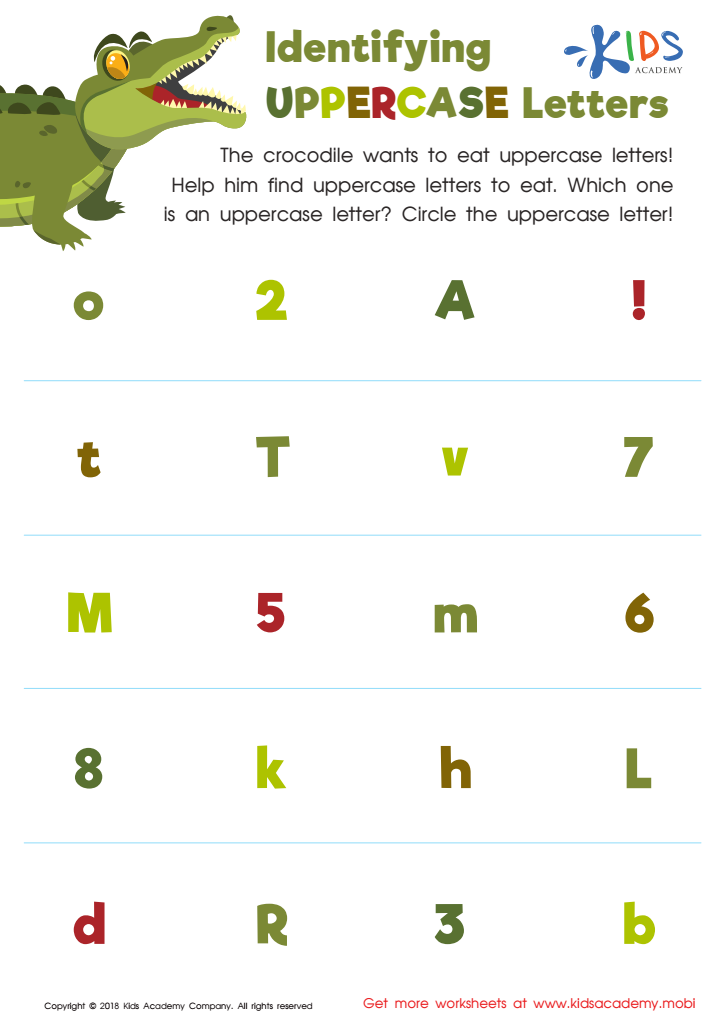
Identifying Uppercase Letters Worksheet
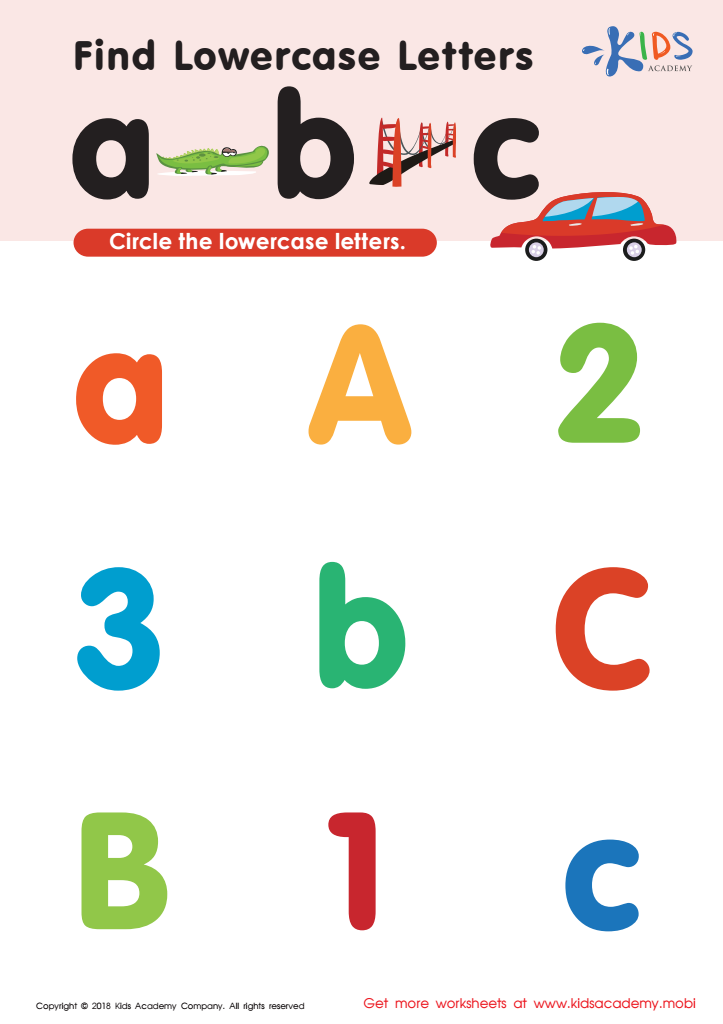
Find lowercase letters a b c Worksheet
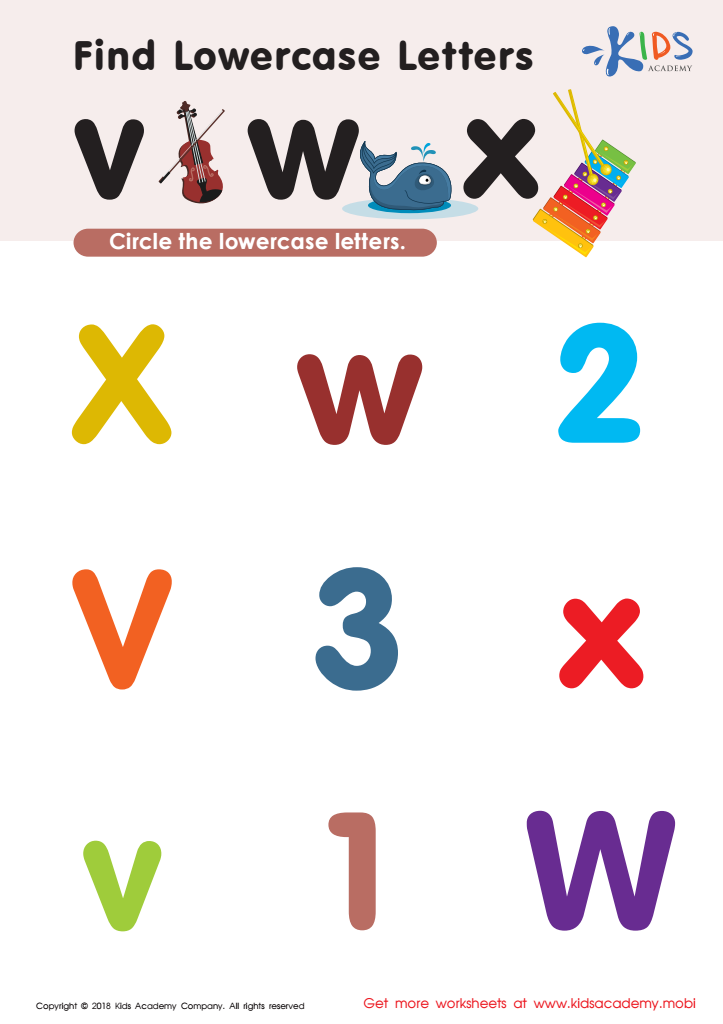
Find Lowercase Letters v w x Worksheet








Visual discrimination skills are crucial for 6-year-olds as they form the foundation for effective reading and writing. At this age, children are developing the ability to differentiate between similar-looking letters and shapes, such as “b” and “d” or “p” and “q.” If children struggle with visual discrimination, they may experience difficulties in recognizing letters, leading to challenges in learning to read and write.
For parents and teachers, fostering these skills is essential to prevent future academic struggles. Strong visual discrimination abilities contribute to improved spelling, reading fluency, and overall literacy development. By helping children identify and differentiate letters and words, adults can enhance their confidence and enthusiasm for learning.
Activities designed to boost visual discrimination include puzzles, matching games, and sorting exercises, which can be easily integrated into everyday routines. Encouraging these skills not only supports a child’s immediate educational needs but also instills a love for reading and learning. Early intervention and support can make a significant difference in shaping a child's academic trajectory, ultimately fostering lifelong learning and success. Therefore, parents and teachers should prioritize and actively engage with children in developing these vital visual skills.







