
Vocabulary development Normal Alphabet Worksheets for 6-Year-Olds
10 filtered results
Difficulty Level
Grade
Age
-
From - To
Subject
Activity
Standards
Enhance your child's language skills with our Vocabulary Development Normal Alphabet Worksheets designed specifically for 6-year-olds. These engaging, printable worksheets provide young learners with fun activities to expand their vocabulary while mastering the alphabet. From letter recognition to word association, each exercise promotes essential literacy skills that support reading and comprehension. Interactive and colorful, these worksheets make learning enjoyable and help build confidence in young learners. Perfect for use at home or in the classroom, our resources are an excellent tool for parents and educators aiming to enrich children’s vocabulary and foster a lifelong love for reading. Start your child's learning journey today!
Favorites
With answer key
Interactive
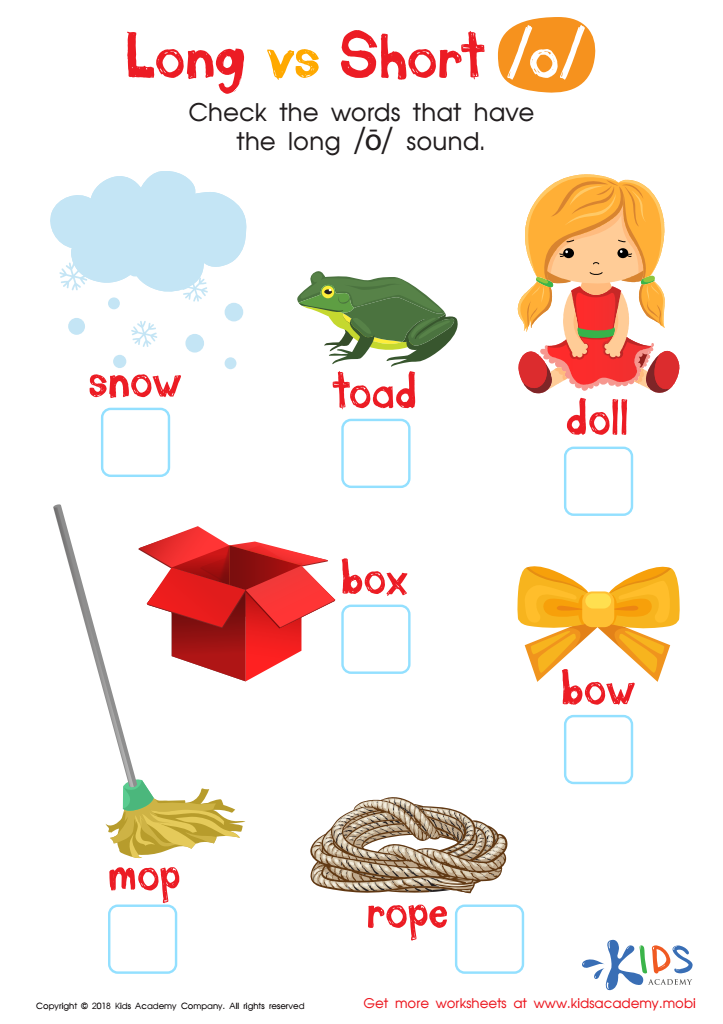
Long vs Short O Reading Worksheet
Help your child learn to identify the long and short «o» sound with this colourful worksheet. Guide them as they spot words with the long or short «o» sound. With practice, your child will find it easier to tell the difference between the two.
 Assign to My Students
Long vs Short O Reading Worksheet
Worksheet
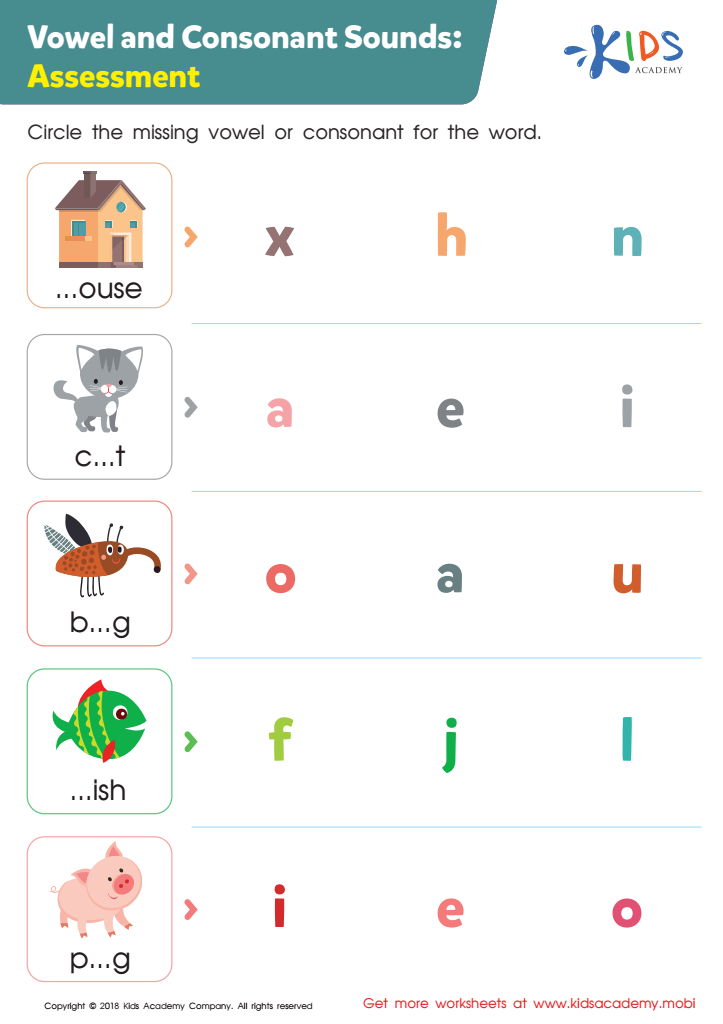
Vowel and Consonant Sounds: Assessment Worksheet
Test young elementary students on vowel and consonant sounds with this friendly phonics assessment worksheet. Get kids to name each image and look at the word underneath. Ask them to sound out the word, then circle the missing letter to complete. This will help assess their knowledge and skills!
Vowel and Consonant Sounds: Assessment Worksheet
Worksheet
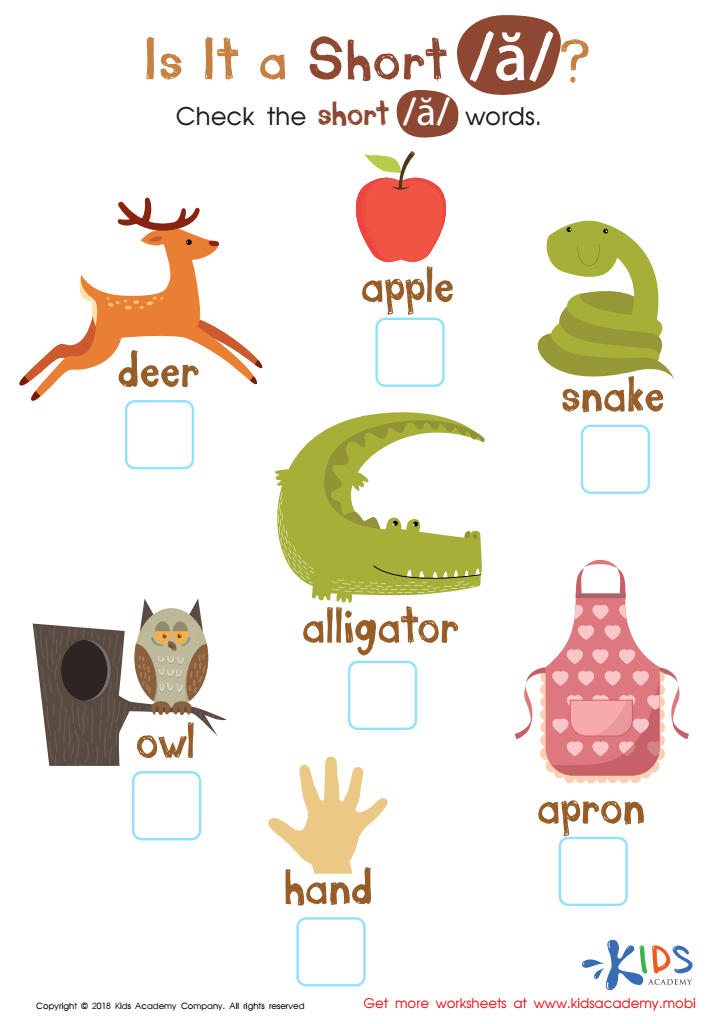
Is It Short A? Reading Worksheet
Struggling readers may have difficulty distinguishing short from long vowels. With this fun PDF worksheet, they practice identifying the corresponding short «ă» by naming each picture and ticking the right boxes. It's a great way to work on decoding and fluency skills!
Is It Short A? Reading Worksheet
Worksheet
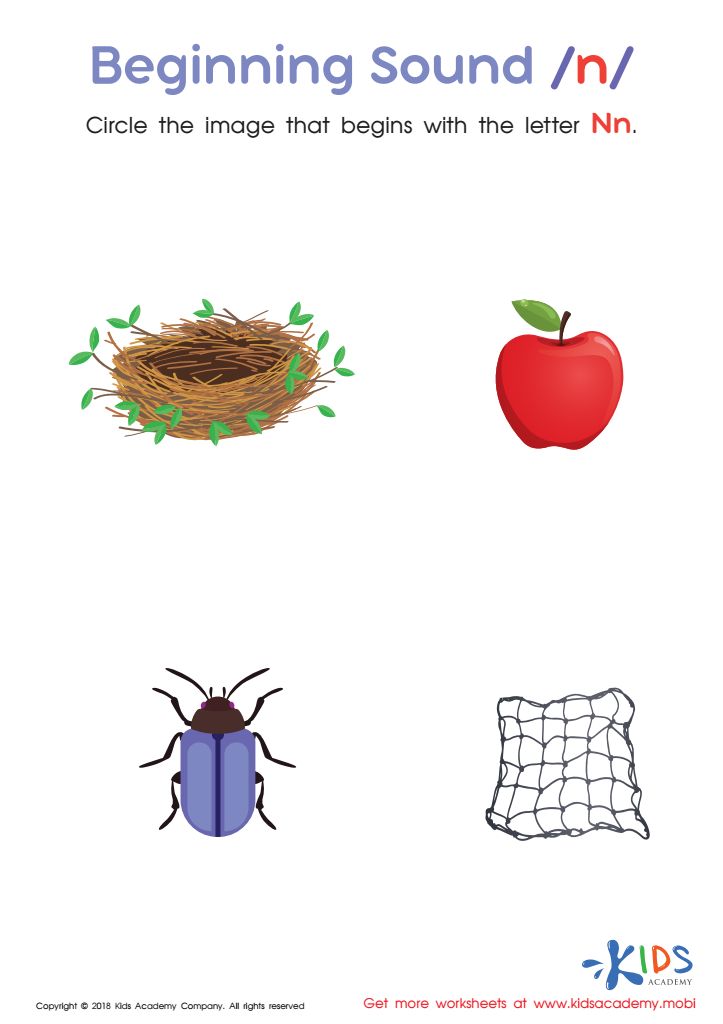
Beginning Sound «n» Worksheet
Help your emerging reader learn the initial «n» sound with this free PDF worksheet! Strengthen fine motor skills by tracing circles around words beginning with «n». Pictures are clear and engaging, giving beginning Phonics learners the right amount of practice and the confidence to succeed.
Beginning Sound «n» Worksheet
Worksheet
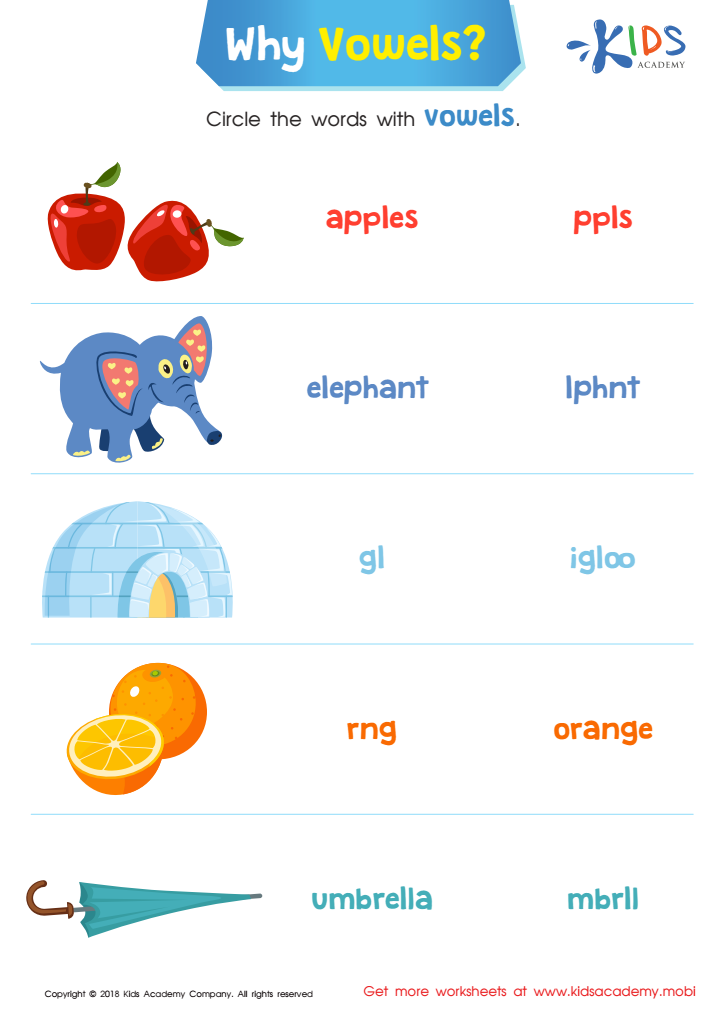
Why Vowels? Reading Worksheet
This worksheet teaches kids to spell words with vowels. It features familiar pics for them to recognize, and they practice fine motor skills by circling the correct spelling. It's an enjoyable way for kids to learn how to spell and promote reading skills.
Why Vowels? Reading Worksheet
Worksheet
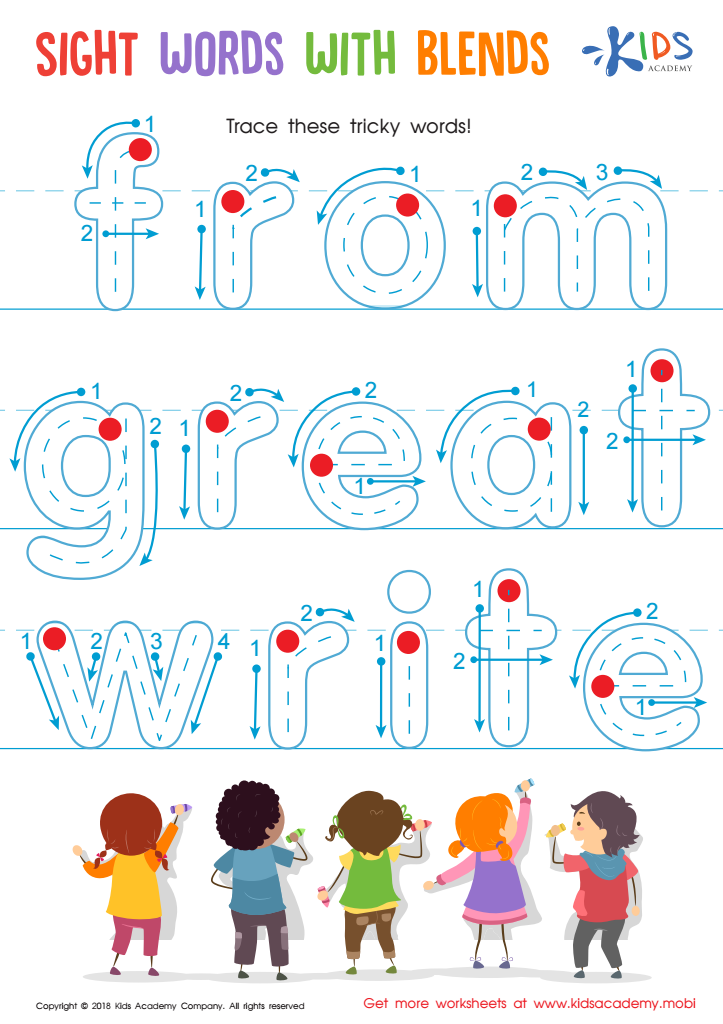
Sight Words with Blends Worksheet
This free PDF lets your children trace and write sight words with tricky blends. The guide numbers help them start from the top, building fine motor skills and enhancing sight word vocab. It's a great way to give your kids a solid foundation for reading!
Sight Words with Blends Worksheet
Worksheet
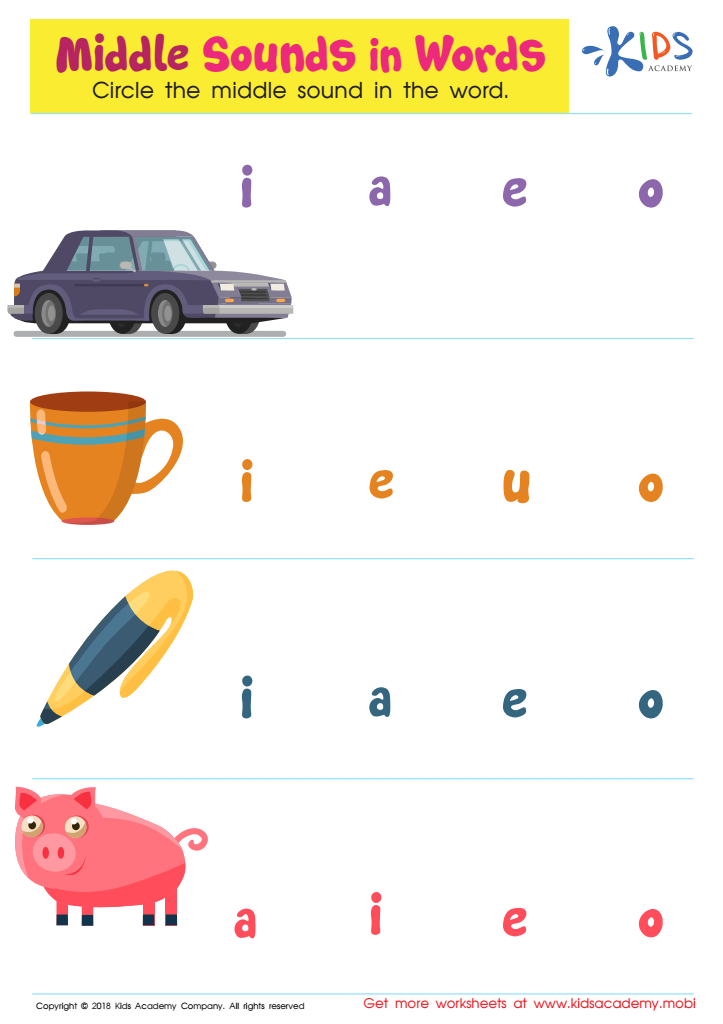
Middle Sounds in Words Worksheet
This worksheet helps emerging readers use picture clues to identify familiar words and practice tracing and fine-motor abilities. It also reinforces spelling by helping them distinguish middle sounds in words. A great way to build listening and literacy skills!
Middle Sounds in Words Worksheet
Worksheet
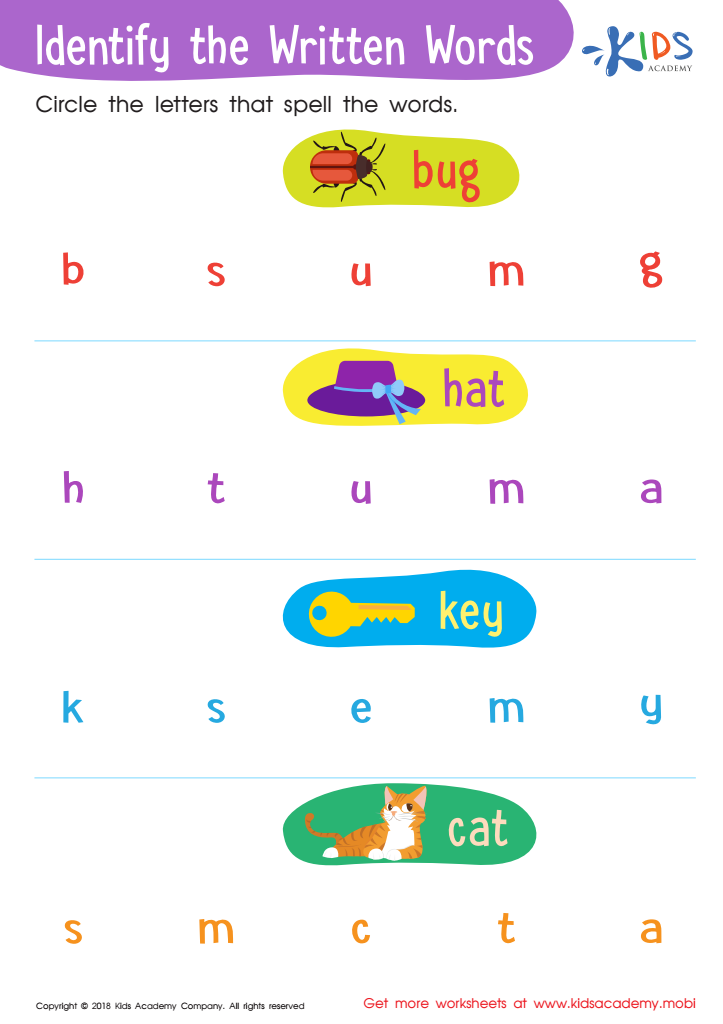
Identify the Written Words Worksheet
Have your students identify the objects on the printout, then spell the words. If they already know how to spell, this exercise should be easy. Help them circle the correct letters from the set to spell out the words. This is a great way to reinforce reading and spelling skills. Max 80 words.
Identify the Written Words Worksheet
Worksheet
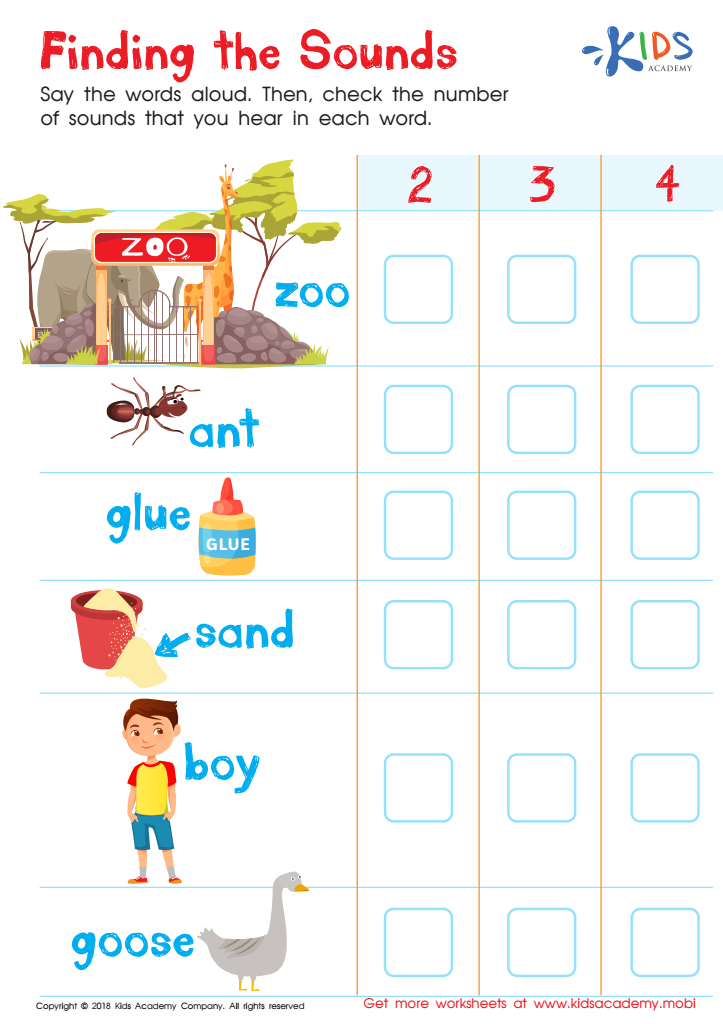
Finding the Sounds Worksheet
This free colorful worksheet assists children in learning words and breaking them down into sounds. It boosts auditory discrimination, phonological awareness and fine motor skills. Picture clues help them read confidently, and they can check the appropriate boxes to practice their reading skills.
Finding the Sounds Worksheet
Worksheet
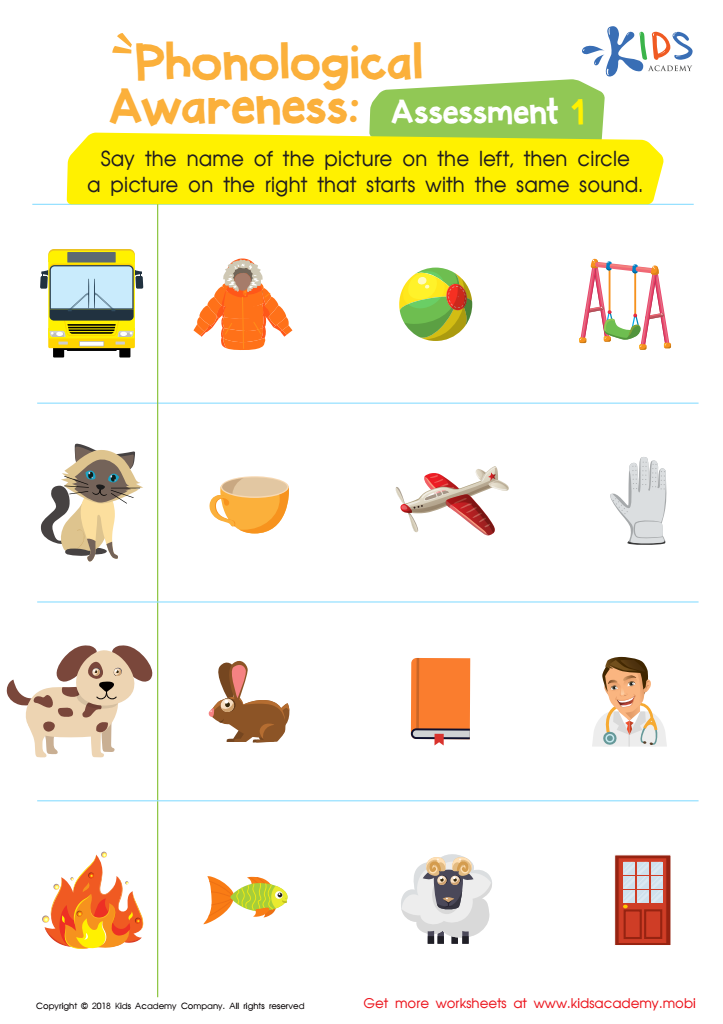
Phonological Awareness: Assessment 1 Worksheet
This worksheet helps kids build key phonics skills for pre-reading. They say each picture name aloud, focusing on the starting sound. Then, they match the sound with an image in the same row. Use as a checkpoint for kindergarten or grade 1 phonics readiness.
Phonological Awareness: Assessment 1 Worksheet
Worksheet
Join Kids Academy for Free
Who is primarily going to use this learning content?








Vocabulary development in 6-year-olds is crucial for several reasons that parents and teachers should prioritize. At this age, children are rapidly expanding their language skills and comprehension abilities, forming the foundation for their future academic success. A robust vocabulary allows children to express themselves clearly, understand complex ideas, and engage with peers during discussions and collaborative activities.
Furthermore, a strong vocabulary enhances reading abilities. Children with an enriched vocabulary can decode text better, leading to improved comprehension and a love for reading. This foundational skill fosters independent learning and critical thinking, essential elements of overall academic achievement. Vocabulary development also influences children's ability to participate in conversations, promoting their social interactions and confidence.
Moreover, exposure to diverse vocabulary cultivates a deeper understanding of the world. It encourages curiosity and the desire to learn new concepts, which is fundamental at this exploratory stage in their lives. Lastly, a supportive environment at home and school enhances children's motivation to learn and share new words, leading to further vocabulary growth.
In summary, investing in vocabulary development for 6-year-olds plays a pivotal role in their educational journey, nurturing their communication skills, reading comprehension, and overall learning enthusiasm.







