Lowercase identification Normal Letter Recognition Worksheets for 6-Year-Olds
4 filtered results
-
From - To
Enhance your 6-year-old's literacy skills with our engaging Lowercase Identification Normal Letter Recognition Worksheets. Designed specifically for early learners, these worksheets provide a fun and interactive way for children to recognize and differentiate lowercase letters. Each activity encourages independent learning while reinforcing essential letter recognition. Kids will enjoy vibrant illustrations and diverse exercises that enhance their reading readiness. As they practice identifying letters in various formats, they'll build a strong foundation for future literacy success. Perfect for classroom settings or at-home learning, these worksheets make mastering lowercase letters enjoyable and effective. Start your child's journey toward reading fluency today!
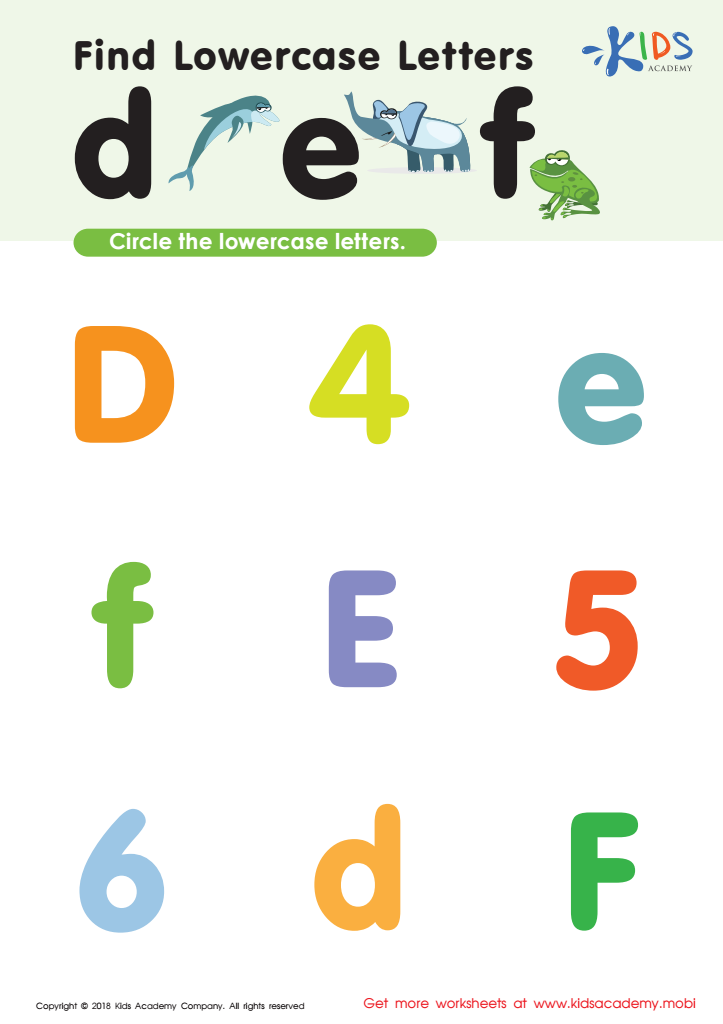
Find Lowercase Letters d e f Worksheet
 Assign to My Students
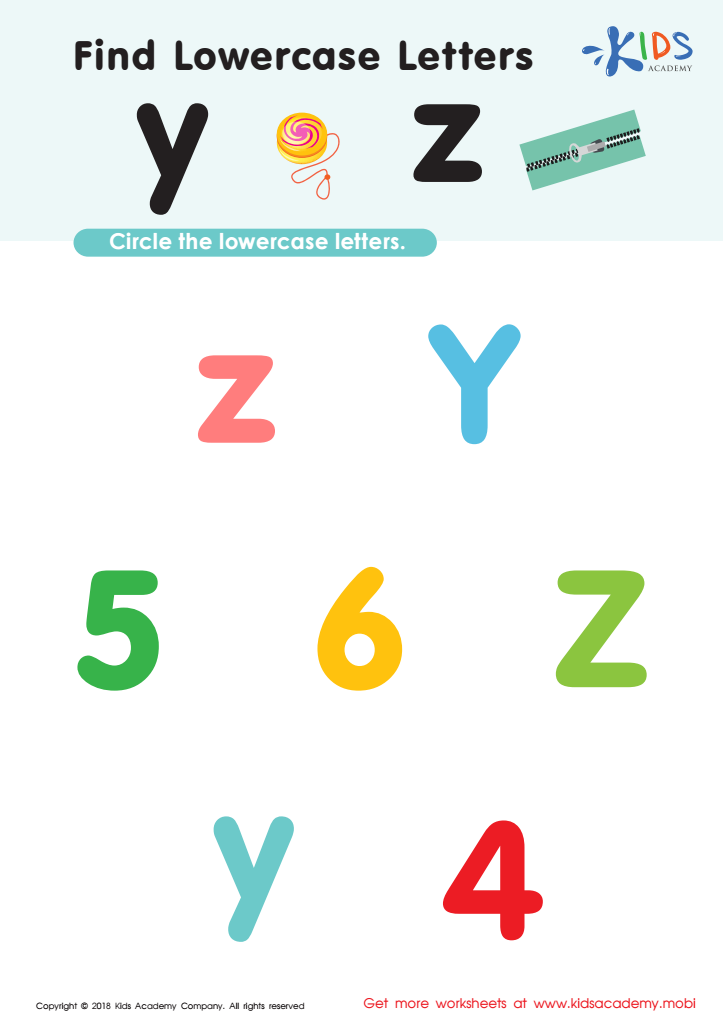
Find Lowercase Letters y z Worksheet
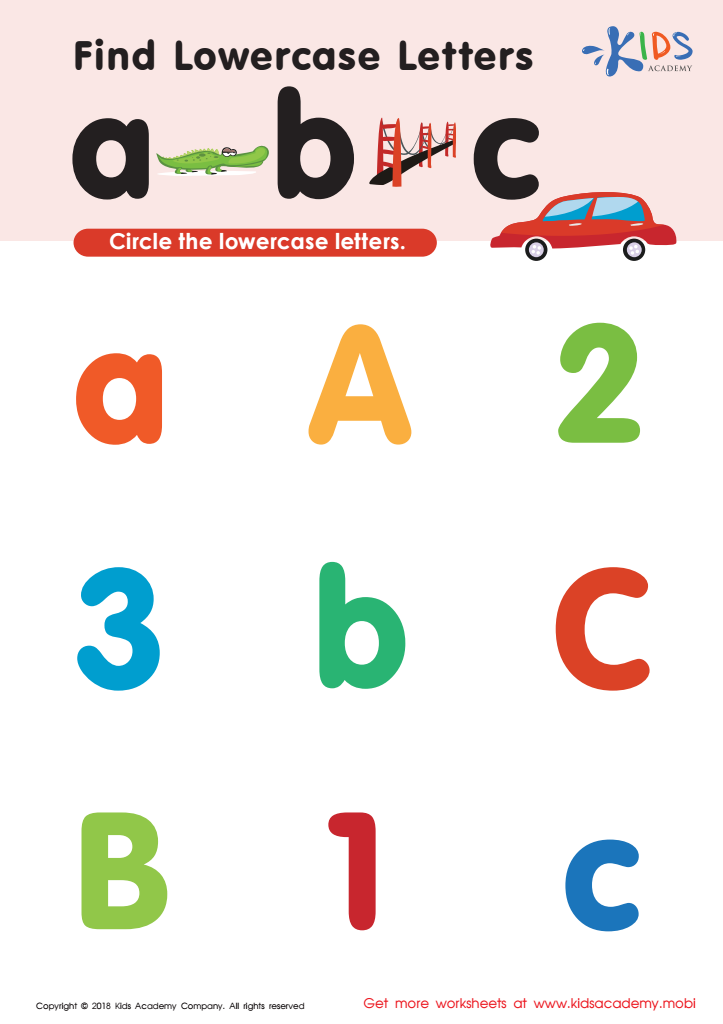
Find lowercase letters a b c Worksheet
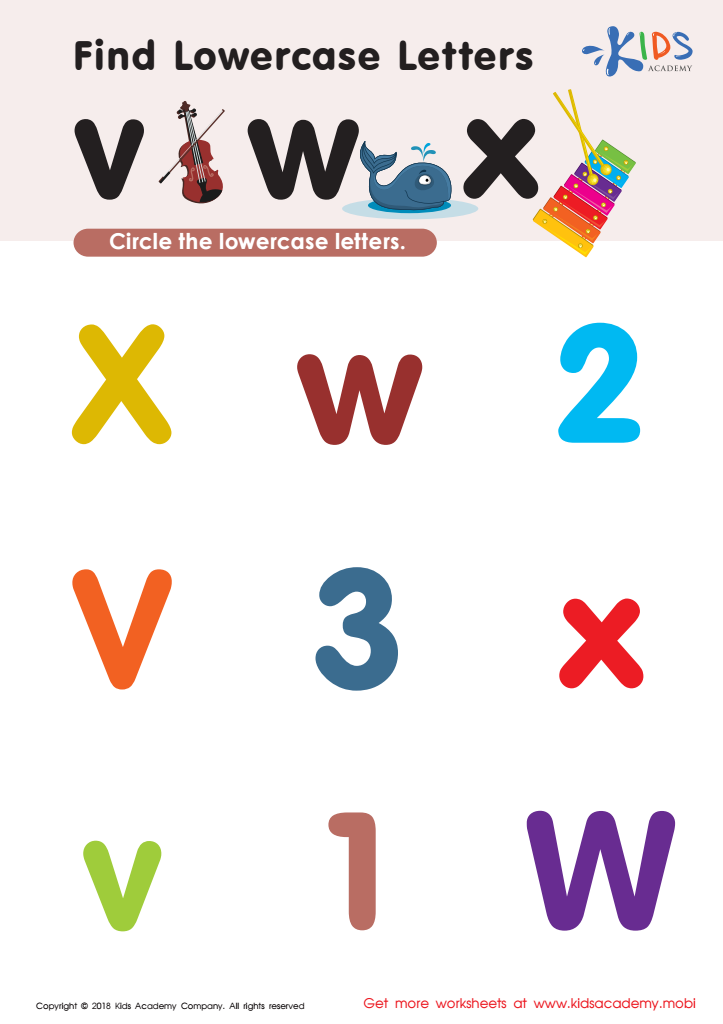
Find Lowercase Letters v w x Worksheet








Lowercase letter identification is a fundamental skill that serves as the basis for literacy development in six-year-olds. Proficiency in recognizing lowercase letters plays a crucial role in reading fluency, writing ease, and overall communication skills. Young learners encounter lowercase letters far more frequently in texts than uppercase forms, thus learning to identify them aids in their ability to decode words efficiently, which is vital for reading comprehension.
When children can easily recognize lowercase letters, they also tend to write more fluently, as recognition supports handwriting skills and letter formation. Furthermore, this foundational skill can boost children's confidence in their reading and writing abilities, encouraging them to engage more deeply with literacy activities.
For parents and teachers, fostering lowercase letter recognition ties directly to promoting lifelong learning. Early identification efforts can identify gaps in knowledge, allowing for timely intervention and support. In a world increasingly dominated by print, ensuring that children have a solid grasp of lowercase letter identification ensures they are equipped for academic success and effective communication in daily life. By prioritizing this skill, adults can help set children on a positive trajectory for literacy development, paving the way for their future educational experiences.








