
Reading skills improvement Normal Phonics Worksheets for 6-Year-Olds
4 filtered results
Difficulty Level
Grade
Age
-
From - To
Subject
Activity
Standards
Enhance your 6-year-old's reading skills with our tailored Normal Phonics Worksheets! Designed for young learners, these worksheets make phonics fun and engaging, helping to build confidence in reading. By focusing on letter sounds, blending, and word formation, children develop essential decoding skills, critical for early literacy. Our user-friendly worksheets encourage independent learning, while colorful illustrations capture attention and spark imagination. Perfect for classroom use or at-home practice, these resources provide a solid foundation for lifelong reading success. Boost your child’s reading capabilities today with our effective and enjoyable phonics worksheets, specifically crafted to nurture young minds. Start the journey to literacy!
Favorites
With answer key
Interactive
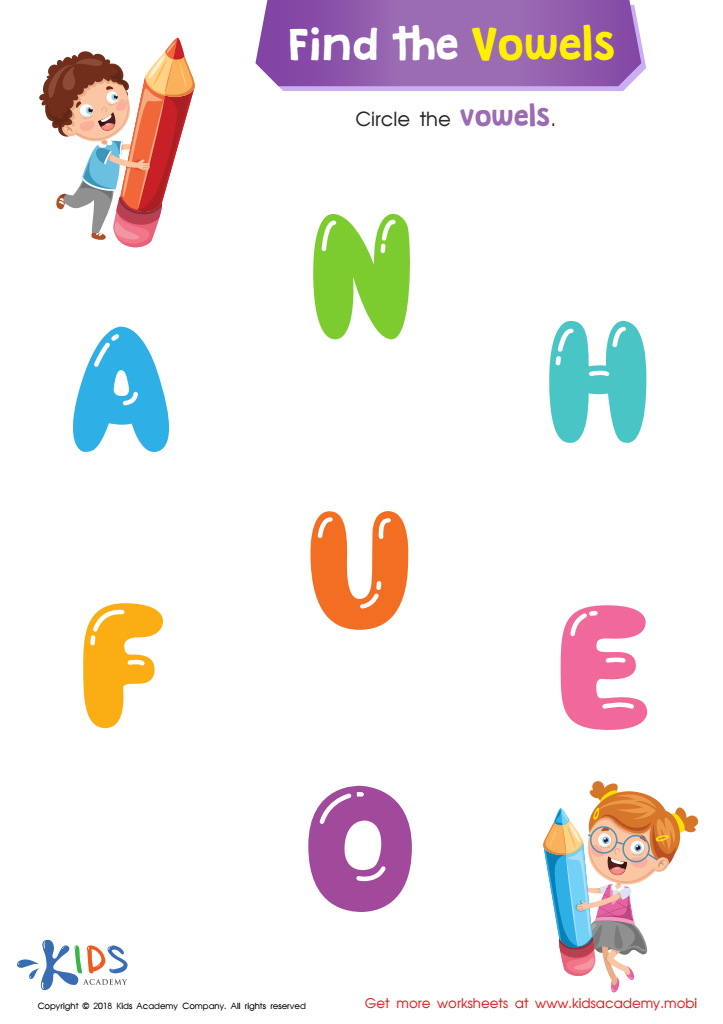
Find the Vowels Reading Worksheet
This worksheet helps kids identify vowels with bright colors and engaging activities to strengthen their visual discrimination and fine motor skills. Young learners will find it easy to succeed and be excited to keep reading!
 Assign to My Students
Find the Vowels Reading Worksheet
Worksheet
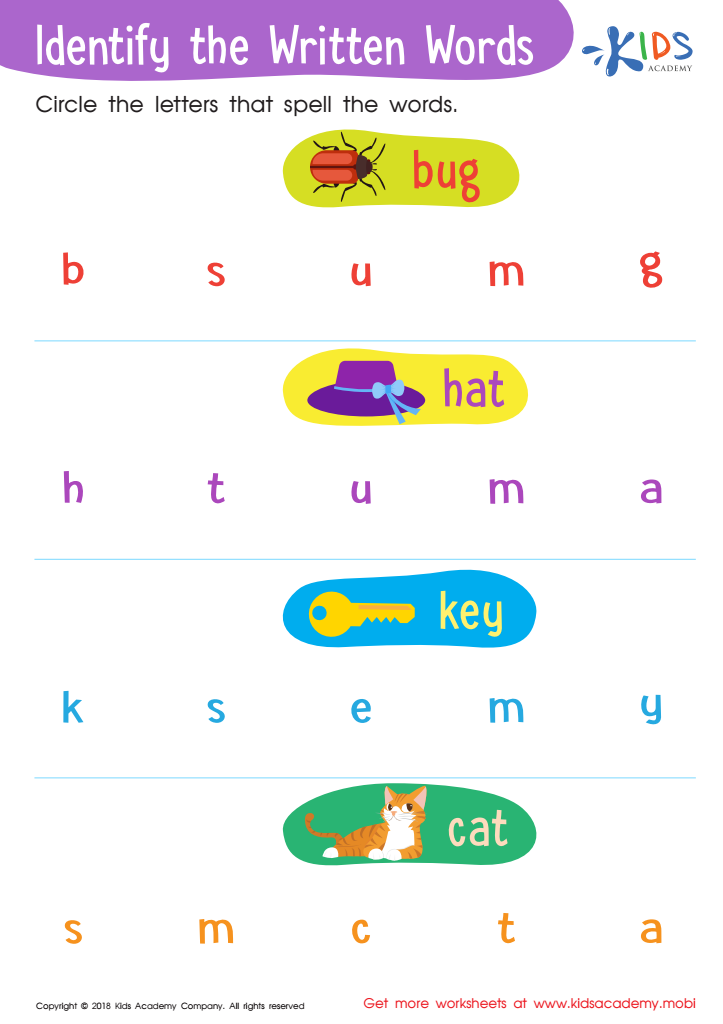
Identify the Written Words Worksheet
Have your students identify the objects on the printout, then spell the words. If they already know how to spell, this exercise should be easy. Help them circle the correct letters from the set to spell out the words. This is a great way to reinforce reading and spelling skills. Max 80 words.
Identify the Written Words Worksheet
Worksheet
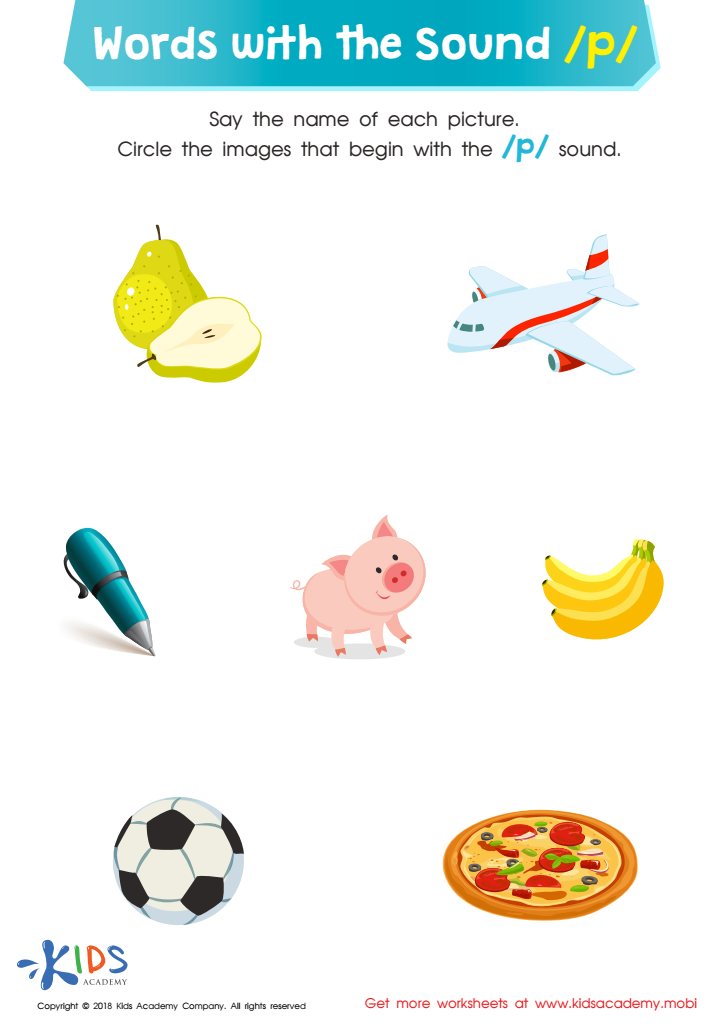
Words with sound p Reading Worksheet
Working on this fun worksheet? Name each picture aloud and listen carefully before circling those that start with the letter «p»! Pizza, pig, plane, or banana - practice phonics to help your child recognize the letter «p» sound for successful early reading and decoding!
Words with sound p Reading Worksheet
Worksheet
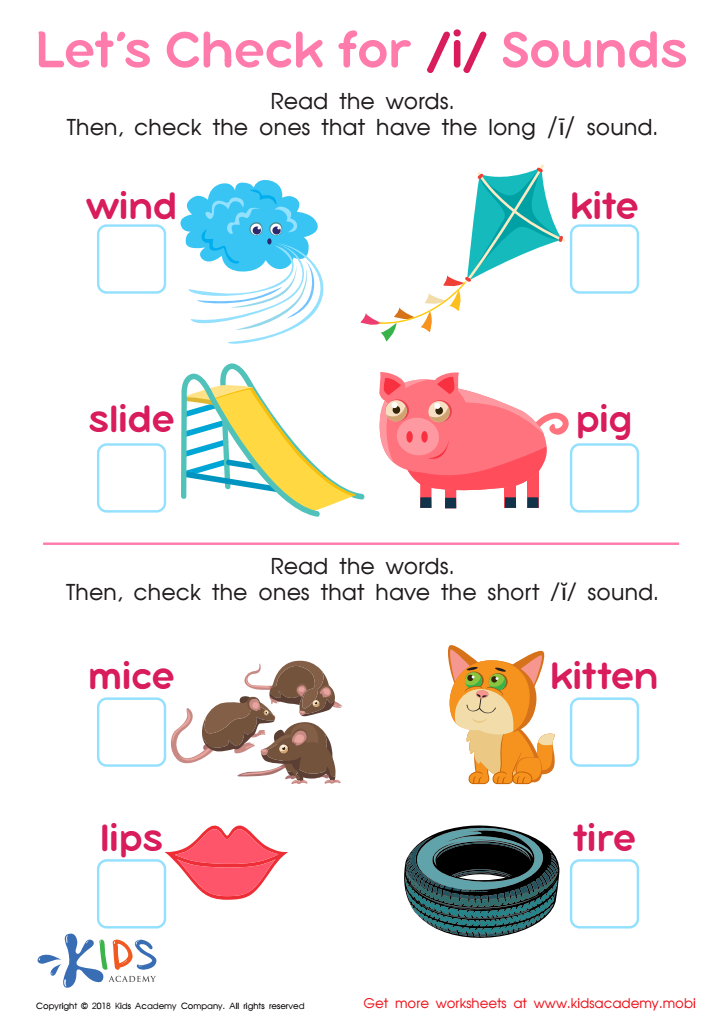
Let's Check for «i» Sounds Worksheet
This fun worksheet with pictures boosts phonics skills - differentiating between long «ī» and short «i» sounds in 1- and 2-syllable words. Kids use picture clues to read words, then check off the correct ones. It's a great way for new readers to practice early reading skills and find success on their own.
Let's Check for «i» Sounds Worksheet
Worksheet
Join Kids Academy for Free
Who is primarily going to use this learning content?








Parents and teachers should care deeply about improving reading skills through Normal Phonics for 6-year-olds because foundational literacy is critical for a child’s overall academic success and development. At this age, children are in a crucial stage of cognitive growth, and the ability to read proficiently lays the groundwork for future learning across all subjects.
Normal Phonics provides a systematic approach to teaching the relationships between letters and sounds, helping children decode words, recognize patterns, and read fluently. By mastering phonics, children gain confidence in their reading abilities, fostering a love for literacy that can lead to lifelong learning. Additionally, strong reading skills enhance comprehension, allowing children to process and understand information more effectively.
Furthermore, commitment to phonics instruction benefits less confident readers who may struggle with traditional reading methods. It promotes problem-solving skills as children learn to break down complex words and sentences. For parents and teachers, investing in improving reading skills means empowering children with the tools they need to navigate the world successfully. Consequently, nurturing these skills at an early age fosters independence, critical thinking, and a positive attitude towards learning both in and outside the classroom.







