Vocabulary Enrichment Normal Phonics Worksheets for 6-Year-Olds
3 filtered results
-
From - To
Enhance your child's language skills with our Vocabulary Enrichment Normal Phonics Worksheets designed for 6-year-olds. These engaging worksheets from Kids Academy focus on expanding young learners' vocabularies while solidifying their phonics foundations. Each activity combines fun learning with essential reading skills, promoting cognitive development and a love for language. By integrating colorful visuals and interactive tasks, our worksheets make learning exciting and effective. Tailored specifically for early learners, these resources help children recognize word patterns, improve pronunciation, and build a robust vocabulary. Unlock your child's potential with our expertly crafted phonics worksheets today!
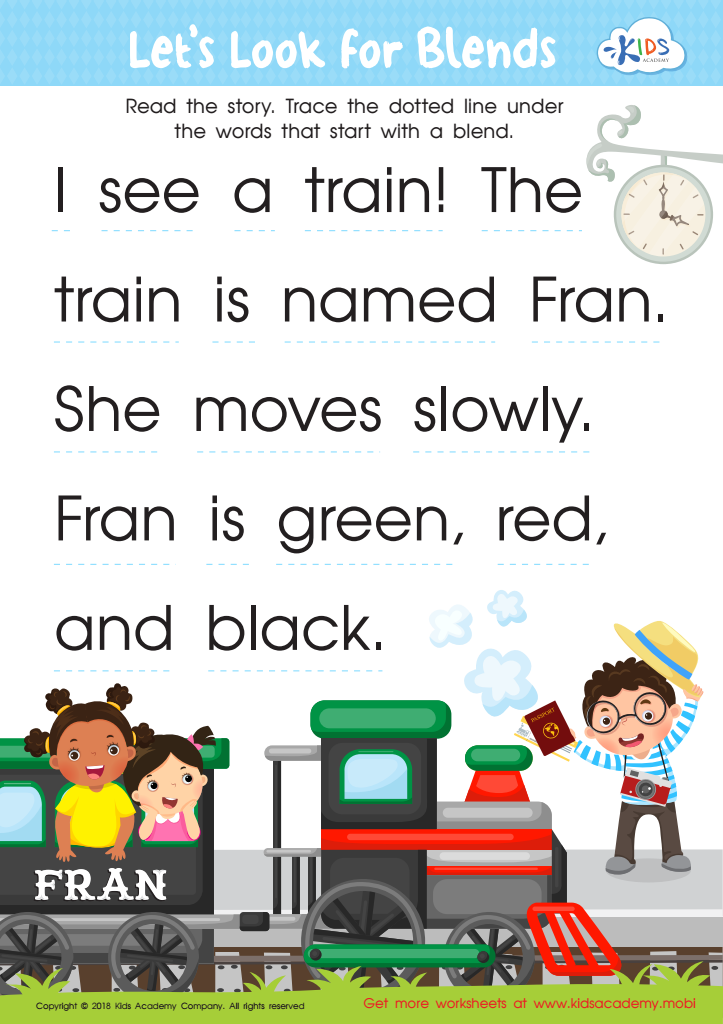
Let's Look for Blends Worksheet
 Assign to My Students
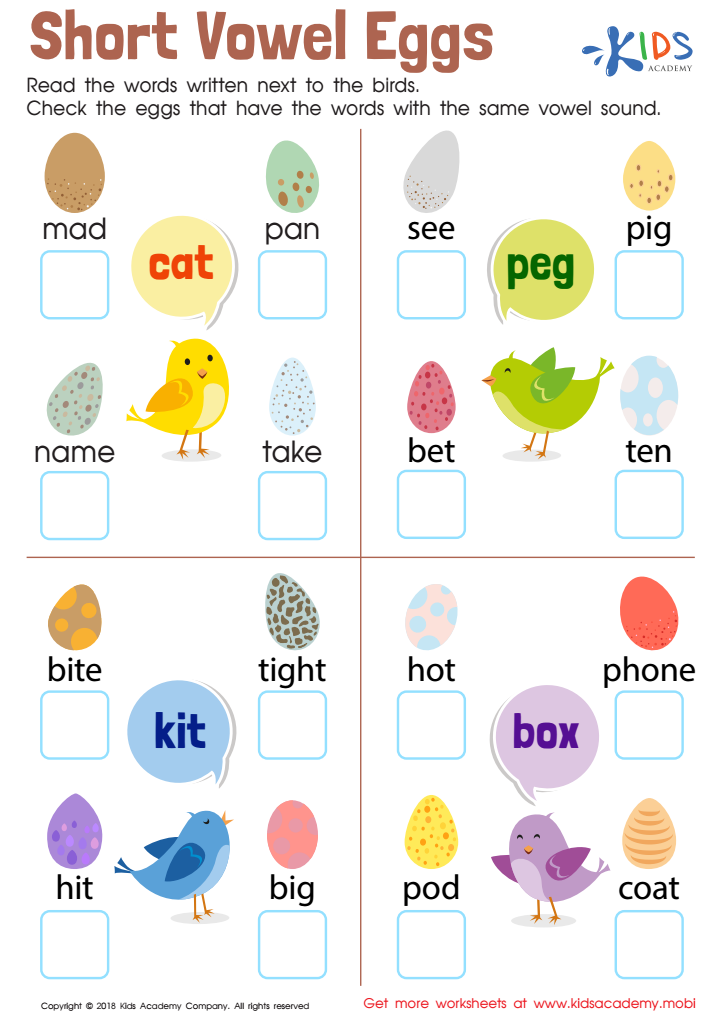
Short Vowel Eggs Worksheet
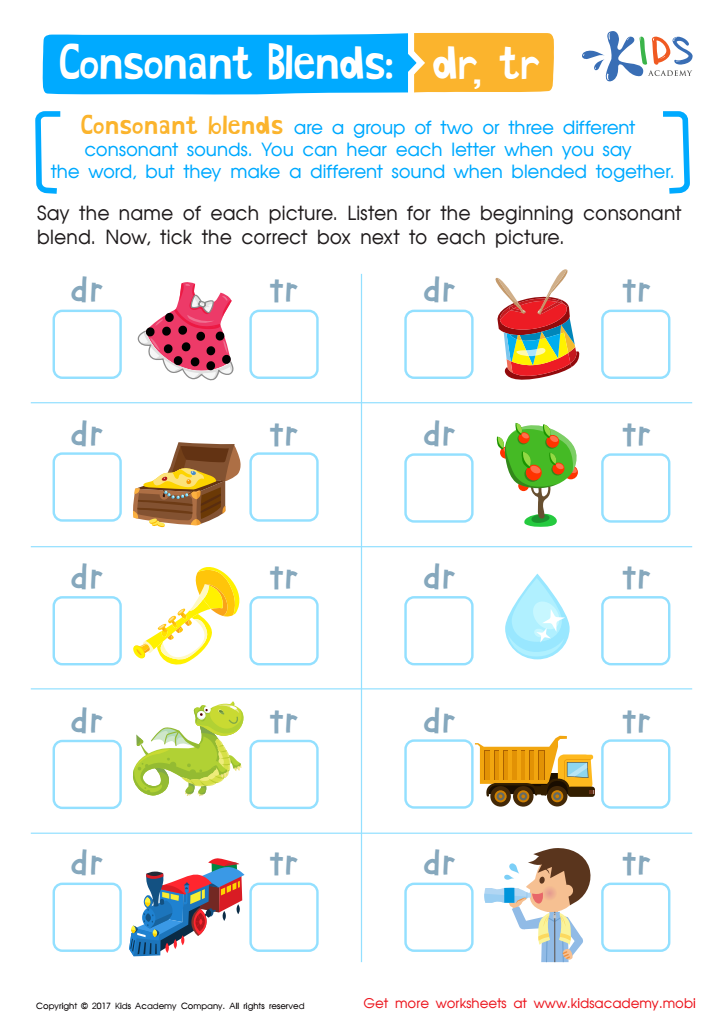
Consonant Blends: "Dr" and "Tr" Printable








Vocabulary enrichment and normal phonics are fundamental aspects of early literacy education for 6-year-olds, and both deserve significant attention from parents and teachers. Firstly, vocabulary enrichment helps young children develop a broad word bank, essential for reading comprehension and effective communication. When children are exposed to a wide range of words, they can better understand the texts they read, which fosters a love for reading and learning. A robust vocabulary is also linked to better academic performance across subjects, as it aids in understanding instructions, questions, and content-specific language.
Normal phonics instruction, on the other hand, focuses on teaching the relationship between sounds and their corresponding letters or groups of letters. This knowledge is crucial for developing decoding skills, which are the ability to sound out words using phonemic awareness. Strong phonics skills build the foundation for fluent reading, reducing the struggle with unfamiliar words and improving accuracy and speed in reading.
Together, vocabulary enrichment and phonics instruction equip young learners with the tools they need to become confident, proficient readers. By emphasizing these areas, parents and teachers can facilitate smoother transitions to higher levels of education, instill a lifelong love for language and reading, and support overall cognitive development.







