Reading comprehension Normal Short Vowels Worksheets for 6-Year-Olds
5 filtered results
-
From - To
Unlock your child's reading potential with our Reading Comprehension Normal Short Vowels Worksheets designed for 6-year-olds. These engaging worksheets help young learners master short vowel sounds through fun and interactive activities. Each worksheet focuses on enhancing reading comprehension, decoding skills, and vocabulary-building. Kids will delight in completing exercises that blend simple word recognition with contextual reading, aiding in a smoother transition to more complex texts. Perfect for reinforcing classroom learning or as part of a homeschooling curriculum, our worksheets provide the foundation for lifelong literacy success. Explore our scientifically crafted resources today and watch your child’s confidence in reading soar!
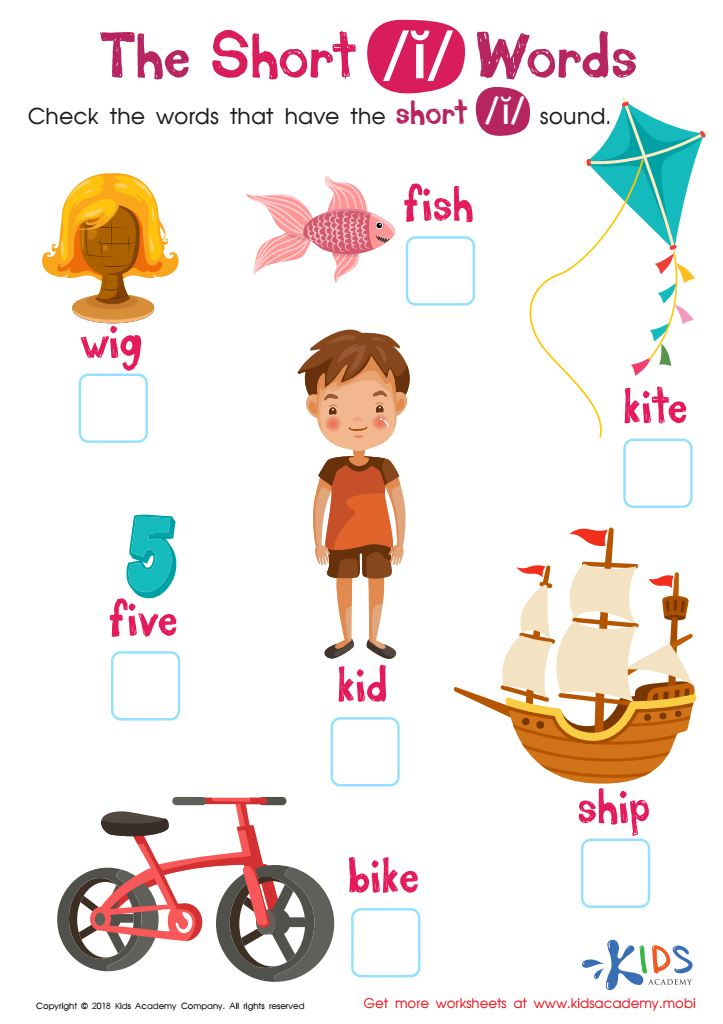
The Short I Words Reading Worksheet
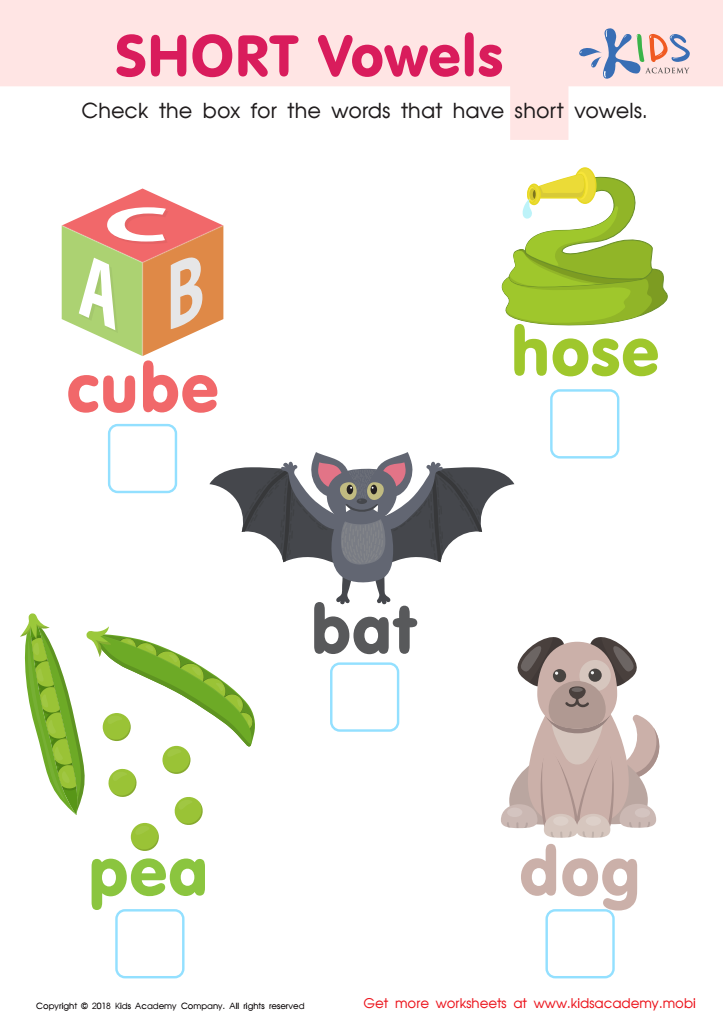
short vowels Worksheet
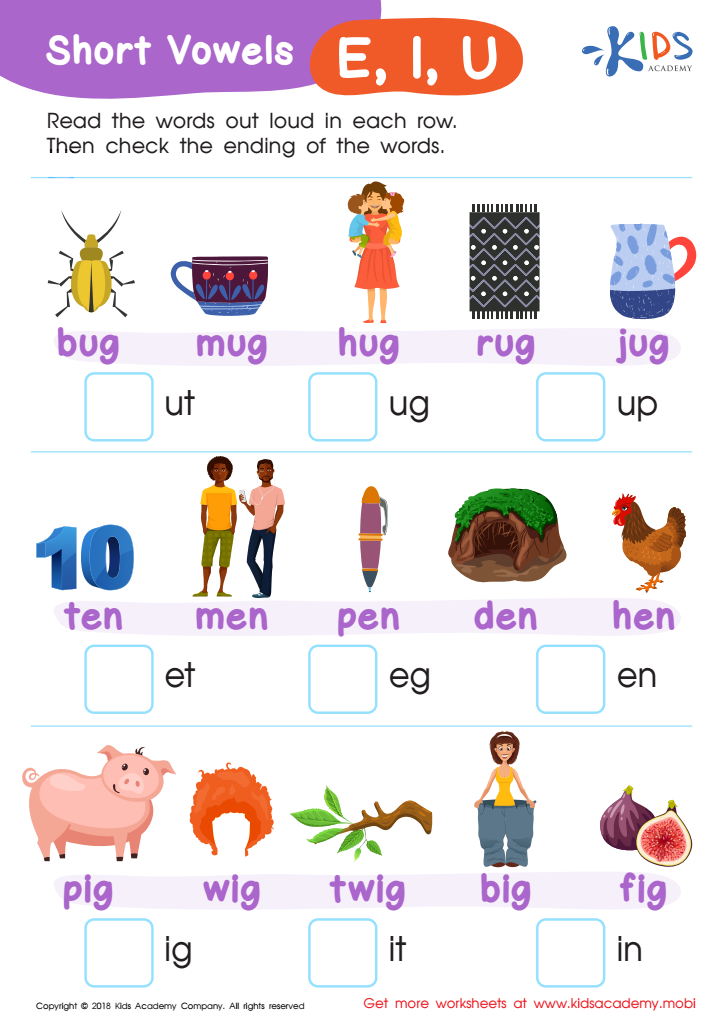
Short Vowels /e/, /i/, and /u/ Worksheet
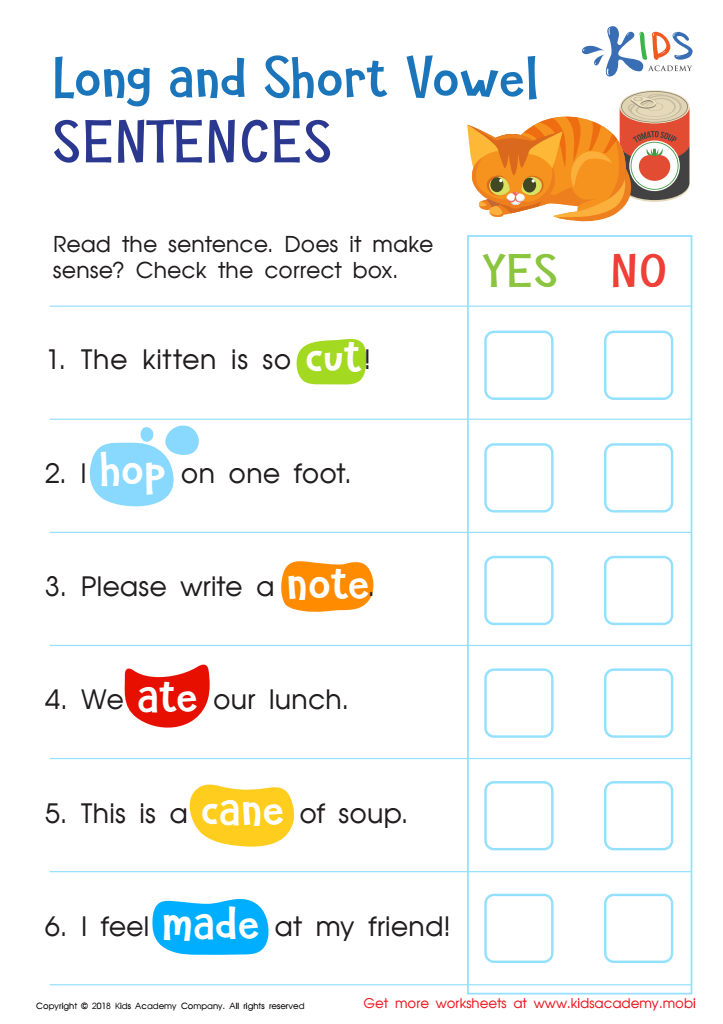
Long and Short Vowel Sentences: Assessment Worksheet
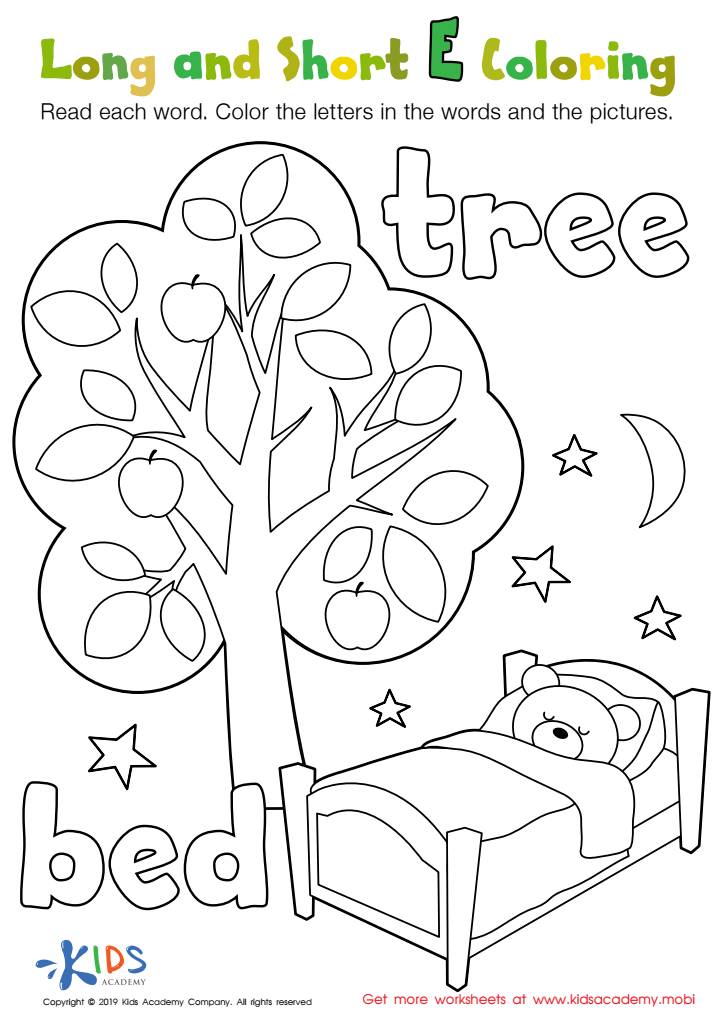
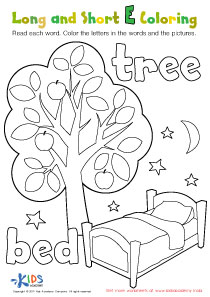
Long and Short E Worksheet
 Assign to My Students



Parents and teachers should pay significant attention to reading comprehension and normal short vowels for 6-year-olds because these foundational skills are critical for early literacy development and academic success. At age six, children are typically in first grade, a crucial period when they transition from recognizing letters to reading simple texts independently. Short vowels (a, e, i, o, u) are the building blocks of many basic words. Mastery of these sounds allows children to decode and understand words more easily.
Reading comprehension, on the other hand, ensures they not only read words but grasp the meaning behind them. This understanding builds their vocabulary, supports cognitive development, and enhances their ability to follow instructions and communicate effectively. Strong reading skills in early childhood are linked to higher academic achievement across all subjects and greater self-confidence in learning.
Teachers and parents play a vital role by providing engaging and age-appropriate reading materials, creating a supportive environment, and offering guided practice. Bottom line, emphasizing these skills sets children on a path to becoming proficient readers, sparking a lifelong love for reading and learning. Investing time and effort into developing reading comprehension and short vowel recognition equips children with essential tools for future educational and personal success.