Mental math practice Normal Worksheets for 6-Year-Olds
5 filtered results
-
From - To
Enhance your child's arithmetic skills with our "Mental Math Practice Normal Worksheets" designed specifically for 6-year-olds. These engaging worksheets are crafted to build confidence and reinforce essential math concepts through fun and interactive learning. Perfect for home or classroom use, these worksheets focus on various mental math exercises, helping young learners practice addition, subtraction, and simple problem-solving. By incorporating colorful illustrations and relatable scenarios, children will find joy in mastering mental math. Equip your little ones with vital math skills that form the foundation for their academic journey. Download our worksheets today and watch them thrive in their math proficiency!
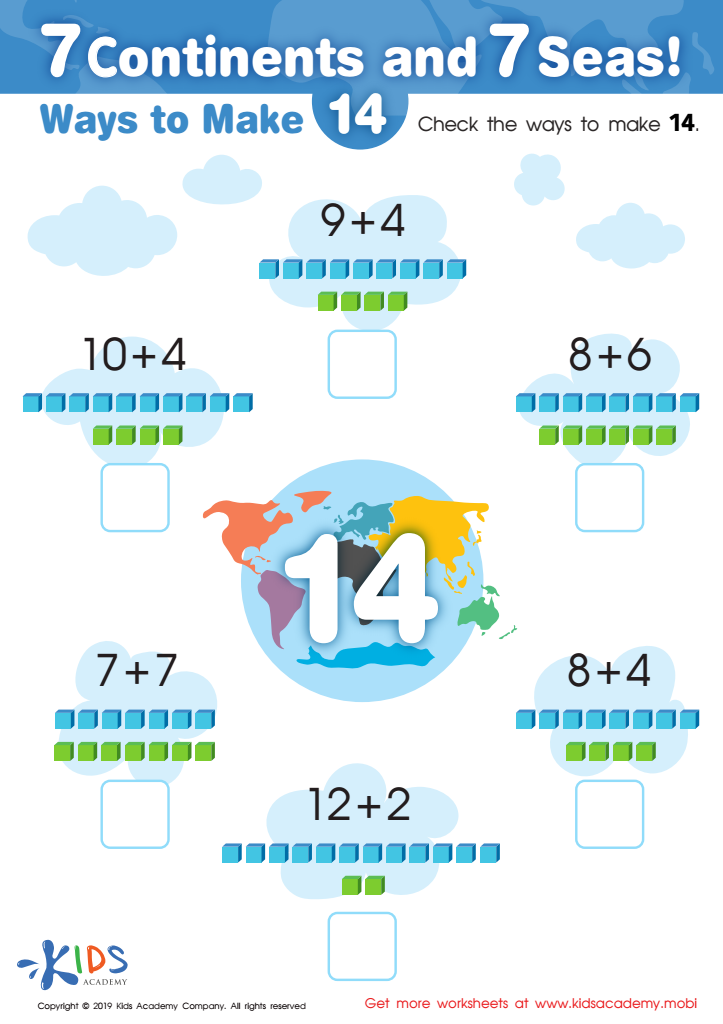
7 Continents and 7 Seas Worksheet
 Assign to My Students
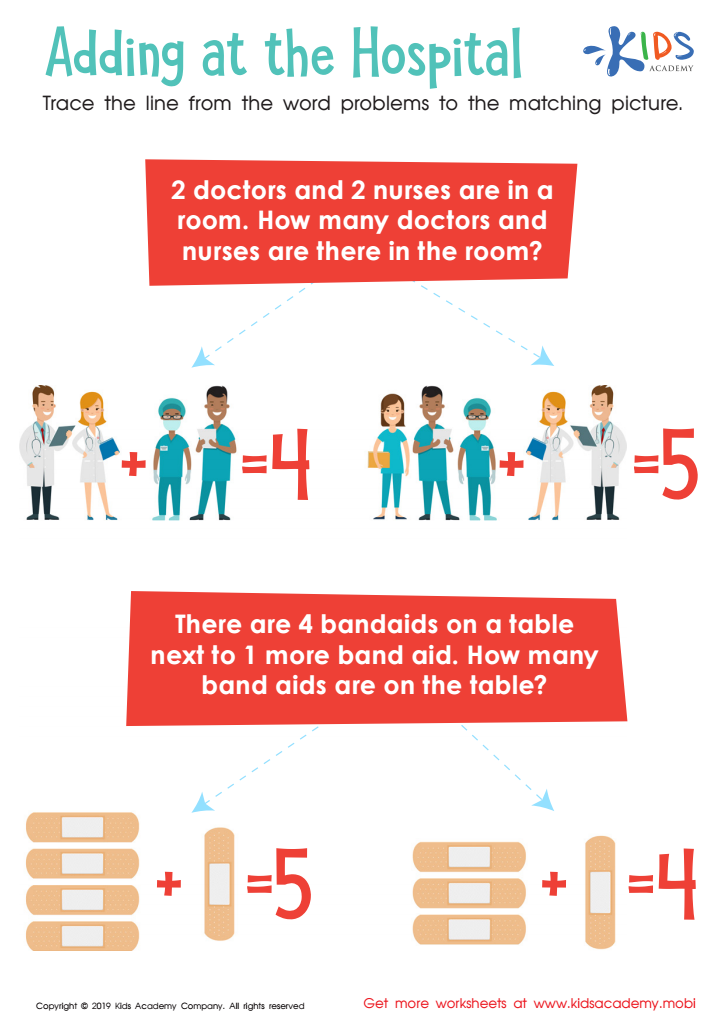
Adding at the Hospital Worksheet
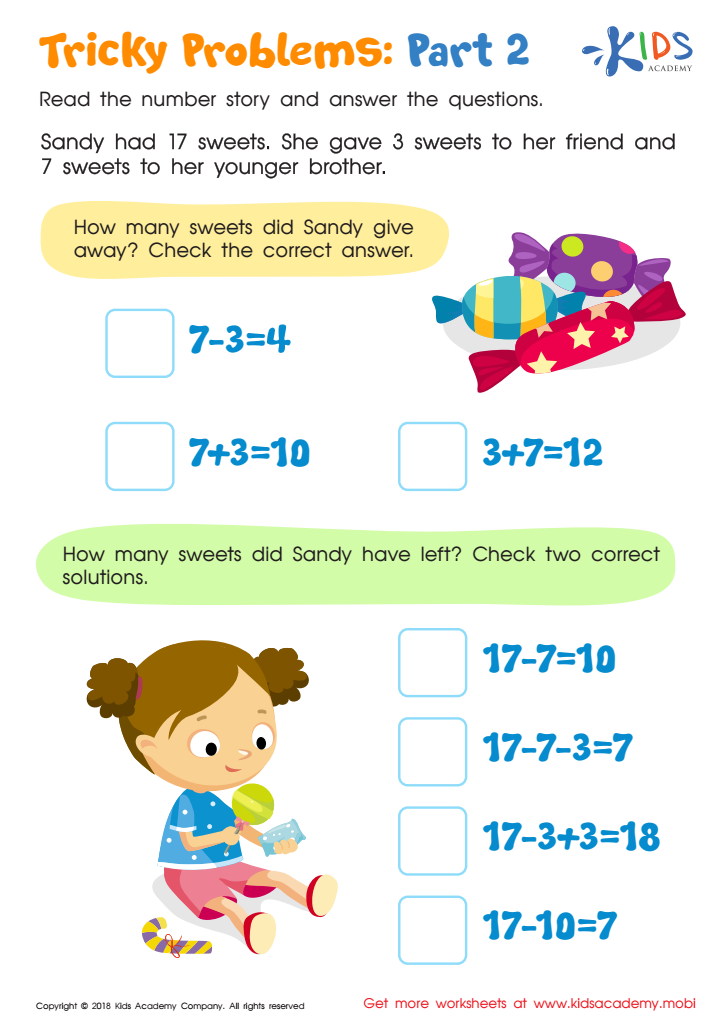
Tricky Problems Worksheet: Part 2
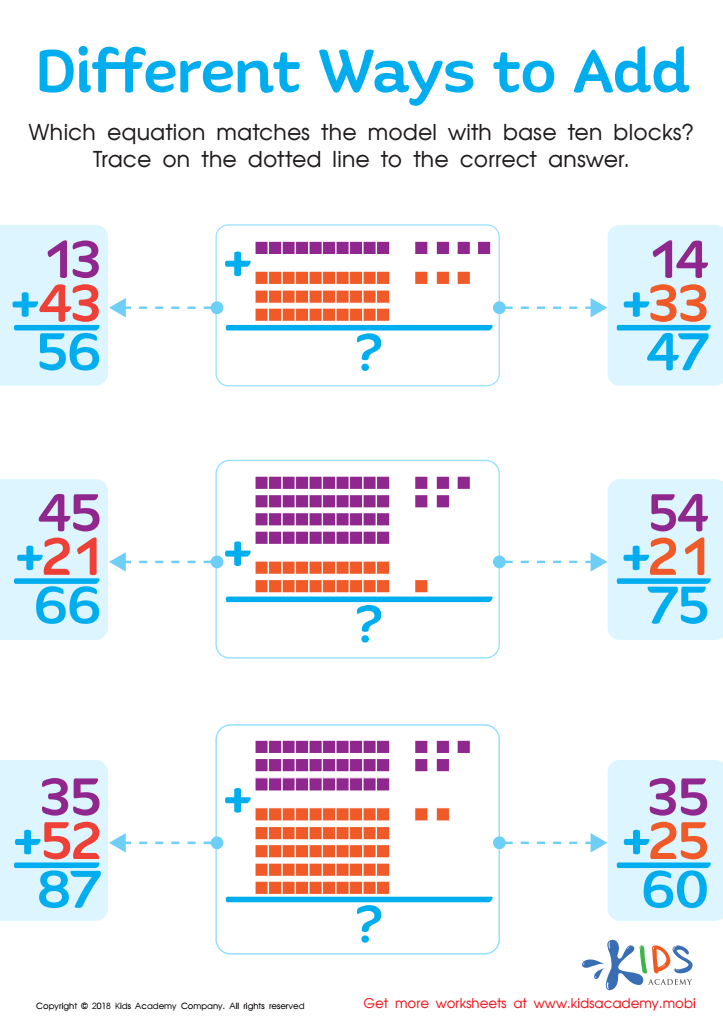
Different Ways to Add Worksheet
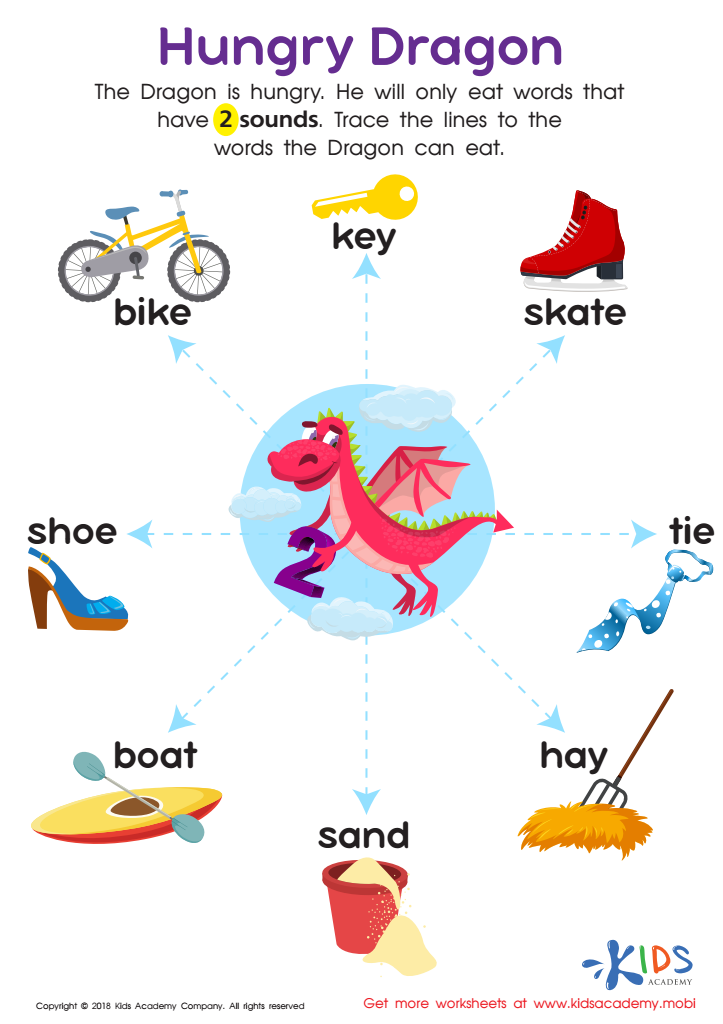
Hungry Dragon Worksheet





Mental math practice is crucial for 6-year-olds as it lays the foundation for their future mathematical abilities. At this developmental stage, children are naturally curious and eager to explore numbers, making it an ideal time to foster a strong mathematical mindset. Engaging in mental math builds confidence, allowing children to tackle mathematical problems with ease and independence.
Practicing mental math enhances cognitive skills, such as problem-solving, logical reasoning, and critical thinking. It encourages children to manipulate numbers in their heads, promoting numerical fluency—a critical skill for more complex mathematics they will encounter later. Moreover, mental math develops memory and concentration, as children must retain information and visualize numbers.
Additionally, mental math can be a fun and interactive experience, transforming learning into a game-like environment that keeps young learners motivated. It also strengthens communication skills, as children learn to articulate their reasoning and approach to solving problems.
Involving parents and teachers in mental math routines creates a supportive learning environment, reinforcing the value of math in everyday life. By prioritizing mental math practice, we equip children with essential skills that not only benefit their academic journey but also foster a lifelong appreciation for mathematics.








