Uppercase identification Normal Worksheets for 6-Year-Olds
5 filtered results
-
From - To
Discover our engaging Uppercase Identification Normal Worksheets designed specifically for 6-year-olds! These worksheets provide a fun and interactive way for young learners to recognize and differentiate uppercase letters. Each sheet features colorful illustrations and a variety of activities that support alphabet familiarity, such as matching, tracing, and coloring. Our thoughtfully crafted materials not only reinforce letter recognition skills but also promote fine motor development and boost confidence in early literacy. Perfect for classroom settings or at-home learning, these worksheets are an invaluable resource for parents and educators alike. Introduce your child to the wonderful world of uppercase letters today!
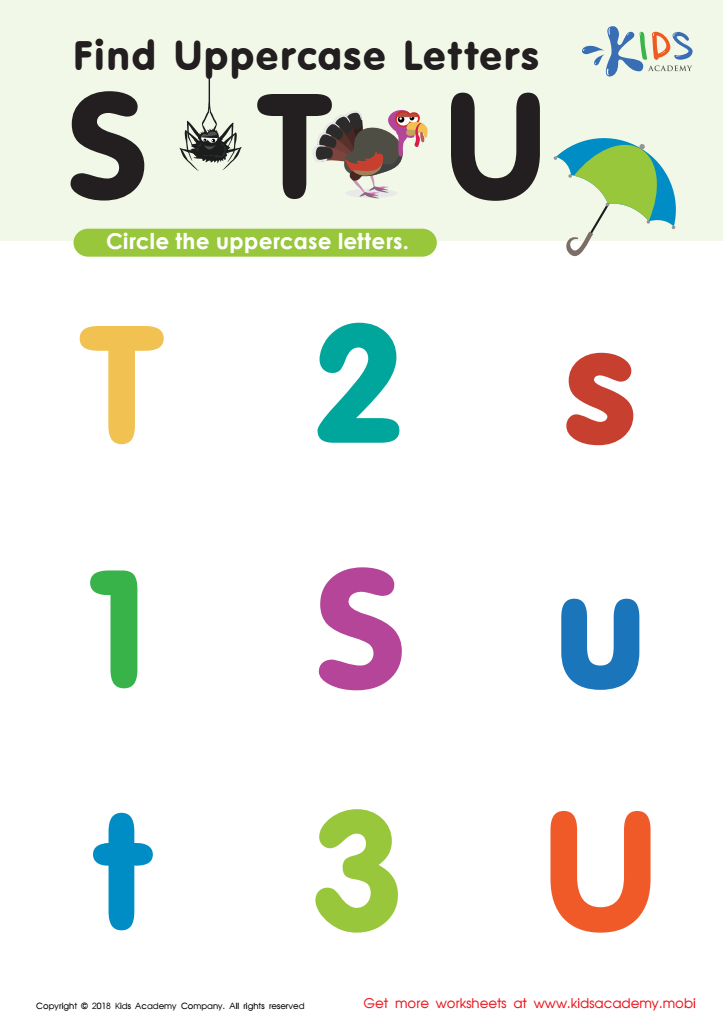
Find Uppercase Letters Worksheet
 Assign to My Students
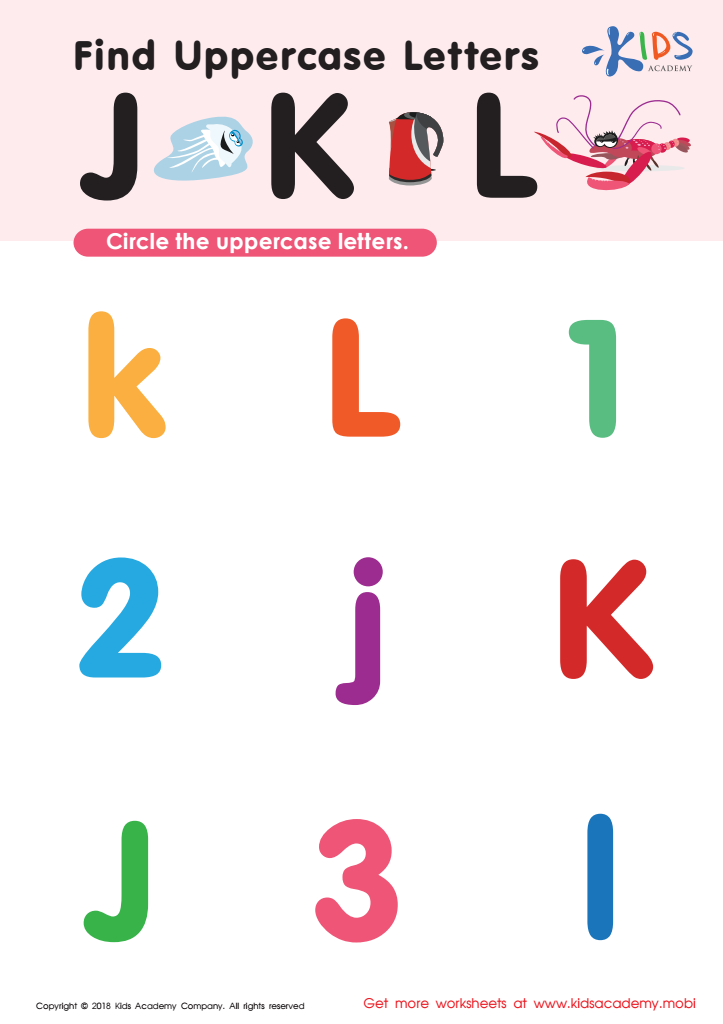
Find Uppercase Letters J, K, and L Worksheet

Find Uppercase Letters A, B, and C Worksheet
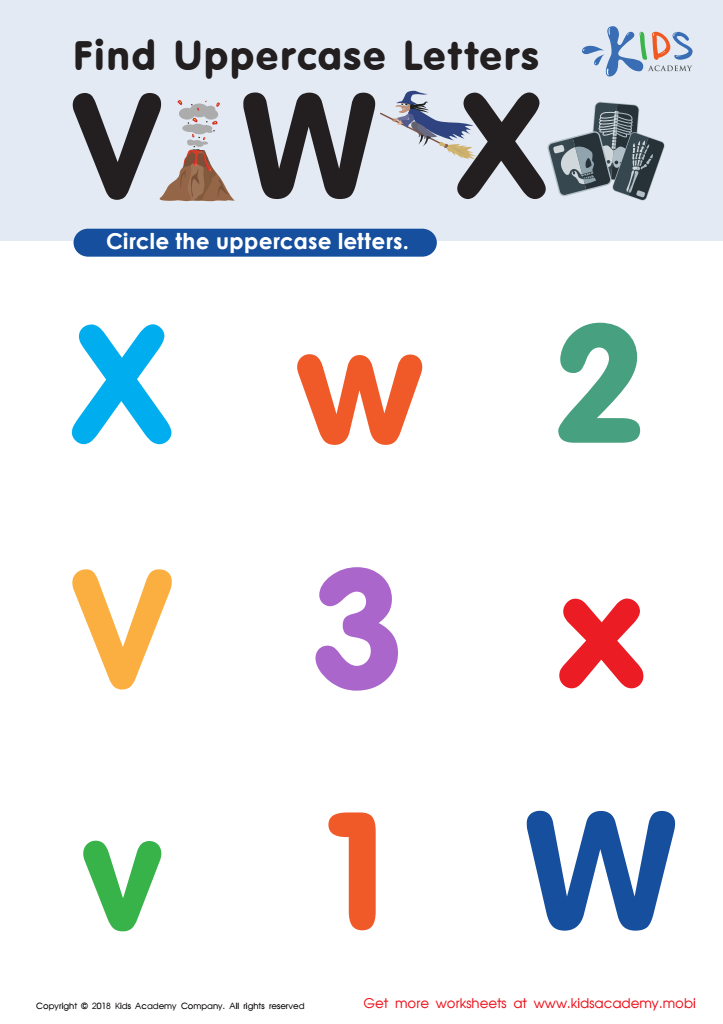
Find Uppercase Letters V, W, X Worksheet
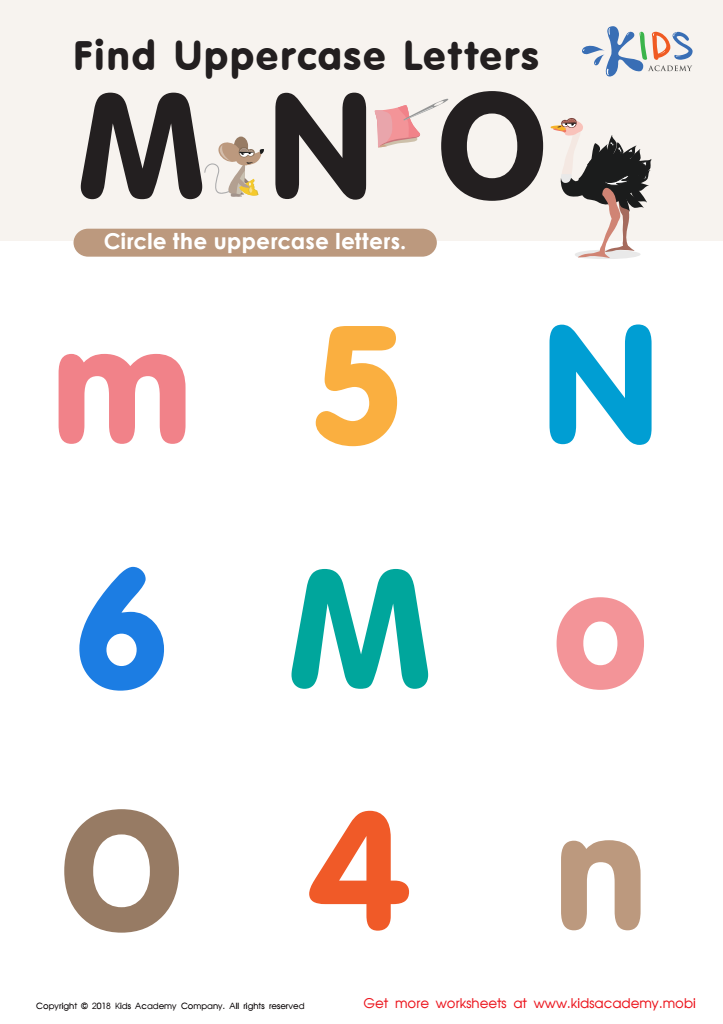
Find Uppercase Letters M, N, and O Worksheet






Uppercase letter identification is a crucial milestone in early literacy development for 6-year-olds. Identifying uppercase letters lays the foundation for reading and writing skills, which are essential for academic success. At this age, children are transitioning from preschool to primary education, where they begin to decode words and understand the written language. Recognizing uppercase letters enables them to distinguish between concepts like beginning versus middle and ending sounds in words.
Moreover, uppercase letters often serve as symbols of names, places, and important concepts, making their identification critical for comprehension. When children master uppercase letter recognition, they gain confidence in their ability to communicate effectively through writing.
Parents and teachers play a vital role in fostering this skill. By implementing engaging activities, such as alphabet songs, games, and reading aloud, they can create a supportive and dynamic learning environment. Additionally, when children can identify uppercase letters, they are better prepared for transitions into more complex phonics and spelling lessons. Ultimately, upper case letter identification is not just an academic goal; it encourages children to grow literacy skills that will serve them throughout their lives, promoting a lifelong love for reading and writing.








