Number Recognition Normal Addition & Subtraction Worksheets for 6-Year-Olds - Page 2
28 filtered results
-
From - To
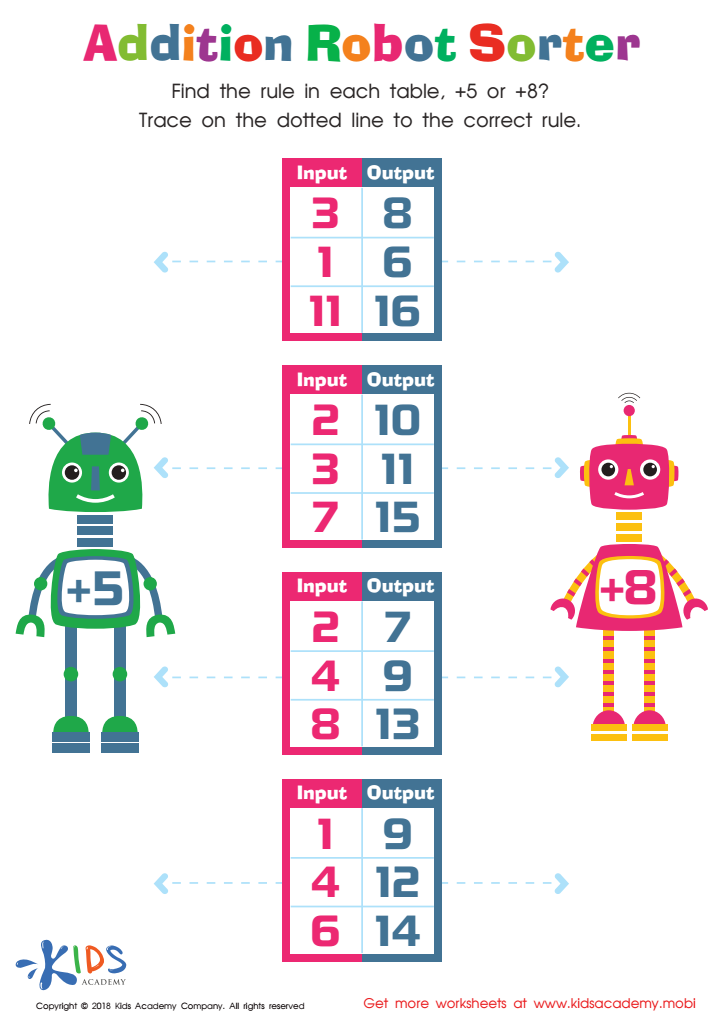
Addition Robot Sorter Worksheet
 Assign to My Students
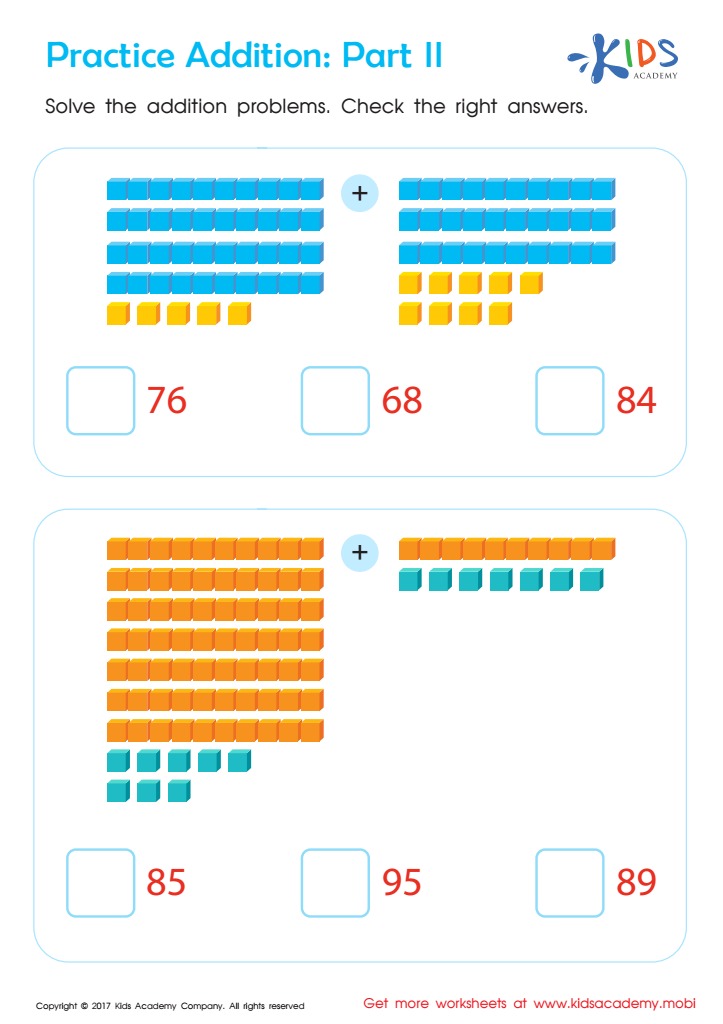
Practice Addition: Part 2 Worksheet
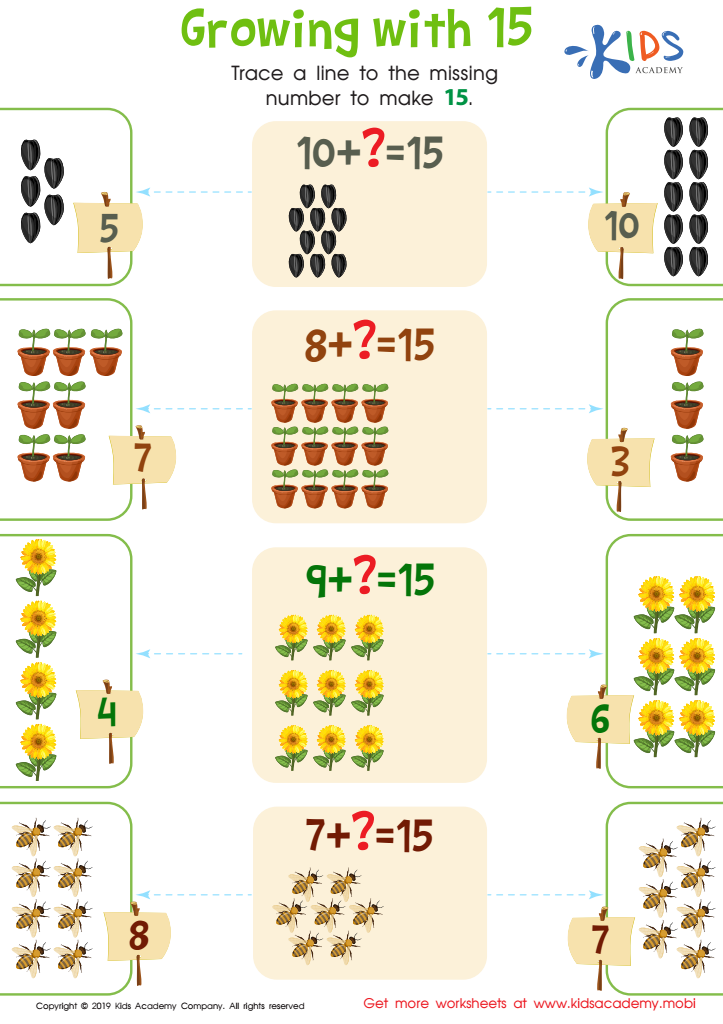
Growing with 15 Worksheet
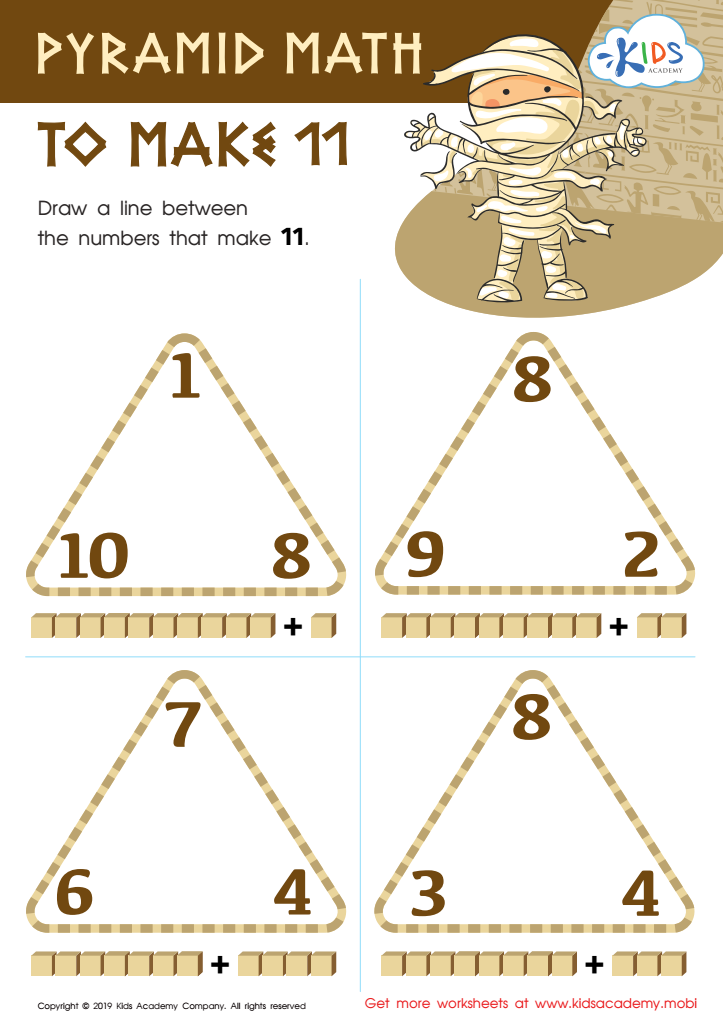
Pyramid Math to Make 11 Worksheet





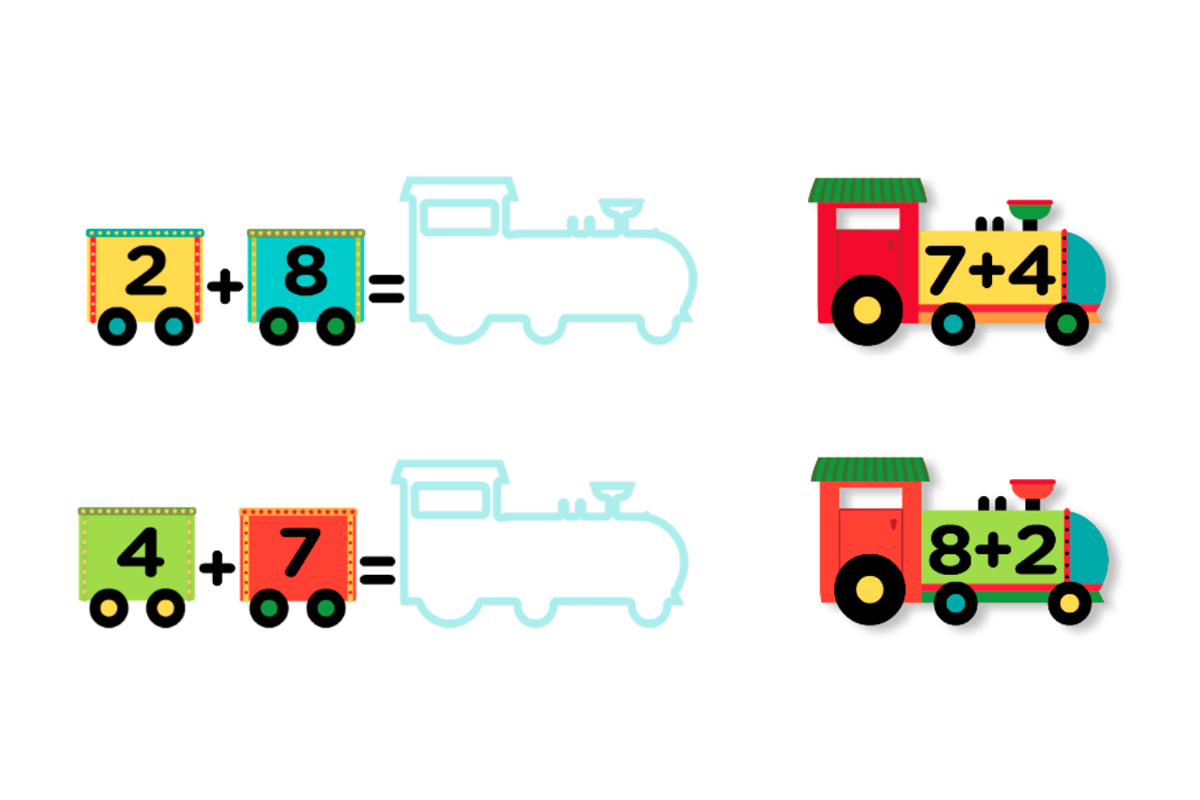


Understanding number recognition, as well as basic addition and subtraction, is fundamental for 6-year-olds as they begin their journey into mathematics. At this stage, children are developing crucial cognitive skills, and grasping these basic math concepts sets a strong foundation for future learning.
Firstly, number recognition helps children make sense of the world around them. It allows them to identify, understand, and use numbers in daily life—whether reading a clock, recognizing ages, or counting objects. This ability aids in enhancing their confidence and independence.
Secondly, mastering addition and subtraction at an early age opens the door to more complex mathematical concepts. These operations are the building blocks of arithmetic and are necessary for understanding next-level math principles. Early proficiency in these areas can stimulate a child’s logical thinking and problem-solving abilities.
From a parent’s or teacher’s perspective, ensuring that a child understands and practices these skills means actively contributing to their academic success. This support can alleviate future struggles or educational gaps. Moreover, engaging children in fun, interactive math activities fosters a positive attitude towards learning and nurtures their curiosity. Hence, integrating these skills into early childhood education not only equips children with essential tools for academic achievement but also contributes significantly to their overall cognitive and emotional development.








