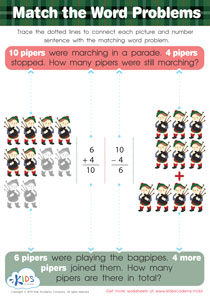
Problem-solving abilities Normal Addition Worksheets for 6-Year-Olds
4 filtered results
-
From - To
Our "Problem-solving Abilities: Normal Addition Worksheets for 6-Year-Olds" are designed to engage young learners in practical math practice, enhancing their problem-solving skills while reinforcing basic addition concepts. Specially curated for first graders, these worksheets offer a variety of simple, yet effective addition problems that gradually increase in complexity. Through colorful and engaging tasks, children develop critical thinking and analytical skills necessary for tackling addition operations. Perfect for both classroom use and home practice, these worksheets aim to build a strong mathematical foundation, boosting confidence and proficiency in young students as they master addition through fun, structured exercises.
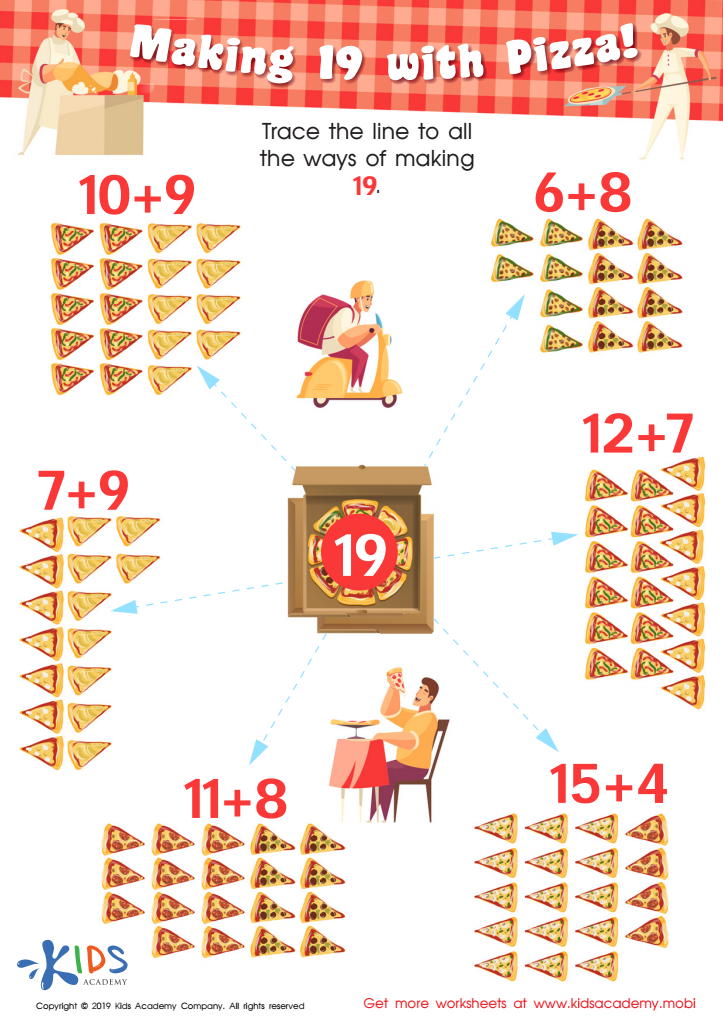
Making 19 with Pizza! Worksheet
 Assign to My Students
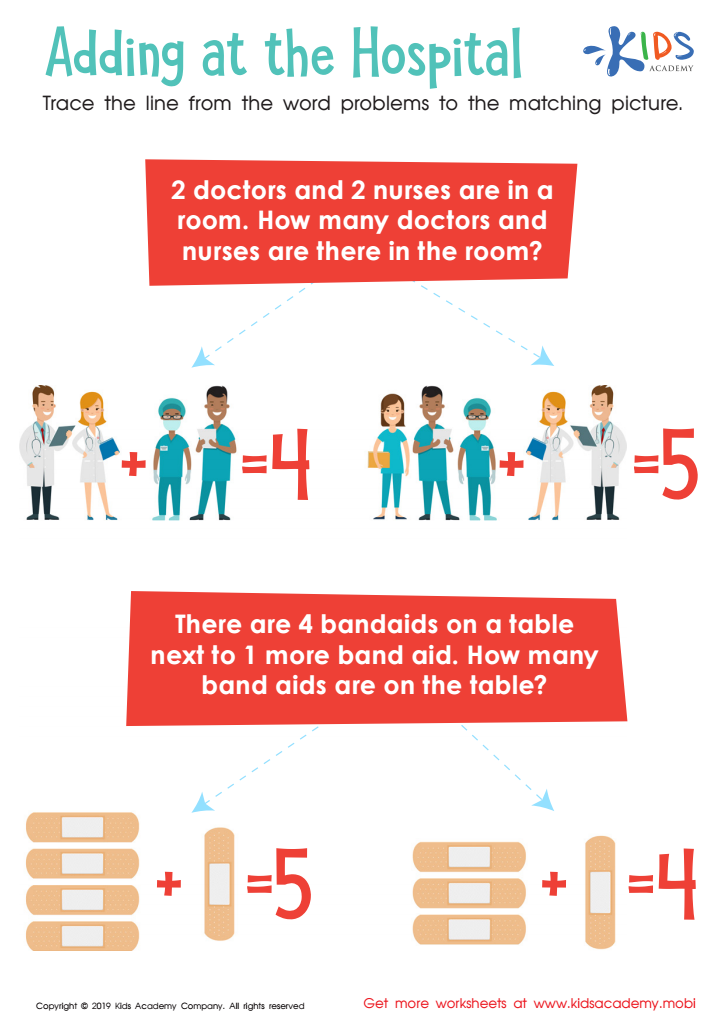
Adding at the Hospital Worksheet
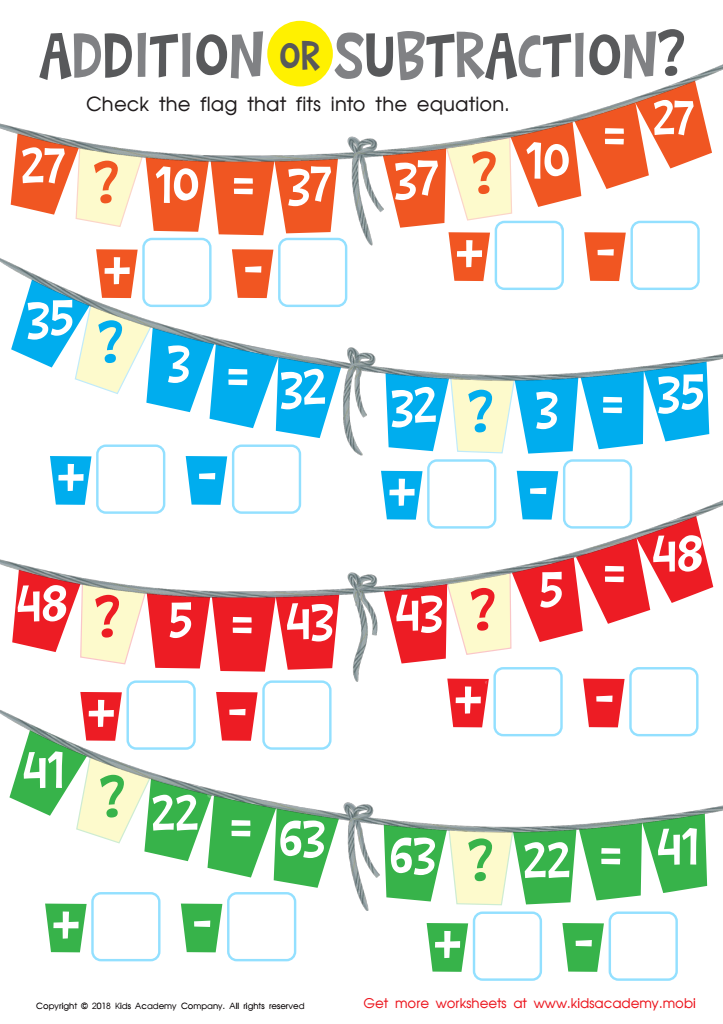
Addition or Subtraction? Worksheet
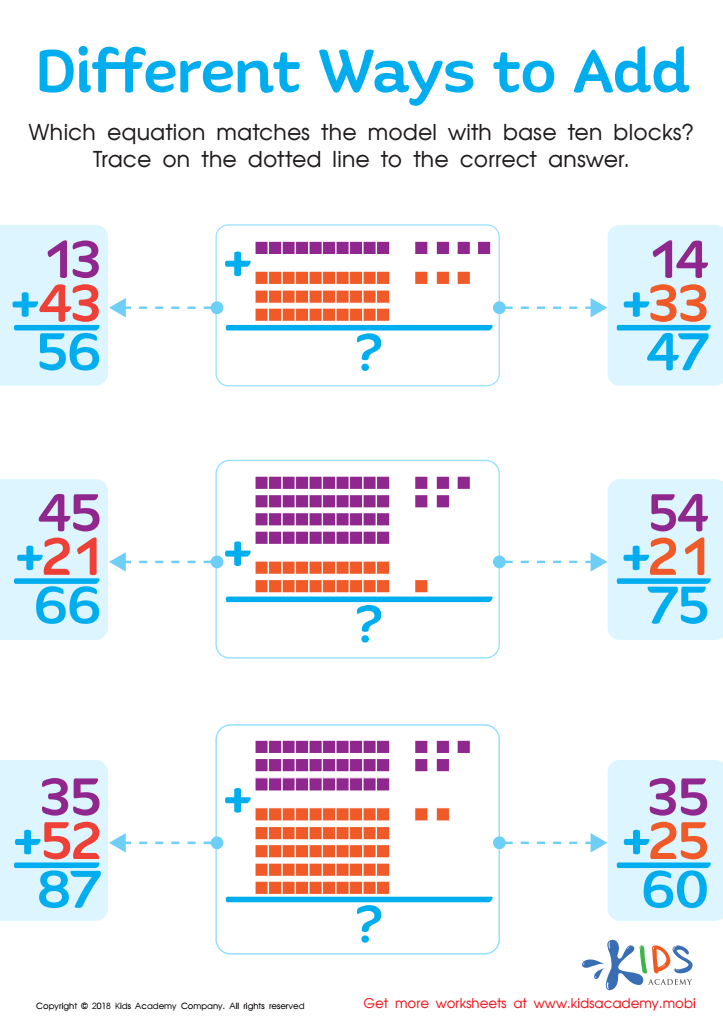
Different Ways to Add Worksheet


.jpg)





Problem-solving abilities in normal addition for 6-year-olds are crucial for several reasons. First, early mastery of addition forms the foundation for more advanced mathematical concepts like subtraction, multiplication, and division. By ensuring children are proficient in simple addition, parents and teachers prepare them for future academic success.
Second, developing problem-solving skills helps 6-year-olds enhance their critical thinking. When they solve addition problems, they learn to analyze situations, consider various solutions, and choose the best approach. This critical thinking is not limited to math; it spills over into reading comprehension, science, and everyday decision-making.
Moreover, early addition problem-solving nurtures confidence. When children successfully solve problems, they build a sense of achievement and self-assurance. These feelings of competence can foster a positive attitude toward school and learning in general, which is essential for lifelong educational engagement.
Lastly, addition closely mimics real-life scenarios that require mathematical thinking, such as sharing toys or dividing snacks. Proficiency in addition makes children more capable in these daily activities, thereby promoting independence.
In summary, caring about 6-year-olds' addition problem-solving abilities equips them with essential mathematical foundations, enhances critical thinking, builds confidence, and prepares them for everyday challenges. Prattinsons and educators should invest time in fostering these skills to ensure comprehensive early childhood development.