Differentiating shapes Normal Math Worksheets for 6-Year-Olds
3 filtered results
-
From - To
Discover our engaging Differentiating Shapes Normal Math Worksheets designed specifically for 6-year-olds! These worksheets aim to develop essential skills in shape recognition and classification, crucial for early math learning. With a variety of fun activities, young learners will sort, identify, and differentiate between shapes, enhancing their critical thinking abilities. Perfect for parents and teachers alike, these printable resources make math a delightful experience. Help your child build a solid foundation in geometry while nurturing their confidence and love for learning. Explore our collection today and watch your little one master shapes with ease and enthusiasm!
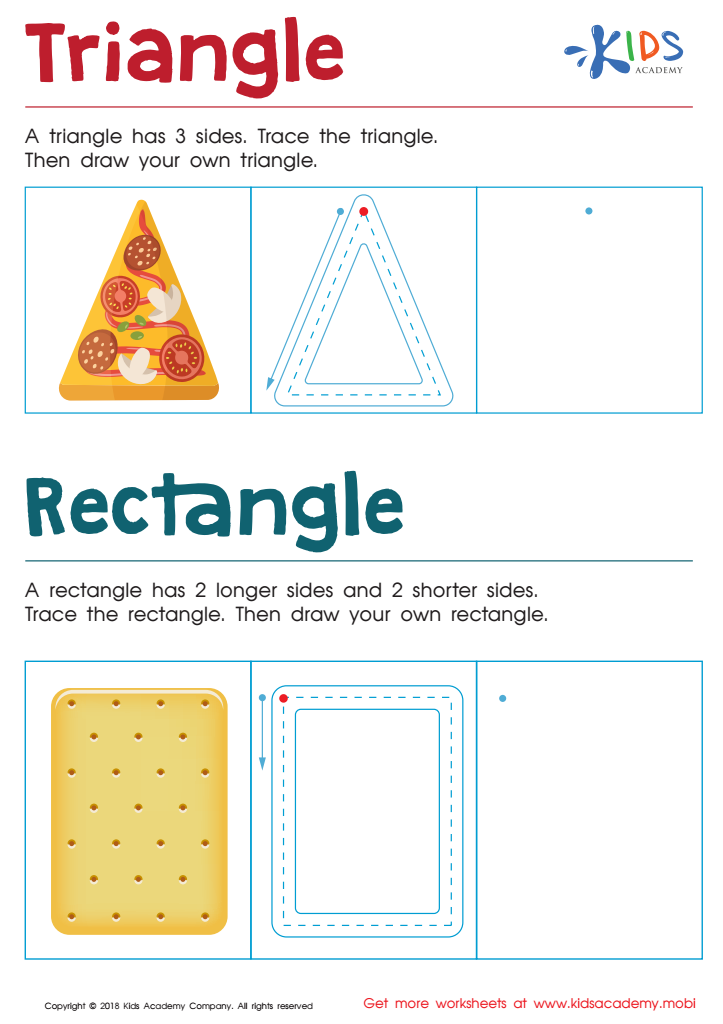
Triangle Rectangle Worksheet
 Assign to My Students
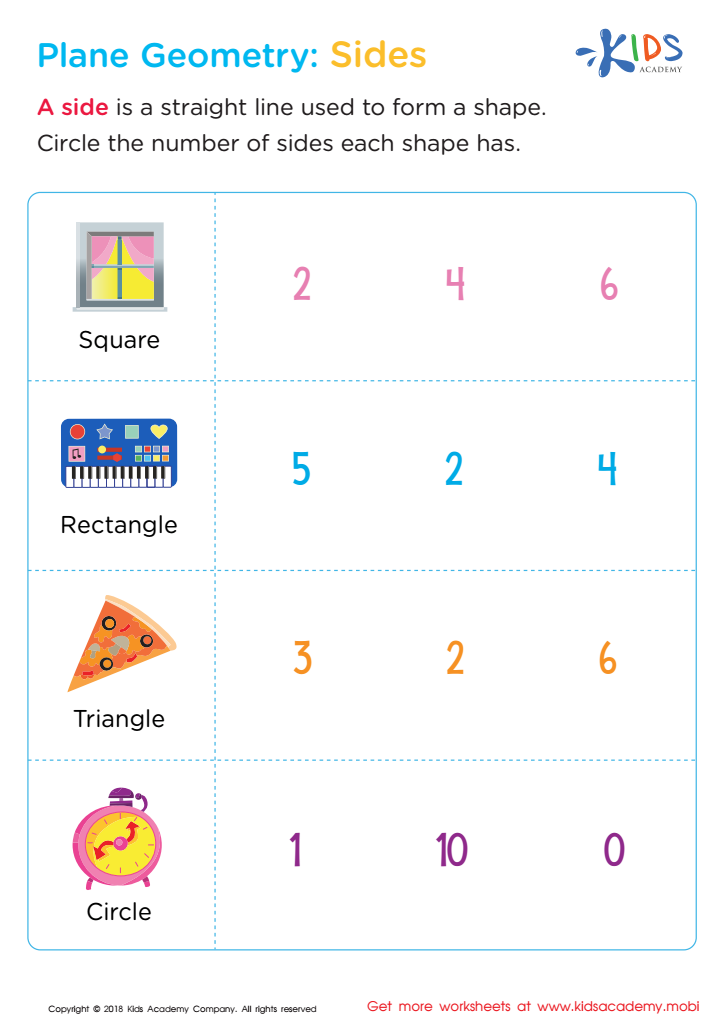
Plane Geometry: Sides Worksheet
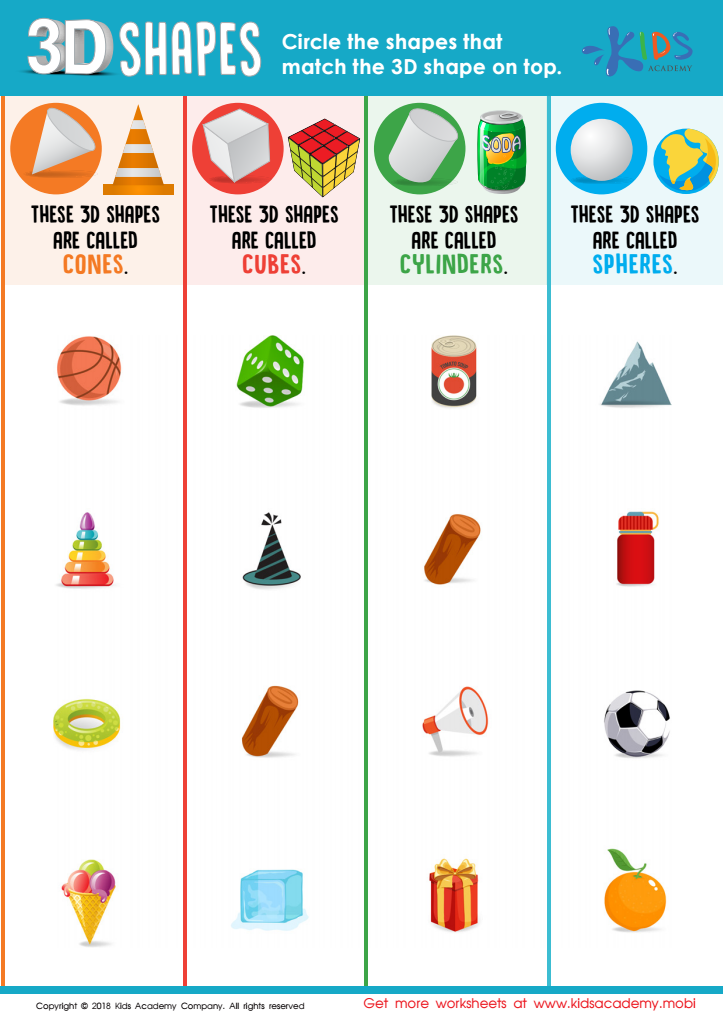
3D Shapes Worksheet








Differentiating shapes in early math education for 6-year-olds is crucial because it forms the foundation for spatial awareness and critical thinking skills. At this age, children are naturally curious and eager to explore their surroundings, making it an ideal time to introduce concepts related to shapes. Understanding shapes helps children develop important cognitive skills, such as recognizing patterns, categorizing objects, and solving problems.
Parents and teachers should care about this differentiation because it supports diverse learning styles and needs. By tailoring lessons to include various shapes and forms—such as circles, squares, triangles, and more—educators can engage children more effectively. This approach fosters a love for math and encourages open participation, enhancing self-esteem and confidence.
Moreover, developing shape recognition expands children’s vocabulary and comprehension in a broader context, enabling them to articulate their thoughts and ideas better. By embracing differentiated learning strategies, adults can ensure that each child grasps essential concepts at their pace, making math a more enjoyable and meaningful experience. Ultimately, understanding shapes lays the groundwork for future mathematical concepts, encouraging lifelong learning and critical thinking skills that benefit children far beyond their early years.








