Number Recognition Normal Numbers 0–10 Worksheets for 6-Year-Olds
22 filtered results
Difficulty Level
Grade
Age
-
From - To
Subject
Activity
Standards
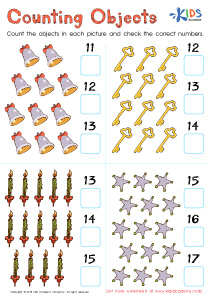
Introduce your child to the basics of number recognition with our "Number Recognition Normal Numbers 0–10 Worksheets for 6-Year-Olds" from Kids Academy. Perfectly designed for young learners, these engaging and educational worksheets help children to confidently identify and write numbers from 0 to 10. By incorporating fun exercises and colorful illustrations, kids stay motivated while developing crucial foundational math skills. Ideal for parents and teachers seeking effective learning tools, our worksheets ensure kids practice counting, understand number sequences, and improve their early math confidence. Unlock your child's numerical potential with our expertly crafted resources.
Favorites
With answer key
Interactive
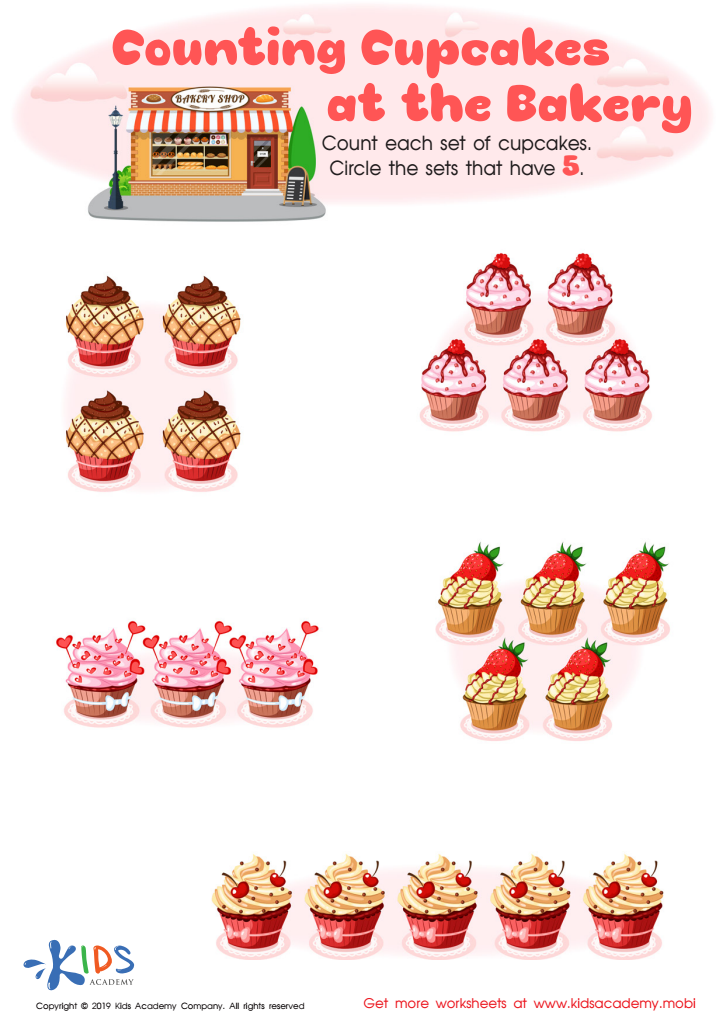
Counting Cupcakes Worksheet
This fun worksheet for preschoolers uses cupcakes to teach counting. Kids must circle the groups of cupcakes that add up to 5. The delicious treats make learning fun and engaging!
 Assign to My Students
Counting Cupcakes Worksheet
Worksheet
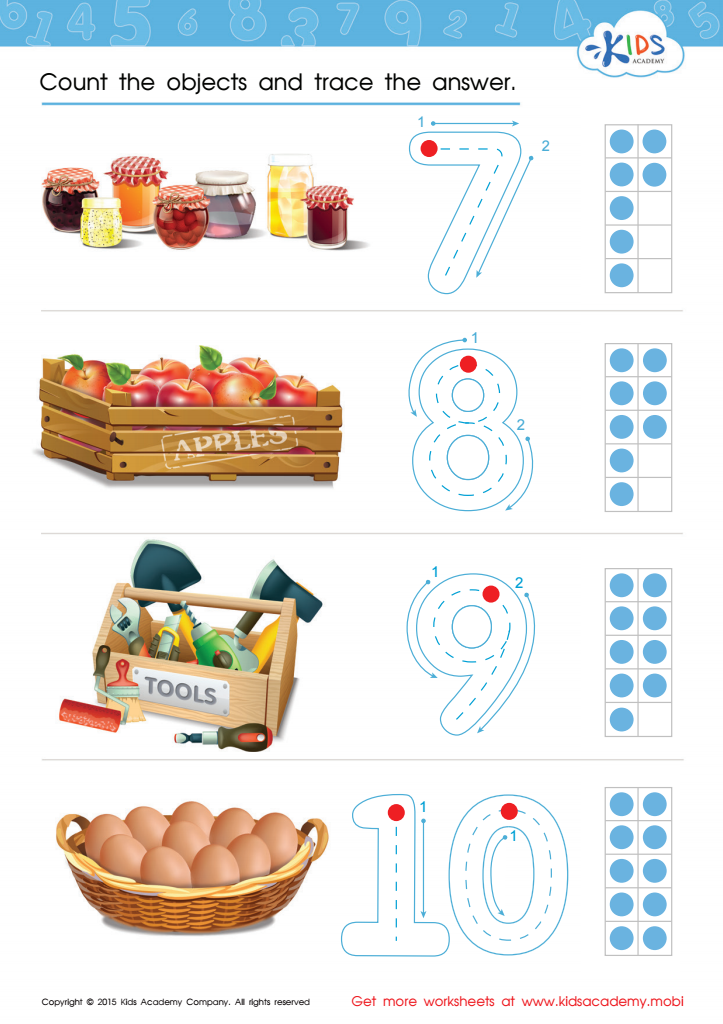
Count and Trace 7 – 10 Worksheet
Let your child develop a lifelong love of math with Kids Academy's printable math worksheet based on the innovative Singapore Math method. It uses funny pictures and graphs to help solve math problems. Check out our amazing collection of free printable math worksheets now!
Count and Trace 7 – 10 Worksheet
Worksheet
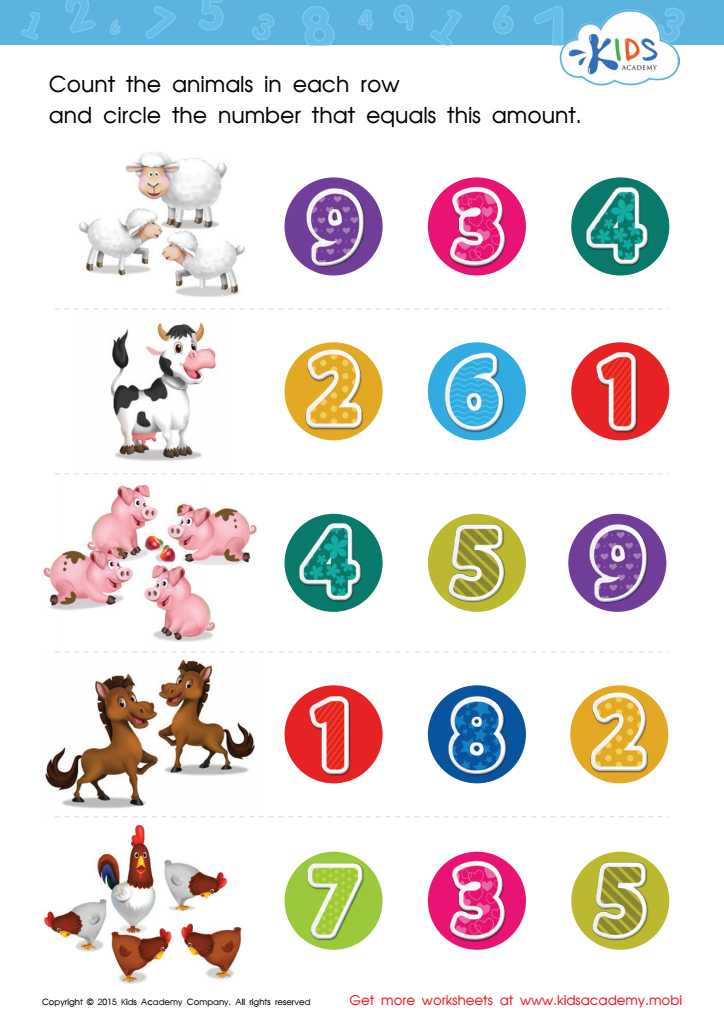
Count and Match 1 – 5 Math Worksheet
Find the colorful worksheet aimed to help your little learner develop their math skills. Count the cute animals and identify the correct numbers based on the Singapore Math method. This worksheet is a fantastic way to start your kid on their mathematical journey.
Count and Match 1 – 5 Math Worksheet
Worksheet
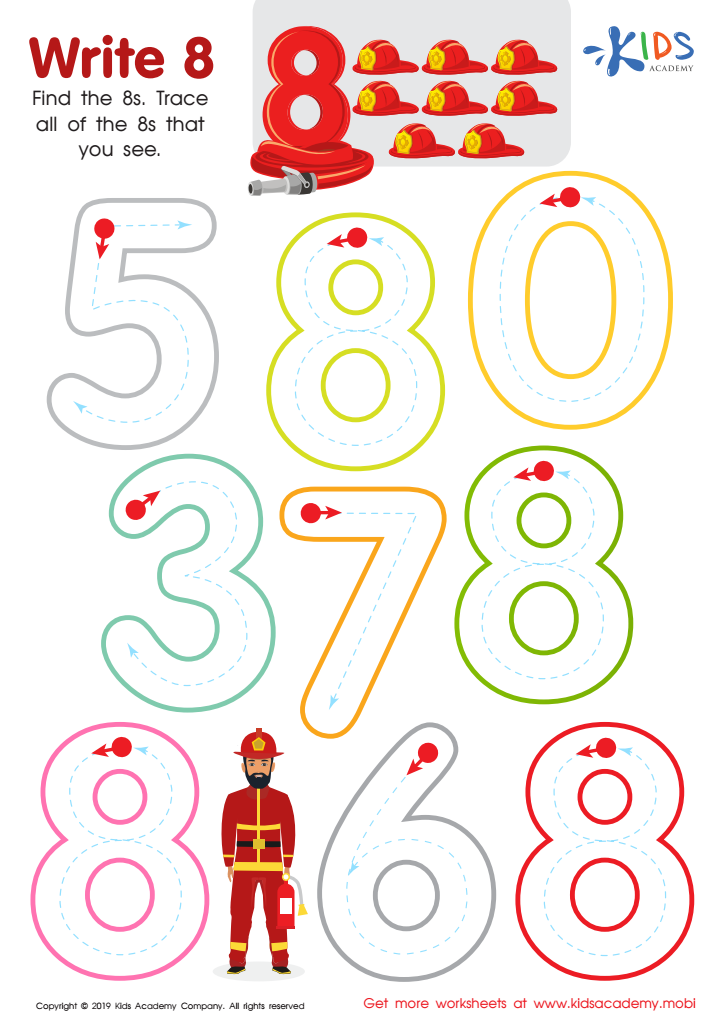
Write 8 Worksheet
Once your kids can count small numbers, it's time to learn how to write them. With your help and patience, they will soon be pros! This worksheet will make learning easier. Help them spot the 8s in the picture, then help them trace them.
Write 8 Worksheet
Worksheet
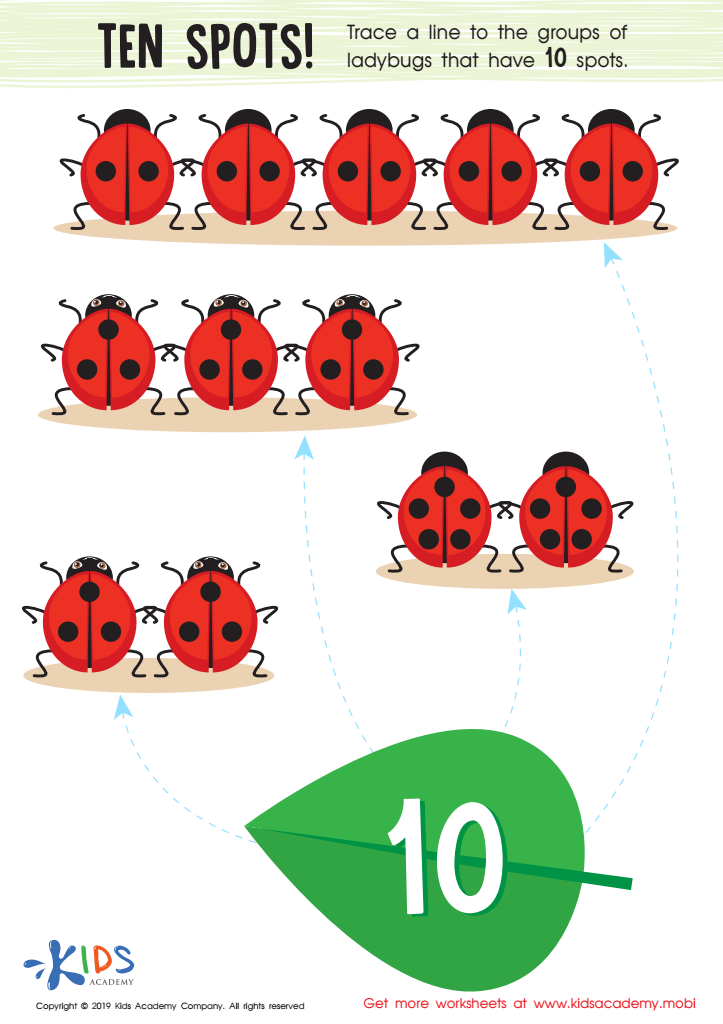
Ten Spots Worksheet
Kids love ladybugs! Ask them to tell you what stands out most--the spots. Show them a picture and help them count the spots. Trace a line to the group with 10 spots for a fun counting lesson.
Ten Spots Worksheet
Worksheet
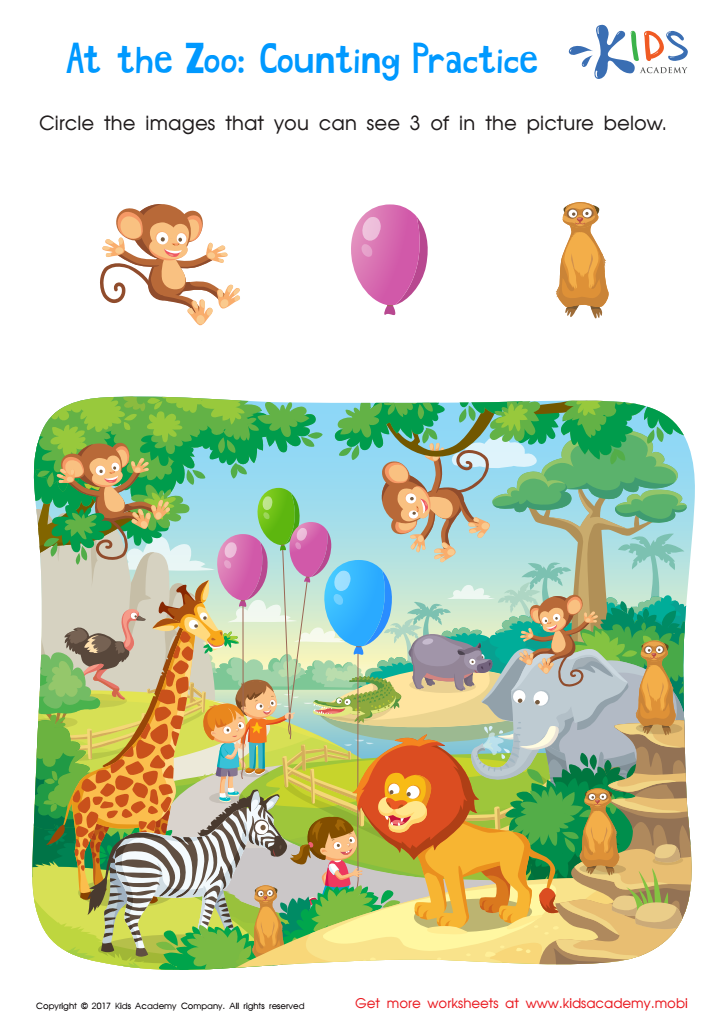
At the Zoo: Counting Practice Worksheet
This zoo-themed worksheet is perfect for practicing early counting skills and following directions. Your child will rule out incorrect answers and use problem solving to find images with duplicates. Fun and educational, this worksheet will get your preschooler ready for early math!
At the Zoo: Counting Practice Worksheet
Worksheet
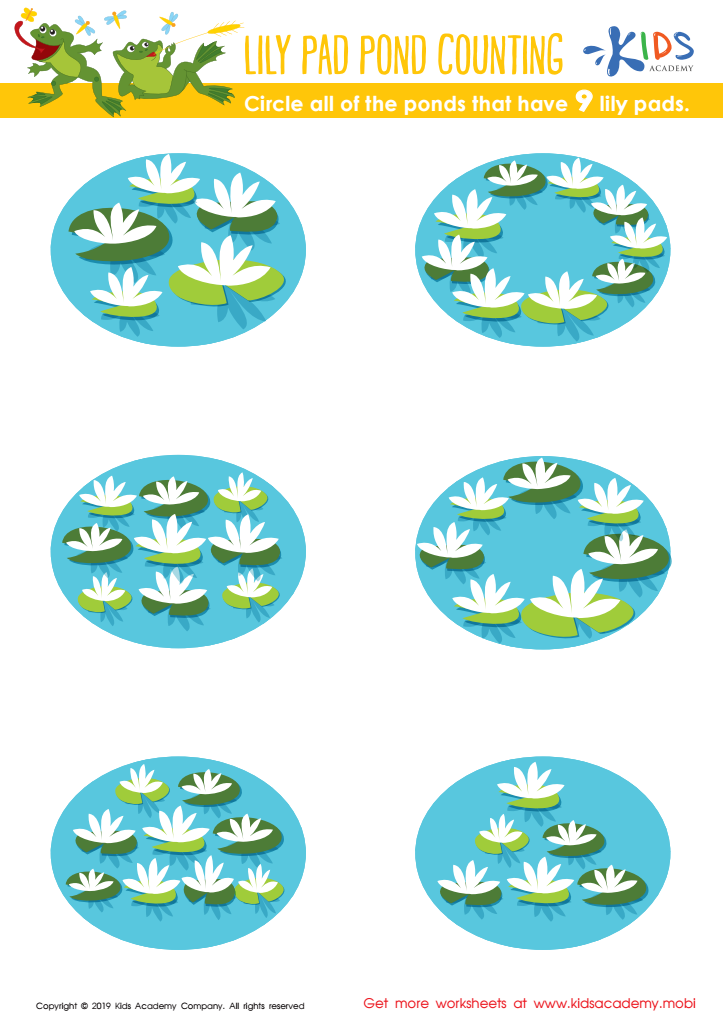
Lily Pad Pond Counting Worksheet
Counting can be fun with this colorful worksheet. Guide and be patient with your kids as they write numbers and count the six groups of lily pads. Help them circle the ponds with 9 lily pads, and watch them learn better and faster.
Lily Pad Pond Counting Worksheet
Worksheet
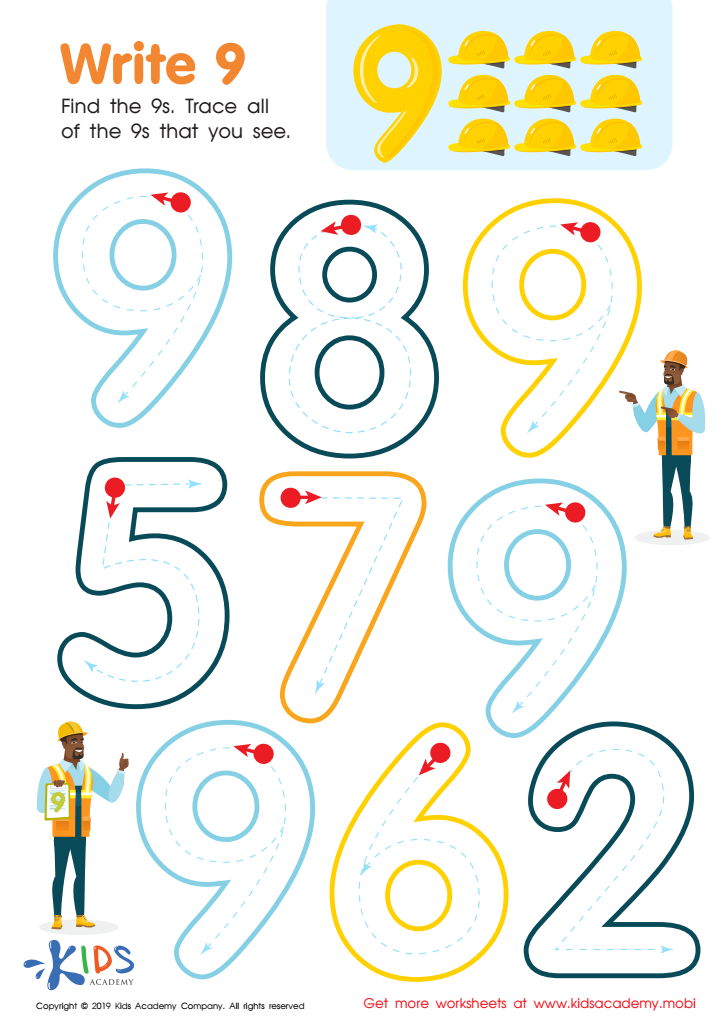
Write 9 Worksheet
Once your kids can count, help them learn to write numbers with your guidance and patience. This worksheet is designed to speed up the process. Help them spot the 9s in the picture, then help them trace them. With your help, your kids will soon be pros at counting and writing numbers.
Write 9 Worksheet
Worksheet
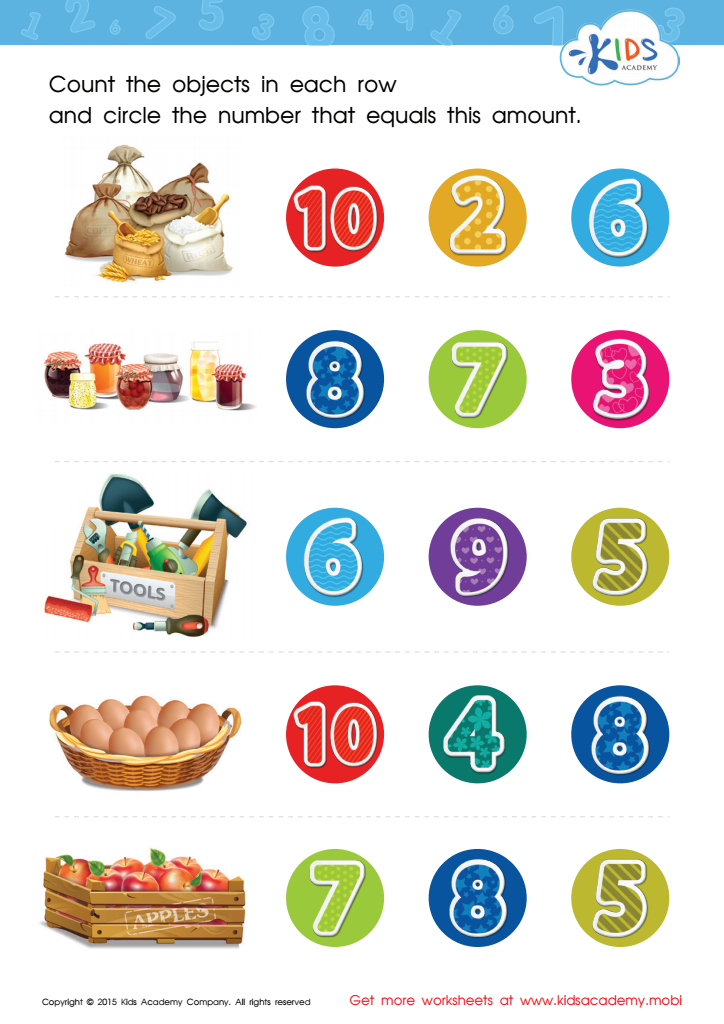
Count and Match 6 – 10 Math Worksheet
Print this fun math worksheet for your kindergartener and help them practice counting up to ten! They'll draw a line from the objects to the correct numbers, visualizing the problem and having fun at the same time. Kids Academy offers more free printable worksheets. Get them now!
Count and Match 6 – 10 Math Worksheet
Worksheet
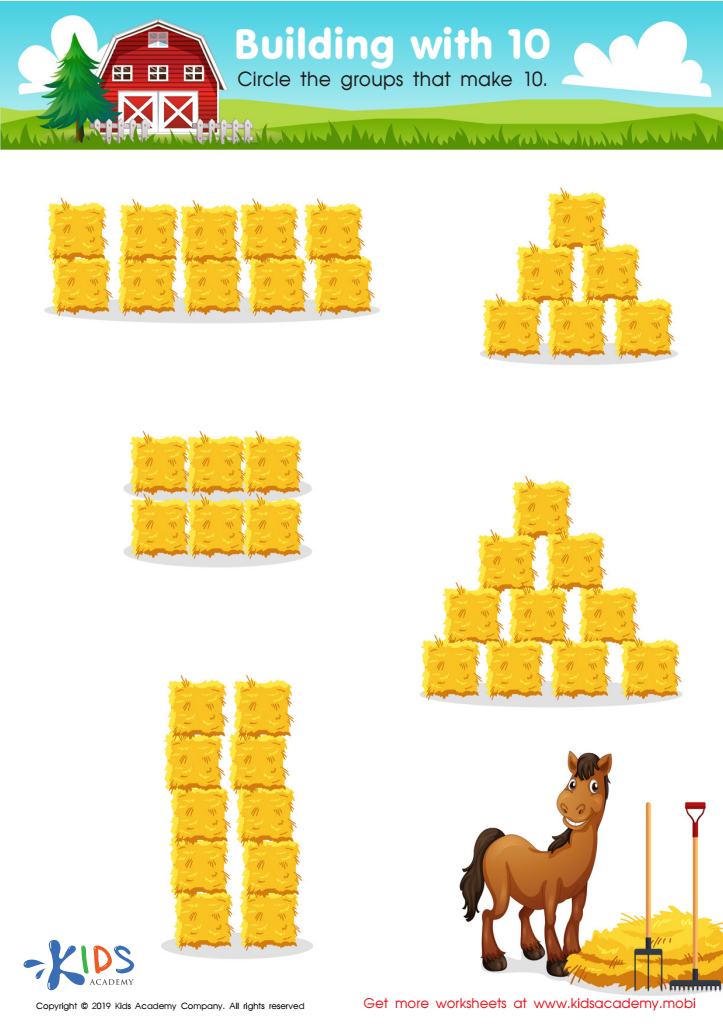
Building with 10 Worksheet
Counting numbers can be simple with this worksheet: Ask your kids to count the stacks of objects, ensure accuracy with your help, then circle the ones of ten. With practice and guidance, your children will soon become counting pros!
Building with 10 Worksheet
Worksheet
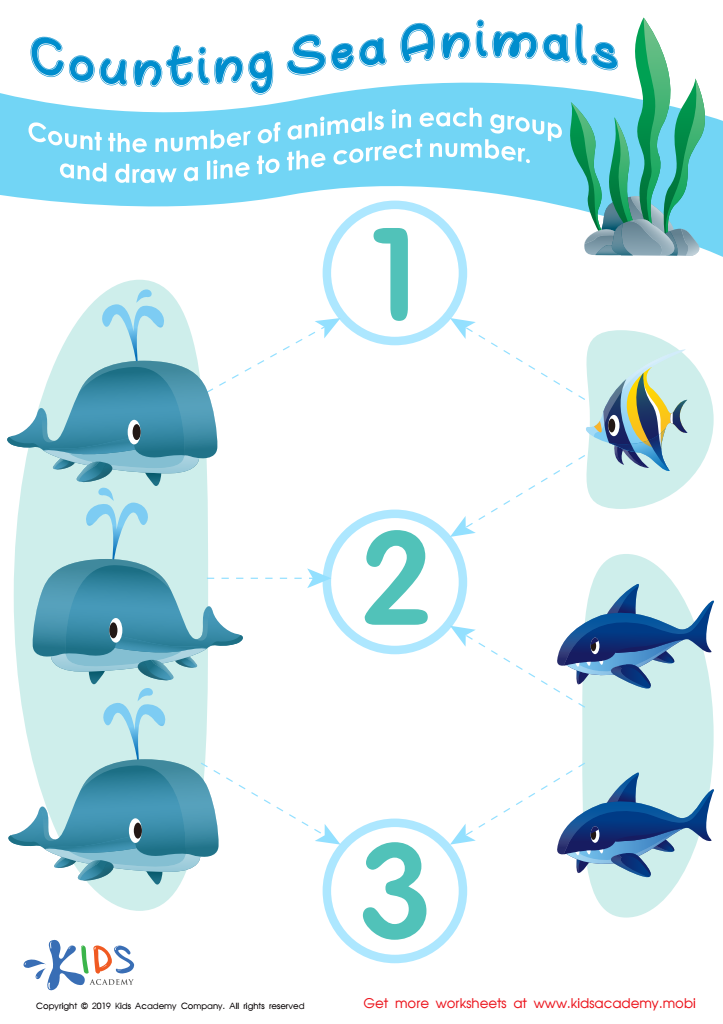
Counting Sea Animals Worksheet
Kids adore sea creatures for their captivating, unknown nature. Let them use this free worksheet to practice counting, where they match numbers to groups of animals. Through traceable lines, they'll easily connect numbers to sea creatures and learn math with vibrant, underwater fun!
Counting Sea Animals Worksheet
Worksheet
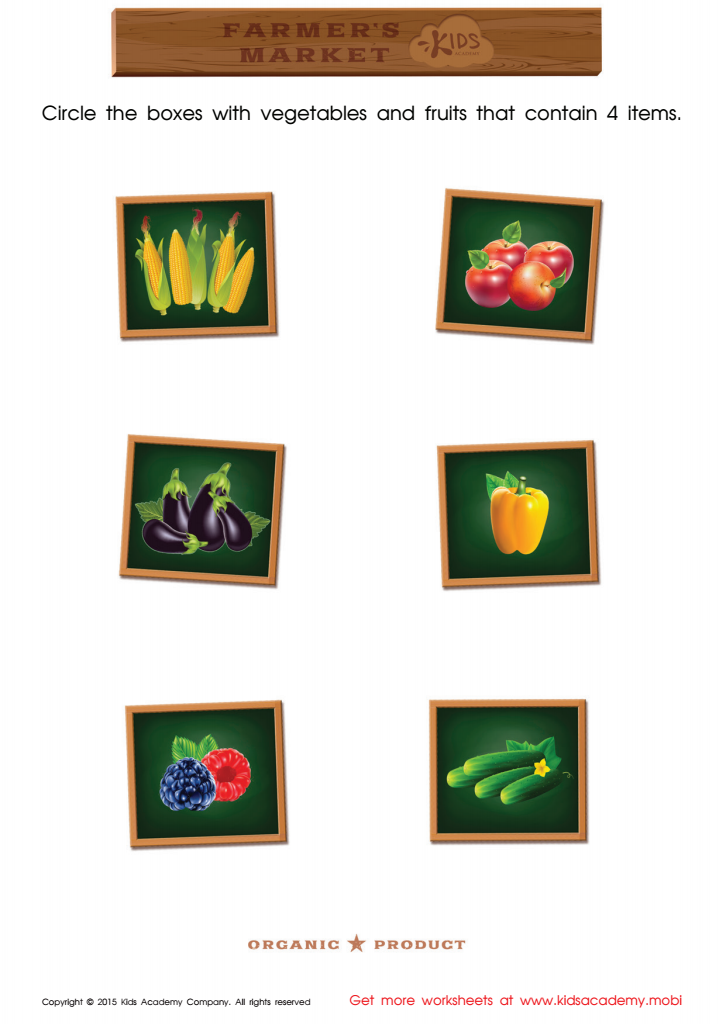
Count and Match Vegetables 2 – 8 Math Worksheet
Download this fun, colorful math worksheet from Kids Academy and help your kid improve their counting skills. Match the boxes to the same number of vegetables, using the pictures to visualize the problem. Get more free printables from Kids Academy by topic.
Count and Match Vegetables 2 – 8 Math Worksheet
Worksheet
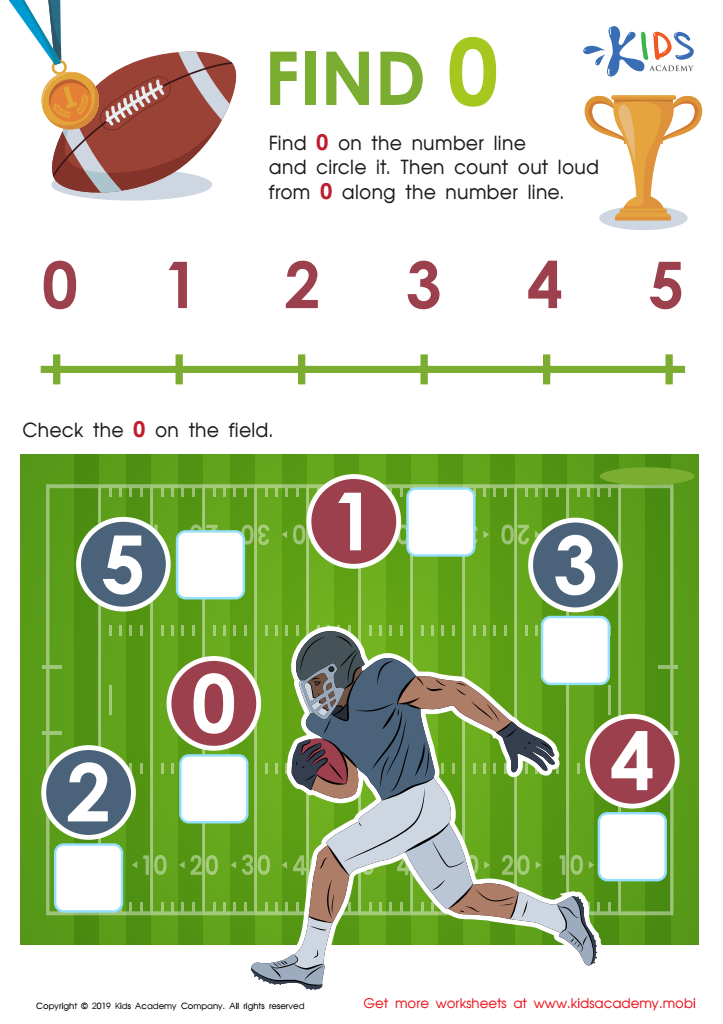
Find 0 Worksheet
Help make number learning easier with this worksheet! Ask your students to find and circle 0 on the number line, then count aloud from 0 to the last number. It might not be their favorite subject, but it's unavoidable - and with this worksheet, they'll be counting like pros!
Find 0 Worksheet
Worksheet
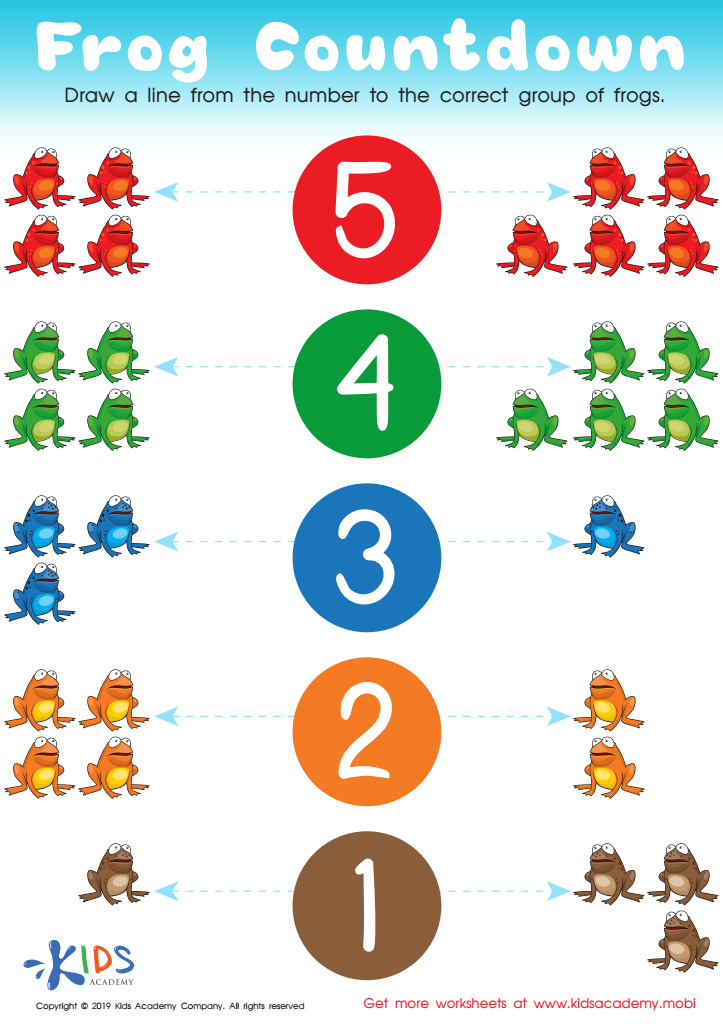
Frog Countdown Worksheet
Make learning fun for kids with traceable printouts! This exercise has kids counting frogs and drawing a line to match the number. Expand their knowledge with activities like this, beyond the basics they learn in school. Help them explore new ways of learning and make it enjoyable.
Frog Countdown Worksheet
Worksheet
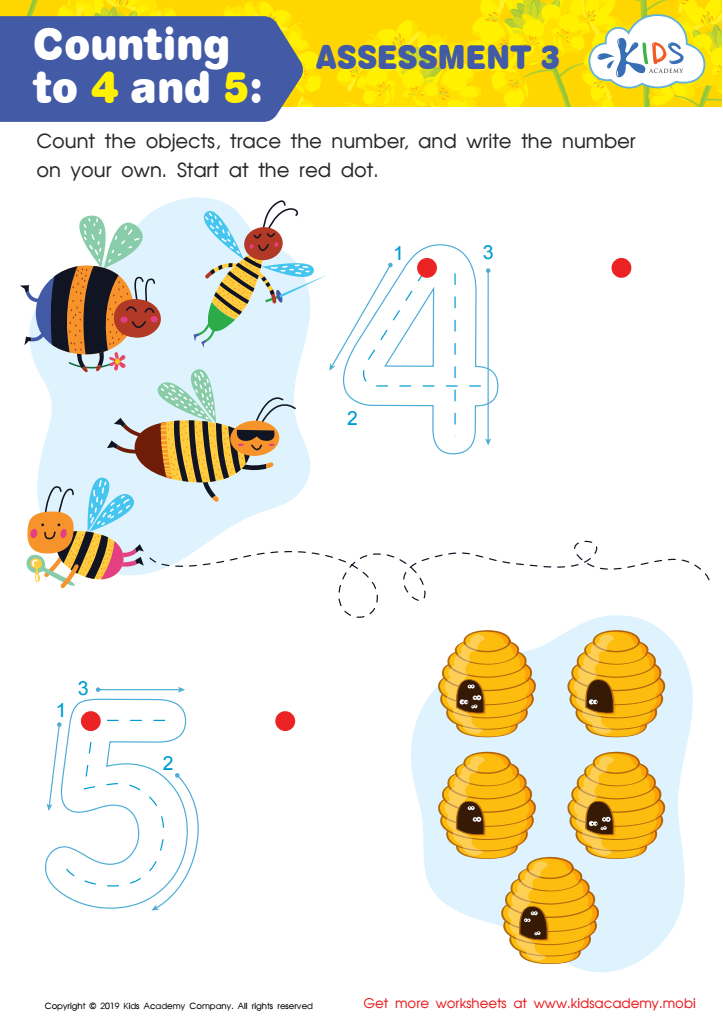
Counting to 4 and 5: Assessment 3 Worksheet
Help your kids learn to count with fun objects and items they like - like the bees in this worksheet. Ask them to count, trace the number, and write it down. Give guidance, starting at the red dot. This is an important first step in math and your kids will love it!
Counting to 4 and 5: Assessment 3 Worksheet
Worksheet
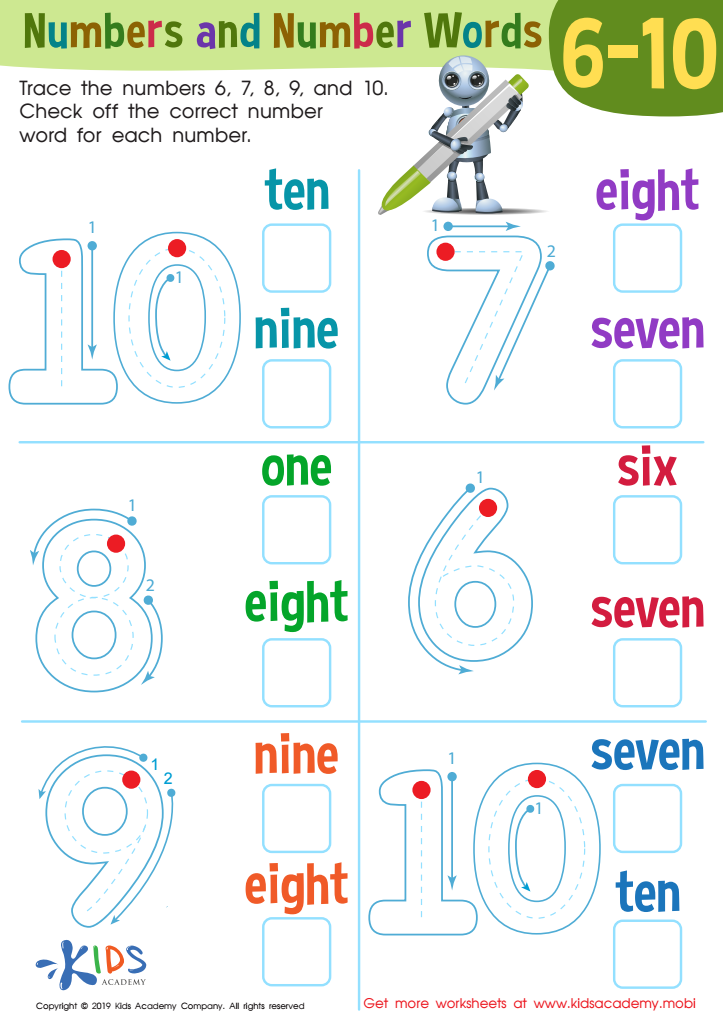
Numbers and Number Words 6–1 Worksheet
As children explore numbers and words, parents and teachers can help them learn to count and read with activities such as this worksheet. Here, the student traces numbers 6-10 and then selects the right number words to match. A fun and interactive way to learn!
Numbers and Number Words 6–1 Worksheet
Worksheet
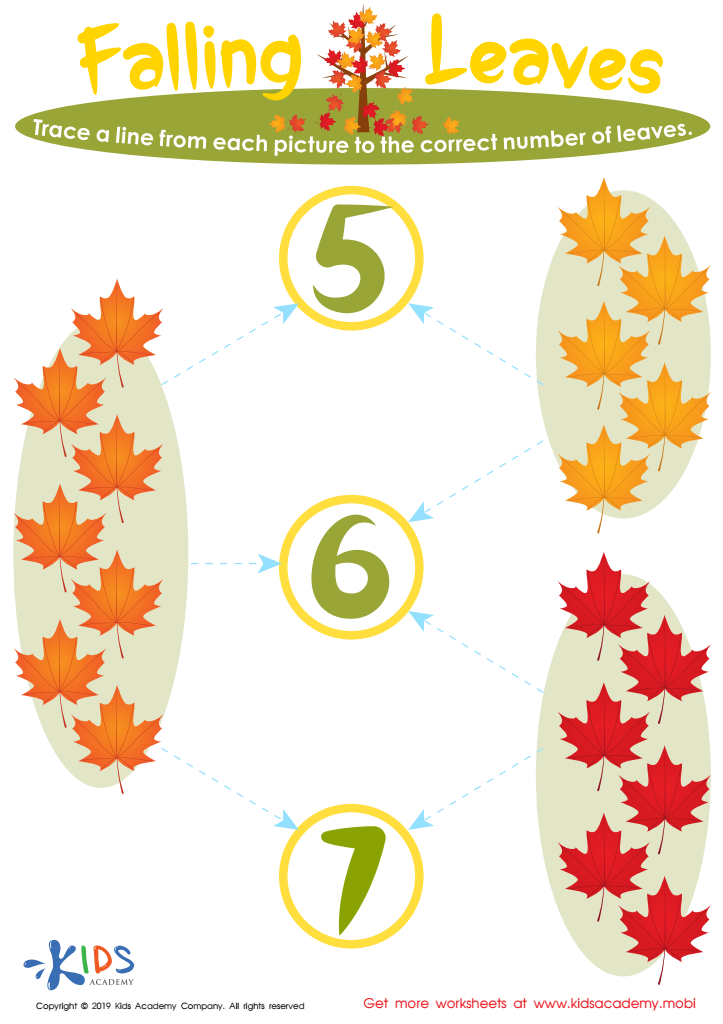
Falling Leaves Worksheet
Do your kids know the seasons? Ask them to name each one, then test their counting skills with a fun worksheet. Have them count from 1 to 10, then trace a line from each picture to the corresponding number of leaves. It's a great way to check their counting ability!
Falling Leaves Worksheet
Worksheet
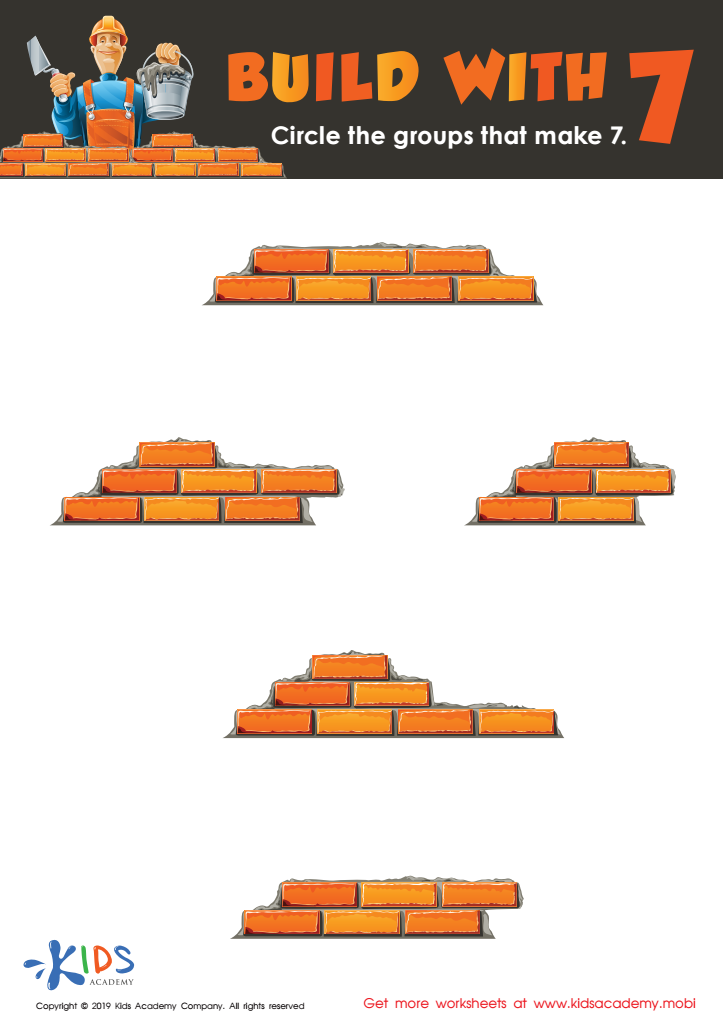
Build with 7 Worksheet
Kids learn best by practicing counting & number sense. This PDF helps them practice with the number 7, using picture representation. When they first start counting, picture representation provides an easy-to-understand & concrete way to remember things. Practice makes perfect!
Build with 7 Worksheet
Worksheet
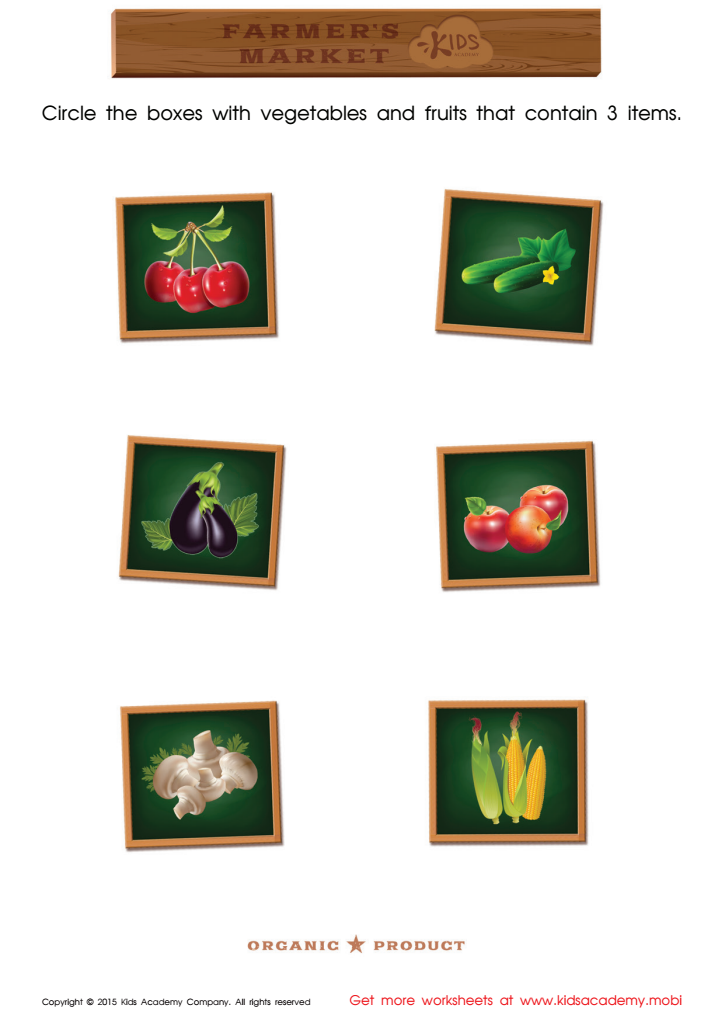
Count and Match Vegetables 1 – 5 Math Worksheet
Get your kindergartener to match the same number of vegetables with the boxes using this fantastic math worksheet. Using the Singapore approach, this printable worksheet makes math problems easy and fun for kids. Want more free worksheets? Click here for Kids Academy's selection!
Count and Match Vegetables 1 – 5 Math Worksheet
Worksheet
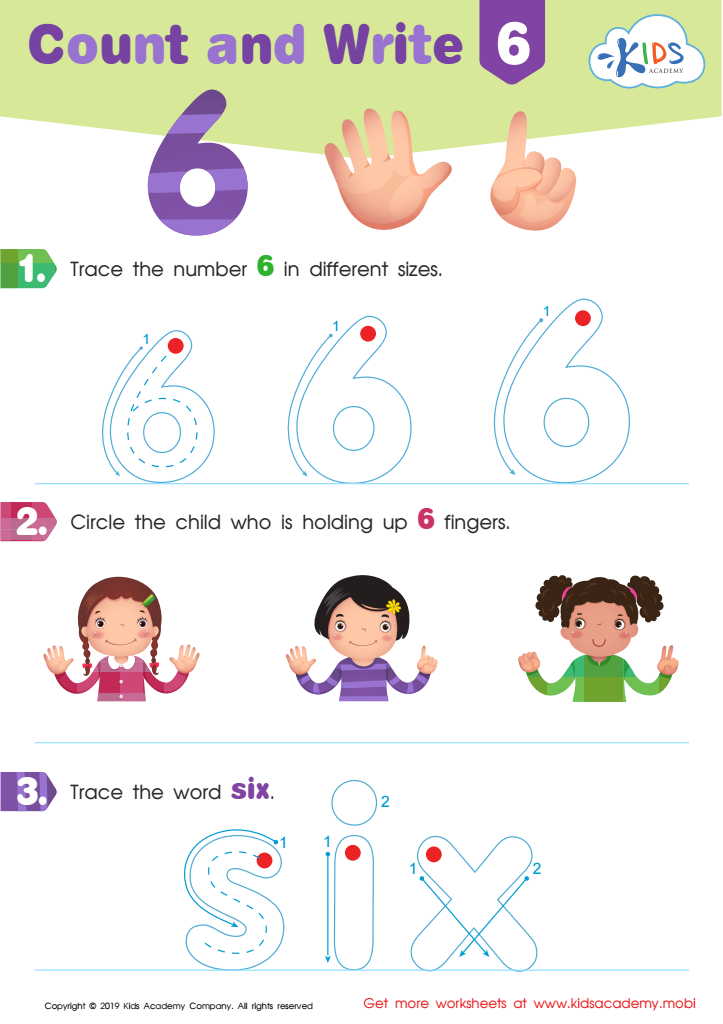
Count and Write 6 Worksheet
Kids begin math by mastering recognition skills. This worksheet helps with that by giving them practice writing "six" and the numeral 6, with guide dots and traceable lines. Giving kids multiple ways to learn the basics helps them build a strong math foundation.
Count and Write 6 Worksheet
Worksheet
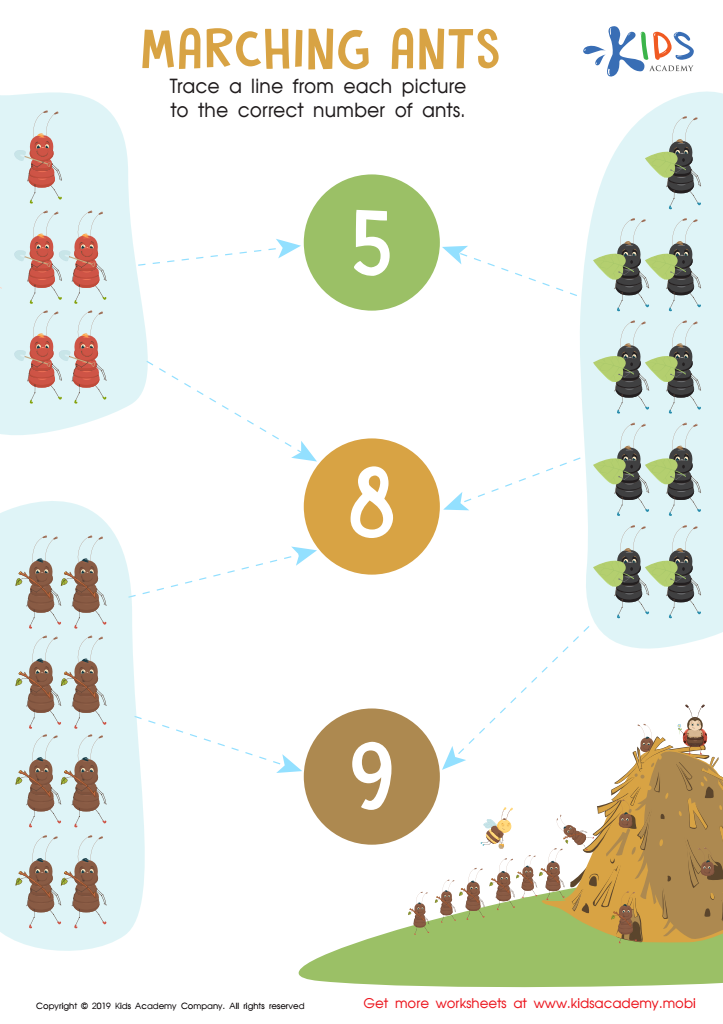
Marching Ants Worksheet
Assess and help your kids practice counting with this worksheet. Ask them to identify the four groups of ants in the picture. Guide them as they count each group and trace the lines to the corresponding number.
Marching Ants Worksheet
Worksheet
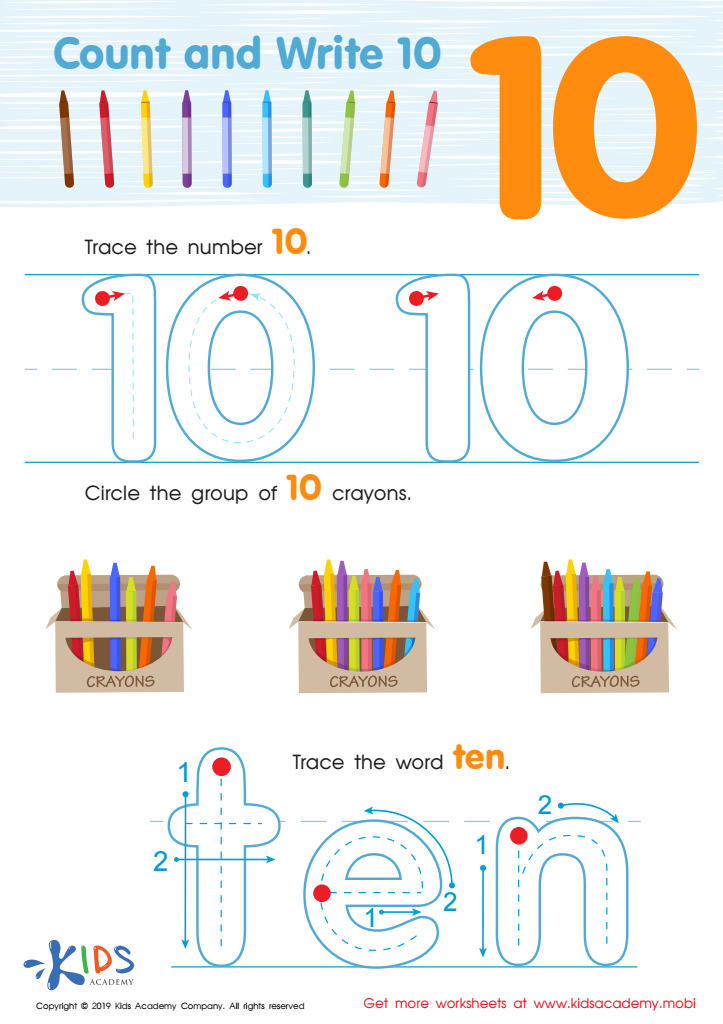
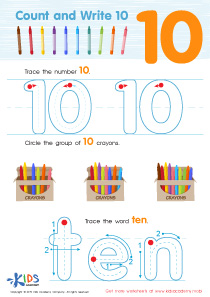
Count and Write 10 Worksheet
Help your child succeed by teaching them numbers! They should already know their 1,2,3s before their first day of school. This worksheet will give them the practice they need to write and count to 10. Get them to count and circle the 10 crayons, then trace the number 10. It's a great way to help them understand numbers and get a head start.
Count and Write 10 Worksheet
Worksheet
Join Kids Academy for Free
Who is primarily going to use this learning content?








Number recognition, specifically normal numbers 0–10, forms the foundational block for early mathematical development in 6-year-olds. This basic skill is essential not only for future academic success but also for practical day-to-day activities. Recognizing numbers allows children to begin understanding and navigating their world—whether telling time, counting objects, or understanding simple money transactions. Ensuring proficiency in number recognition is crucial for developing more advanced math skills such as addition, subtraction, and problem-solving, making it indispensable for both teachers and parents to prioritize.
For parents, involvement in recognizing numbers sporadically through daily activities fosters a supportive learning environment at home. Playful interactions, like counting toys and snacks, can significantly reinforce a child's ability to recognize and understand numbers effortlessly. Teachers play an equally important role, incorporating fun and engaging activities that anchor these numerical concepts in a child’s mind within a classroom setting.
Lacking solid number recognition skills might lead to struggles in later stages, creating anxiety or a lack of confidence in their mathematical abilities. Hence, early engagement ensures that 6-year-olds find school more enjoyable and less intimidating. Moreover, proficiency in these skills is a predictor of future academic and even social-emotional competencies, highlighting the critical need for devoted attention from both educators and caregivers.