Rhyming skills development Normal Reading Worksheets for 6-Year-Olds
3 filtered results
-
From - To
Enhance your child's reading journey with our Rhyming Skills Development worksheets designed specifically for 6-year-olds! These engaging and interactive resources help young learners grasp the concept of rhyming, a fundamental skill for improving reading fluency and vocabulary. Packed with fun activities, our worksheets encourage creativity while fostering a love for language. From identifying rhyming words to completing simple rhymes, each printable resource makes learning enjoyable and effective. Perfect for at-home practice or classroom use, our worksheets support essential literacy development, laying a strong foundation for future reading success. Discover the joy of learning through rhyme today!
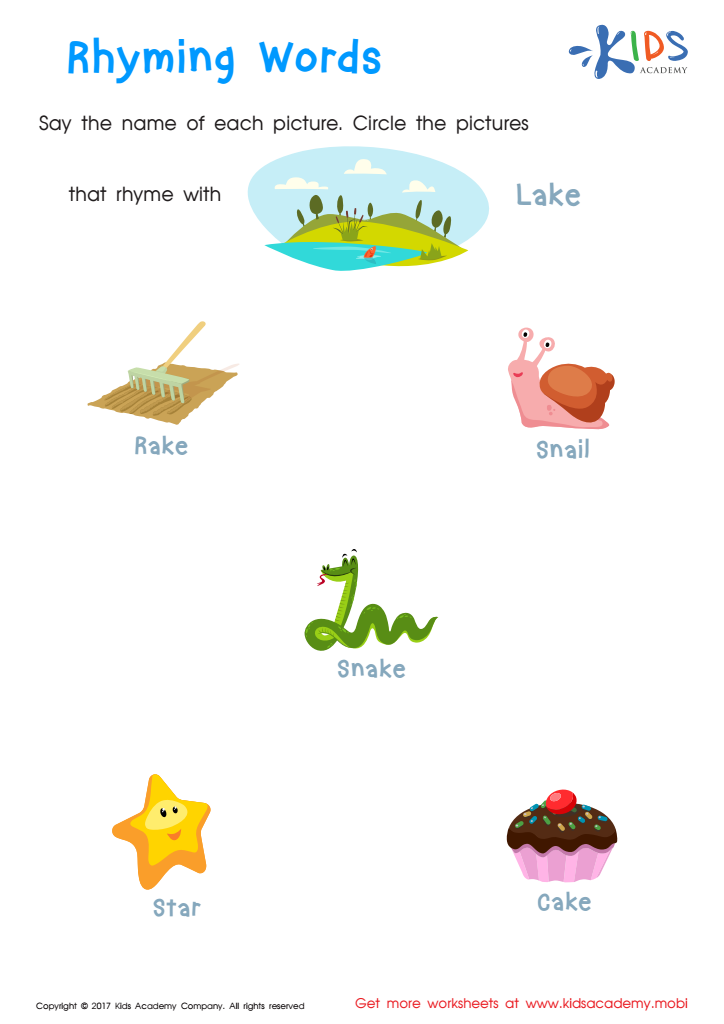
Rhyming Words Rhyming Worksheet
 Assign to My Students
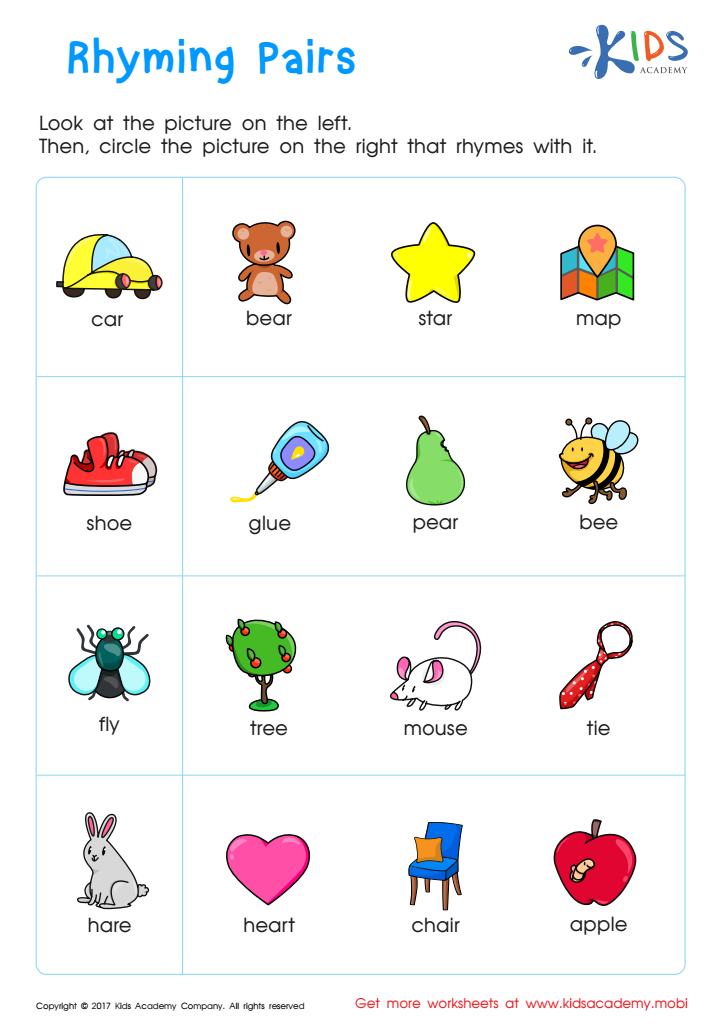

First Words: Picture Rhymes Worksheet







Rhyming skills are crucial in the reading development of 6-year-olds, as they form a foundational experience for literacy. When children engage with rhymes, they enhance their phonemic awareness—the ability to hear, identify, and manipulate sounds in words. This skill is pivotal for decoding new words, making it easier for young learners to connect sounds with letters and develop strong reading abilities.
Additionally, rhyming enhances vocabulary acquisition. By encountering new words within familiar rhyming patterns, children are more likely to remember and use them. It creates a fun, engaging way to explore language, and helps in developing their understanding of word families, which is instrumental in spelling and reading fluency.
Moreover, rhyming promotes cognitive skills and creativity. Through playful language, children foster imagination and narrative skills, which contribute to overall communication development. Parents and teachers who support rhyming activities—like singing songs, saying nursery rhymes, or reading rhyming books—cultivate a love for language and literacy in children. This joy is essential for lifelong learning and helps motivate children to explore reading and writing further. Thus, focusing on rhyming is a powerful step in supporting a child’s educational journey.








