Visual interpretation Normal Reading Worksheets for 6-Year-Olds
3 filtered results
-
From - To
Explore our engaging Visual Interpretation Normal Reading Worksheets designed specifically for 6-year-olds! These interactive worksheets help young learners enhance their reading comprehension through visual analysis. By interpreting pictures and illustrations connected to various stories, children can develop critical thinking skills and boost vocabulary. Our resources are crafted to make learning fun and effective, allowing kids to connect words with images in an engaging way. Perfect for home or classroom use, these worksheets encourage creativity and imaginative thinking, setting a strong foundation for literacy. Download our worksheets today and watch your child’s reading skills flourish!
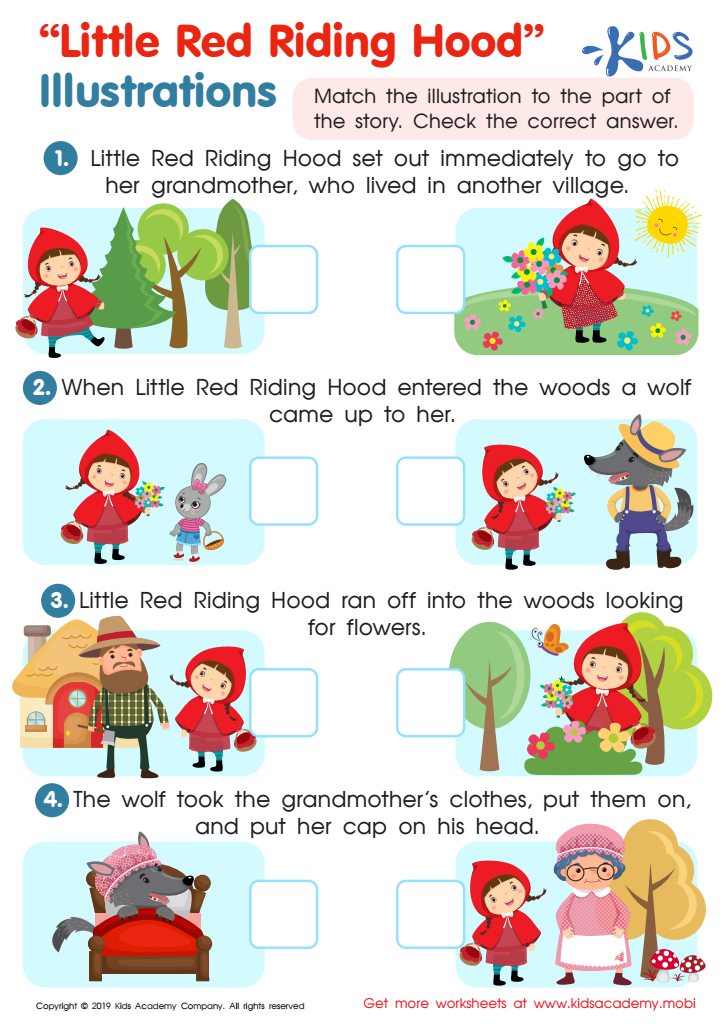
Little Red Riding Hood: Illustrations Worksheet
 Assign to My Students
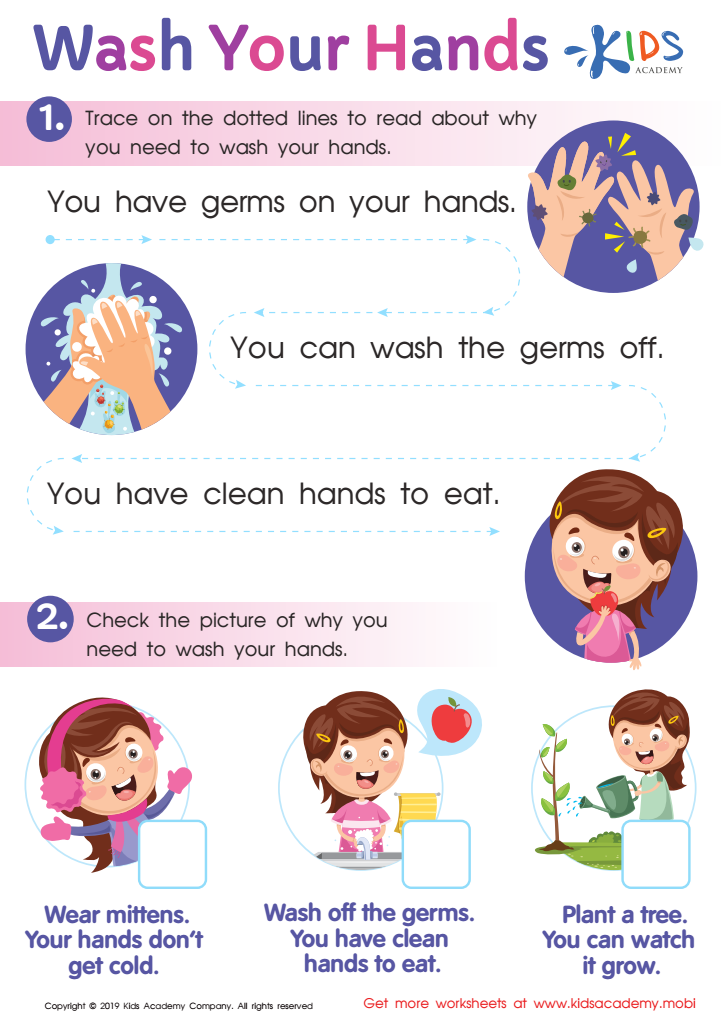
Wash Your Hands Worksheet
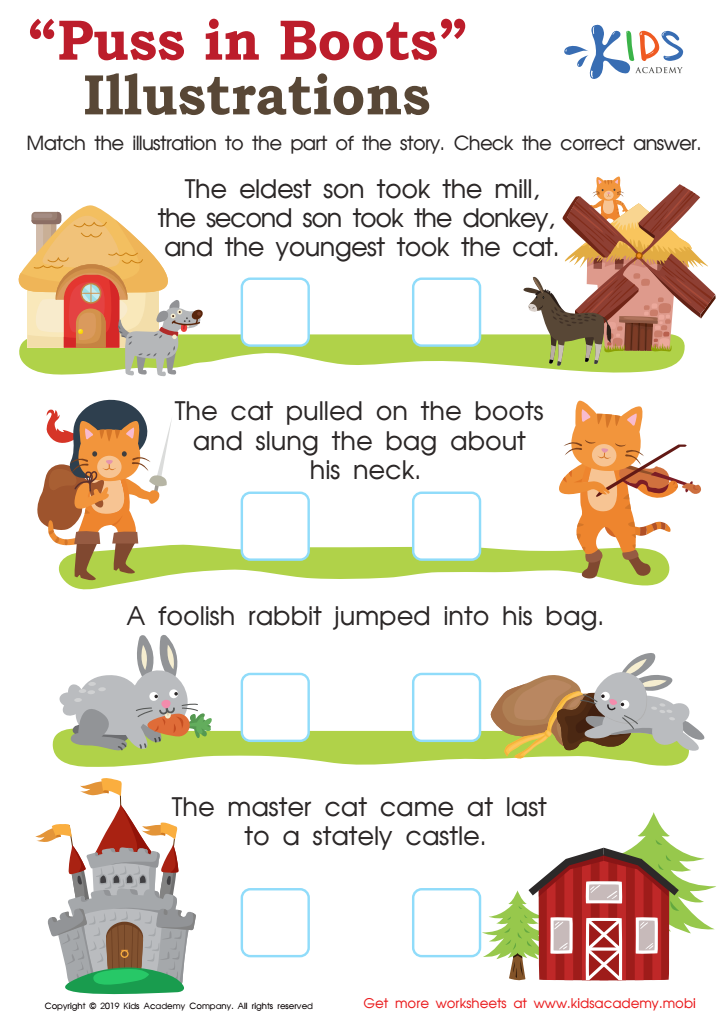
Puss in Boots Illustrations Worksheet






.jpg)

Visual interpretation in reading is crucial for 6-year-olds as it lays the foundation for comprehension and overall literacy skills. At this age, children are rapidly developing their ability to recognize letters, words, and the relationship between text and images. When parents and teachers emphasize visual interpretation, they help children make connections between visual stimuli and their meanings, enhancing their understanding of stories and concepts.
Visual interpretation encourages active engagement with reading materials. Children learn to analyze illustrations, inferring context and emotions, which enriches their narrative comprehension. This process also supports vocabulary development, as visual cues provide context to new words, making them more relatable and easier to remember.
In addition, proficiency in visual interpretation strengthens critical thinking skills. Through assessing images and text, children develop the ability to predict outcomes, identify cause-and-effect relationships, and connect details within a story. This holistic approach to reading not only cultivates a love for literature but also prepares them for more complex texts in later grades.
Ultimately, supporting visual interpretation in young readers empowers them to become confident, thoughtful, and independent learners. Both parents and teachers play vital roles in guiding this developmental journey, making it essential to prioritize these skills in early education.








