Logical Reasoning Normal Reading Fiction Worksheets for 6-Year-Olds
3 filtered results
-
From - To
Enhance your child's cognitive abilities with our engaging Logical Reasoning Normal Reading Fiction Worksheets designed specifically for 6-year-olds. These worksheets combine captivating short stories with thought-provoking questions that encourage critical thinking and comprehension skills. By exploring fun narratives, children will learn to identify main ideas, make predictions, and draw connections, all while improving their reading fluency. Ideal for home or classroom use, these worksheets foster a love of reading while developing essential reasoning skills in young learners. Get started today to support your child's educational journey and promote an early understanding of logical thought processes through fiction!
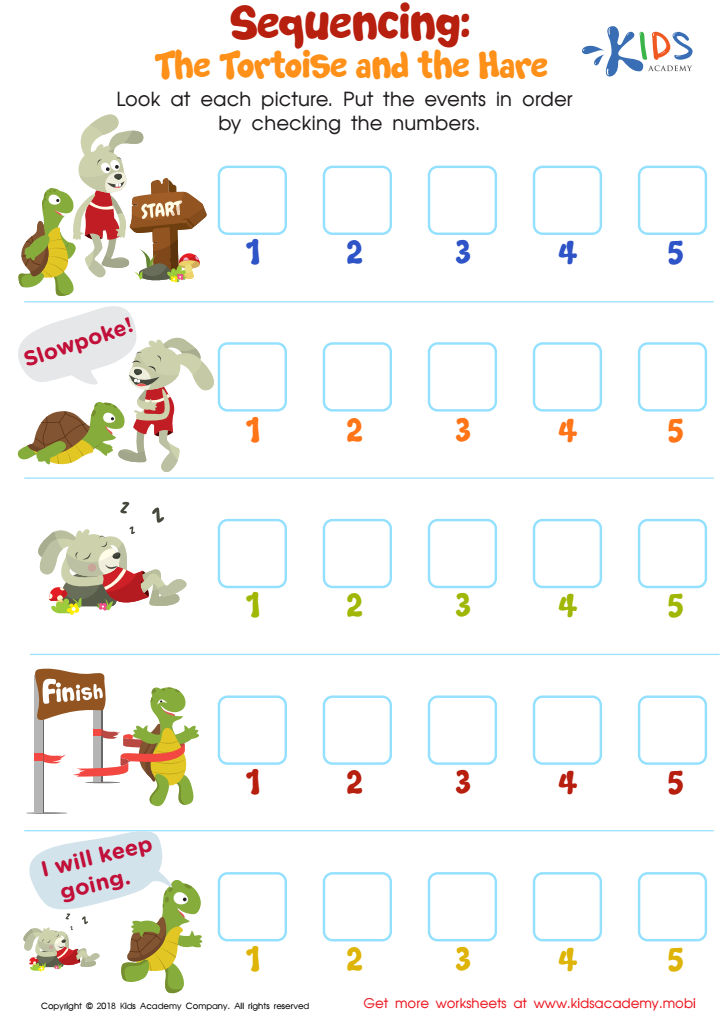
Sequencing: The Tortoise and the Hare Worksheet
 Assign to My Students
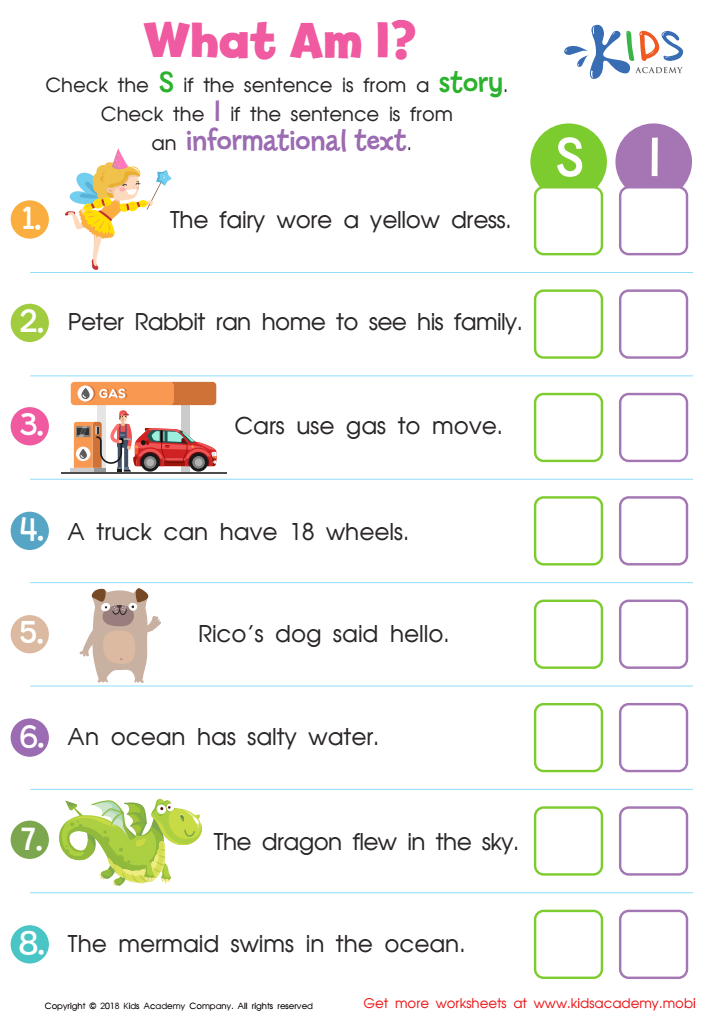
What Am I? Worksheet
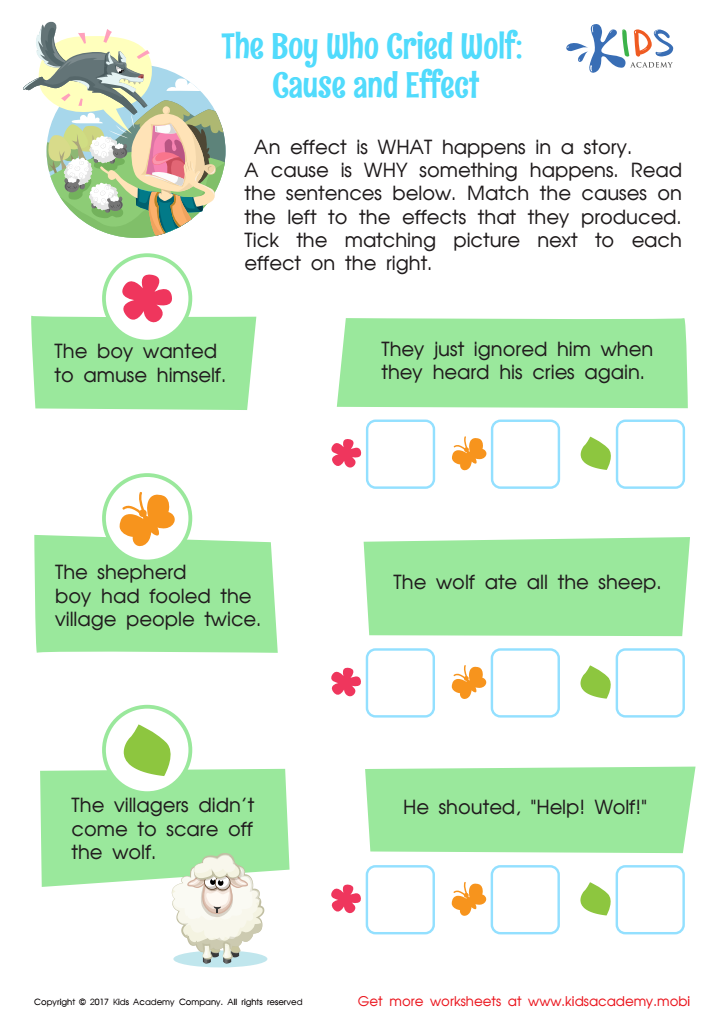
The Boy Who Cried Wolf: Cause and Effect Worksheet



.jpg)

.jpg)


Logical reasoning is a critical skill that helps children interpret information, solve problems, and make decisions. For 6-year-olds, this is especially important as they begin to engage with fiction in more meaningful ways. Reading fiction not only enhances their vocabulary and comprehension but also nurtures their ability to understand complex ideas and relationships.
When children read stories, they encounter characters, plots, and conflicts that require them to think critically about motives and outcomes. This encourages them to make inferences, draw conclusions, and understand cause-and-effect relationships—key components of logical reasoning. By caring about the logical reasoning embedded in fiction, parents and teachers can foster deeper cognitive skills in young learners.
Additionally, literature for this age group often poses moral dilemmas and thematic questions that prompt discussions, allowing children to practice articulating their thoughts and negotiating ideas with others. This conversation skills tie back to logical reasoning, as children learn to construct arguments based on their interpretation of texts.
Encouraging engagement with logical reasoning through fictional reading not only supports academic success but also prepares children for real-world problem-solving. Supporting their journey in this domain could help them become thoughtful, rational individuals.







