
Categorization skills Normal Animals Worksheets for 6-Year-Olds
3 filtered results
Difficulty Level
Grade
Age
-
From - To
Subject
Activity
Standards
Enhance your 6-year-old’s learning with our Categorization Skills Normal Animals Worksheets. Specifically designed for young minds, these engaging and educational worksheets help children identify and group animals based on different characteristics. By completing vibrant and fun exercises, kids will develop critical thinking and observational skills. Perfect for home or classroom use, these printable activities not only foster curiosity about the animal kingdom but also build foundational science knowledge. Encourage your child to explore, compare, and categorize with these science-based worksheets that make learning enjoyable and productive. Access them today to support your child’s educational journey!
Favorites
With answer key
Interactive
 Assign to My Students
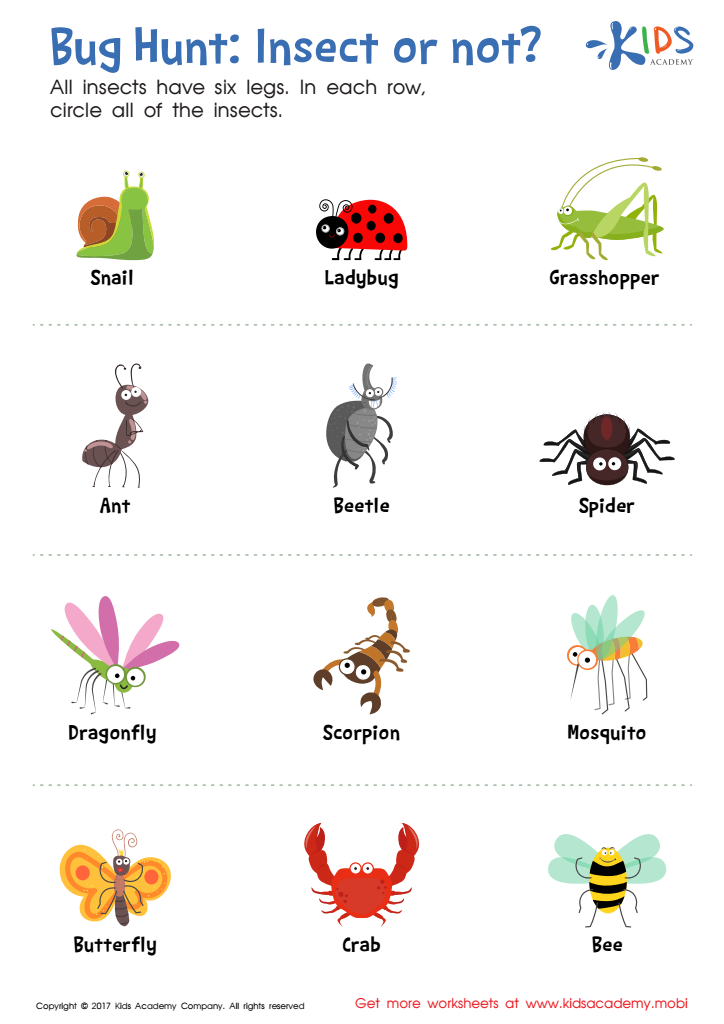
Insect or Not? Worksheet
Worksheet
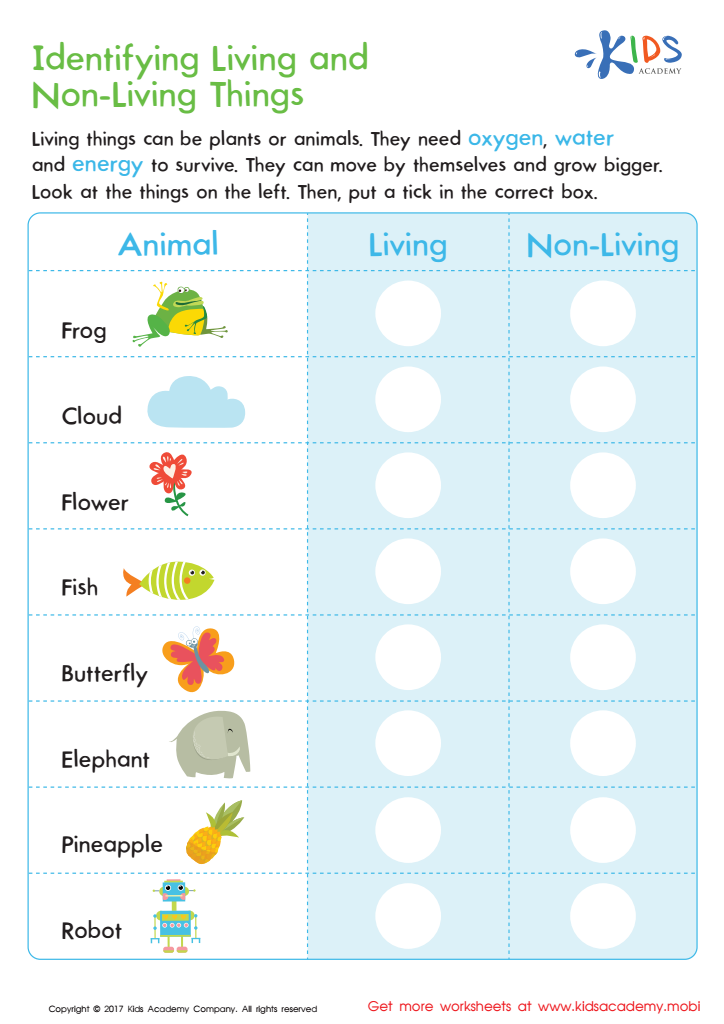
Identifying Living or Non–living Worksheet
Help your child learn to sort and categorize in a new way! Teach them to classify things as living or non-living using this worksheet. It's the perfect way to build their scientific understanding, and to have some learning fun! Print this worksheet and watch them discover the world of science!
Identifying Living or Non–living Worksheet
Worksheet
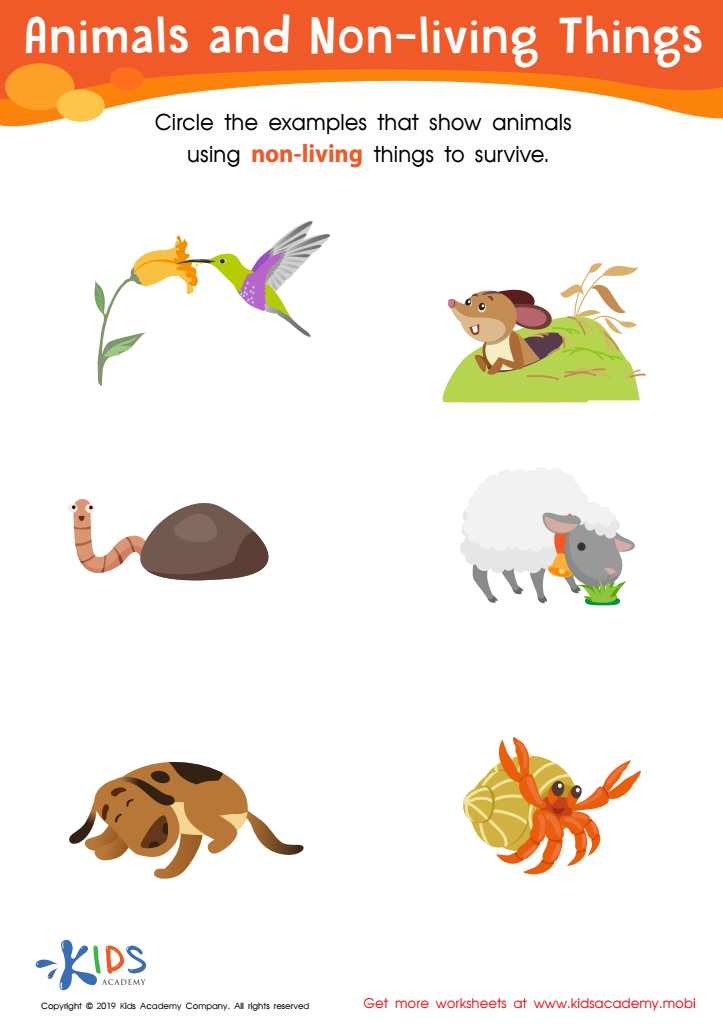
Animals and Non-Living Things Worksheet
People and animals both require more than food to survive. We need shelter, clothing and water, while animals use non-living things like rocks and trees. Ask your kids what else is necessary to survive - then have them identify the objects in the worksheet and circle the examples of animals using non-living things.
Animals and Non-Living Things Worksheet
Worksheet
Join Kids Academy for Free
Who is primarily going to use this learning content?







Categorization skills are critical cognitive abilities that allow children to organize and classify information based on shared attributes. For 6-year-olds, focusing on categorization through activities like sorting and classifying normal (everyday or common) animals serves multiple developmental purposes. Firstly, it sharpens observational skills as children must notice and understand the differences and similarities among animals, enhancing their attention to detail. Secondly, it boosts vocabulary and language skills; children learn new words like "mammal," "bird," and "reptile," aiding communication and literacy.
Moreover, categorizing animals fosters logical thinking and promotes memory retention. These young minds start understanding hierarchies and relationships, foundational for advanced math and science concepts. Practical categorization also sparks curiosity and nurtures a love for learning; discovering facts about animals can lead to a lifelong appreciation for nature and science. Additionally, group activities involving categorization can help with social skills like teamwork and cooperative play.
Understanding and practice in this skill reassure that children are on the right track in their cognitive development. As parents and teachers invest in these activities, they ensure that children build a solid foundation for critical thinking, problem-solving, and academic success in later years. Thus, nurturing categorization skills in young learners is vital for their overall intellectual and personal growth.








