Knowledge application Normal Science Worksheets for 6-Year-Olds
3 filtered results
-
From - To
Discover an exciting range of Knowledge Application Normal Science Worksheets for 6-Year-Olds at Kids Academy! Our engaging worksheets are designed to make learning science fun and effective. Packed with experiments, puzzles, and hands-on activities, these resources encourage young learners to apply scientific concepts in real-world situations. Ideal for enhancing critical thinking, observation, and problem-solving skills, our worksheets help children grasp essential science topics with ease. From basic biology to physical science, each worksheet is meticulously crafted to spark curiosity and foster a love for learning. Fuel your child's scientific journey today with Kids Academy.
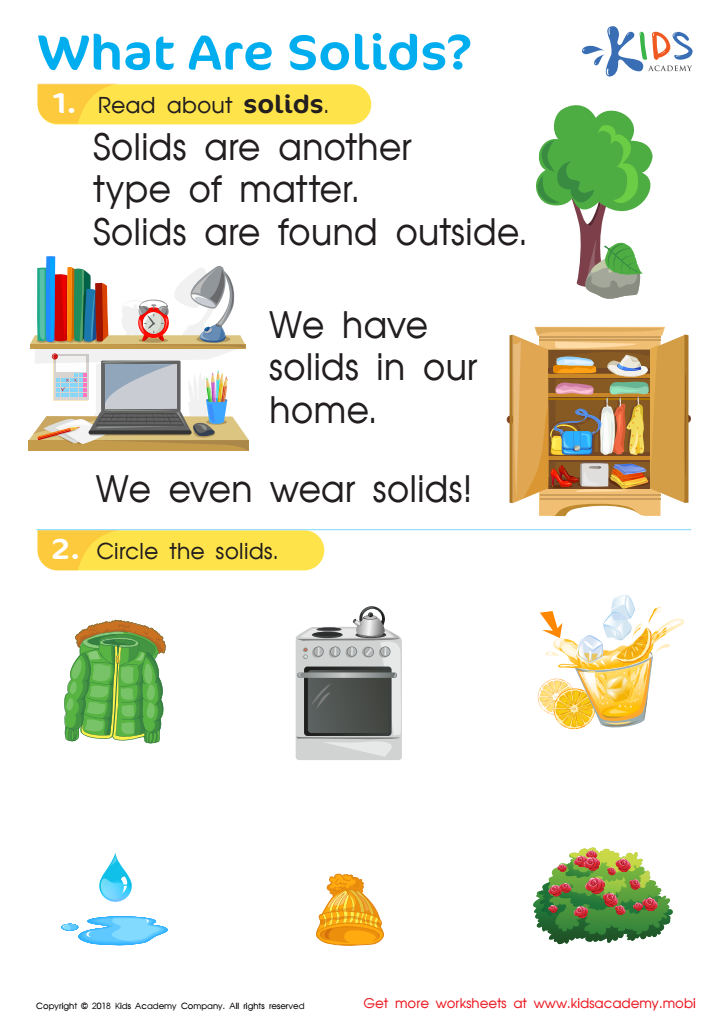
What Are Solids? Worksheet
 Assign to My Students
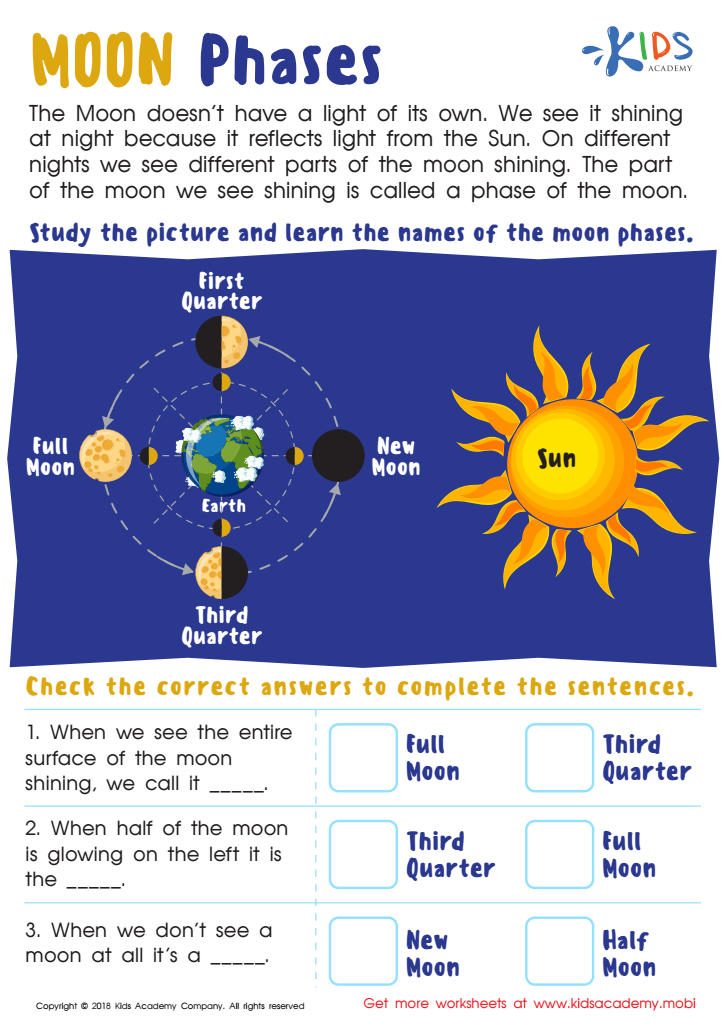
Moon Phases Worksheet
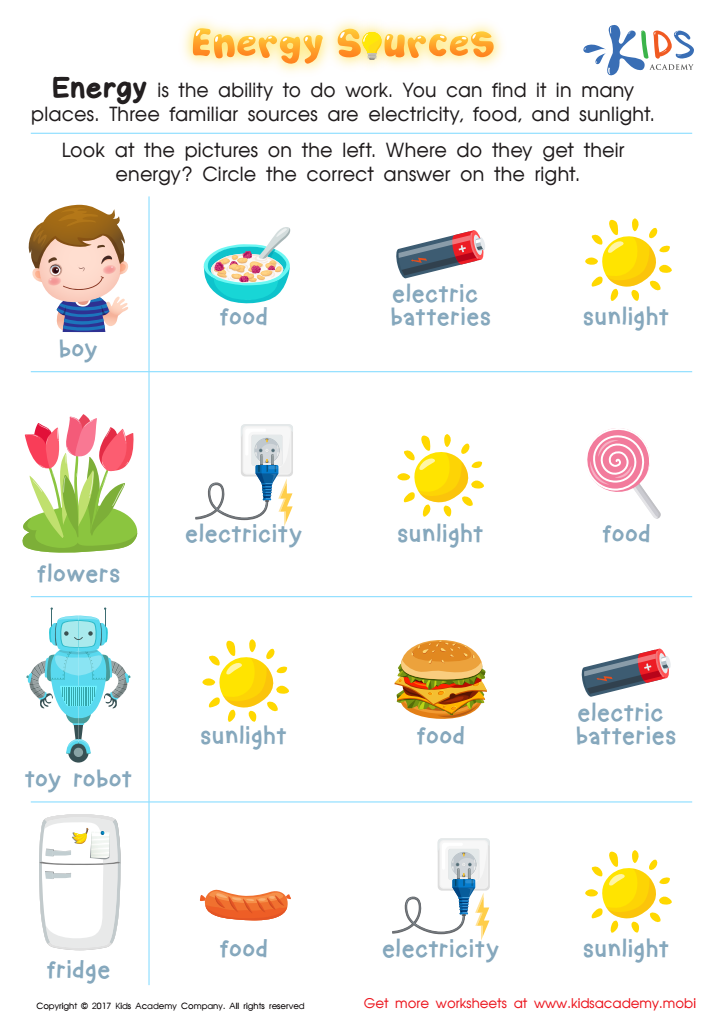
Energy Sources Printable








Parents and teachers should prioritize the application of knowledge in the context of normal science for 6-year-olds because it serves as a foundational building block for lifelong learning and critical thinking skills. At this formative age, children are naturally curious and eager to explore their surroundings. Integrating knowledge application in science fosters an early interest in discovery and investigation, encouraging children to think like scientists. It helps them understand natural phenomena through observation, experimentation, and reasoning, which are essential skills not only in academics but in everyday problem-solving.
Additionally, engaging with scientific principles enhances cognitive development, promoting skills such as logical reasoning, pattern recognition, and sequence processing. It also nurtures creativity and innovation as children learn to ask questions, make hypotheses, and explore outcomes. This approach is particularly empowering as it aligns with experiential learning—children learn best by doing and experiencing rather than passively receiving information.
Incorporating science at an early age also promotes social skills like teamwork and communication when children collaborate on experiments or discuss their observations. Moreover, it lays the groundwork for a strong scientific literacy, essential in an increasingly technology-driven world. By fostering a positive and engaging learning environment around science, parents and teachers can help ensure that young children develop a lasting interest and proficiency in critical areas of knowledge and inquiry.







