Recognizing Patterns Normal Science Worksheets for 6-Year-Olds
3 filtered results
-
From - To
Enhance your child's critical thinking skills with "Recognizing Patterns Normal Science Worksheets for 6-Year-Olds." These expertly designed worksheets from Kids Academy engage young learners with fun, age-appropriate puzzles and activities focused on identifying and understanding patterns in nature, numbers, and daily life. Perfect for developing foundational math and science competencies, each worksheet encourages 6-year-olds to observe, compare, and predict sequences, fostering a love for learning and discovery. Download now to support your child’s educational journey with engaging, standard-aligned interactive lessons tailored to inspire curiosity and cognitive growth.
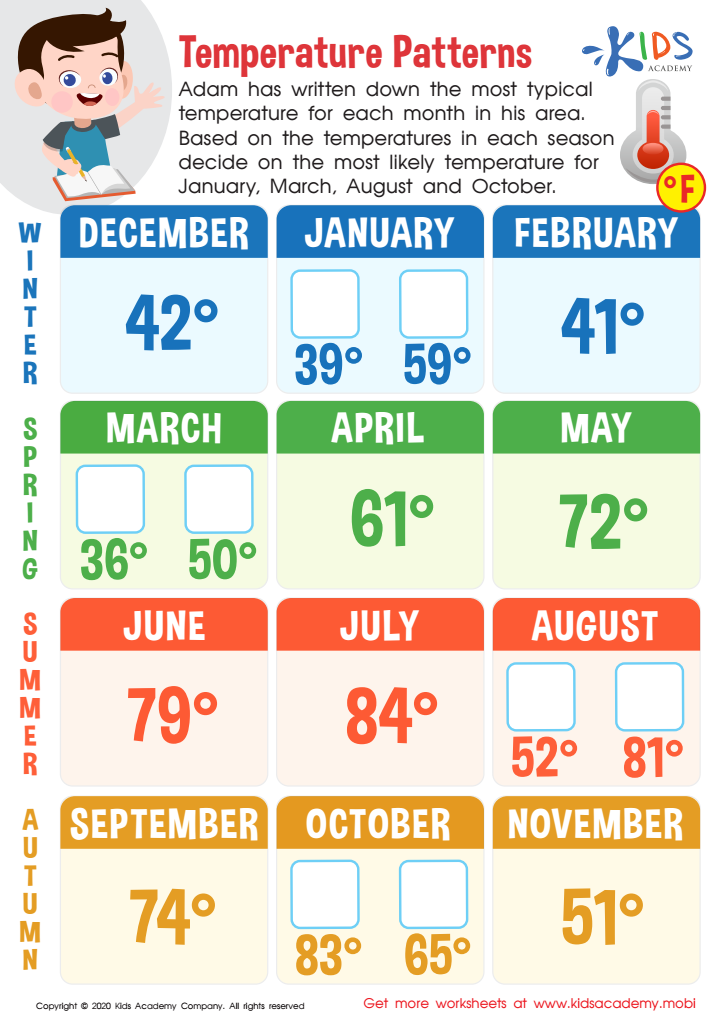
Temperature Patterns Worksheet
 Assign to My Students
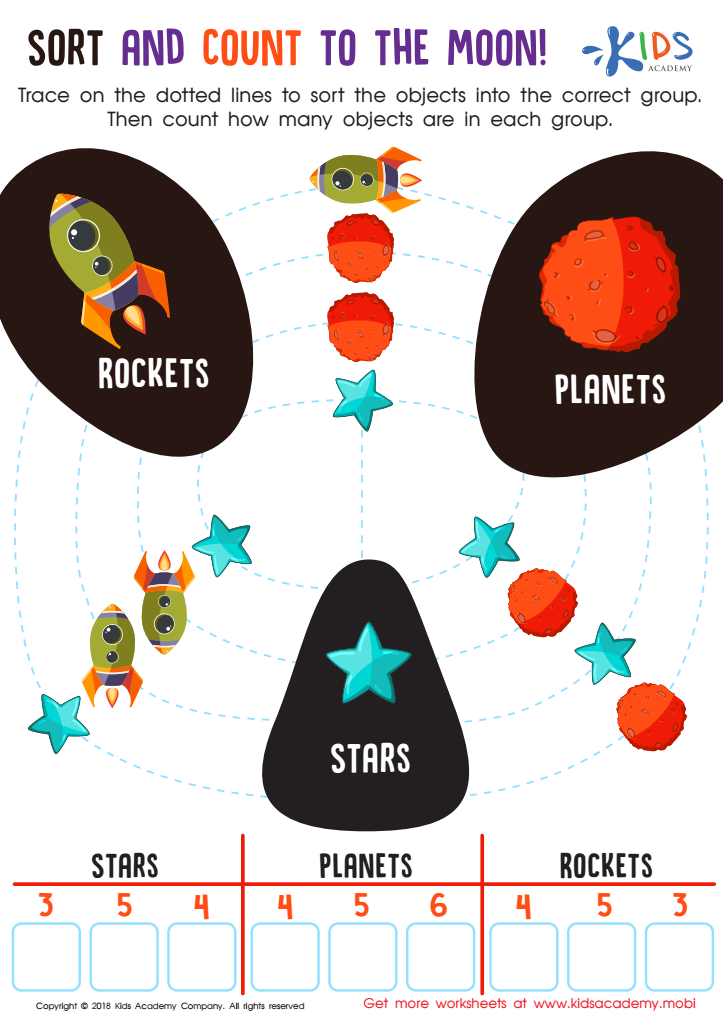
Sort and Count to the Moon Worksheet
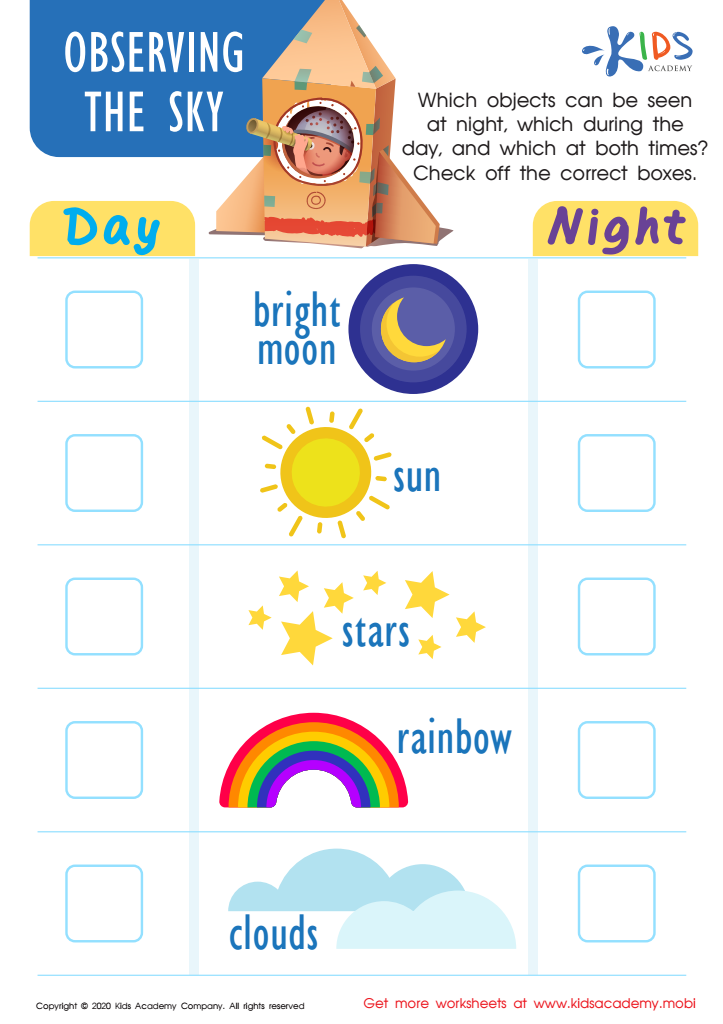
Observing the Sky Worksheet


.jpg)





Recognizing patterns is fundamental in the cognitive development of 6-year-olds because it lays the groundwork for critical thinking and problem solving. Patterns help children understand order, predictability, and how different elements relate to one another, which is essential in subjects ranging from math to language arts. By identifying and understanding patterns, children learn to make connections and predictions, skills that are pivotal in scientific thinking.
Normal Science activities that involve pattern recognition can improve numeracy skills. For example, recognizing number sequences or geometric shapes helps children grasp arithmetic concepts more quickly. Patterns in storytelling and reading aid in comprehension by highlighting sequences and commonalities in narratives.
Moreover, recognizing patterns also extends to social and emotional development. When children identify regularities in social interactions and human behavior, they experience the world as more predictable and safe. This predictability offers a sense of security and boosts their confidence in navigating social settings.
Teachers and parents can support this by incorporating a variety of pattern-recognition activities into daily learning through games, art, and practical life experiences. When adults emphasize the importance of patterns, children not only engage more actively in learning but also build a robust foundation for future scientific inquiry and overall intellectual growth.







