Spatial awareness Normal Science Worksheets for 6-Year-Olds
5 filtered results
-
From - To
Explore our captivating Spatial Awareness Normal Science Worksheets for 6-Year-Olds! Tailored to boost young learners' understanding of space and shapes, these engaging printable activities promote essential skills like problem-solving, critical thinking, and geometry. Each worksheet is designed to make learning fun and interactive, helping children recognize patterns, measure distances, and understand spatial relationships. Perfect for home or classroom use, these resources will inspire curiosity and confidence in science. Join us at Kids Academy to support your child's growth and development with our expertly crafted, age-appropriate learning materials.
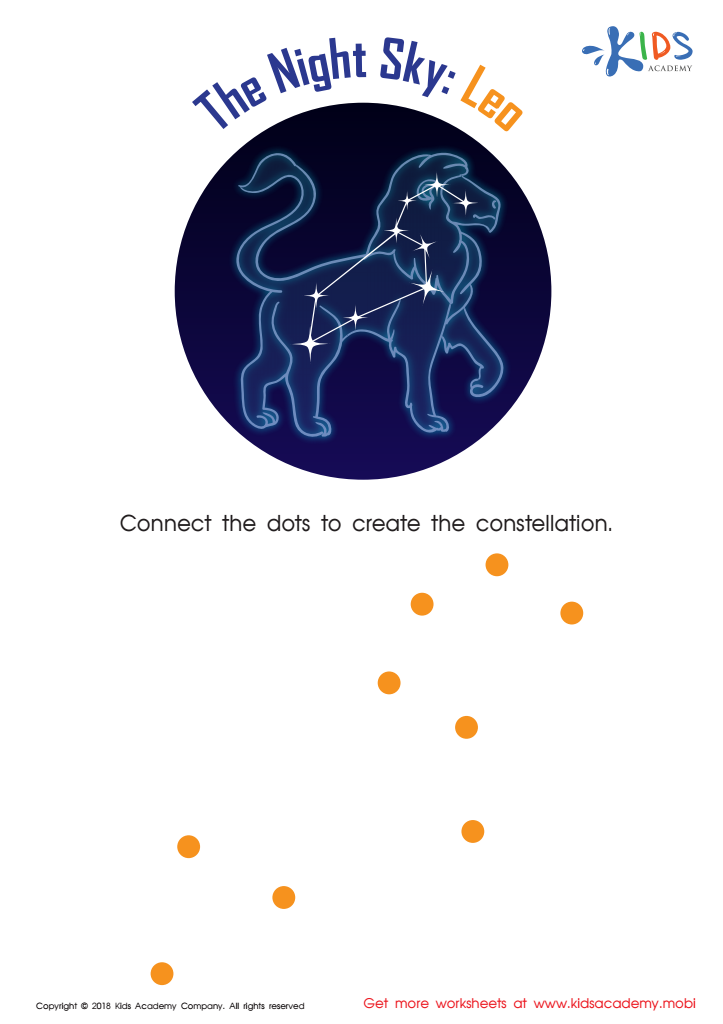
The Night Sky: Leo Worksheet
 Assign to My Students
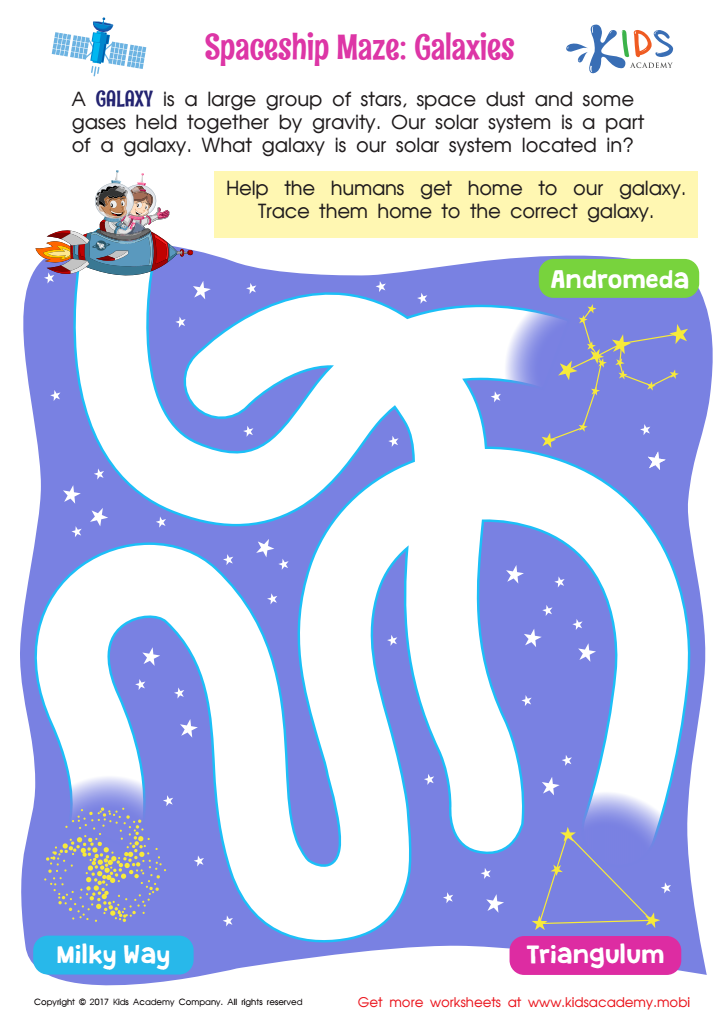
Spaceship Maze: Galaxies Worksheet
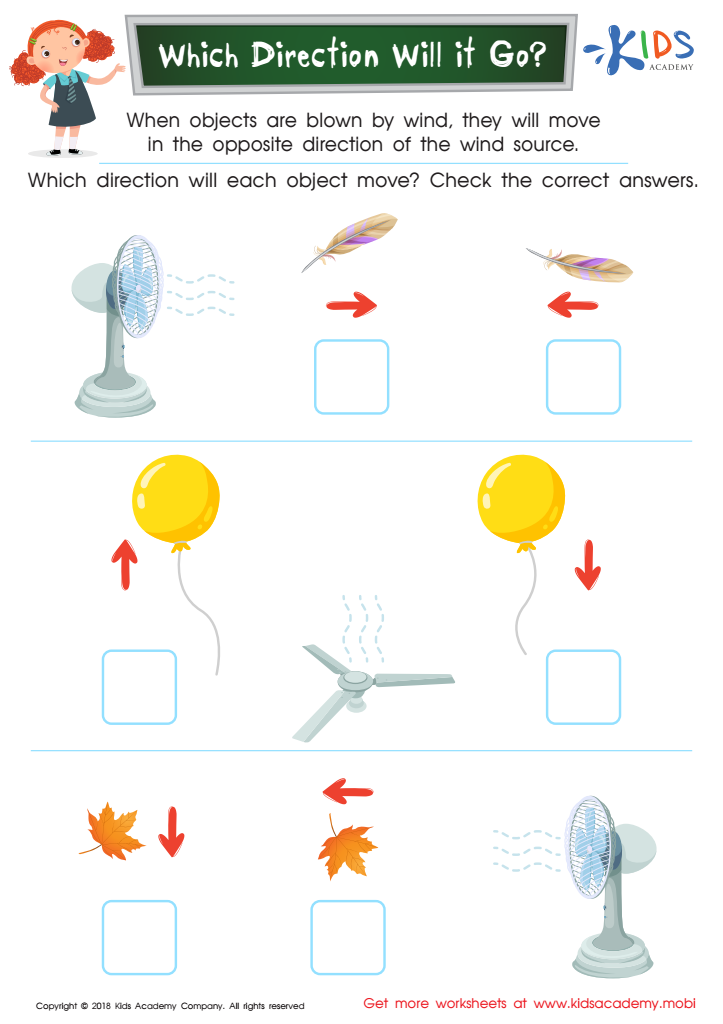
Which Direction Will it Go? Worksheet
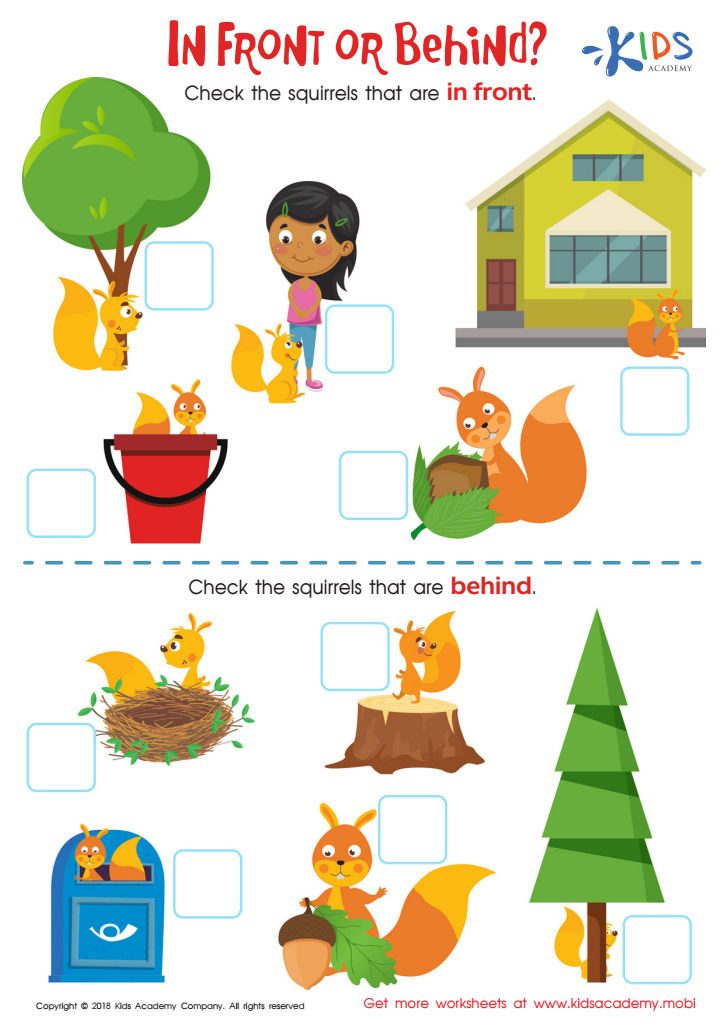
In Front or Behind: Part 2 Worksheet
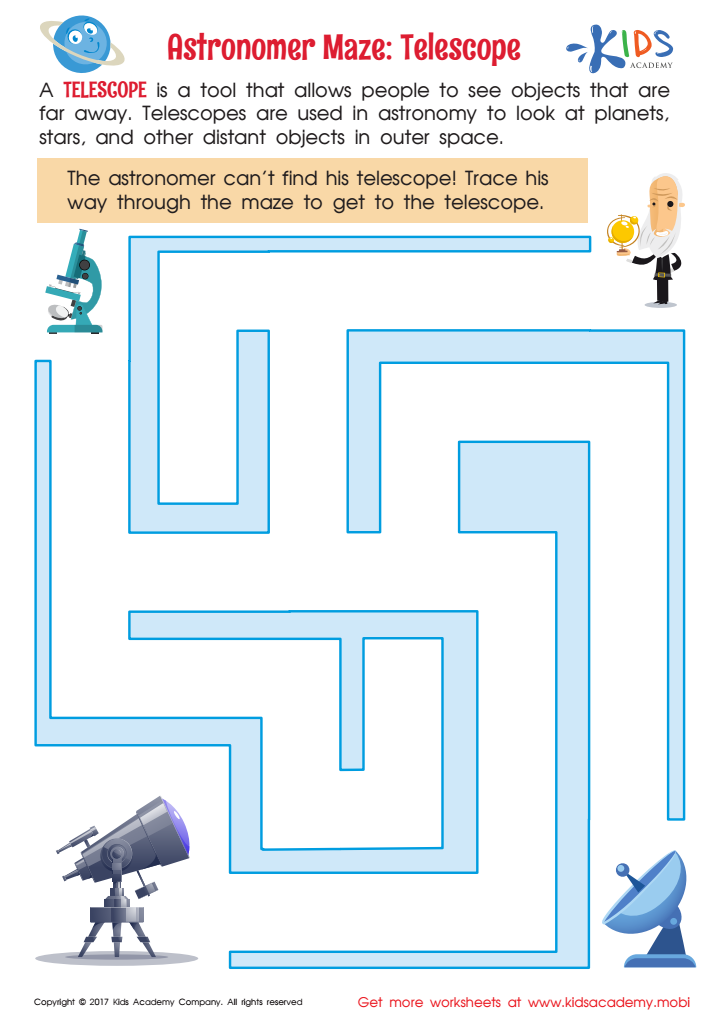
Astronomer Maze: Telescope Worksheet








Spatial awareness is a fundamental cognitive skill for 6-year-olds, underpinning much of their learning and development. For both parents and teachers, fostering this ability can have significant, far-reaching benefits. Spatial awareness is the ability to understand and interact with the environment by recognizing the location, distance, and relationship between objects and oneself. Encouraging this skill promotes better problem-solving, improved motor skills, and stronger academic performance.
Children with well-developed spatial awareness can navigate physical spaces confidently, which helps in activities from playing sports to organizing personal belongings. Academically, spatial skills are closely linked to success in science, technology, engineering, and math (STEM) education. For instance, grasping geometric concepts, understanding maps, and solving math problems all require a certain level of spatial reasoning.
Moreover, spatial awareness also enhances children's ability to internalize and follow instructions, an essential trait for classroom learning and social interactions. As 6-year-olds engage in activities that require spatial thinking—such as puzzles, building blocks, drawing, or even understanding the layout of objects—they develop critical thinking and visualization skills.
Thus, parents and teachers should actively encourage activities and environments that nurture spatial awareness. This investment in early cognitive development sets the stage for later academic and personal success, fostering a child's ability to navigate and understand the world more effectively.







