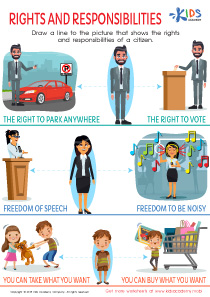
Building vocabulary Normal Community Worksheets for 6-Year-Olds
3 filtered results
-
From - To
Explore our "Building Vocabulary Normal Community Worksheets for 6-Year-Olds," designed to enhance young learners’ vocabulary in a fun and engaging way. Our expertly crafted worksheets encourage students to discover new words related to their community and daily life. These educational activities not only improve language skills but also boost comprehension and critical thinking. Ideal for both classroom and at-home learning, our worksheets are a valuable resource for parents and teachers dedicated to enriching their child’s educational journey. Download, print, and watch your child’s vocabulary flourish while they learn about their surroundings!
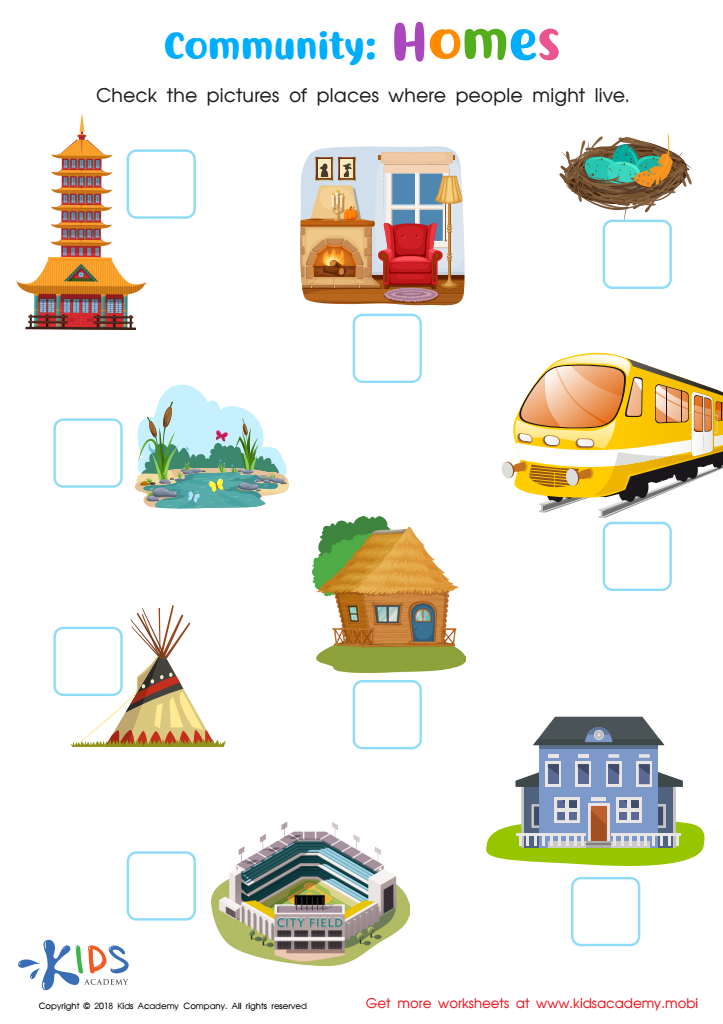
Community: Homes Worksheet
 Assign to My Students
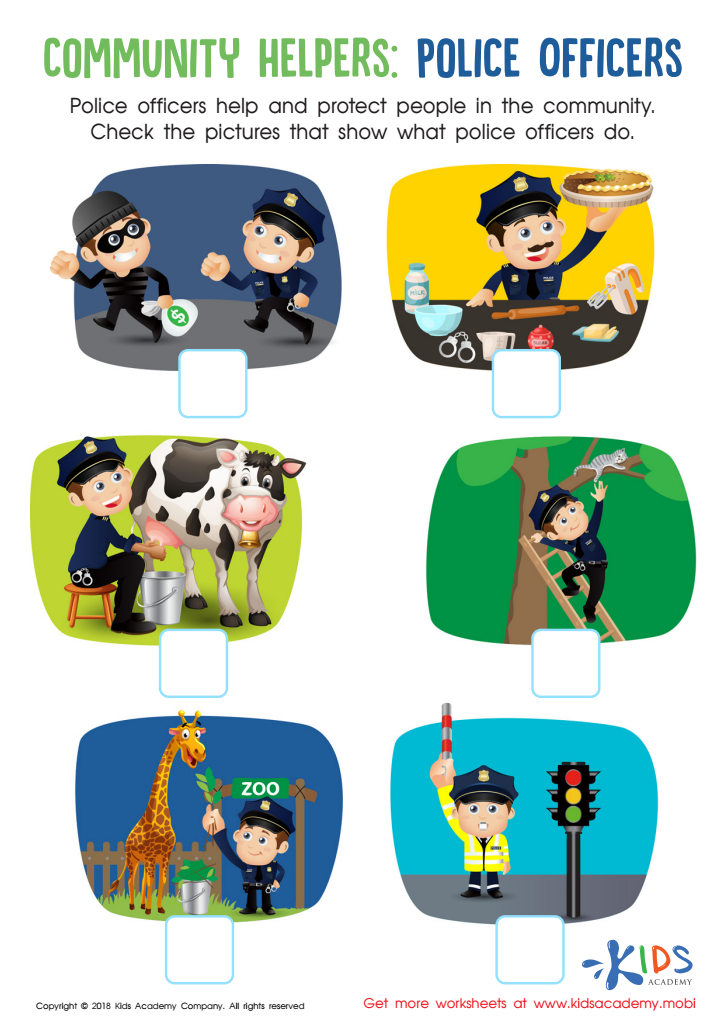
Police Officers Community Helpers Worksheet
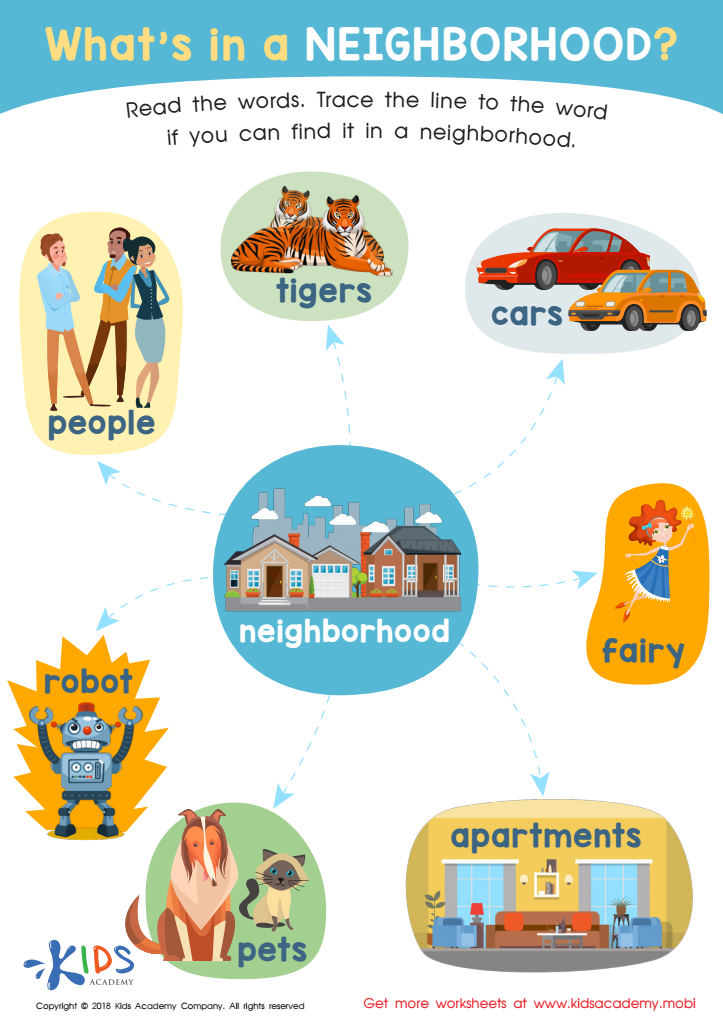
What's in a Neighborhood? Worksheet








Developing a rich vocabulary in early childhood is vital for both educational and social reasons, making it essential for parents and teachers to focus on building vocabulary for 6-year-olds. At this age, children are remarkably receptive to language acquisition, soaking up new words like sponges. Enhancing their vocabulary sets a fundamental base for literacy, including reading and writing. When children possess a broader range of words, they are better equipped to understand texts that they read, thereby fostering a love for reading and learning.
Moreover, a strong vocabulary helps children express their ideas and emotions clearly and confidently. This ability is integral for effective communication, which in turn boosts their social interactions and relationships with peers and adults. It also aids in building their self-esteem. For instance, a child who can accurately describe their thoughts or emotions is less likely to feel frustrated or misunderstood.
Furthermore, vocabulary development is closely linked to cognitive development. It enhances critical thinking and problem-solving skills because it allows children to categorize, classify, and engage in abstract thinking more effectively. Therefore, investing time and effort in expanding a child's vocabulary isn't just about learning new words; it's about equipping them with essential tools for overall cognitive, social, and emotional growth. Parents and teachers play a critical role in this, creating a robust foundation that supports future academic success and personal wellbeing.