Shape Recognition Normal Social Studies Worksheets for 6-Year-Olds
3 filtered results
-
From - To
Explore our engaging Shape Recognition Normal Social Studies Worksheets designed specifically for 6-year-olds! These interactive resources cultivate children's ability to identify and understand various shapes while integrating essential social studies concepts. Our worksheets encourage fun, hands-on learning experiences that enhance spatial awareness and promote cognitive development. Ideal for classroom or home use, these printables cater to diverse learning styles, making it easy for educators and parents to support young learners. With vibrant designs and age-appropriate activities, your child will discover the joys of shape recognition in a social context. Visit our site to boost early learning skills in an enjoyable way!
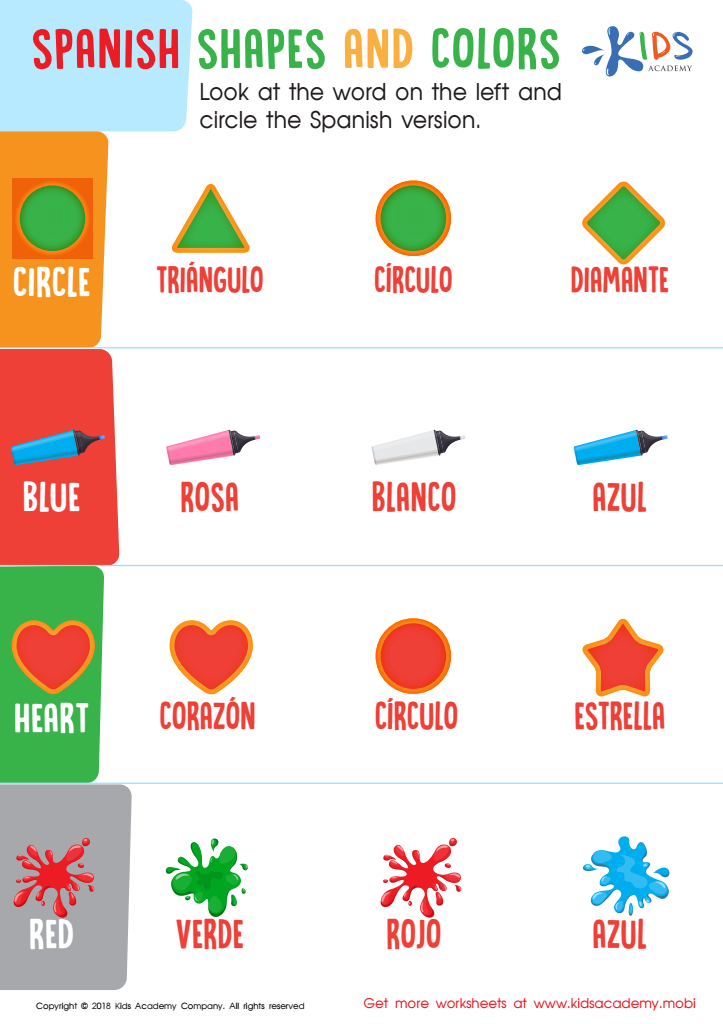
Spanish Shapes and Colors Worksheet
 Assign to My Students

Playground Worksheet
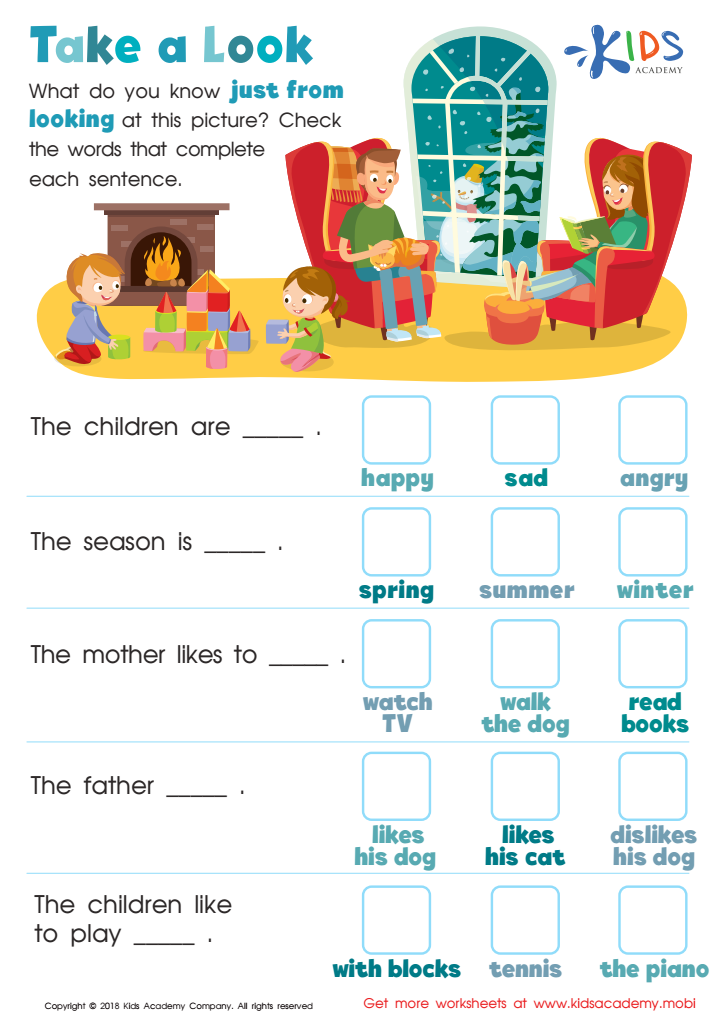
Take a Look - Part 1 Worksheet








Shape recognition is a fundamental skill for 6-year-olds that lays the groundwork for various areas of learning and development. Parents and teachers should prioritize this skill, as it supports not only mathematical conceptualization but also essential cognitive and social capabilities. Understanding shapes helps children learn to categorize and identify objects in their environment, paving the way for basic geometry and spatial reasoning skills that are vital as they progress in their education.
In social studies, shape recognition can enhance a child's ability to see patterns in cultural artifacts, architecture, and geographic representations. These connections foster an appreciation for diversity and aid in the comprehension of their surroundings. Moreover, learning through shapes enhances creative thinking; children begin to engage in art and design, using shape knowledge to create their own representations of the world.
Additionally, shape recognition promotes fine motor skills through activities like drawing, cutting, and crafting shapes—essential for physical development. By integrating shape recognition into social studies, children learn to collaborate and communicate as they share their discoveries, igniting curiosity about their community and the world. Ultimately, nurturing this skill fosters a holistic educational experience, encouraging well-rounded growth in young learners.








