Understanding communities Normal Social Studies Worksheets for 6-Year-Olds
3 filtered results
-
From - To
"Understanding Communities Normal Social Studies Worksheets for 6-Year-Olds" offer young learners an engaging way to explore the concept of communities. These expertly crafted worksheets cover various aspects of community life, including roles, responsibilities, and connections. Helping 6-year-olds develop social awareness and a sense of belonging, each worksheet nurtures learning through fun, interactive activities. Perfect for both classroom and home use, these resources inspire curiosity and foster a deeper understanding of the world around them. With vivid illustrations and thoughtfully designed questions, children will enjoy discovering how communities work and why they are essential. Ideal for building foundational social studies skills.
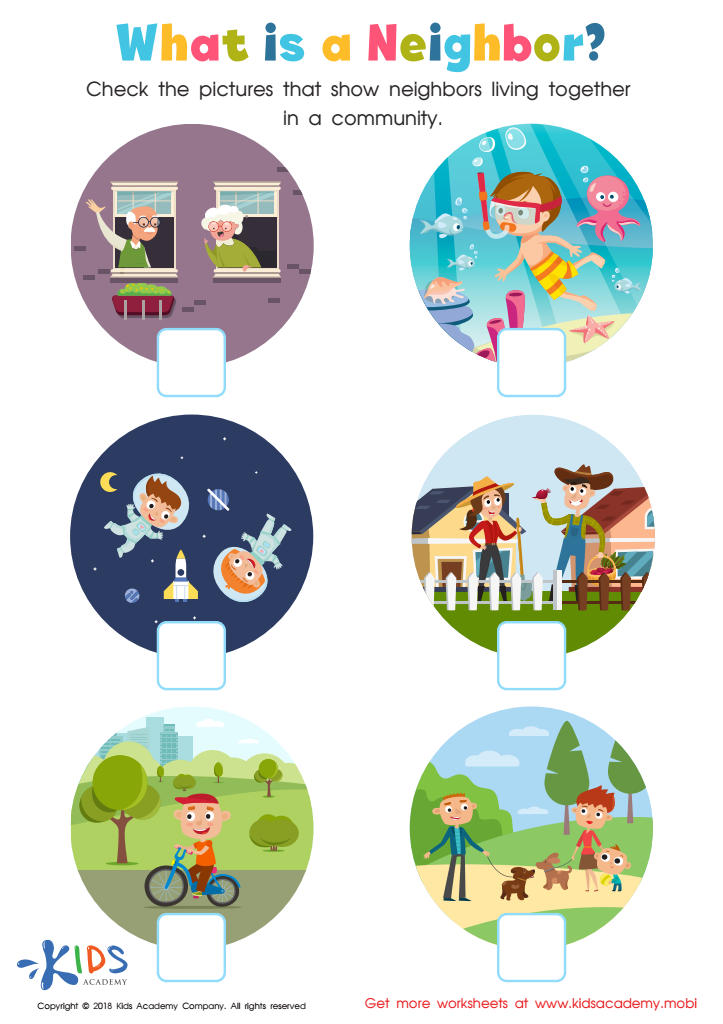
What is a neighbor Worksheet
 Assign to My Students
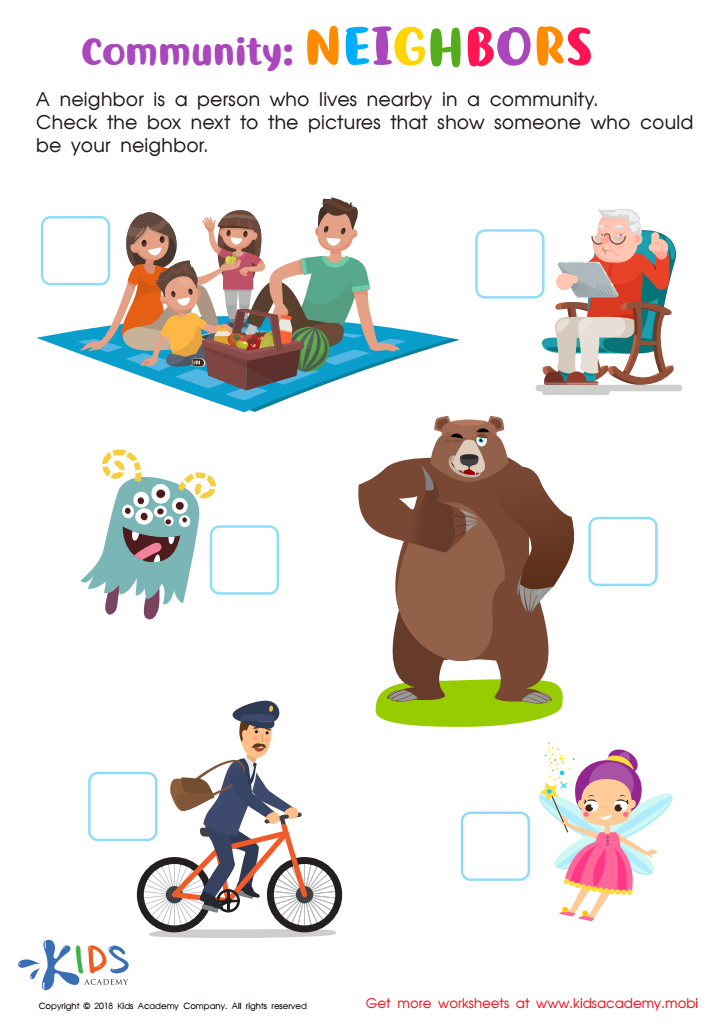
Community: Neighbors Worksheet
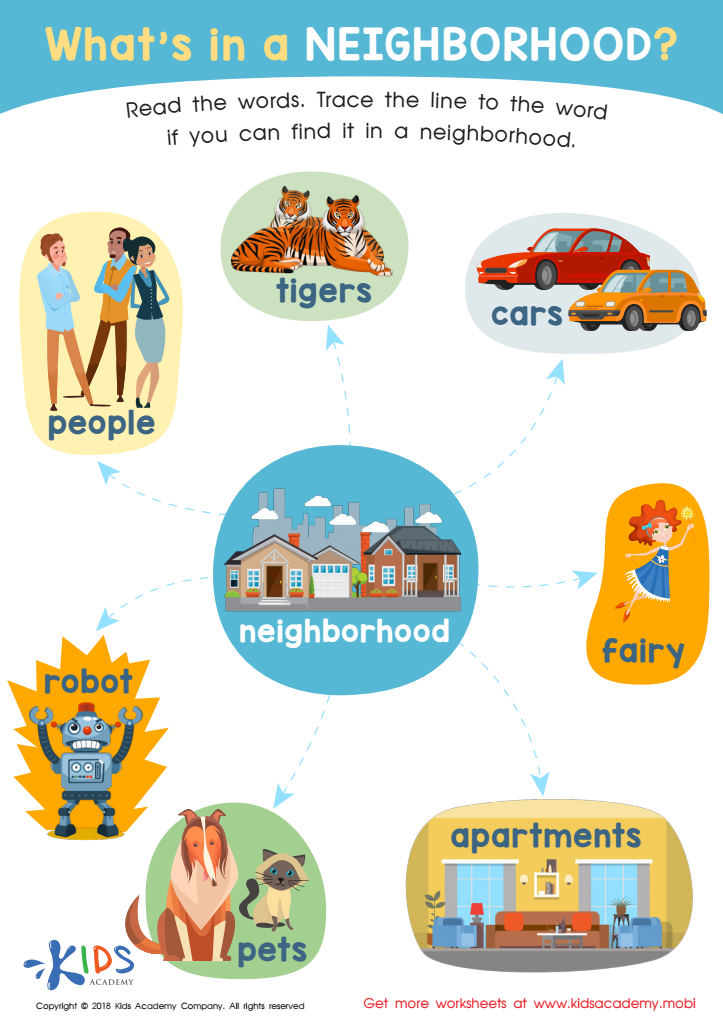
What's in a Neighborhood? Worksheet








Understanding communities in social studies is crucial for 6-year-olds as it lays the foundation for their social and academic development. At this age, children are beginning to make sense of the world beyond their immediate family. Learning about communities allows them to see the roles and responsibilities people have, understand diversity, and develop empathy. For parents and teachers, this introduces the child to concepts of cooperation, democracy, and the importance of working together for the common good.
When kids grasp the basics of how communities function, they learn about social relationships, cultural practices, and community helpers such as doctors, firemen, and teachers. This understanding fosters a sense of belonging and responsibility, critical for personal growth and civic awareness. It encourages kids to appreciate differences and embrace inclusivity, crucial in our diverse society.
Additionally, early exposure to these social norms makes children better listeners, opens the door to effective communication, and promotes conflict resolution skills. Home and school collaboration in teaching community principles strengthens these lessons, making the educational experience more meaningful and cohesive. Parents' and teachers' active participation in a child's learning journey enriches their understanding, helping them grow into responsible, informed citizens who value their community and actively contribute to it.