Rhyming skills development Normal Alphabet Worksheets for Ages 7-8
4 filtered results
-
From - To
Enhance your child's rhyming skills with our engaging Normal Alphabet Worksheets designed for ages 7-8! These worksheets focus on phonemic awareness and boost literacy by encouraging children to recognize and generate rhymes, a vital aspect of reading development. Each worksheet includes fun, interactive activities that captivate young learners and make practicing this essential skill enjoyable. Ideal for classroom settings or home learning, these printable resources help build vocabulary, improve pronunciation, and foster a love for language. Watch your child gain confidence and creativity through the joy of rhyming while solidifying their foundational reading skills! Explore the fun and educational opportunities today!

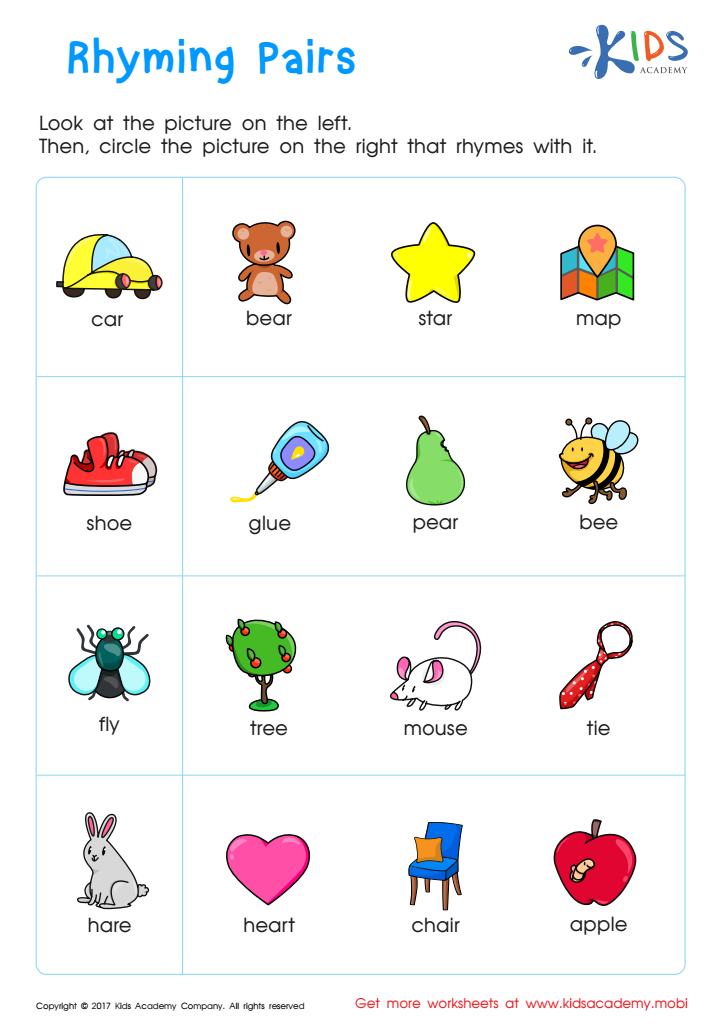
Rhyming Words Rhyming Worksheet
 Assign to My Students
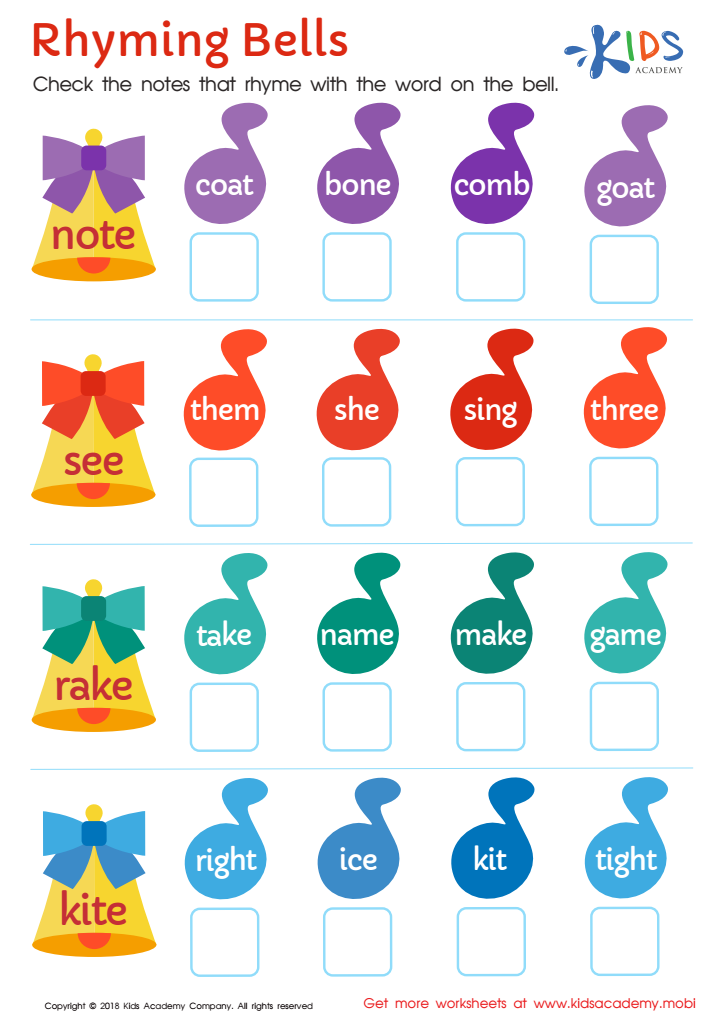
Rhyming Bells Worksheet
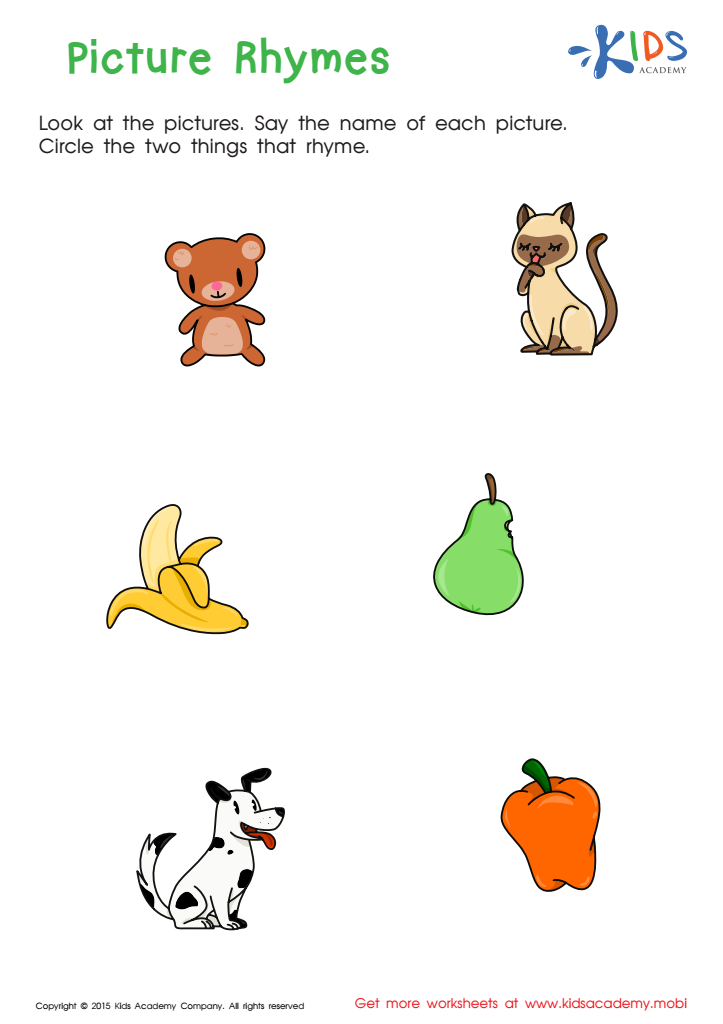
First Words: Picture Rhymes Worksheet







Rhyming skills are essential for children aged 7-8 as they significantly contribute to language development, literacy, and overall cognitive skills. At this age, children are not only consolidating their understanding of phonemic awareness but also preparing to tackle more complex reading and writing tasks. Rhyming helps them to recognize patterns in words, which is crucial for decoding unfamiliar words and enhances their pronunciation skills.
Additionally, engaging children in rhyming activities fosters a love for language and poetry. It encourages creativity and imagination as they explore different words and sounds. These skills are fundamental for writing richer stories and poems, enhancing their communication abilities. Moreover, rhyming can improve memory and recall, essential for their academic success.
Parents and teachers should also focus on social interaction—rhyming games and activities promote collaboration and turn-taking, vital for developing social skills. By nurturing these skills early, we lay a strong foundation for effective reading comprehension, critical thinking, and a lifelong enthusiasm for learning. Ultimately, supporting rhyming skills not only enhances children's academic capabilities but also supports their emotional expression and creativity. Thus, investing in this aspect of their development yields long-term benefits in and out of the classroom.







