Sound-letter association Normal Alphabet Worksheets for Ages 7-8
3 filtered results
-
From - To
Unlock your child's reading potential with our Sound-letter Association Normal Alphabet Worksheets designed specifically for ages 7-8! These engaging worksheets aim to strengthen your child’s understanding of the connection between sounds and letters, vital for developing reading proficiency. Packed with interactive activities and vibrant illustrations, your child will practice letter recognition and phonetic sounds in a fun and engaging way. Whether used at home or in the classroom, our worksheets support early literacy skills and promote confident reading. Explore a variety of exercises that cater to different learning styles and help your child master the fundamentals of reading through sound-letter association!
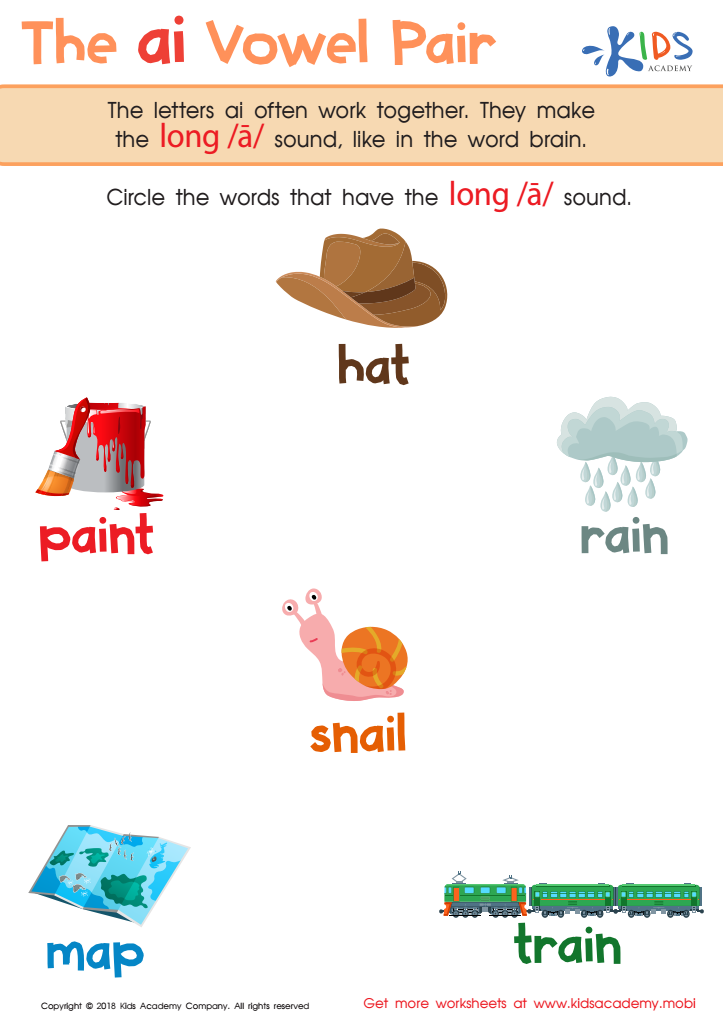
The AI Vowel Pair Worksheet

Letter E Tracing Worksheet
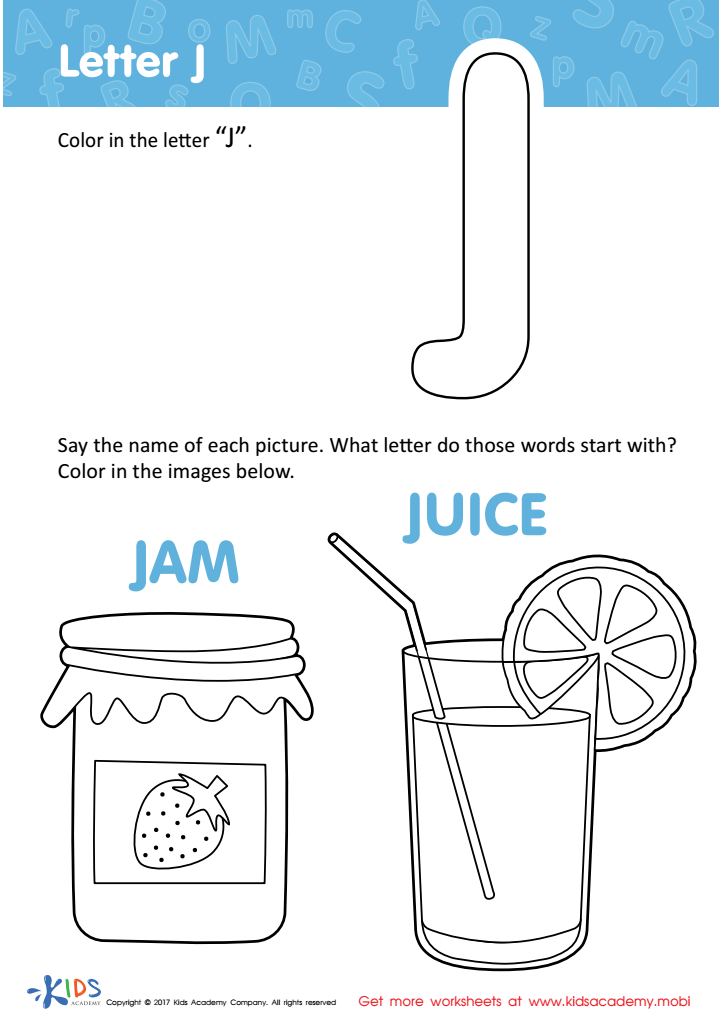
Letter J Coloring Sheet
 Assign to My Students







Sound-letter association is crucial for children aged 7-8 as it forms the foundation for reading and writing proficiency. At this stage, learners transition from learning to read to reading to learn, making it essential to solidify their understanding of how letters correspond to sounds. This association helps young learners decode words, enhancing their ability to recognize familiar patterns in language.
Teachers and parents should care about sound-letter association because it significantly impacts a child's future academic success. Students proficient in sound-letter connections are more likely to develop strong reading fluency, vocabulary skills, and comprehension. This not only improves their performance in literacy-related subjects but also builds their confidence in tackling more complex reading materials as they progress.
Moreover, effective sound-letter instruction promotes critical thinking and problem-solving skills. It helps children approach unfamiliar words systematically, fostering resilience and independence in learning. Through practice, sound-letter associations can enhance a student’s enjoyment of reading, sparking a lifelong love for literature.
Therefore, supporting children through targeted sound-letter activities ensures they acquire essential literacy skills, paving the way for their overall educational development and success in a competitive world. Both teachers and parents play a vital role in nurturing these skills.







