Discover the perfect tool to enhance your child's reading skills with our Phonics Recognition Worksheets, tailored for ages 7-8. Designed to align with standard curriculum requirements, these engaging sheets provide young learners with essential practice in sound-letter associations, blending, and phonemic awareness. Each worksheet is crafted to build confidence in phonics through fun, interactive activities that keep children motivated and excited about learning. Ideal for classrooms or at-home study, our worksheets are the reliable choice for solidifying foundational literacy skills. Give your child the head start they need with our expertly designed Phonics Recognition Worksheets.

Check out this FREE Trial Lesson on Phonics for age 7-8!

Distinguish Between Words with Long I and Short I

Favorites
With answer key
Interactive
  • 7-8
  • Phonics recognition
  • Phonics
  • Normal
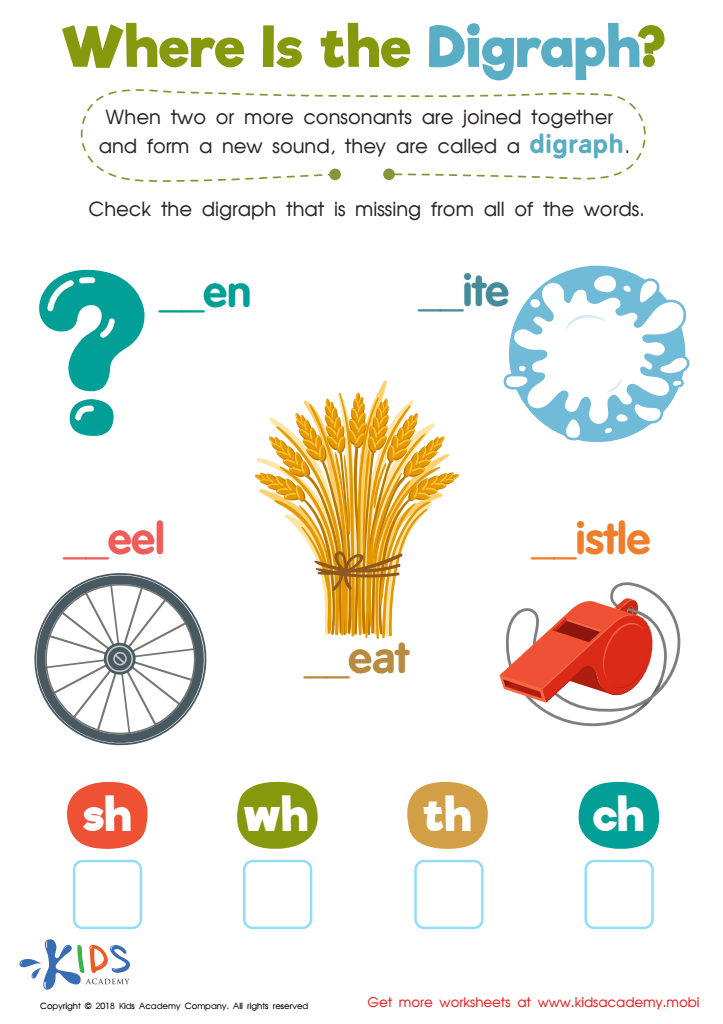
Where Is the Digraph? Worksheet

Where Is the Digraph? Worksheet

Teach your child about digraphs - two or more consonants that form one sound, like /wh/, /sh/, and /ch/. Show them words with these sounds and use this worksheet to help. Ask them which digraph is missing from the words and point out the pictures. 80 words.
Where Is the Digraph? Worksheet
Worksheet
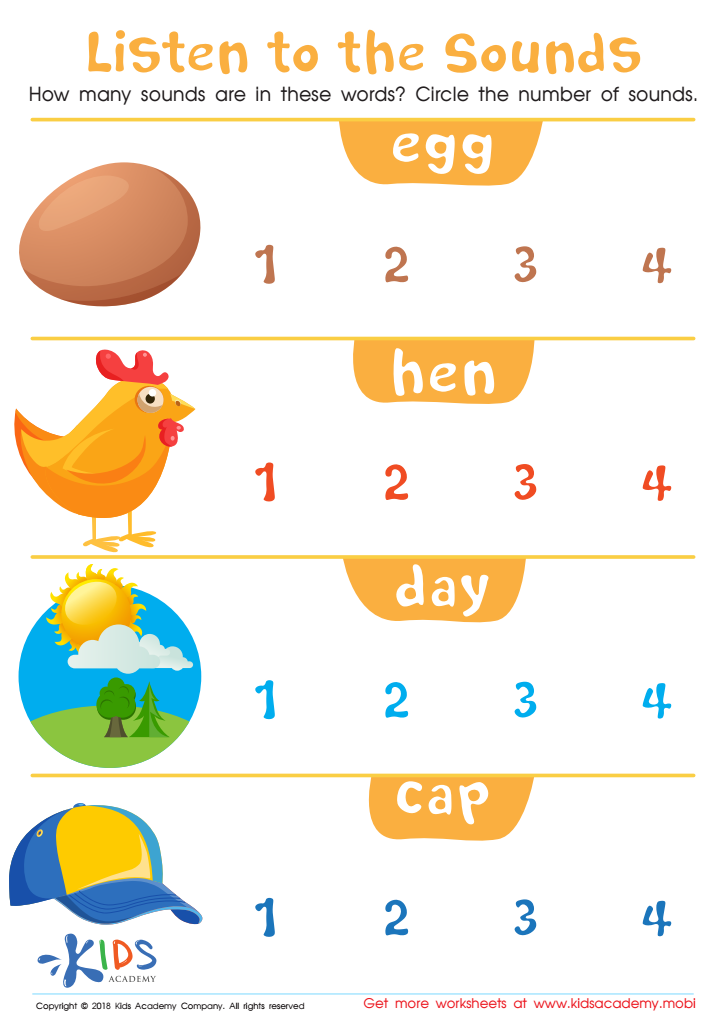
Listen to the Sounds Worksheet

Listen to the Sounds Worksheet

This worksheet builds emerging readers' skills in using sounds for reading and spelling. It helps strengthen auditory processing by having them count the sounds in each word, then trace the corresponding number. Fun and cheerful!
Listen to the Sounds Worksheet
Worksheet
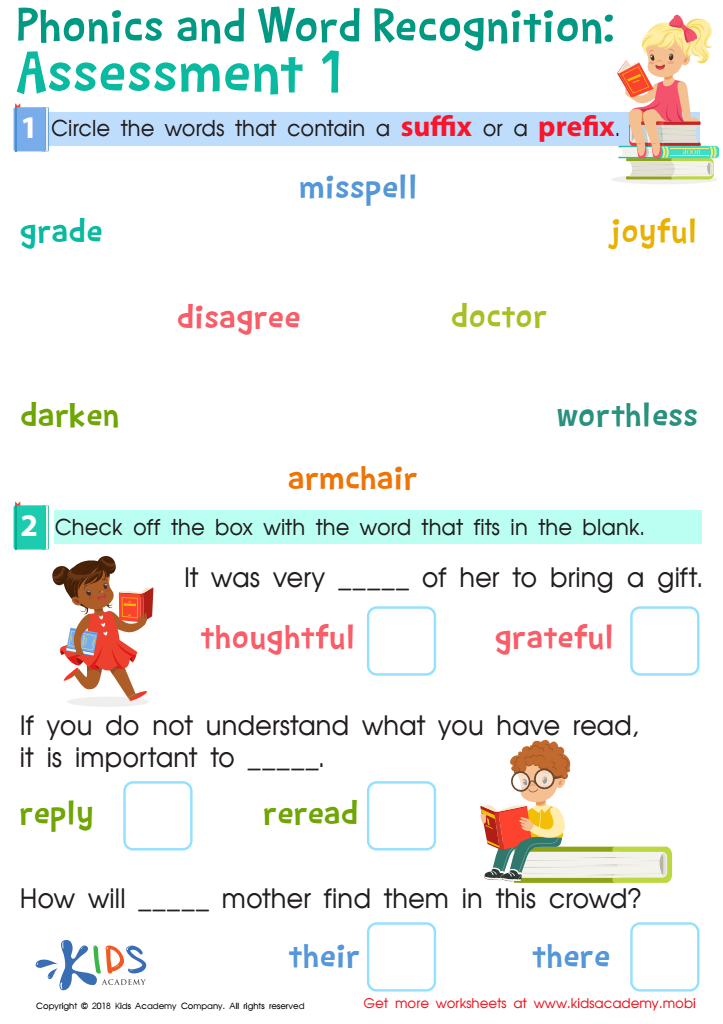
Phonics and Word Recognition: Assessment 1 Worksheet

Phonics and Word Recognition: Assessment 1 Worksheet

Explain prefixes (words added to start of another word to give it a new meaning) and suffixes (added to end of word to change its meaning) to your kids with examples like 'unhappy' (prefix) and 'forgetful' (suffix). Now, help your child complete this worksheet, including circling words and checking boxes.
Phonics and Word Recognition: Assessment 1 Worksheet
Worksheet
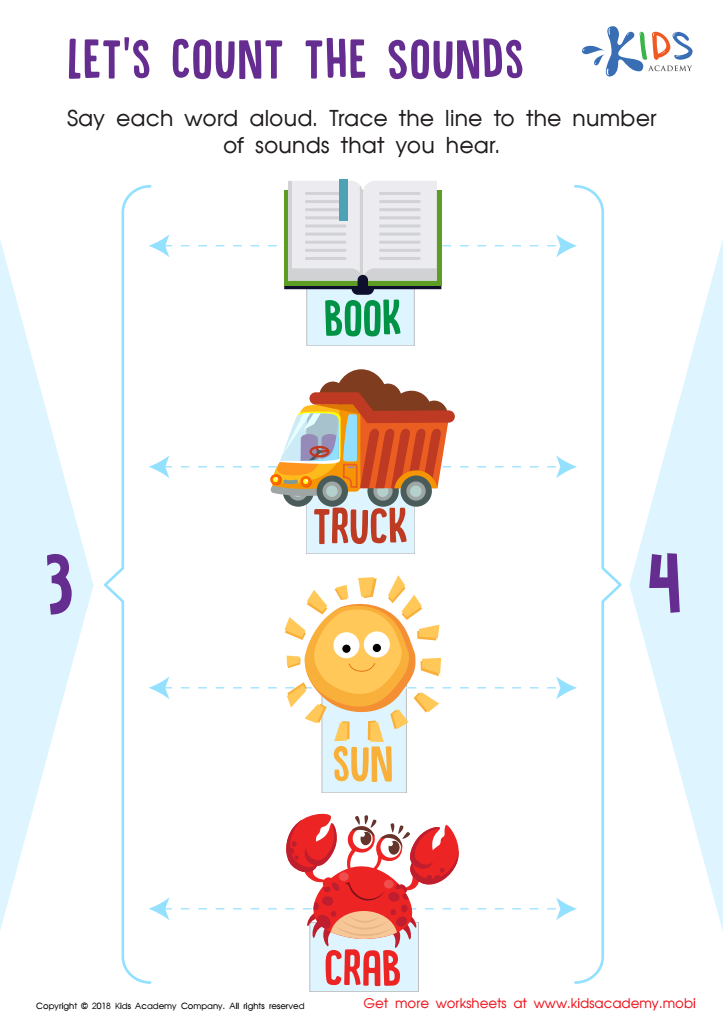
Let's Count the Sounds Worksheet

Let's Count the Sounds Worksheet

This bright and cheery traceable worksheet encourages children to practice auditory discrimination and phonological awareness. Using picture clues, they read each word and trace the line that represents the number of sounds heard. This builds decoding skills and helps them become successful readers.
Let's Count the Sounds Worksheet
Worksheet
Reading: Long I and Short I Sound Maze Worksheet

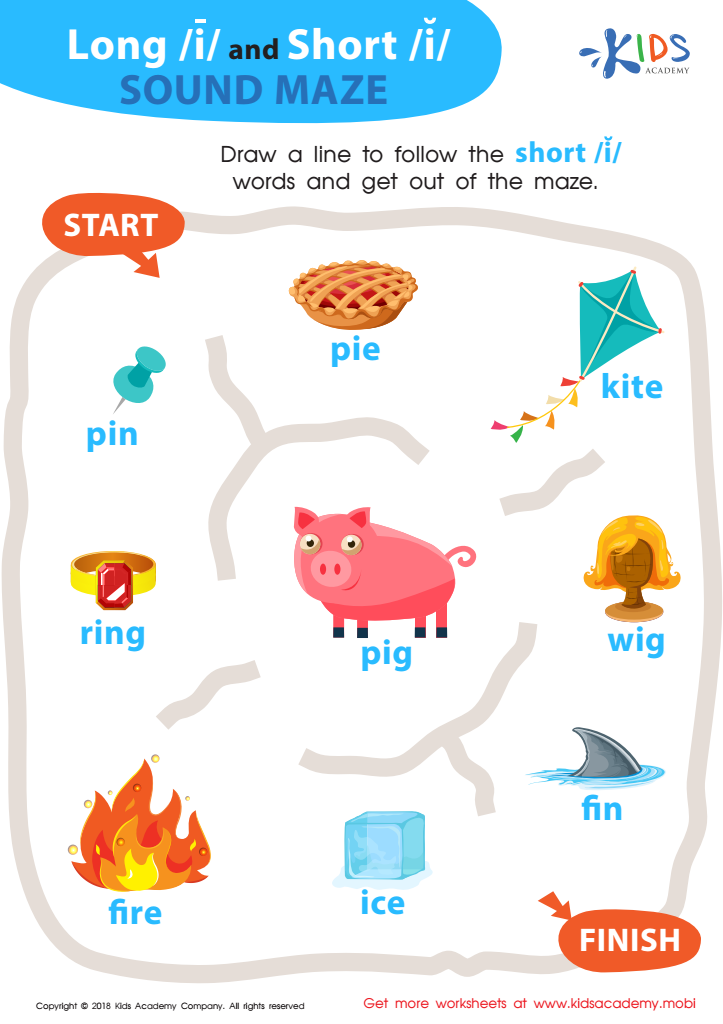
Reading: Long I and Short I Sound Maze Worksheet

Question your students if the worksheet is entertaining. They may respond negatively! Nonetheless, this activity will bring satisfaction while learning the distinction between a long and short I sound. Students read the words in the maze and only follow the words with the short I sound to finish the exercise. Grasping the difference between long and short vowels is demanding, but this worksheet helps students understand this reading skill.
Reading: Long I and Short I Sound Maze Worksheet
Worksheet
Let's Check for «i» Sounds Worksheet

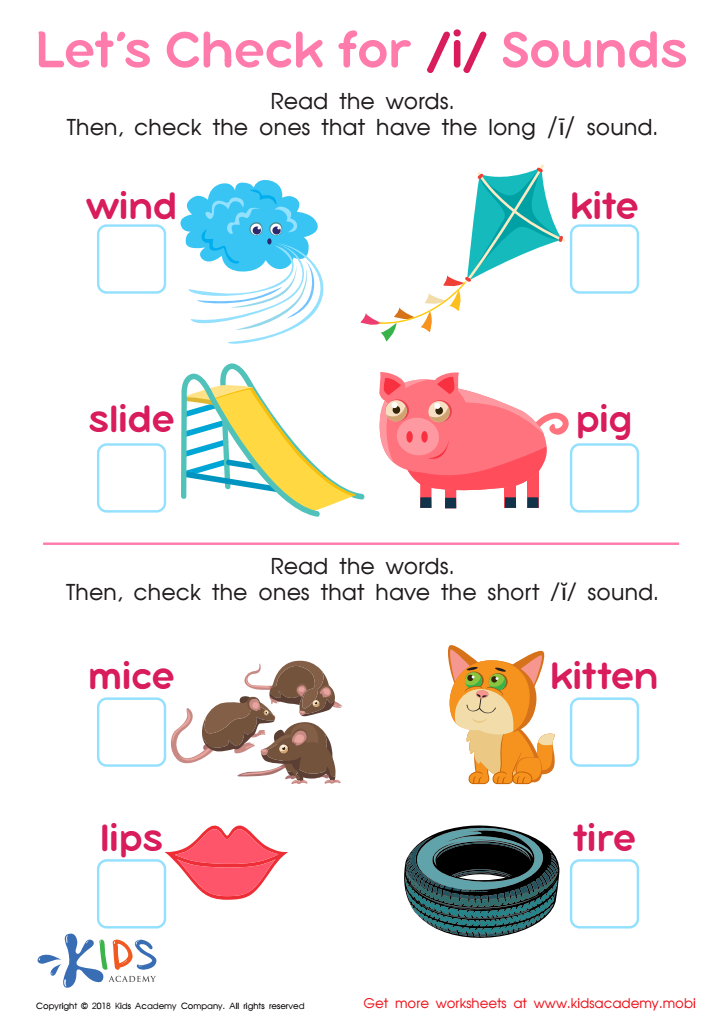
Let's Check for «i» Sounds Worksheet

This fun worksheet with pictures boosts phonics skills - differentiating between long «ī» and short «i» sounds in 1- and 2-syllable words. Kids use picture clues to read words, then check off the correct ones. It's a great way for new readers to practice early reading skills and find success on their own.
Let's Check for «i» Sounds Worksheet
Worksheet
Phonics and Word Recognition: Assessment 2 Worksheet

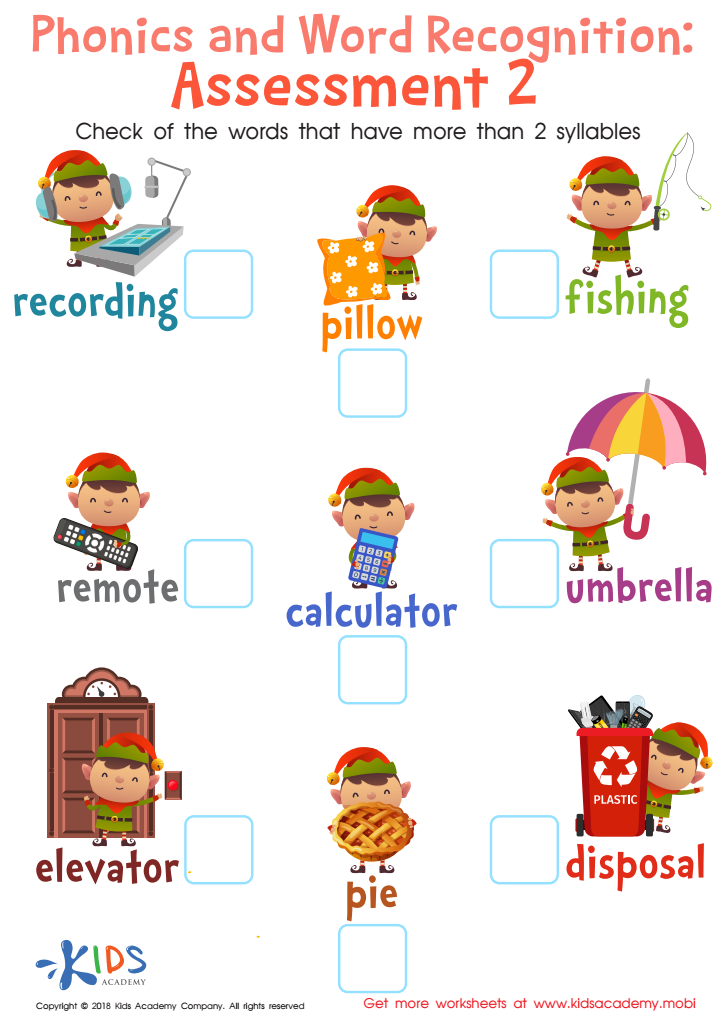
Phonics and Word Recognition: Assessment 2 Worksheet

Help your kids learn proper pronunciation by counting syllables. Most words they'll encounter have 1-3 syllables, making them simple to say. Have them repeat the words in your worksheet after you. Focus on longer words with more than two syllables.
Phonics and Word Recognition: Assessment 2 Worksheet
Worksheet
Ir ur er words worksheet

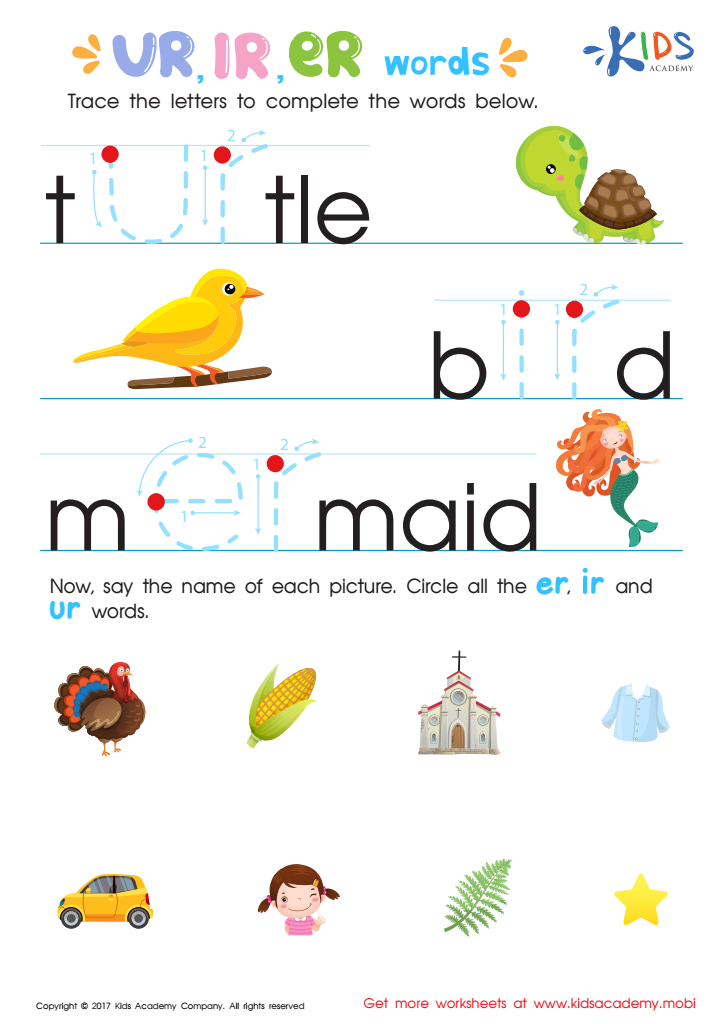
IR UR ER Words Worksheet

Trouble spelling words with the same initial vowel sound? Our worksheet is here to help! With its exercises to help your child learn to read and spell turtle, bird, and mermaid, it'll make differentiating these tricky digraphs a snap.
IR UR ER Words Worksheet
Worksheet


Phonics recognition plays a crucial role in a child's literacy development, especially for ages 7-8. At this stage, children transition from "learning to read" to "reading to learn." Phonics is the relationship between letters and sounds, and understanding this can significantly impact a child’s ability to read, write, and spell effectively. For parents and teachers, emphasizing phonics helps children decode new words, leading to improved reading fluency and comprehension.

As children grasp phonics principles, they become more confident readers. This boosts their academic performance not only in language arts but across all subjects that require reading. Additionally, early phonics recognition can help identify and address learning difficulties, such as dyslexia, providing timely support tailored to the child's needs.

Furthermore, phonics instruction promotes independent reading, which builds a lifelong love for books and learning. Teachers and parents who commit to phonics education provide their children with essential tools to tackle more complex texts, supporting overall cognitive development.

In summary, investing time in phonics recognition at ages 7-8 sets a strong foundation for future literacy and learning. It empowers children with the skills needed for academic success and nurtures a positive attitude towards education.