Filters

6 filtered results

Clear all filters
Favorites
With answer key
Interactive

6 filtered results

Difficulty Level

Grade


Enhance your child's vocabulary with our engaging Normal Phonics Worksheets, designed specifically for ages 7-8. These worksheets promote vocabulary development through fun, interactive exercises that strengthen phonetic awareness and word recognition. With a variety of activities, including matching words to pictures, fill-in-the-blank exercises, andword searches, children will build a robust vocabulary that enhances their reading and writing skills. Our resources not only make learning enjoyable but also cater to different learning styles, ensuring that every child can thrive. Give your child the tools they need to succeed in literacy with our thoughtfully crafted phonics worksheets!

Check out this FREE Trial Lesson on Phonics for age 7-8!

Divide Words into Syllables

Favorites
With answer key
Interactive
  • 7-8
  • Vocabulary development
  • Phonics
  • Normal
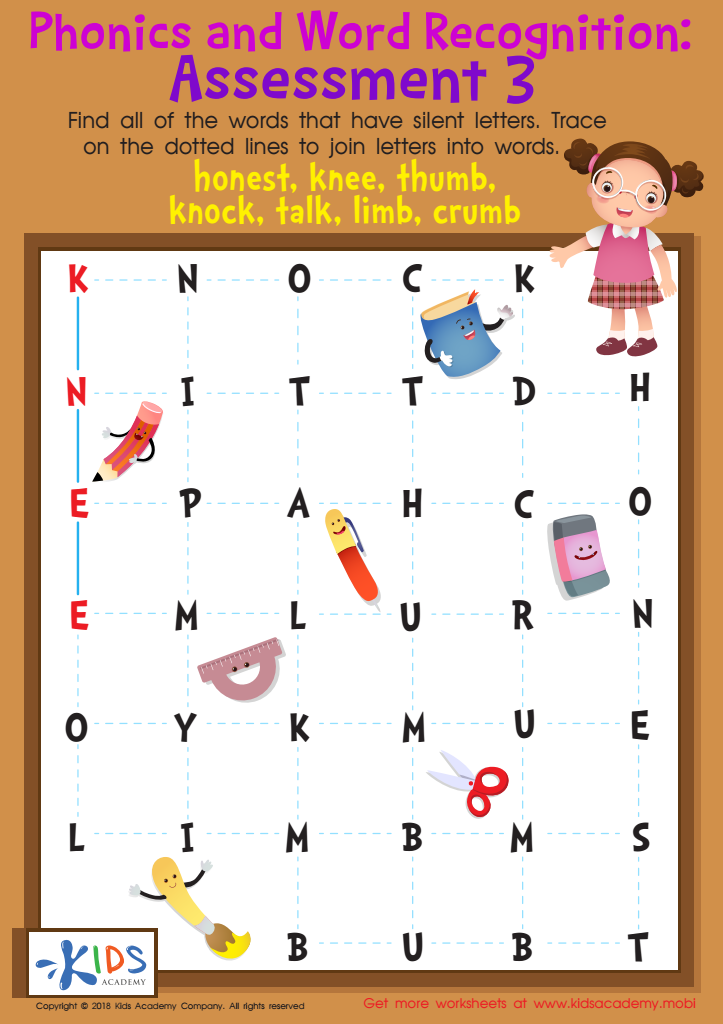
Phonics and Word Recognition: Assessment 3 Worksheet

Phonics and Word Recognition: Assessment 3 Worksheet

Silent letters can be tricky for kids learning to read and write. Show them how they work with words like 'knee' and 'dumb'. Then, challenge them to come up with their own. Give them a worksheet with silent letters and trace the lines to join the letters into words.
Phonics and Word Recognition: Assessment 3 Worksheet
Worksheet
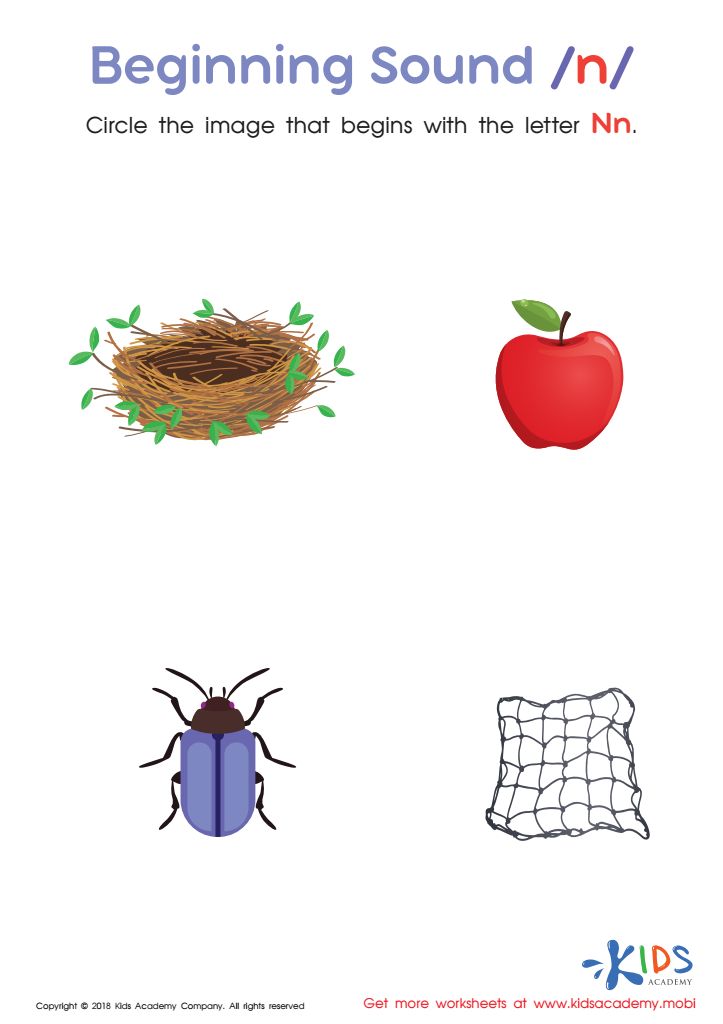
Beginning Sound «n» Worksheet

Beginning Sound «n» Worksheet

Help your emerging reader learn the initial «n» sound with this free PDF worksheet! Strengthen fine motor skills by tracing circles around words beginning with «n». Pictures are clear and engaging, giving beginning Phonics learners the right amount of practice and the confidence to succeed.
Beginning Sound «n» Worksheet
Worksheet
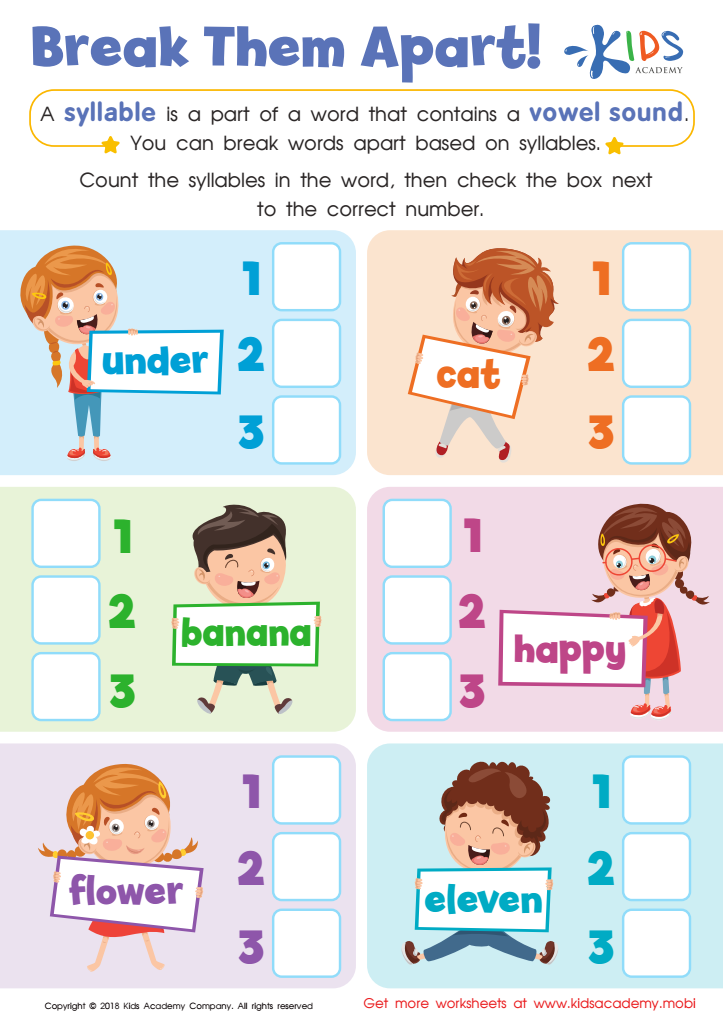
Reading: Break Them Apart Worksheet

Reading: Break Them Apart Worksheet

See if students understand syllables with this fun worksheet. It teaches them that a syllable is a word part with a vowel sound. Kids read each word and choose how many parts it has. Doing this often helps them decode new words and gain confidence.
Reading: Break Them Apart Worksheet
Worksheet
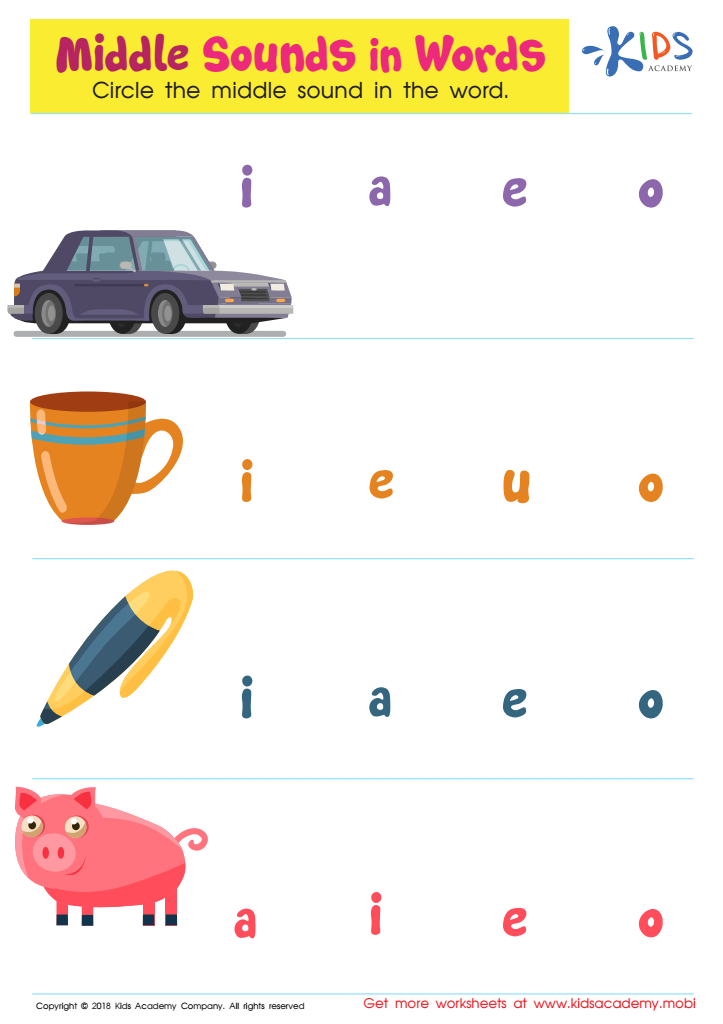
Middle Sounds in Words Worksheet

Middle Sounds in Words Worksheet

This worksheet helps emerging readers use picture clues to identify familiar words and practice tracing and fine-motor abilities. It also reinforces spelling by helping them distinguish middle sounds in words. A great way to build listening and literacy skills!
Middle Sounds in Words Worksheet
Worksheet
Reading: Shoot for the Moon Worksheet

Reading: Shoot for the Moon Worksheet

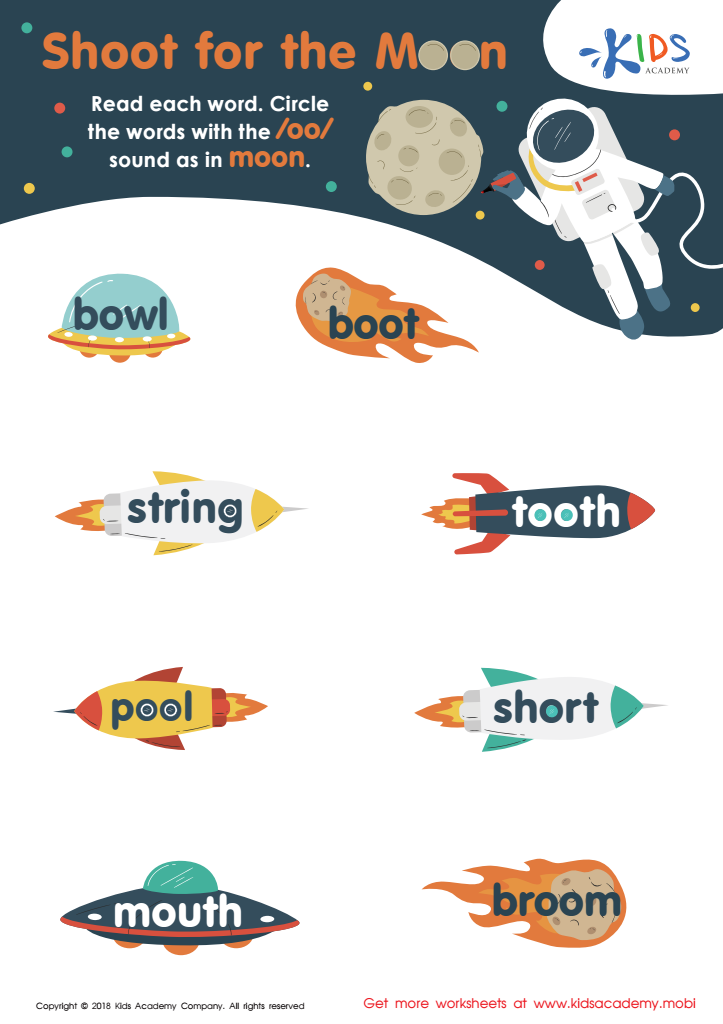
Ask your kids if they can name any common words with the /oo/ sound. Read each word with them and help them pronounce it. Then, have them circle the words that have the /oo/ sound as in moon.
Reading: Shoot for the Moon Worksheet
Worksheet
Finding the Sounds Worksheet


Finding the Sounds Worksheet

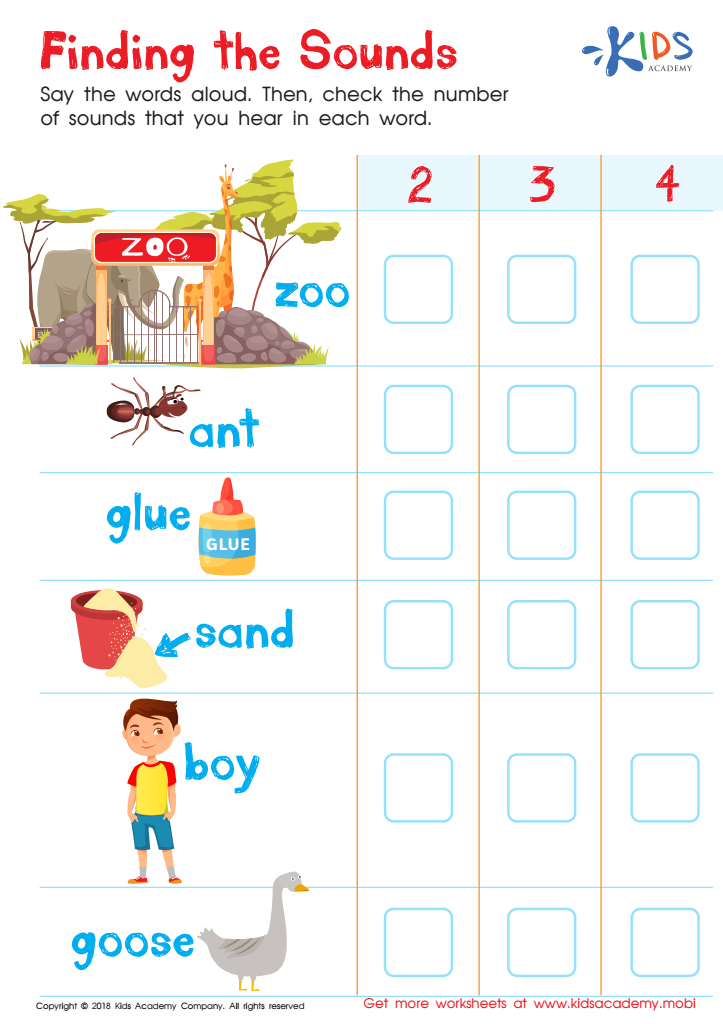
This free colorful worksheet assists children in learning words and breaking them down into sounds. It boosts auditory discrimination, phonological awareness and fine motor skills. Picture clues help them read confidently, and they can check the appropriate boxes to practice their reading skills.
Finding the Sounds Worksheet
Worksheet


Vocabulary development and phonics mastery are crucial components of literacy for children aged 7-8. At this age, students are transitioning from learning to read to reading to learn, making strong vocabulary skills vital for comprehension across various subjects. A rich vocabulary enables children to express themselves effectively and understand increasingly complex texts, fostering academic success.

Phonics, the method of teaching reading by correlating sounds with letters or groups of letters, supports vocabulary development by helping children decode unfamiliar words. When parents and teachers prioritize Normal Phonics, they provide children with tools to break down words systematically, enhancing their reading fluency and confidence. Moreover, phonics instruction is foundational for spelling and writing skills, allowing students to communicate their thoughts clearly.

Equipping learners with robust vocabulary and phonics skills is not just about academic performance; it nurtures a lifelong love for reading and learning. Engaging them in rich language experiences reinforces their understanding and application of new words in context. Ultimately, both vocabulary development and phonics are essential for enabling children to navigate the complexities of language and learning, empowering them for future educational challenges and opportunities.