
Animal recognition Normal Worksheets for Ages 7-8
3 filtered results
Difficulty Level
Grade
Age
-
From - To
Subject
Activity
Standards
Explore our engaging Animal Recognition Normal Worksheets designed specifically for children ages 7-8! These printable resources help hone vital observational skills while introducing young learners to various animals in a fun and interactive way. With a range of engaging activities, including matching games, identification exercises, and colorful illustrations, kids will enhance their understanding of animal traits and habitats. Perfect for both classroom and at-home learning, these worksheets promote critical thinking and encourage a love for nature. Support your child’s education with these invaluable tools to foster learning and curiosity about the animal kingdom! Get started today and watch them thrive!
Favorites
With answer key
Interactive
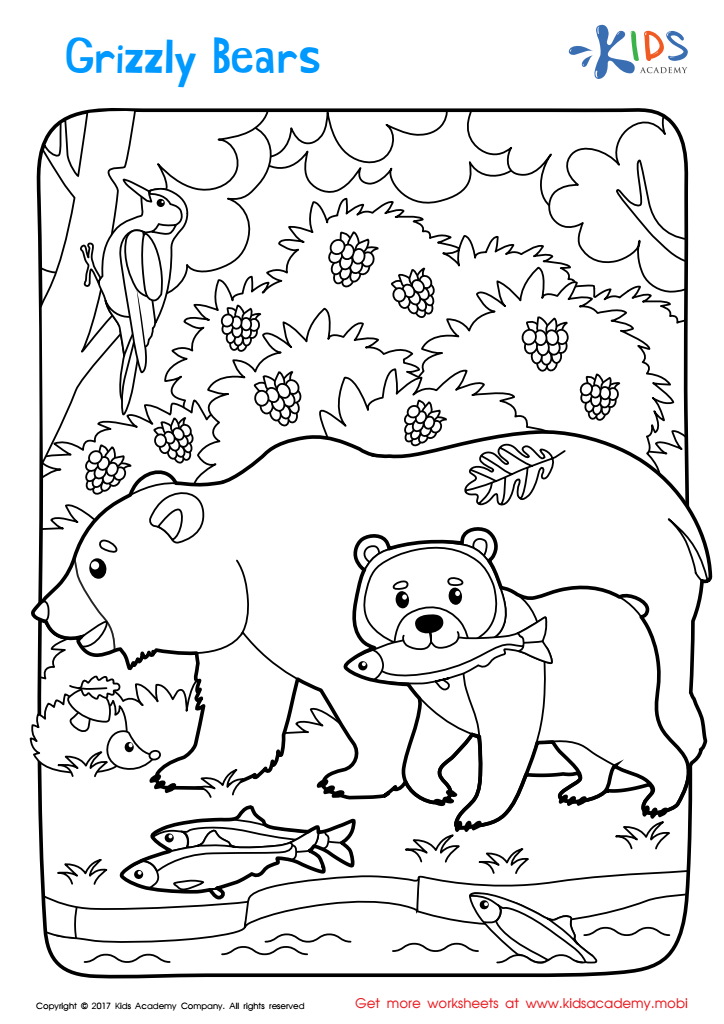
Free Printable Grizzly Bear Coloring Page
Today we're exploring the Great Plains and its most popular inhabitant: the grizzly bear! Our free printable coloring page introduces kids to the bear's natural habitat and food, like salmon and berries. Join us for a fun and educational experience!
Download (PDF)
 Assign to My Students
Assign to My Students
Free Printable Grizzly Bear Coloring Page
Worksheet
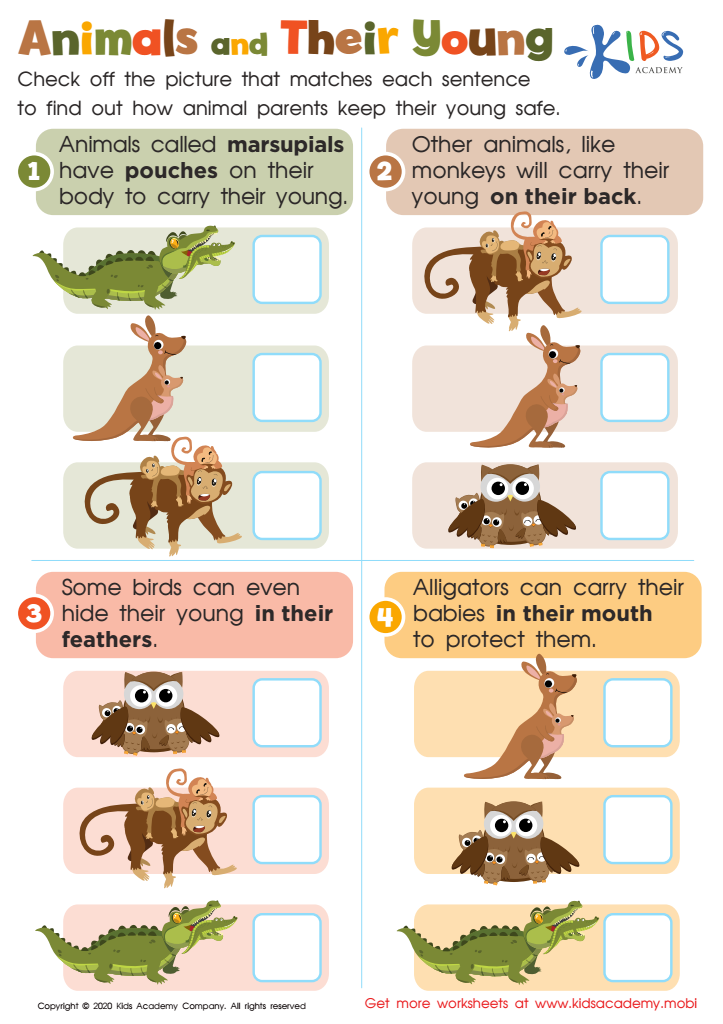
Animals and Their Young Worksheet
Help your child learn more about the animal kingdom with this cute science worksheet! They'll find out how animals protect and keep their babies close. From pouches to hitching a ride on mama’s back, they'll read the sentence above each illustration and select the description that fits. Check off the correct description as they go - a fun and educational activity!
Animals and Their Young Worksheet
Worksheet
Join Kids Academy for Free
Who is primarily going to use this learning content?







Animal recognition is an essential skill for children ages 7-8, and parents and teachers should prioritize it for several reasons. First, it fosters a connection to nature, encouraging children to appreciate and respect the environment. Understanding different species helps children identify local wildlife, which can spark an interest in conservation efforts.
Moreover, recognizing animals enhances cognitive development. As children learn to differentiate between various animals, they engage in critical thinking, observation, and memory skills. This is vital during a time when their brains are rapidly growing and developing.
Additionally, animal recognition can be a fun and engaging way to incorporate learning across various subjects—such as science, geography, and even art. Lessons on animals can spur conversations about habitats, diets, and ecosystems, promoting a well-rounded education.
Finally, knowledge of animals can cultivate empathy and emotional intelligence. When children learn to recognize and care about different species, they develop a deeper understanding of living beings and their needs, which can result in heightened compassion for both animals and people. Overall, fostering animal recognition in children supports their emotional, cognitive, and social development, bridging the gap between education and personal growth.








