
Math problem-solving Normal Worksheets for Ages 7-8
5 filtered results
Difficulty Level
Grade
Age
-
From - To
Subject
Activity
Standards
Unlock the joy of learning with our Math Problem-Solving Normal Worksheets for Ages 7-8! Designed to enhance critical thinking and analytical skills, these worksheets provide engaging and age-appropriate challenges that promote problem-solving abilities in young learners. Each activity encourages children to think outside the box while reinforcing essential math concepts. From simple addition and subtraction to basic multiplication and division, these worksheets cultivate a strong math foundation. Perfect for classroom or home use, our printable resources make learning fun and interactive. Help your child build confidence in math today and watch their skills flourish!
Favorites
With answer key
Interactive
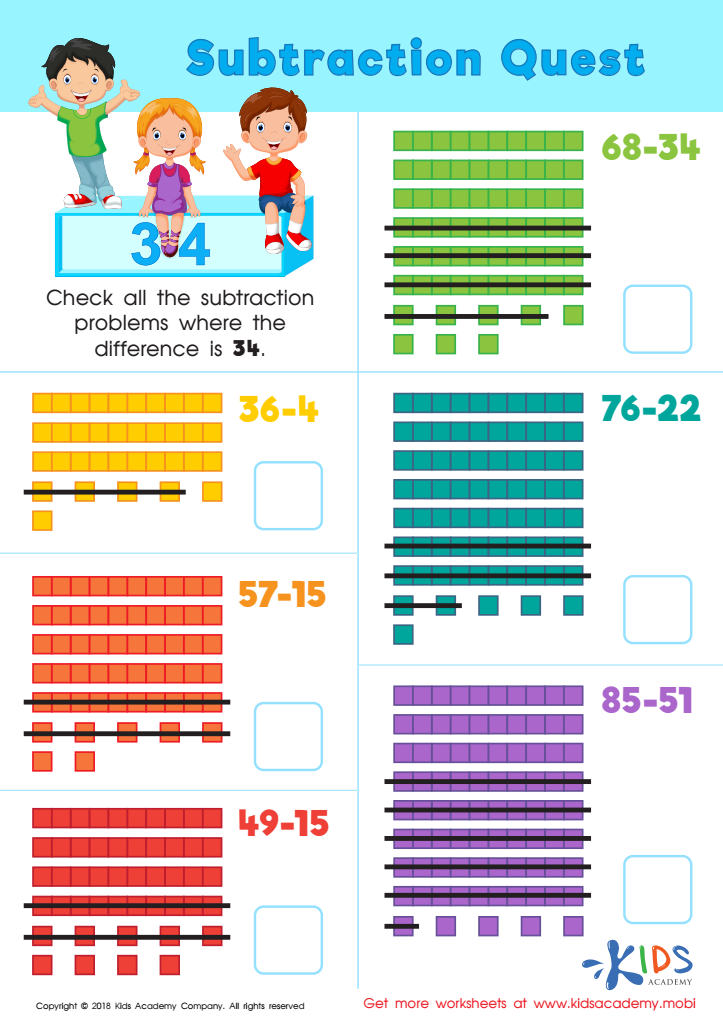
Subtraction Quest Worksheet
Send your little mathematicians on a quest full of fun! This free, downloadable PDF worksheet has them using base ten blocks to decide if the difference in each problem is 34. They'll solve each problem, marking equations where the difference is 34. It's a great way to build number sense and challenge themselves - plus, they won't even realize it's math!
 Assign to My Students
Subtraction Quest Worksheet
Worksheet
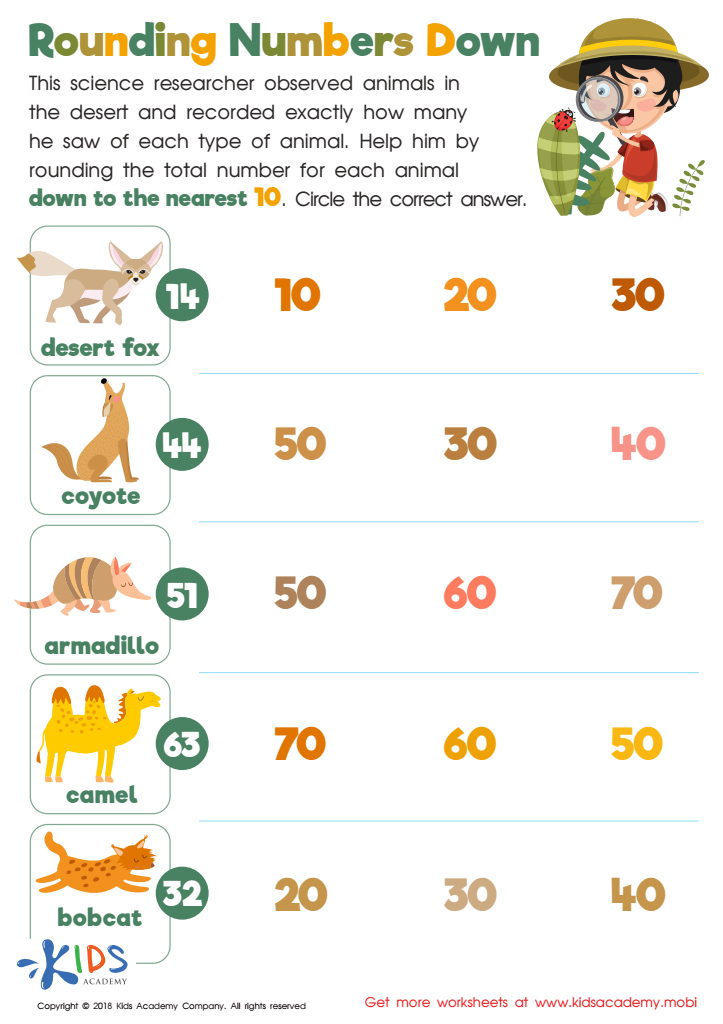
Rounding Numbers Down Worksheet
Does your child aspire to be a science researcher? This worksheet is the perfect place to start! Help your little one round the total number of animals seen in the desert to the nearest 10, then circle the correct answer for each. Fun and educational, this activity is a great way to help your kids get a taste of the science researcher lifestyle.
Rounding Numbers Down Worksheet
Worksheet
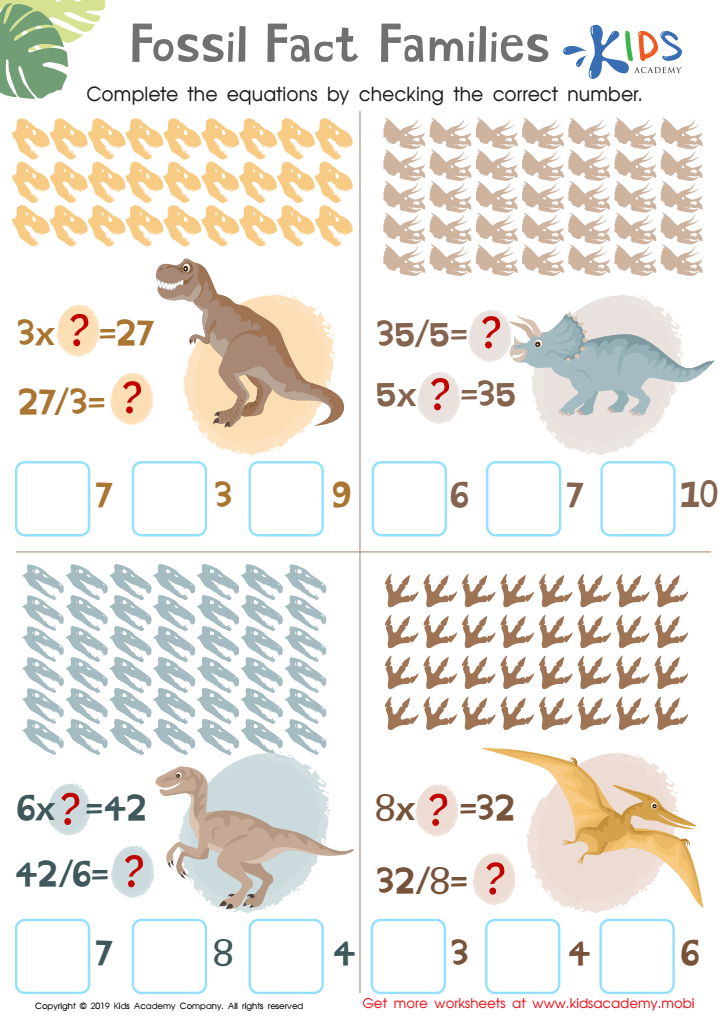
Fossil Fact Families Worksheet
Kids love dinosaurs, so why not learn about fact families with some fun prehistoric friends? This PDF worksheet uses picture arrays to help kids understand the relationships between multipliers and dividends. It helps them build automaticity with multiplication facts so they can quickly solve division problems and see the relationships between the two fact families.
Fossil Fact Families Worksheet
Worksheet
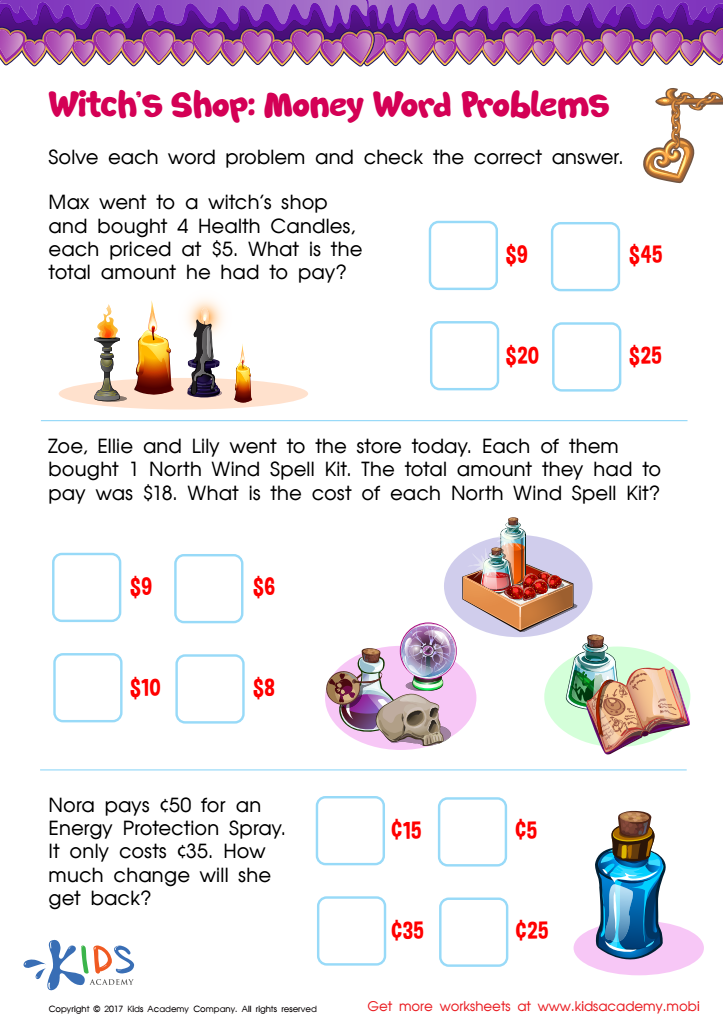
Money Word Problems Printable
Boost your 3rd grader's math skills with money word problems. This worksheet takes them to a witch's shop for a fun way to practice multiplication and division.
Money Word Problems Printable
Worksheet
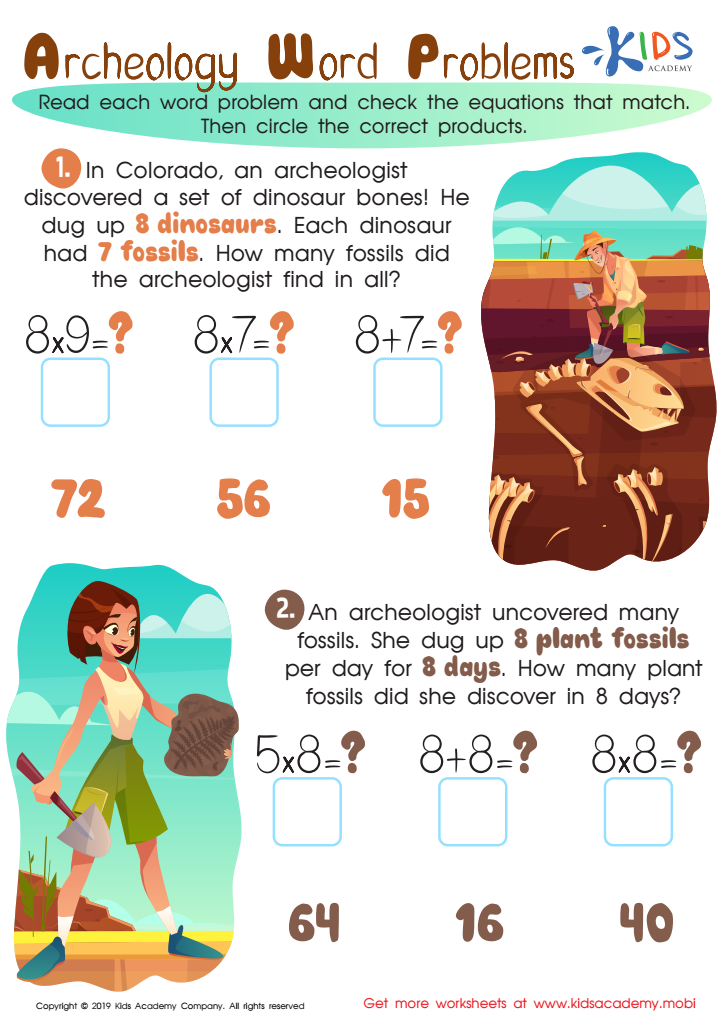
Archeology Word Problems Worksheet
Encourage your child to explore their career options! Show them an archeologist's job with this worksheet - featuring a picture of a dinosaur bone discovery. Read the accompanying text, then solve the word problems. Help your kids circle the correct answers to better understand this profession.
Archeology Word Problems Worksheet
Worksheet
Join Kids Academy for Free
Who is primarily going to use this learning content?







Parents and teachers should care about math problem-solving for children aged 7-8 because it lays the foundation for critical thinking skills that extend beyond math. At this developmental stage, children begin to transition from concrete to abstract thinking, making it a prime time to cultivate their ability to solve problems effectively. Engaging in math problem-solving helps children develop analytical skills, enhances their ability to reason logically, and encourages persistence in the face of challenges.
Moreover, math is not just about numbers; it's an essential skill used in daily life, from budgeting allowance to measuring ingredients for a recipe. By encouraging a positive attitude towards math problem-solving, adults can help reduce math anxiety, fostering a mindset that views challenges as opportunities for learning.
Additionally, the collaborative nature of problem-solving promotes teamwork and communication skills, as children often work together to explore various solutions. This experience helps them articulate their thinking and appreciate different perspectives.
Ultimately, prioritizing math problem-solving in early education nurtures well-rounded, confident learners who are better prepared for future academic challenges and real-world situations, promoting a lifelong appreciation for the role of math in everyday life.








