
Observation skills Normal Worksheets for Ages 7-8
6 filtered results
Difficulty Level
Grade
Age
-
From - To
Subject
Activity
Standards
Enhance your child's observation skills with our engaging worksheets designed specifically for ages 7-8. These Normal Worksheets from Kids Academy focus on critical thinking and attention to detail, fostering young learners' ability to analyze and interpret information. Each worksheet offers fun activities that help children observe patterns, compare images, and identify differences, which are vital skills for academic success. Crafted with colorful visuals and age-appropriate exercises, these worksheets can be easily integrated into daily learning routines. Support your child's development and boost their confidence as they master observation skills that will benefit them across various subjects. Start exploring today!
Favorites
With answer key
Interactive
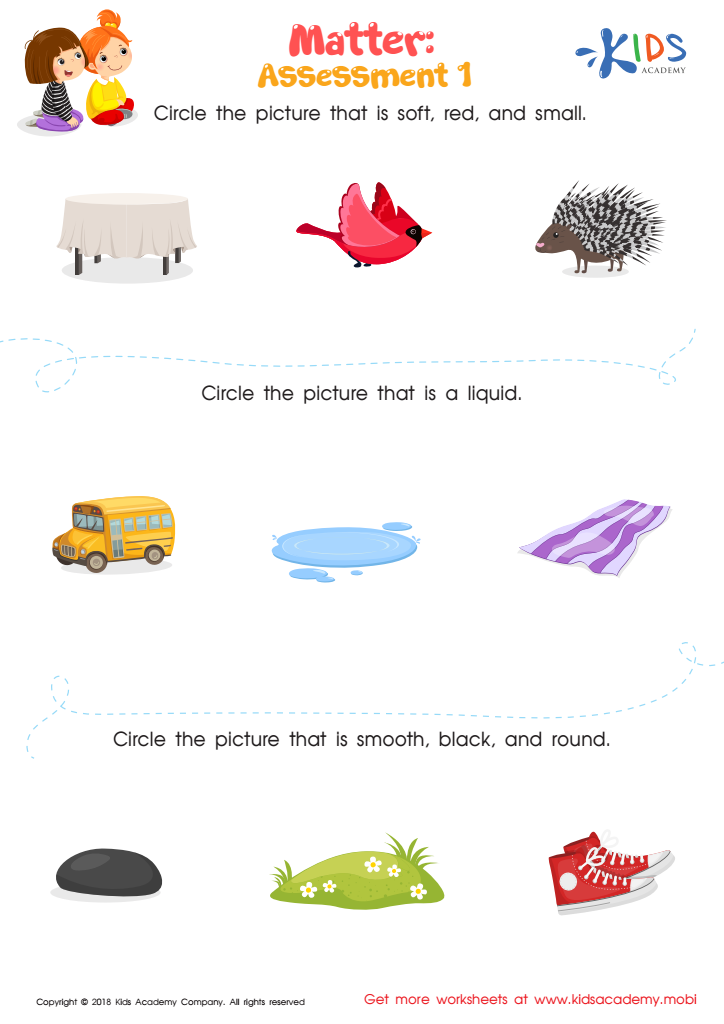
Matter: Assessment 1 Worksheet
Have your children learn that anything that has weight and takes up space is matter. Examples include buses, tables, people, animals, and more. Use this worksheet to help them identify the objects and circle the soft, red, and small one; the liquid; and the smooth, black, and round one.
 Assign to My Students
Matter: Assessment 1 Worksheet
Worksheet
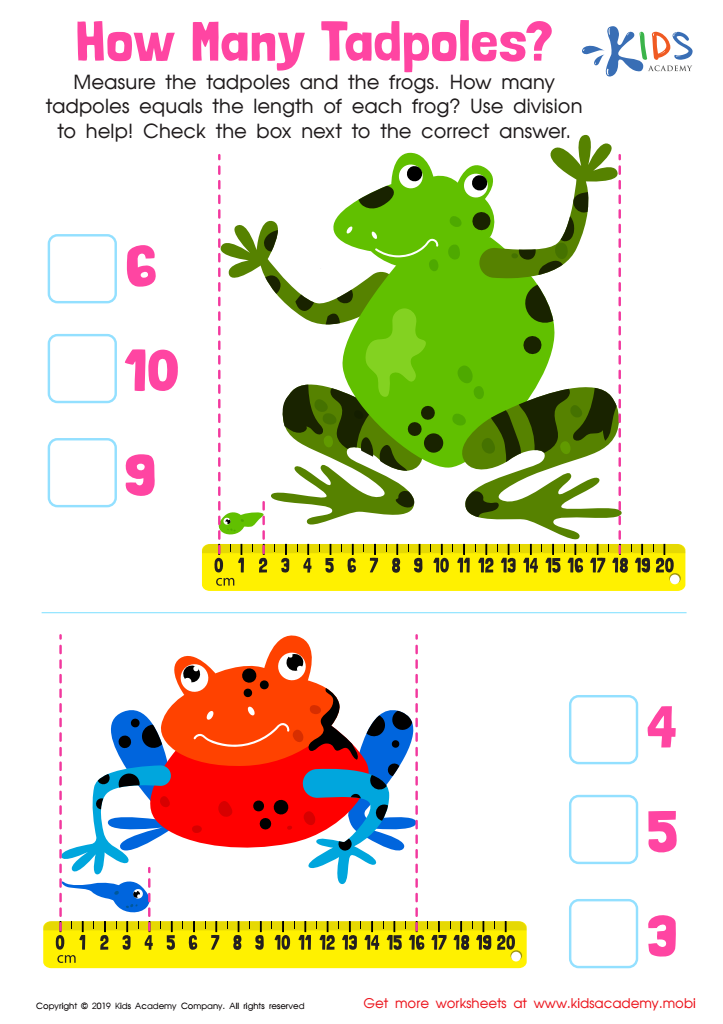
How Many Tadpoles Worksheet
Kids love tadpoles! They'll have fun using them to work out the measurements of their frog friends. By dividing the length of the frogs by the length of the tadpoles, children can deduce how many tadpoles it takes to equal a frog. With the use of 'how many' and 'each' they'll solve math problems without realizing it!
How Many Tadpoles Worksheet
Worksheet
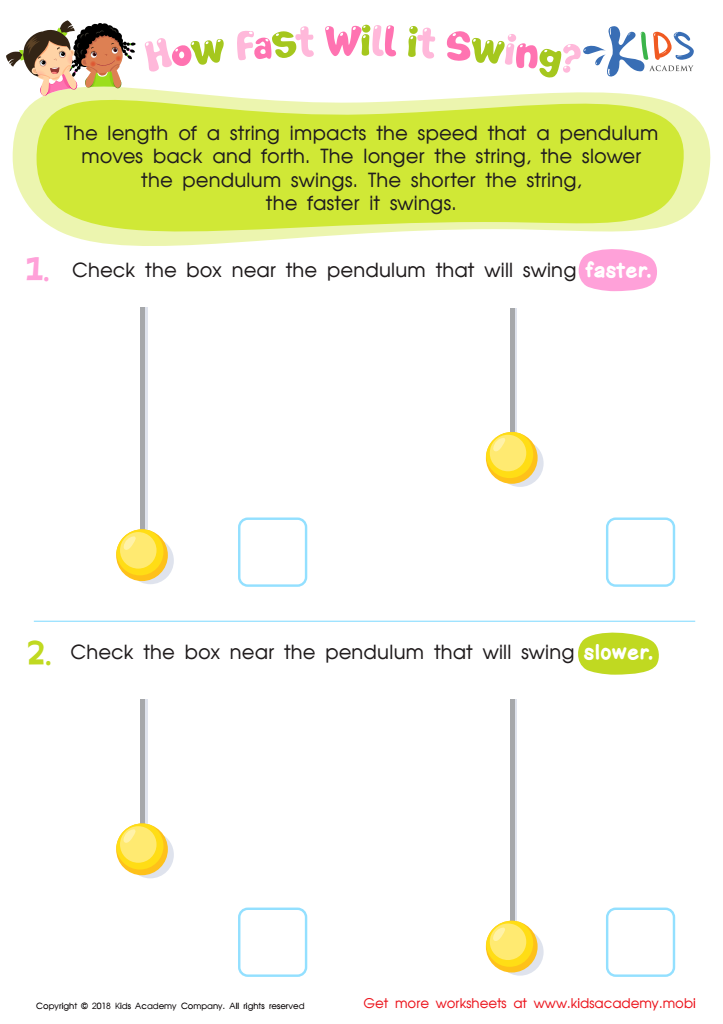
Pendulum Experiment Worksheet For 3rd Grade
Time to flex those science muscles! A pendulum's speed depends on its string length. Complete this 3rd grade pendulum experiment worksheet and experiment with a yo-yo at home! Read the description to answer the questions correctly.
Pendulum Experiment Worksheet For 3rd Grade
Worksheet
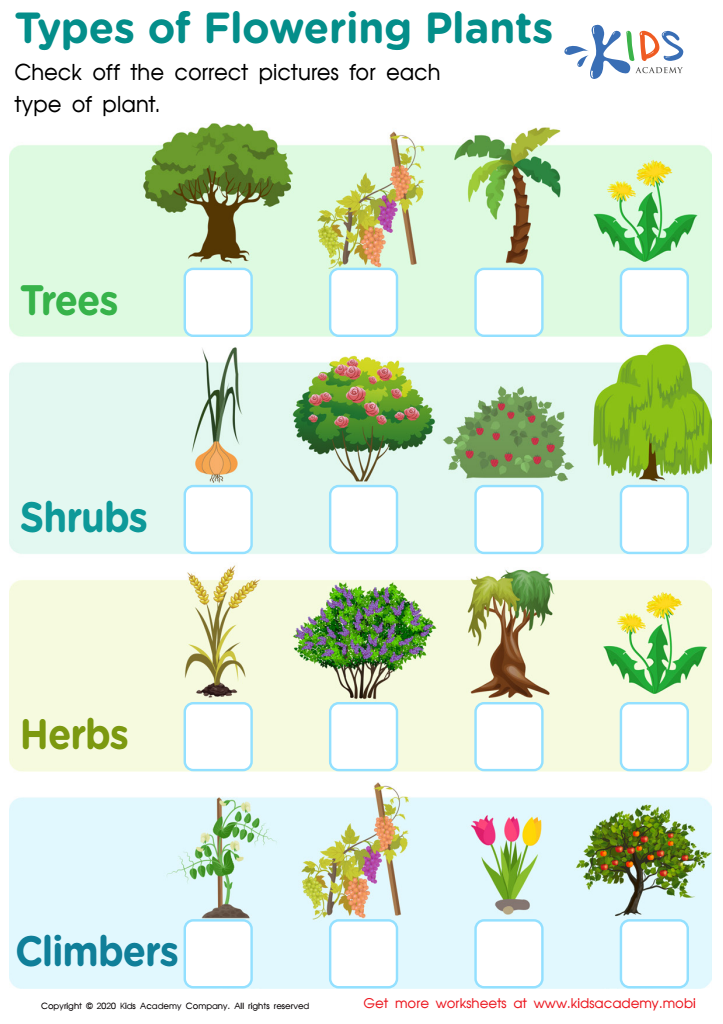
Types of Flowering Plants Worksheet
Help kids explore the variety of plants around them! Have them discover trees, shrubs, herbs, and vines with this fun science worksheet. Print it and let them match the plant pictures to their correct names. It's an exciting learning experience that'll let them check off the right images and explore the botanical world.
Types of Flowering Plants Worksheet
Worksheet
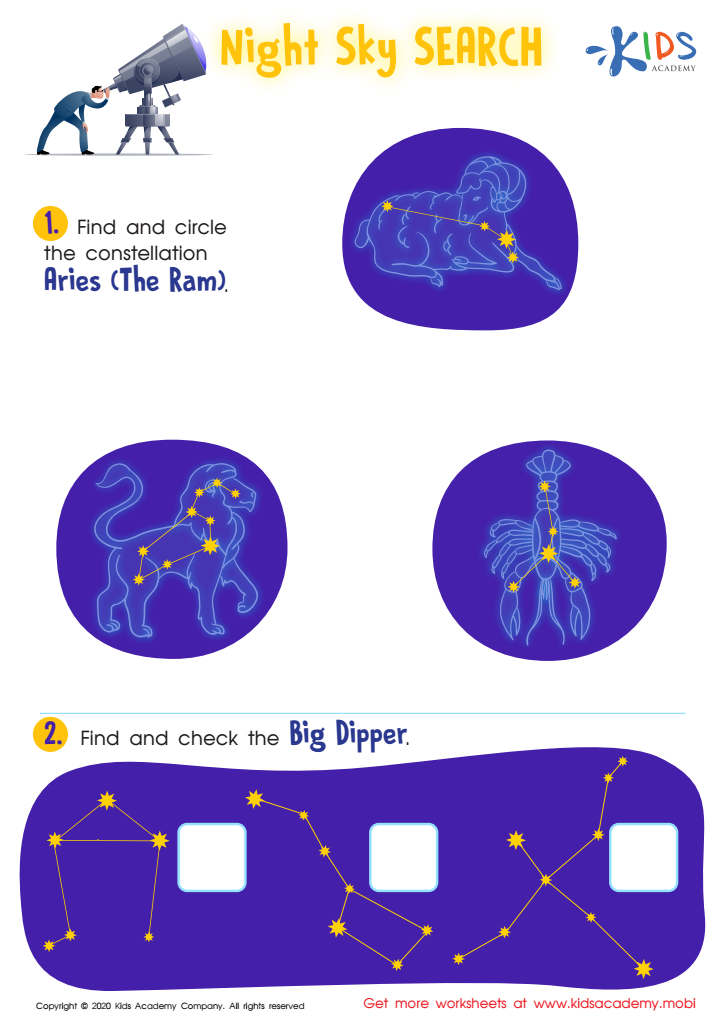
Night Sky Search Worksheet
Gaze up into the night sky and spot the stars! Your little astronomer can learn about Aries and Big Dipper constellations with this science worksheet. Simply find the ram for Aries and check the box for Big Dipper. Then, when the weather is right, go outside and look for them in the night sky!
Night Sky Search Worksheet
Worksheet
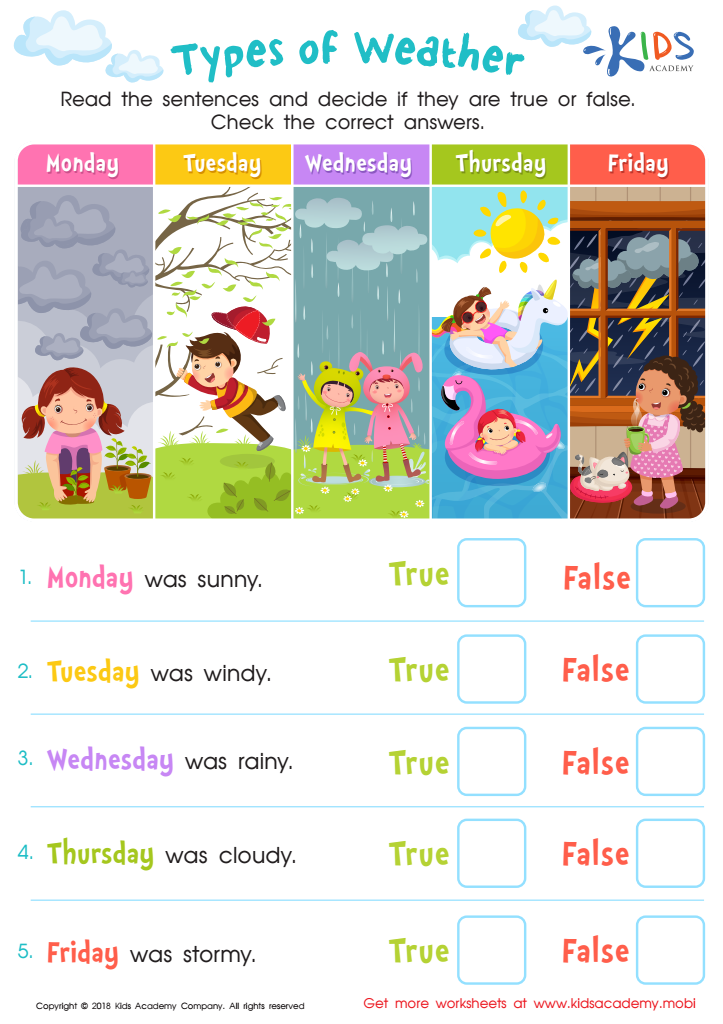
Types of Weather Worksheet
This worksheet will test your child's knowledge of the weather. Show them the pictures of five days of the week, each with a different weather and ask them to describe it. Then read the sentences and ask if they're true/false. Help them find the right answers.
Types of Weather Worksheet
Worksheet
Join Kids Academy for Free
Who is primarily going to use this learning content?




.jpg)
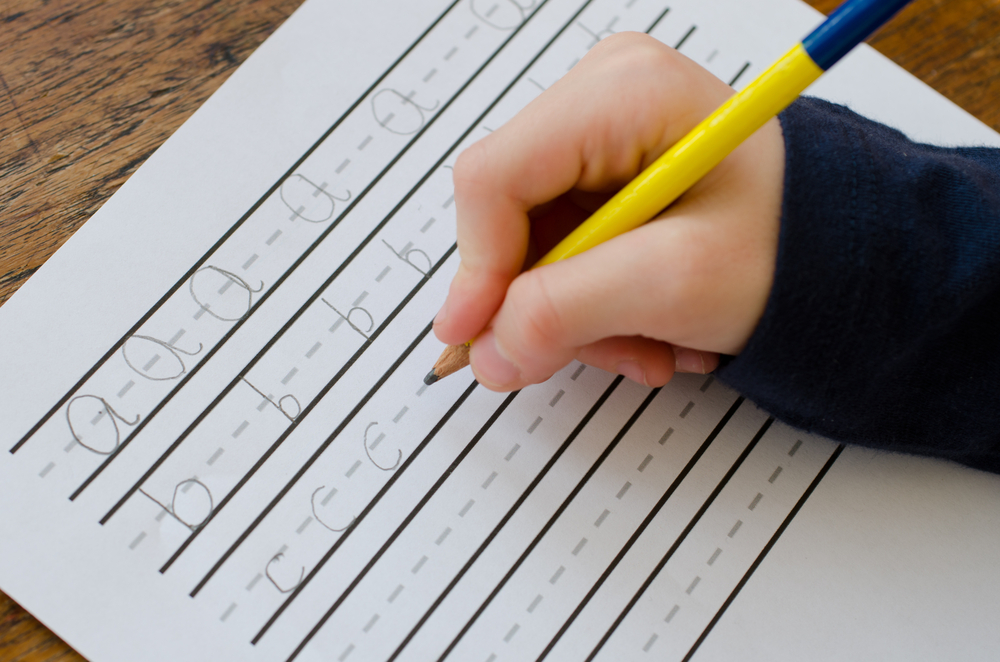
Observation skills are crucial for children aged 7-8 as they play a fundamental role in their overall development, learning, and social interactions. At this age, children are increasingly engaging with their environment and building their understanding of the world around them. Effective observation skills enable them to gather information, make associations, and draw conclusions, which are essential for critical thinking and problem-solving.
Parents and teachers should care about these skills because they directly impact a child’s academic performance and social competence. Children with strong observation skills can better comprehend lessons, follow instructions, and participate in discussions, fostering a supportive learning environment. They can identify patterns and relationships, enhancing their ability to grasp complex concepts in subjects like math and science.
In addition, observation skills promote emotional intelligence. As children observe the emotions and behaviors of their peers, they learn empathy, communication, and cooperative play. This not only aids in their social interactions but also helps in conflict resolution, both crucial skills as they navigate encouraging friendships.
In summary, nurturing observation skills during this pivotal age lays the foundation for academic success, interpersonal relationships, and lifelong learning, making it essential for parents and teachers to prioritize.








