Phonological awareness Normal Worksheets for Ages 7-8
3 filtered results
-
From - To
Engage your 7-8-year-old students with targeted Phonological Awareness Worksheets designed to enhance their reading and learning skills. Our worksheets offer enjoyable activities focusing on sound recognition, rhyming, and syllable segmentation. Perfect for both classroom and home use, these printables provide versatile, fun exercise that aligns with educational standards, fostering essential literacy development. Tailored for young learners, our comprehensive resources make it easy to help children excel in phonological tasks, promoting stronger language fundamentals. Give your students a head start in reading mastery with our expertly crafted phonological awareness worksheets today!
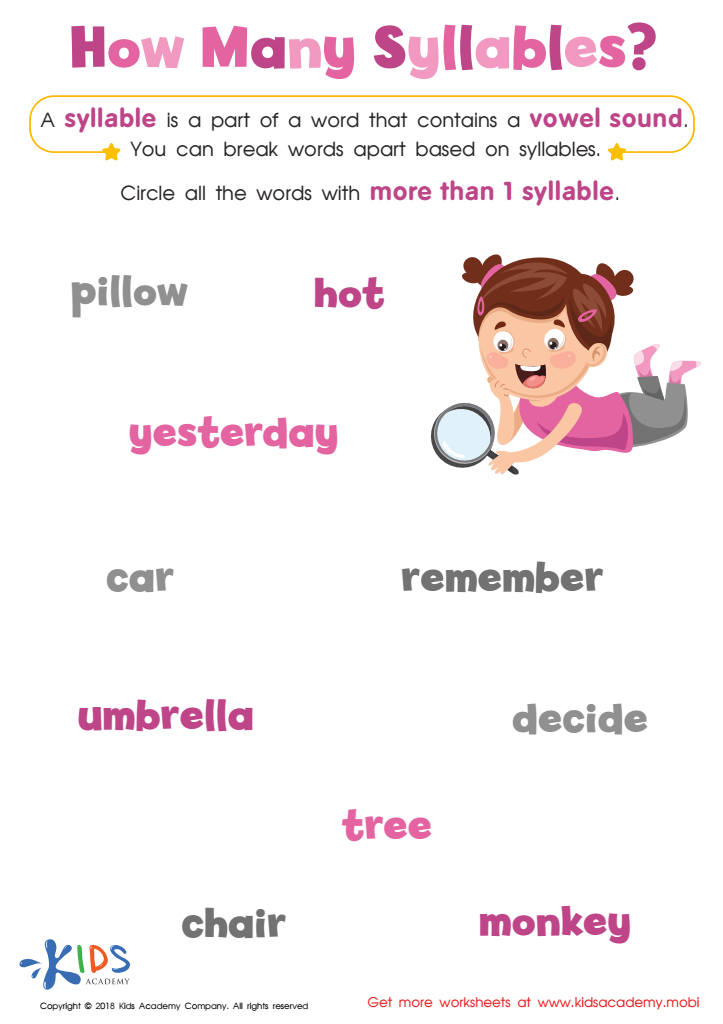
Reading: How Many Syllables Worksheet
 Assign to My Students
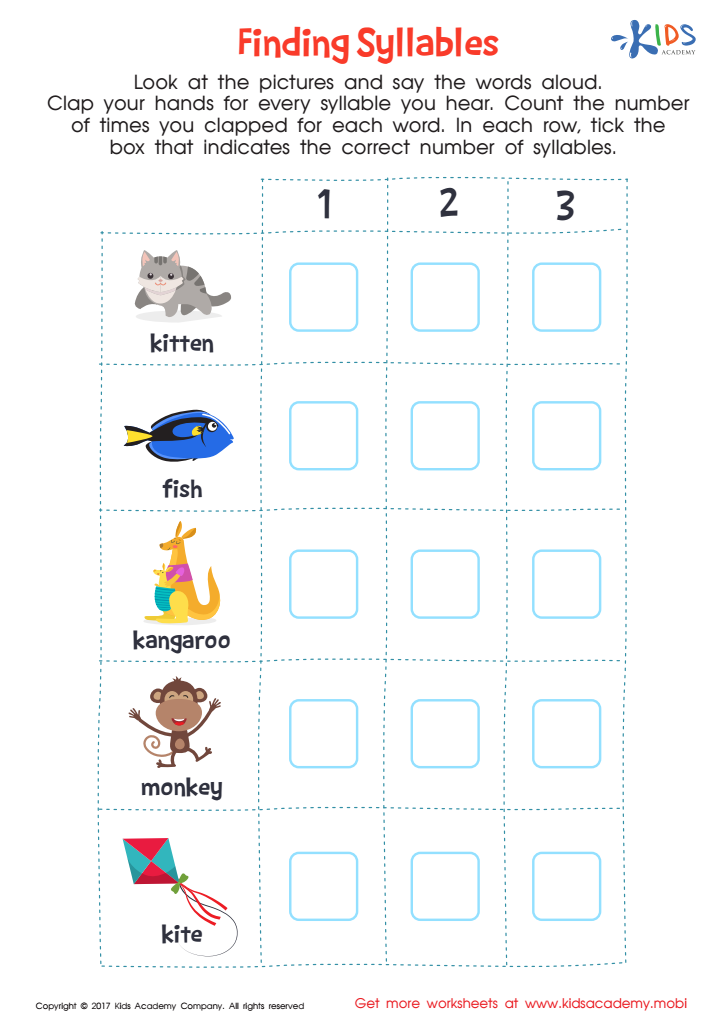
Finding Syllables Word Structure Worksheet
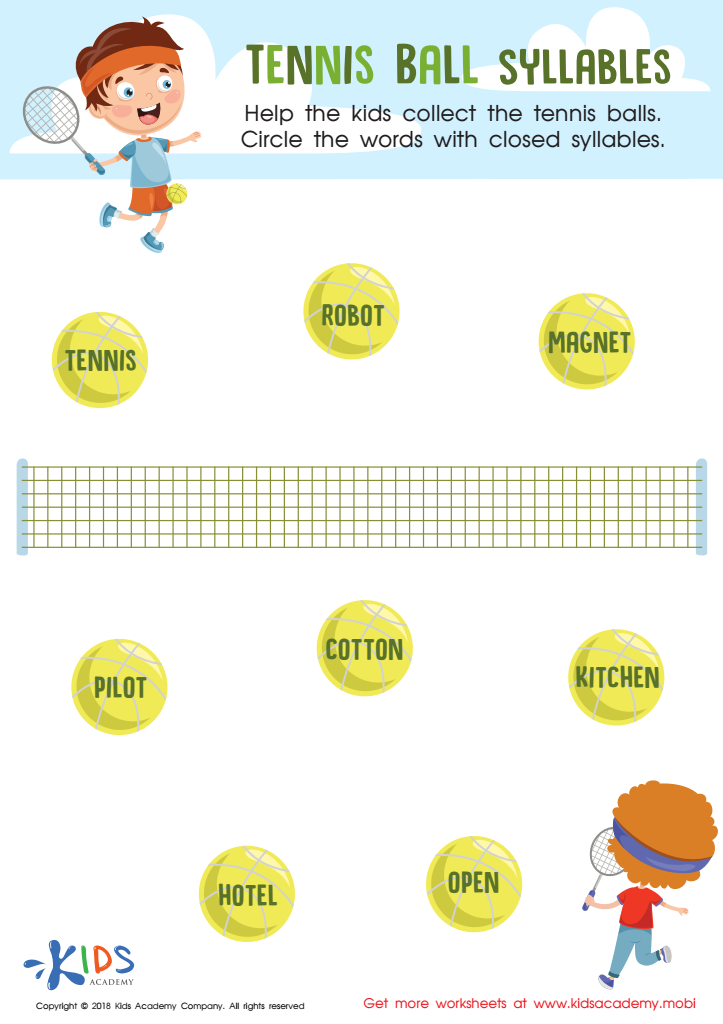
Tennis Ball Syllables Worksheet






Phonological awareness is a critical component of literacy development, especially for children between the ages of 7 and 8. It refers to the ability to recognize and manipulate the sound structures of language, such as syllables, onsets, rimes, and phonemes. At this age, children transition from learning to read to reading to learn. Parents and teachers should prioritize phonological awareness for several compelling reasons.
Firstly, strong phonological awareness skills are foundational for effective decoding and word recognition. When children can break words into smaller sound units, they can more easily map these sounds onto corresponding letters or letter patterns. This proficiency supports fluent reading, which is essential for comprehension and enjoyable reading experiences.
Secondly, early phonological skills are strong predictors of future reading success. Research consistently shows that children with well-developed phonological awareness tend to excel in reading and writing, while those with weak skills often struggle. By focusing on these skills, parents and teachers can help prevent future literacy problems.
Lastly, enhancing phonological awareness can build confidence and academic self-esteem. Children who read proficiently are more likely to enjoy reading, participate in classroom activities, and engage with complex texts, setting them up for long-term academic success. Helping children at this stage is an investment in their educational journey, yielding benefits that extend well beyond the classroom.








