Reading thermometers Normal Worksheets for Ages 7-8
3 filtered results
-
From - To
Welcome to our engaging "Reading Thermometers Normal Worksheets" designed specifically for children aged 7-8. These worksheets provide a fun and interactive way for young learners to develop essential skills in reading thermometers and understanding temperature concepts. With clear visuals and age-appropriate exercises, students gain confidence in interpreting temperature readings in Celsius and Fahrenheit. Our resources promote hands-on learning, making it easy for educators and parents to reinforce these critical math and science skills at home or in the classroom. Explore our worksheets to enhance your child's understanding of temperature measurement, ensuring they grasp this important mathematical concept effectively.
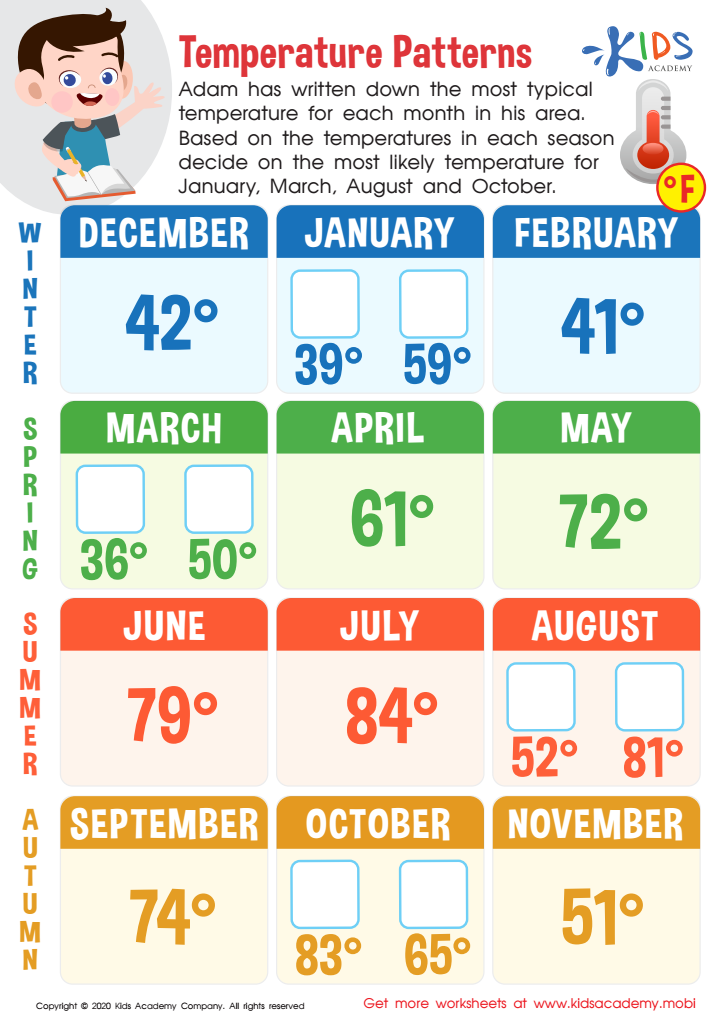
Temperature Patterns Worksheet
 Assign to My Students
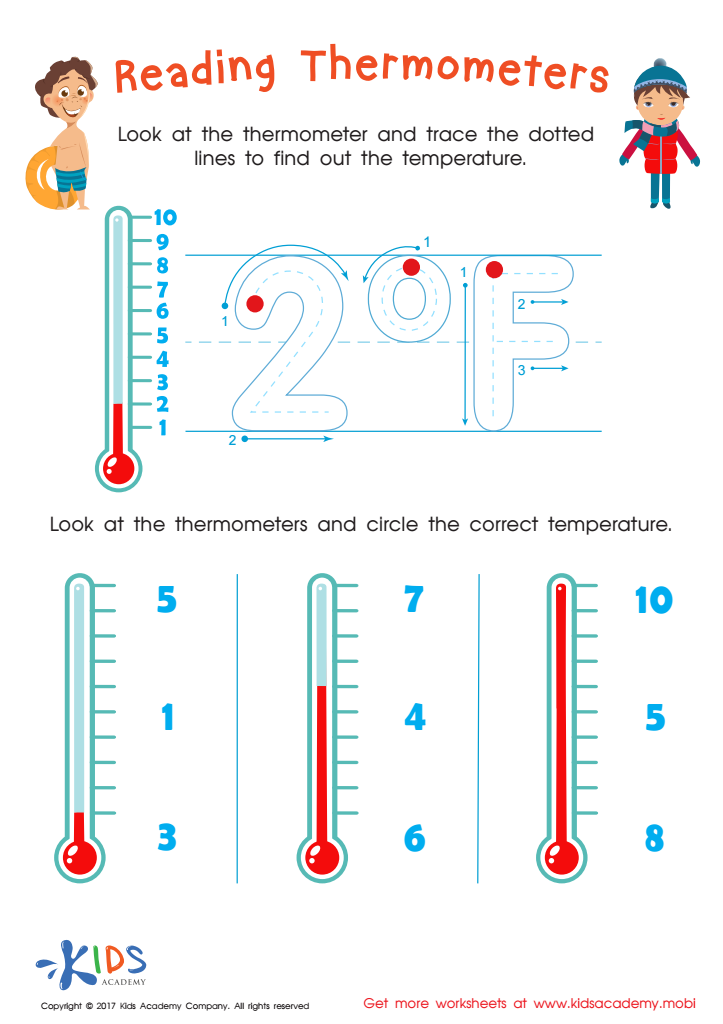
Reading Thermometers Printable
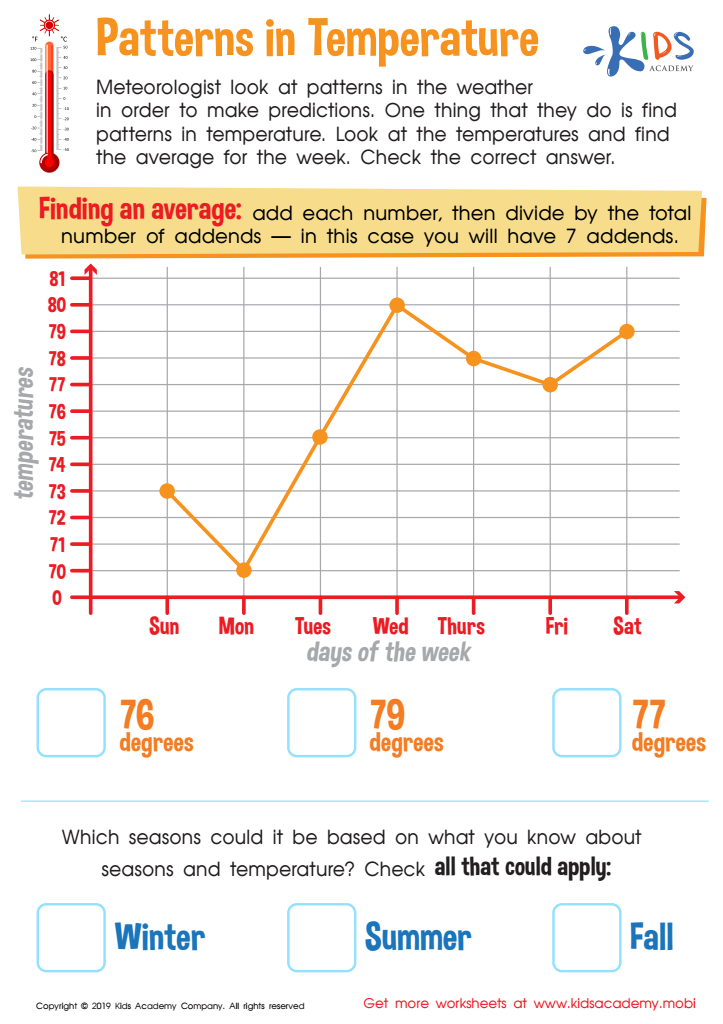
Patterns in Temperature Worksheet







Parents and teachers should care about reading thermometers for children aged 7-8 because it nurtures essential skills and promotes a fundamental understanding of measurement and health. At this age, children begin to grasp concepts of temperature, which are integral to science education and everyday life. Understanding how to read thermometers fosters critical thinking and problem-solving skills as they learn to interpret data and make informed decisions, such as when to seek medical attention for a fever.
Additionally, comprehension of temperature measurement is crucial for health literacy. Children who can read thermometers understand their body’s signals better and can communicate effectively about their health needs. Introducing this skill during these formative years encourages confidence and promotes responsibility for personal well-being.
Incorporating thermometer reading into daily routines, such as monitoring the weather or tracking family health, creates opportunities for discussions about science, health, and environmental literacy. It also supports mathematical skills, as students learn about increments and calculate temperature differences. In summary, teaching children to read thermometers benefits their cognitive development, enhances their daily life skills, and prepares them for more complex scientific concepts in the future.








