Syllable identification Normal Worksheets for Ages 7-8
5 filtered results
-
From - To
Boost your child's reading skills with our engaging Syllable Identification Worksheets for ages 7-8! Designed to enhance phonemic awareness and reading fluency, these worksheets feature a variety of fun activities that help kids recognize and practice syllable segmentation. From colorful visuals to interactive exercises, students will enjoy learning how to break words into manageable parts. These worksheets align with educational standards, making them ideal for both classroom learning and home practice. Perfect for reinforcing reading skills or preparing for further language arts challenges, our Syllable Identification Worksheets offer an effective and enjoyable way for young learners to enhance their literacy journey!
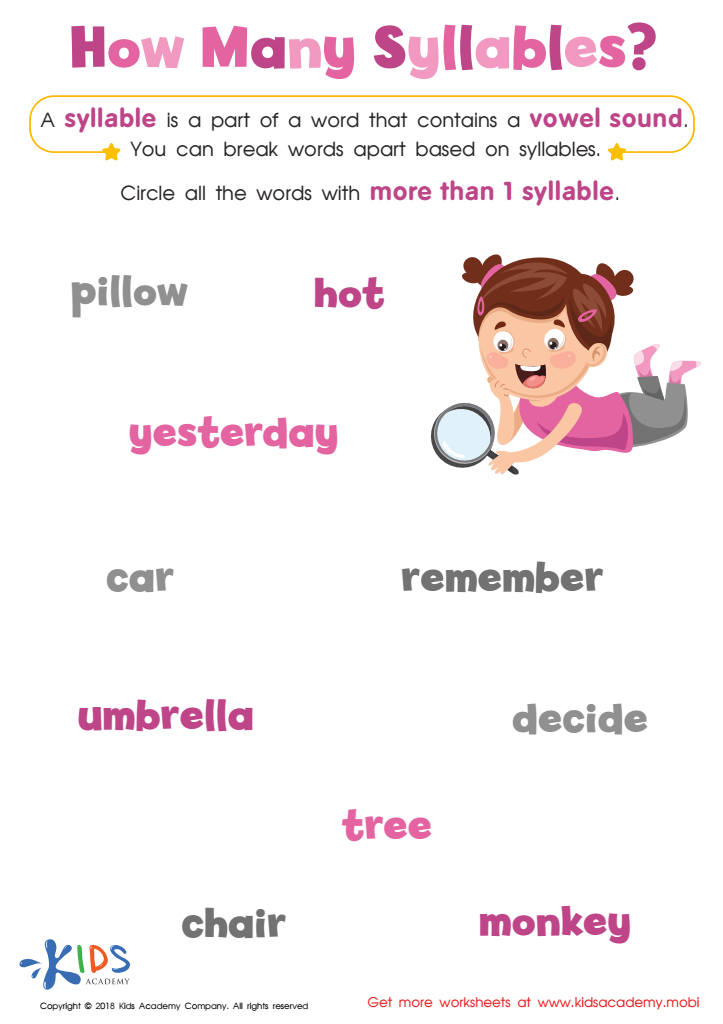
Reading: How Many Syllables Worksheet
 Assign to My Students
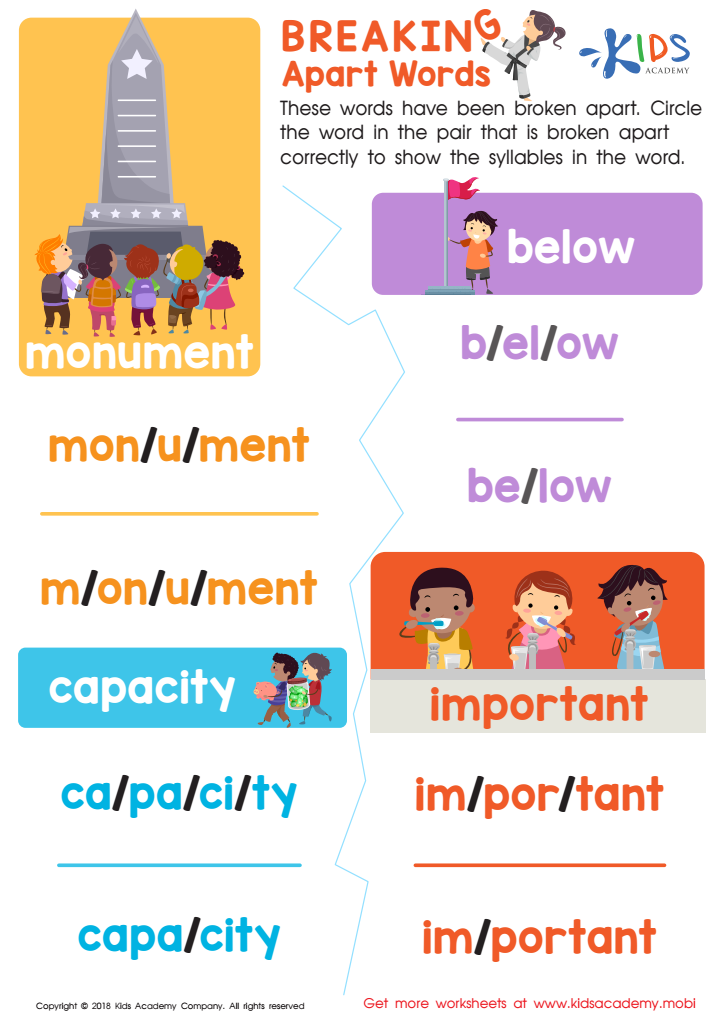
Breaking Apart Words Worksheet
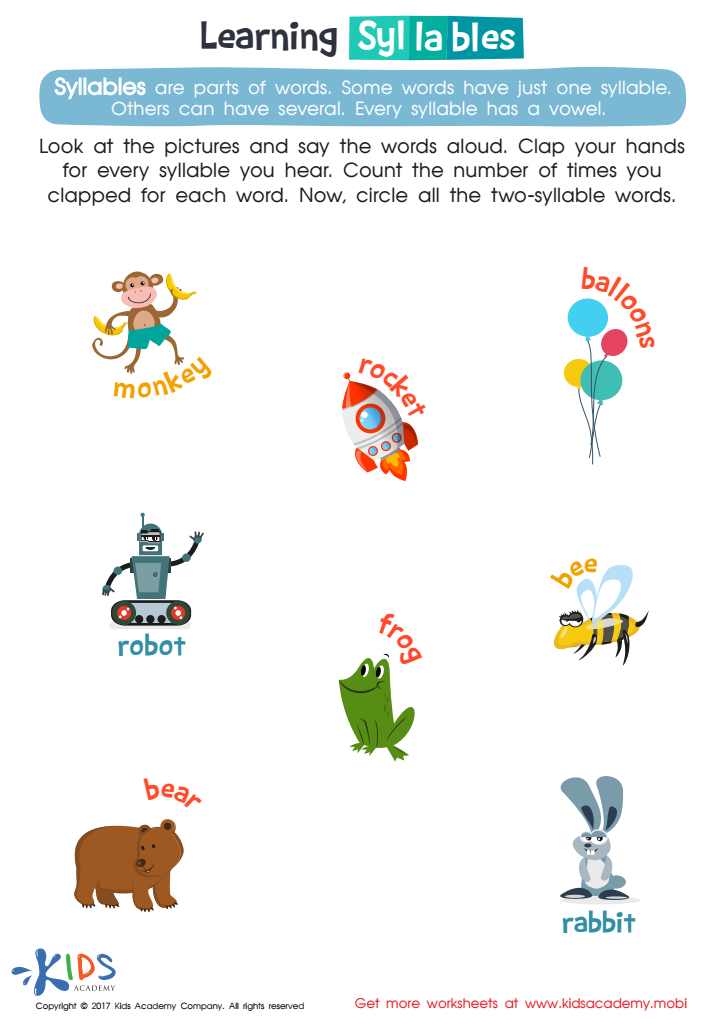
Learning Syllables Word Structure Worksheet
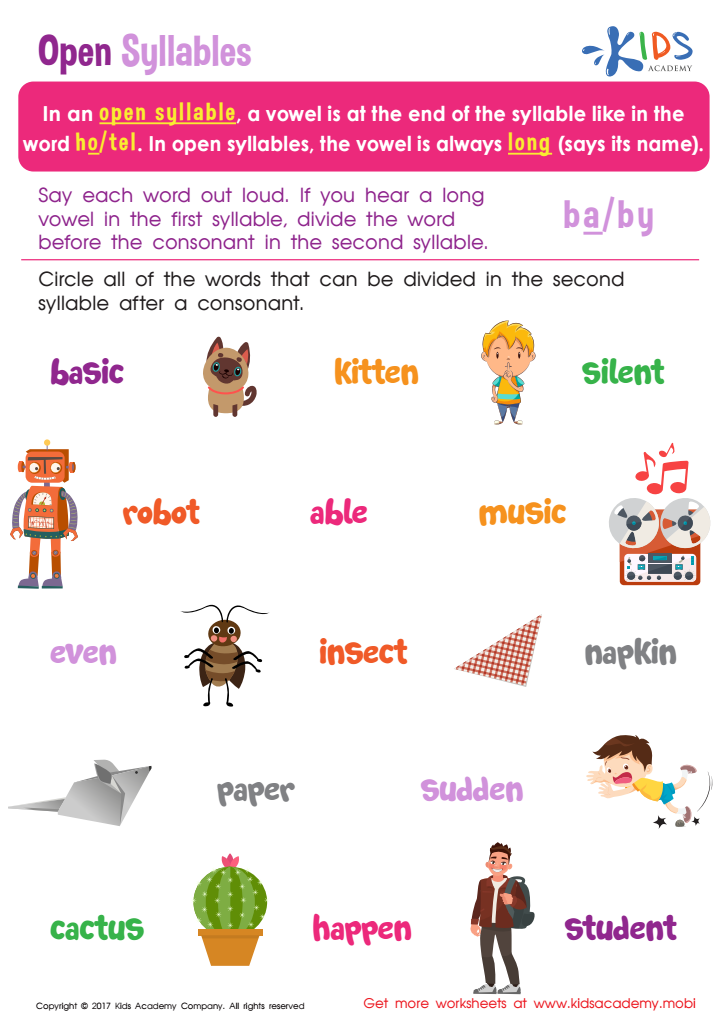
Open Syllable Printable Worksheet
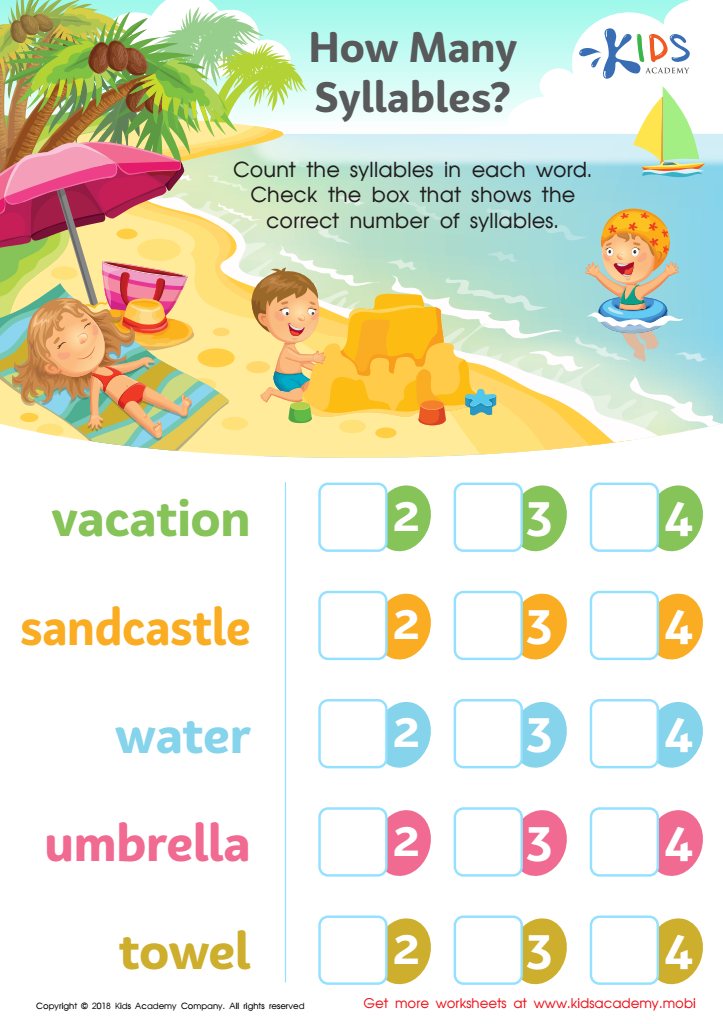
How Many Syllables Worksheet








Syllable identification is a foundational skill that significantly impacts literacy development for children ages 7-8. At this stage, children are refining their reading and writing abilities, making syllable awareness crucial for their progress. Syllables are the building blocks of words; understanding them helps children decode unfamiliar words, enhancing their reading fluency and comprehension.
When parents and teachers emphasize syllable identification, they empower children to break down complex words into manageable parts, fostering greater confidence in their abilities. This skill aids in spelling, as children learn to segment words during writing exercises. Moreover, mastery of syllables supports phonemic awareness, a precursor to successful reading.
Paying attention to syllable identification also provides insights into a child’s linguistic development and potential learning difficulties. Early intervention can address issues like dyslexia or other reading challenges, ensuring that all children have the support they need to succeed.
Ultimately, fostering syllable identification helps create a strong literacy foundation, enabling children to communicate effectively and engage meaningfully with the world around them. Parents and teachers play pivotal roles in nurturing this essential skill, setting the stage for lifelong learning.








