Understanding adjectives Normal Worksheets for Ages 7-8
5 filtered results
-
From - To
Enhance your child's descriptive skills with our "Understanding Adjectives" worksheets for ages 7-8. These carefully designed activities help young learners grasp the concept and usage of adjectives, enabling them to enrich their vocabulary and make their writing more vibrant. With engaging exercises and fun illustrations, your child will practice identifying, comparing, and using adjectives in sentences. Perfect for home or classroom use, these worksheets will boost your child's confidence and proficiency in language arts. Foster a love for learning and watch your child's reading and writing skills flourish with Kids Academy's expert-crafted resources.
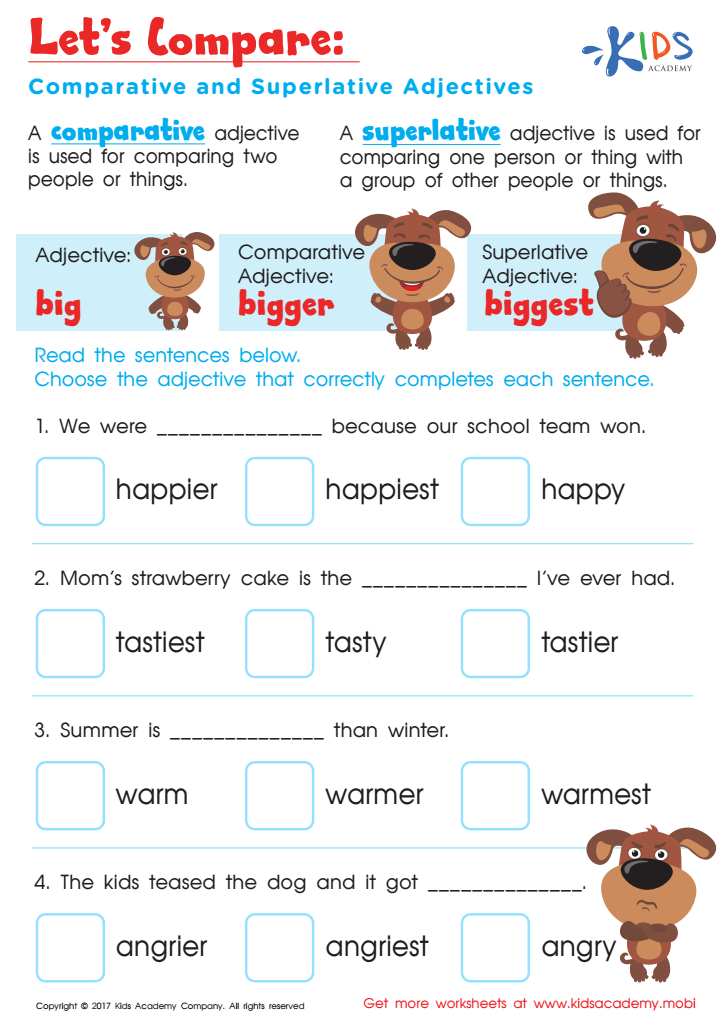
Comparative and Superlative Worksheet
 Assign to My Students
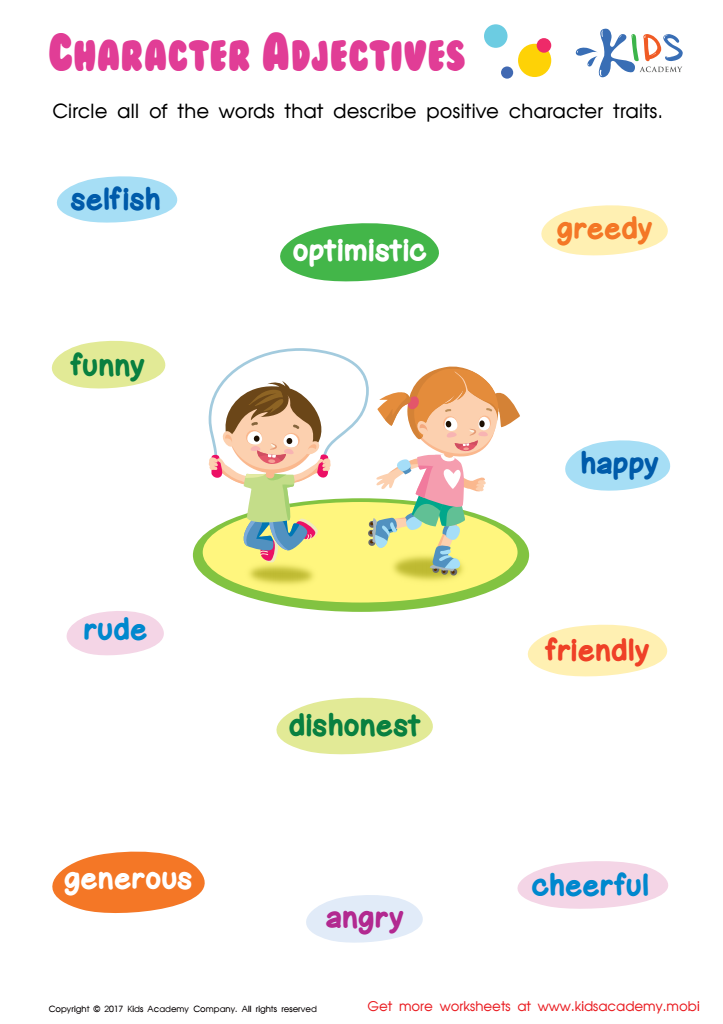
Character Adjectives Worksheet
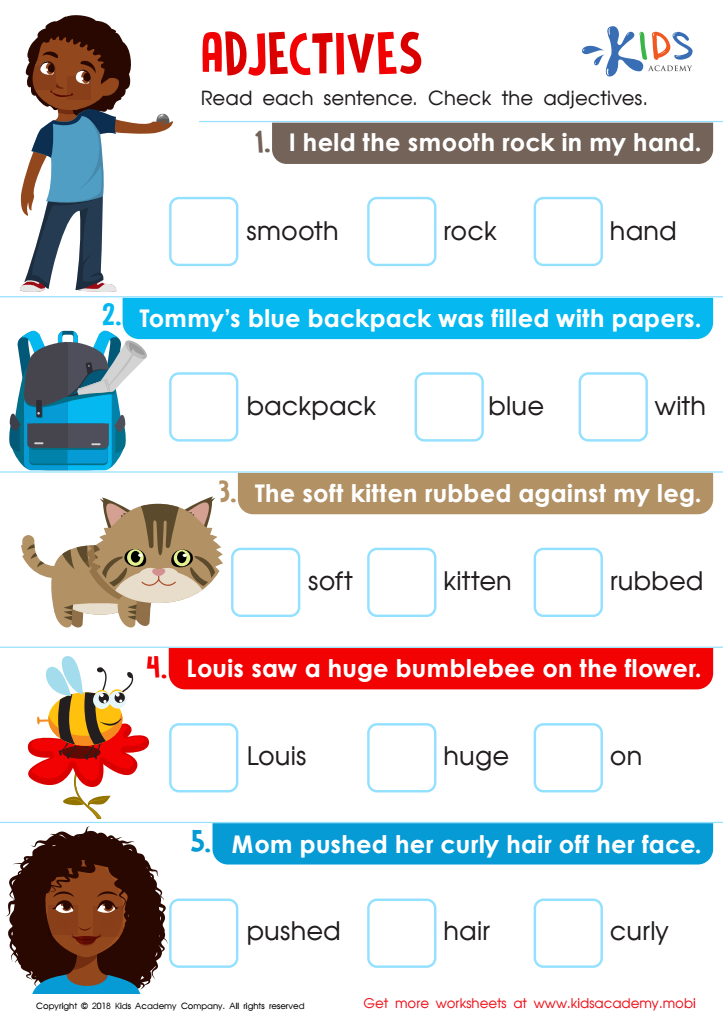
Adjectives Worksheet
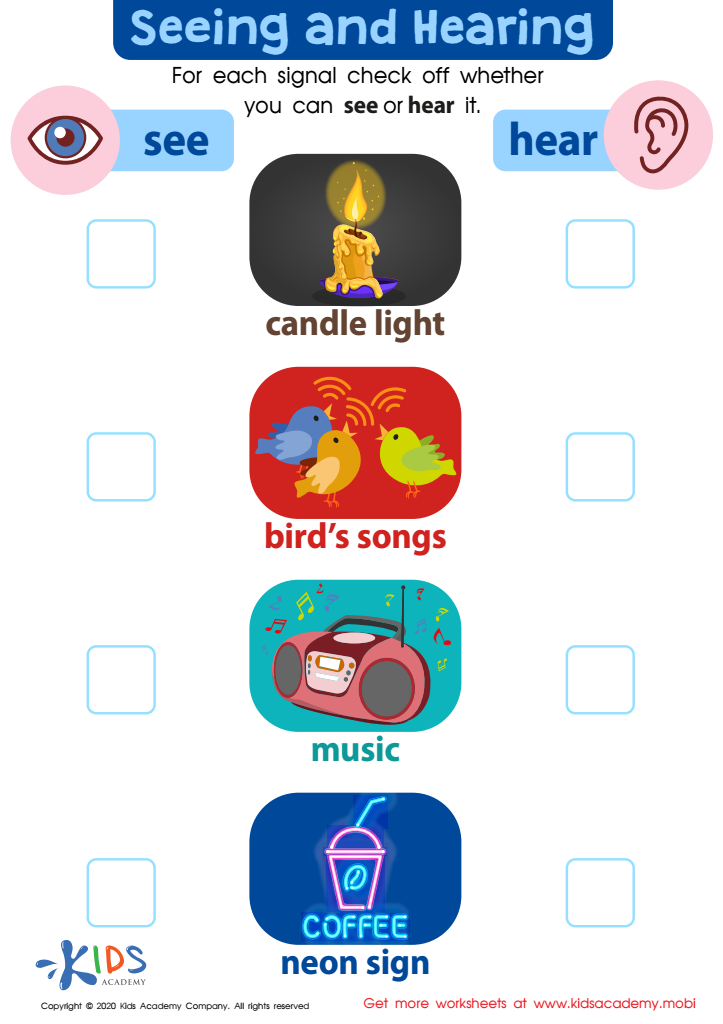
Seeing and Hearing Worksheet
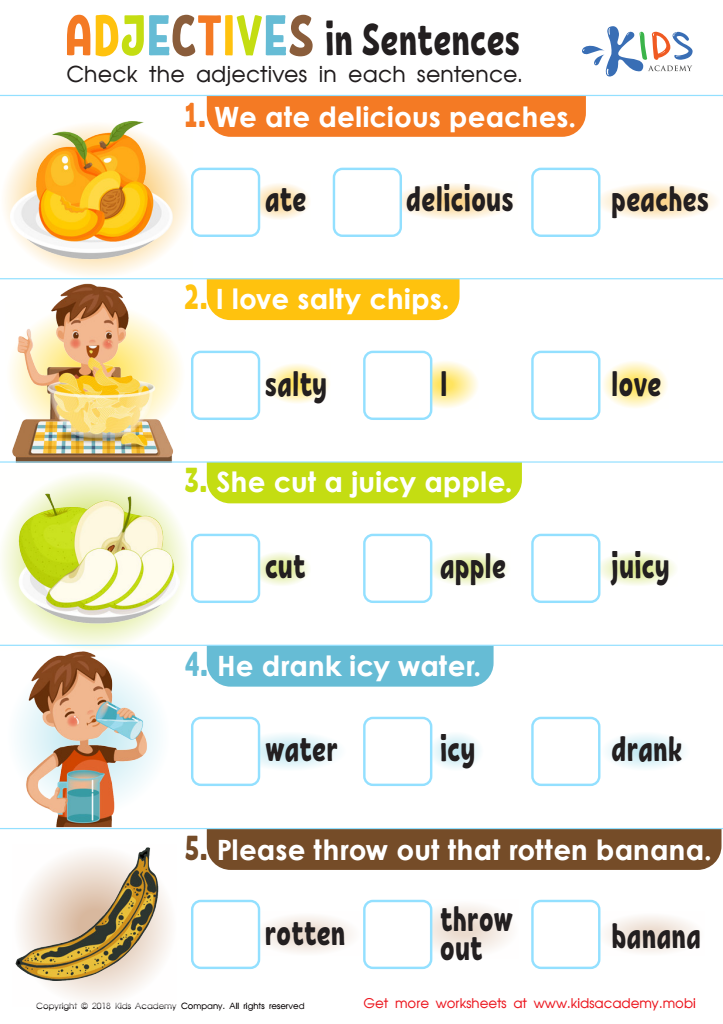
Adjectives in Sentences Worksheet








Understanding adjectives is an essential milestone for children aged 7-8, as it enhances their communication and cognitive skills in several ways. Adjectives add detail and color to language, enabling children to create more vivid and engaging descriptions. When students grasp adjectives, their ability to convey feelings, observations, and nuanced insights deepens, making their interactions richer and more meaningful.
First, adjectives enhance reading comprehension. With the ability to understand descriptive words, children can better infer the atmosphere, emotions, and subtleties in stories. This understanding aids in deeper engagement with text, improving both enjoyment and interpretative skills.
Second, mastering adjectives strengthens writing skills. As young writers, students become capable of crafting more detailed and imaginative stories, which not only makes writing more fun but also helps express their thoughts more clearly and creatively. Better writing leads to improved academic performances overall, as students' abilities to articulate ideas are essential across all subjects.
Finally, the understanding of adjectives plays a crucial role in social interactions. When kids accurately describe their experiences and feelings, it leads to improved empathy and relationships with peers and adults.
In conclusion, parents and teachers should prioritize the understanding of adjectives for children aged 7-8 to boost their academic, social, and emotional development. These foundational skills lead to lifelong benefits in communication and expression.








