Understanding forces Normal Worksheets for Ages 7-8
6 filtered results
-
From - To
Discover the "Understanding Forces Normal Worksheets" designed for ages 7-8, perfect for young learners to grasp the exciting concepts of force and motion! Our engaging worksheets help children explore various types of forces, including push, pull, and gravity, through interactive activities and fun illustrations. Each worksheet reinforces key scientific principles while promoting critical thinking and problem-solving skills. Ideal for classroom use or at-home learning, these resources provide a comprehensive approach to science education. Enhance your child's understanding of the physical world with our easy-to-follow, educational materials designed to stimulate curiosity and inspire a lifelong love for science! Explore now!
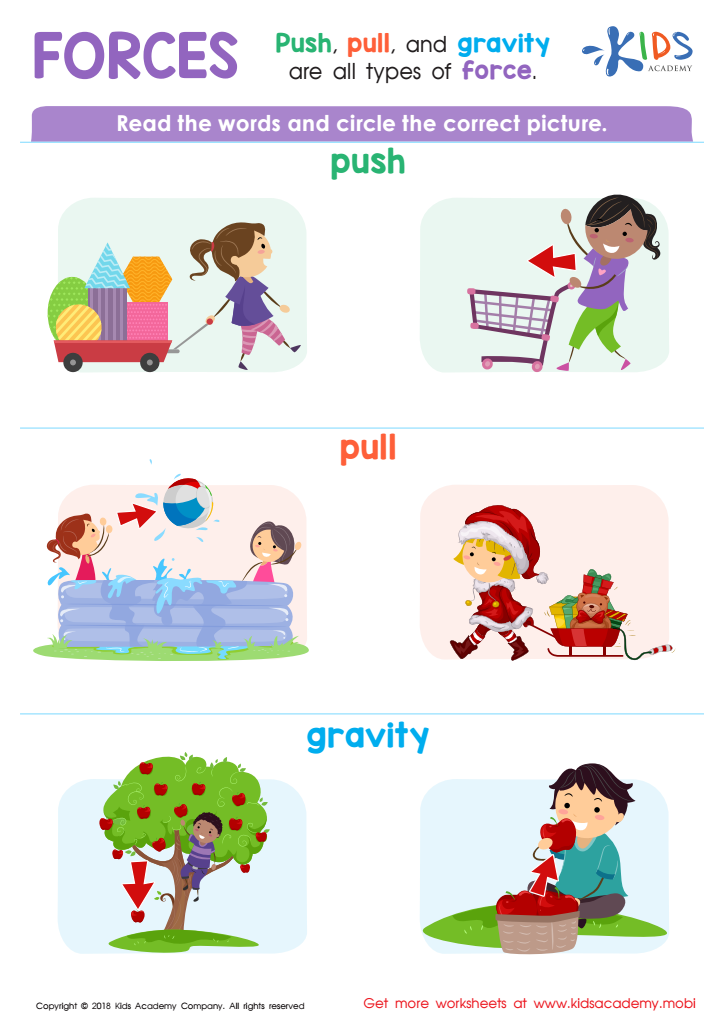
Forces Worksheet
 Assign to My Students
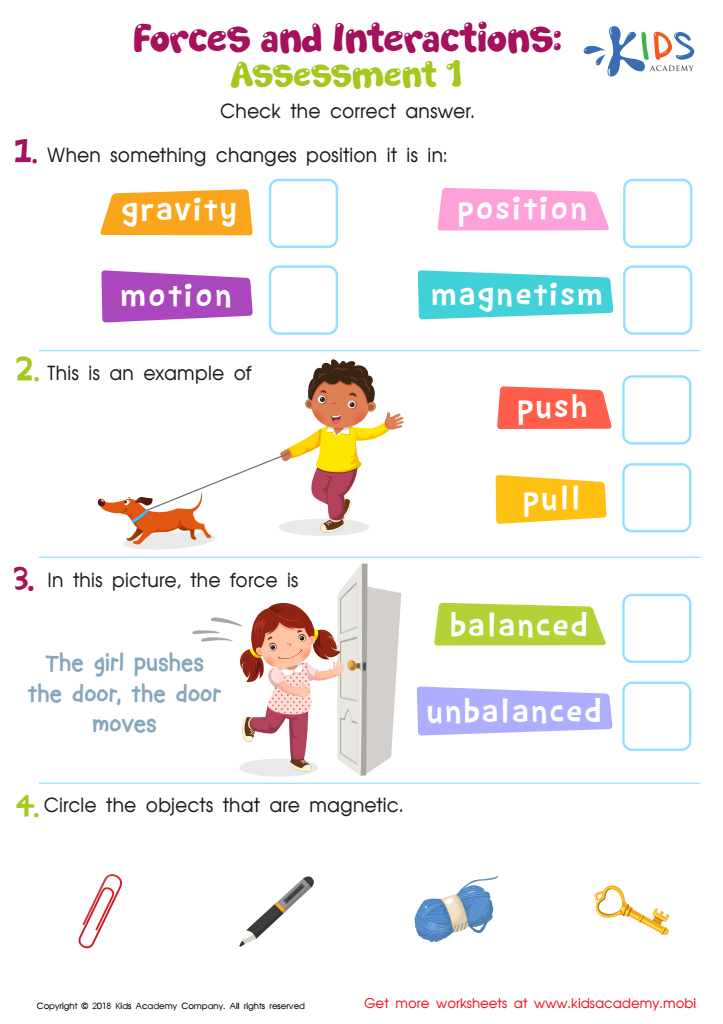
Forces and Interactions Printable
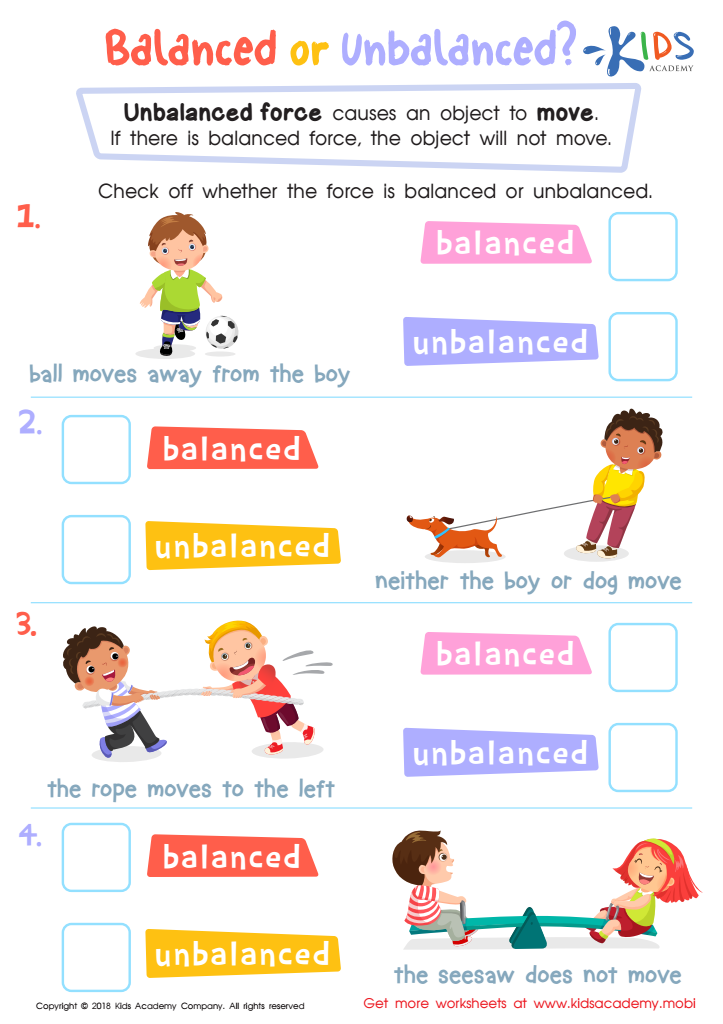
Balanced or Unbalanced Science Worksheet
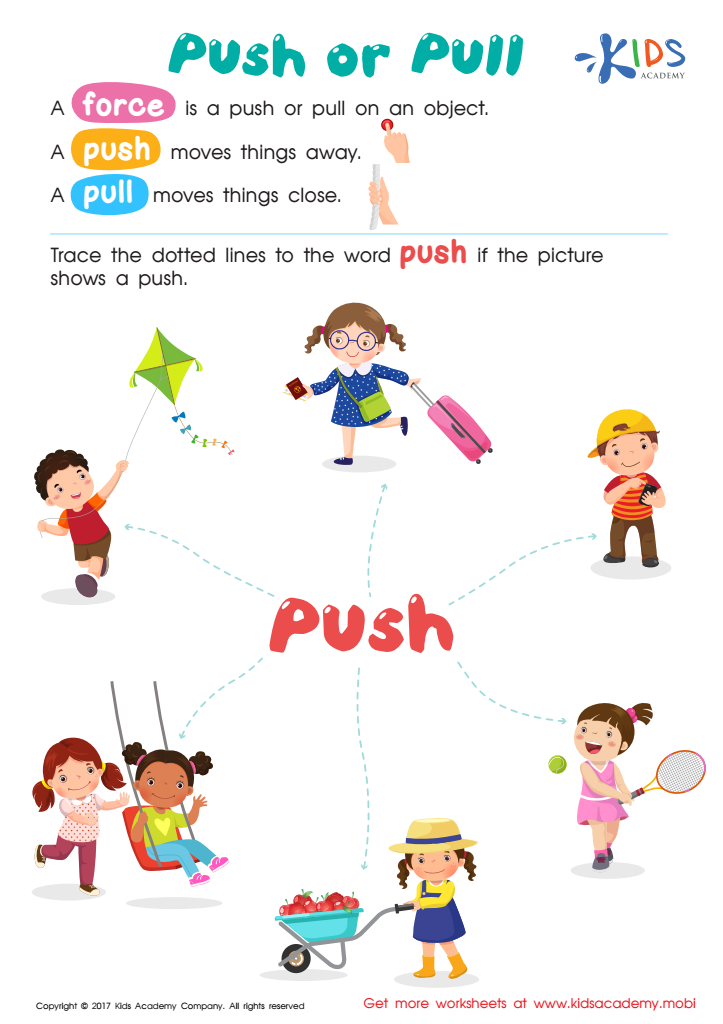
Push or Pull Worksheet
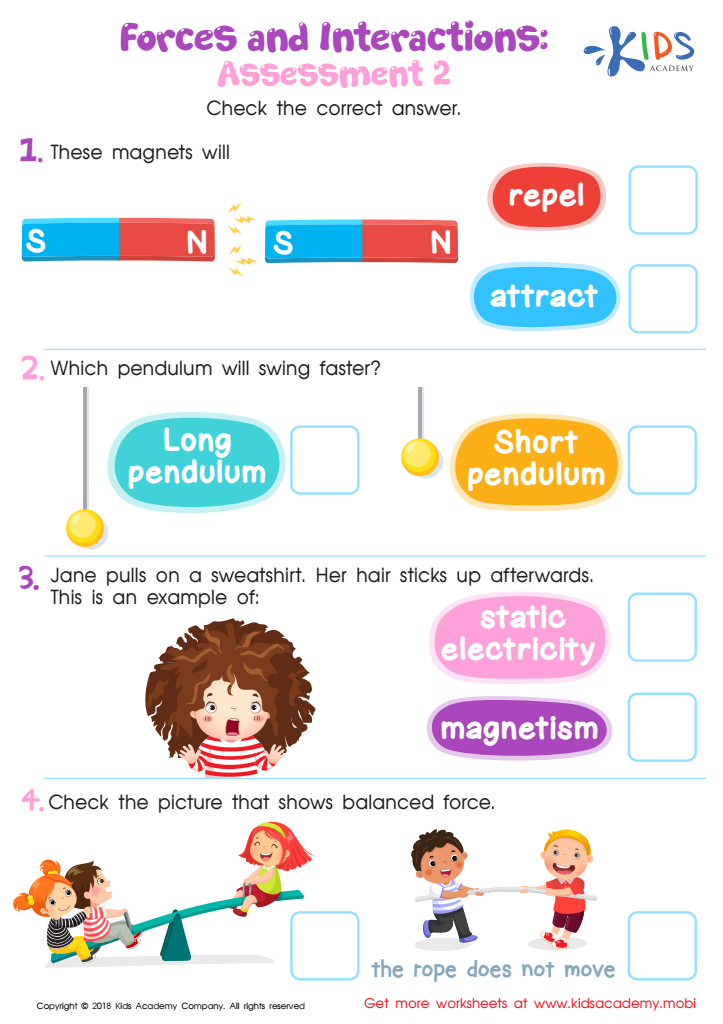
Forces and Interactions Worksheet For 3rd Grade
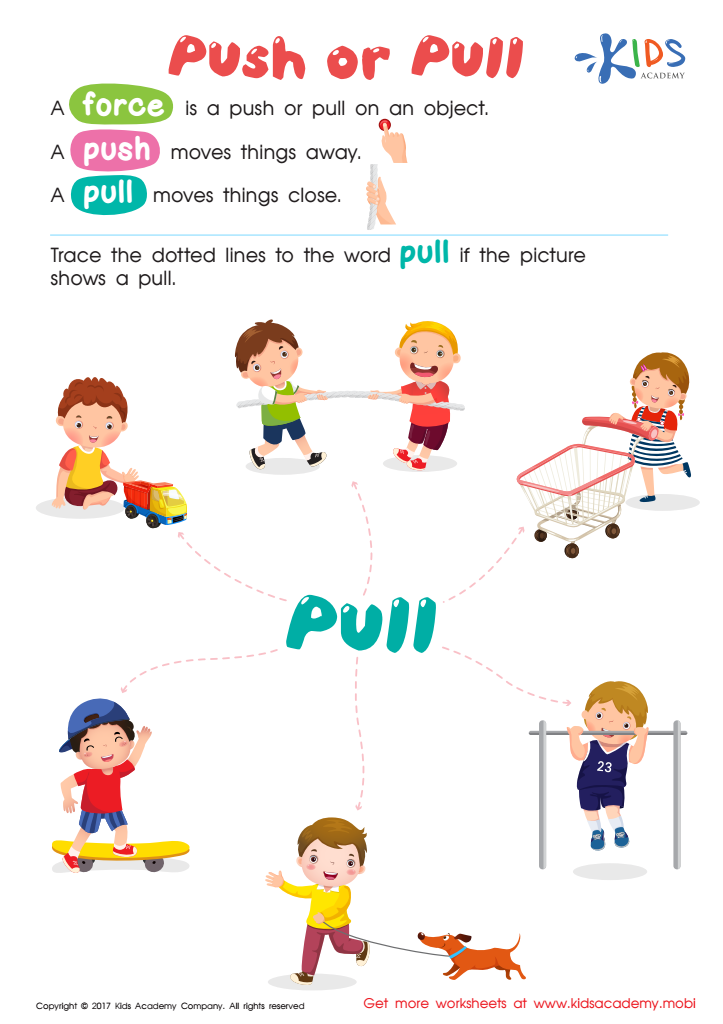
Pull or Push Worksheet







Understanding forces is crucial for children aged 7-8, as it lays the foundation for their scientific knowledge and critical thinking skills. At this developmental stage, children are naturally curious, and introducing the concept of forces, particularly normal force, helps satisfy that curiosity by connecting their observations of the world around them to scientific principles.
Parents and teachers should care about this topic because grasping basic physics concepts enhances children's understanding of everyday phenomena. For instance, when a child learns how normal force works, they can comprehend why objects don’t sink through surfaces, enabling them to make sense of experiences like sitting on a chair or placing a book on a table.
Moreover, understanding forces fosters problem-solving skills. As children explore concepts like balance and movement, they learn to formulate questions, test hypotheses, and draw conclusions. This foundational knowledge also promotes STEM literacy, preparing them for future academic endeavors and careers in science, technology, engineering, and mathematics. Ultimately, nurturing an understanding of forces encourages children to observe, ask questions, and appreciate the intricate workings of the world, cultivating a lifelong interest in learning and exploration.








