Visual Perception Skills Normal Worksheets for Ages 7-8
5 filtered results
-
From - To
Enhance your child's visual perception skills with our specially designed worksheets for ages 7-8! These engaging and interactive activities focus on improving important skills such as shape recognition, visual discrimination, spatial awareness, and more. Ideal for both classroom use and at-home learning, our worksheets provide a fun way for children to practice critical thinking and enhance their educational journey. Tailored to keep young learners motivated and excited, these resources are perfect for parents and teachers looking to reinforce visual perception in a constructive manner. Explore our collection and watch your child thrive in their learning experience!
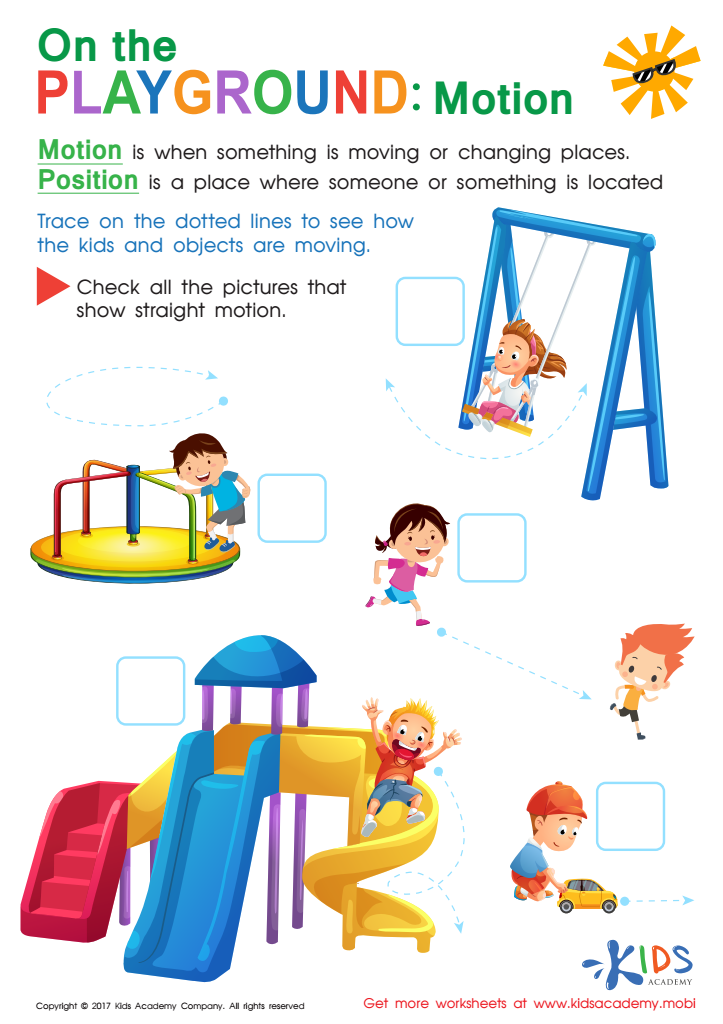
Position and Motion Worksheet
 Assign to My Students
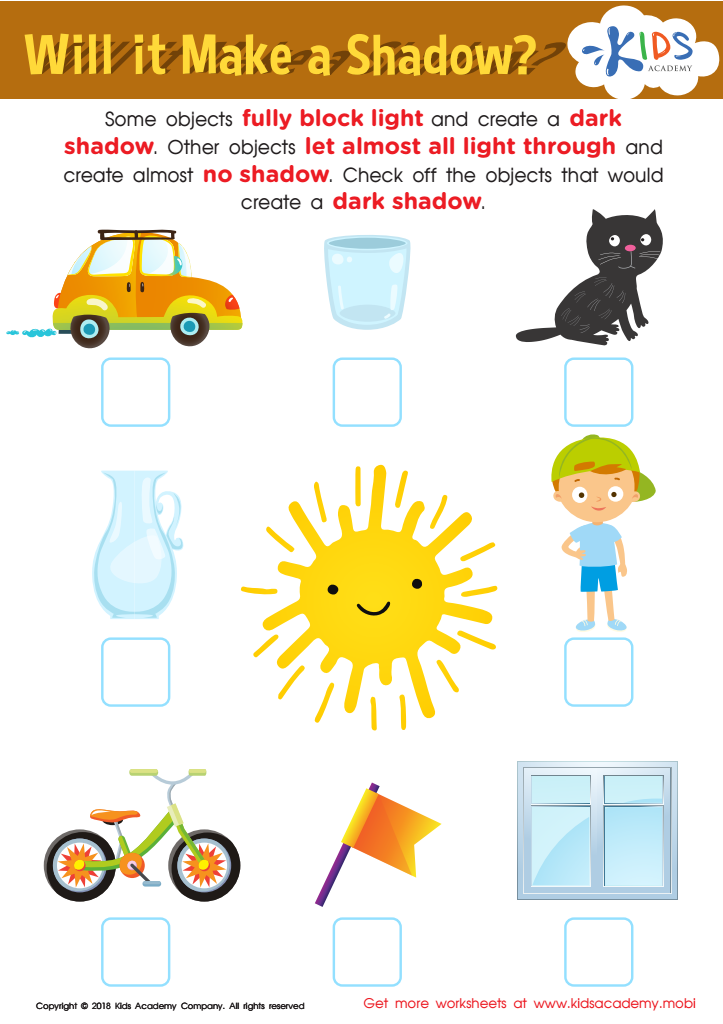
Will It Make a Shadow? Worksheet
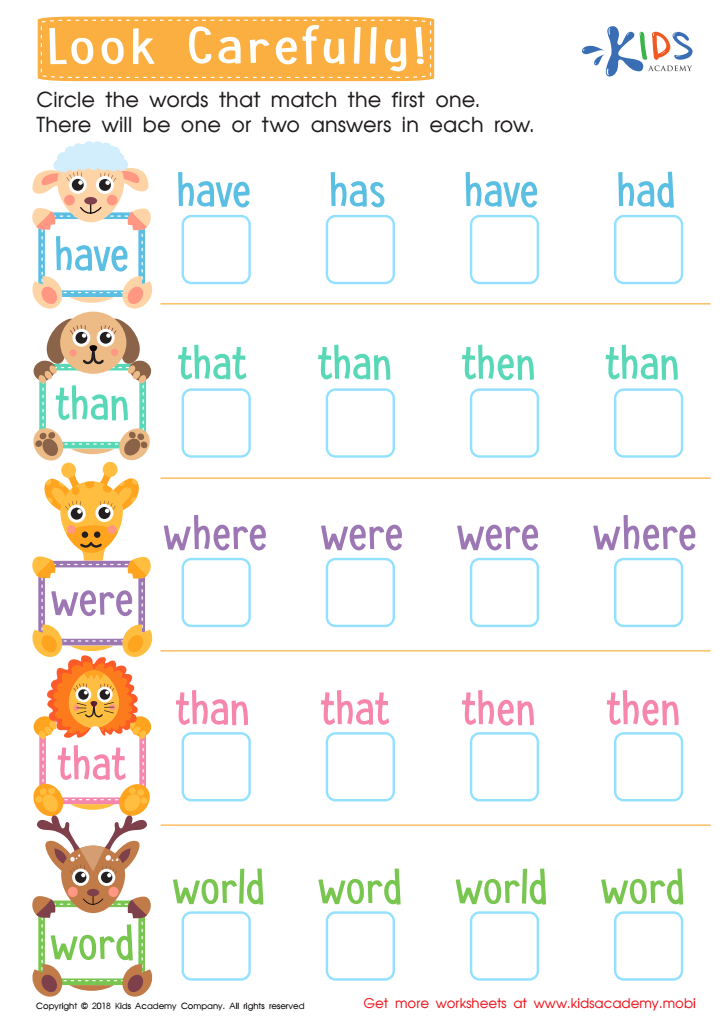
Look Carefully Worksheet
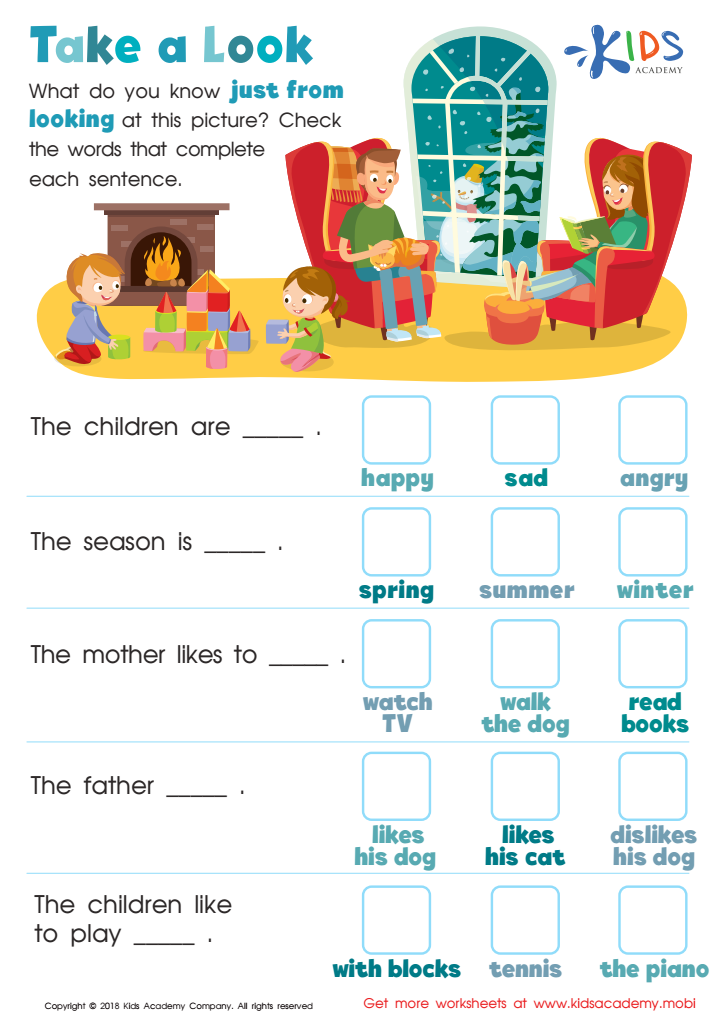
Take a Look - Part 1 Worksheet
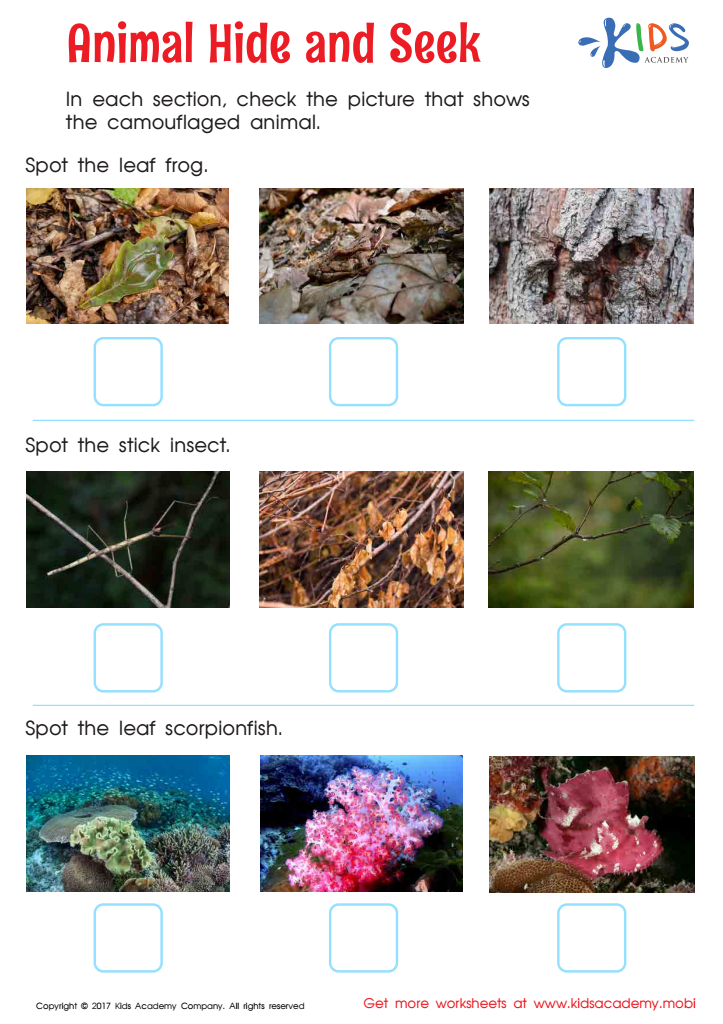
Animal Hide and Seek Worksheet


.jpg)



Visual perception skills are essential for children aged 7-8 as they directly impact learning and everyday activities. At this stage, children are developing critical abilities to interpret and process visual information, which plays a crucial role in their academic success and social interactions.
Strong visual perception skills enable students to recognize letters, numbers, shapes, and patterns, contributing to reading, writing, and math proficiency. When children struggle with these skills, they may face challenges in understanding texts, following instructions, or visualizing mathematical concepts. This can lead to frustration, lowered self-esteem, and diminished motivation to learn.
Moreover, visual perception is not just about seeing; it involves understanding visual information, integrating it with prior knowledge, and applying it in practical situations. This skillset becomes increasingly important as children engage in more complex tasks, such as problem-solving in science projects or interpreting charts in history.
Parents and teachers should prioritize developing these skills through targeted activities and games that promote visual discrimination, spatial awareness, and visual memory. By fostering strong visual perception abilities, we empower children to navigate their educational landscapes confidently and succeed in their academic pursuits. Supporting these foundational skills can make a significant difference in a child's ongoing development and overall well-being.








