Number Recognition Normal Addition and Subtraction Word Problems Worksheets for Ages 7-8
5 filtered results
-
From - To
Enhance your child's math skills with our Number Recognition Normal Addition and Subtraction Word Problems Worksheets, designed specifically for ages 7-8. These engaging worksheets not only strengthen number recognition but also focus on solving real-world math problems to develop critical thinking. With a variety of scenarios, children will practice adding and subtracting through fun, relatable situations that foster a love for learning. Ideal for classroom use or at-home practice, these worksheets encourage independent problem-solving and improve arithmetic fluency. Download our user-friendly worksheets today and watch your child's confidence and abilities in math soar! Perfect for educational development and skill reinforcement.
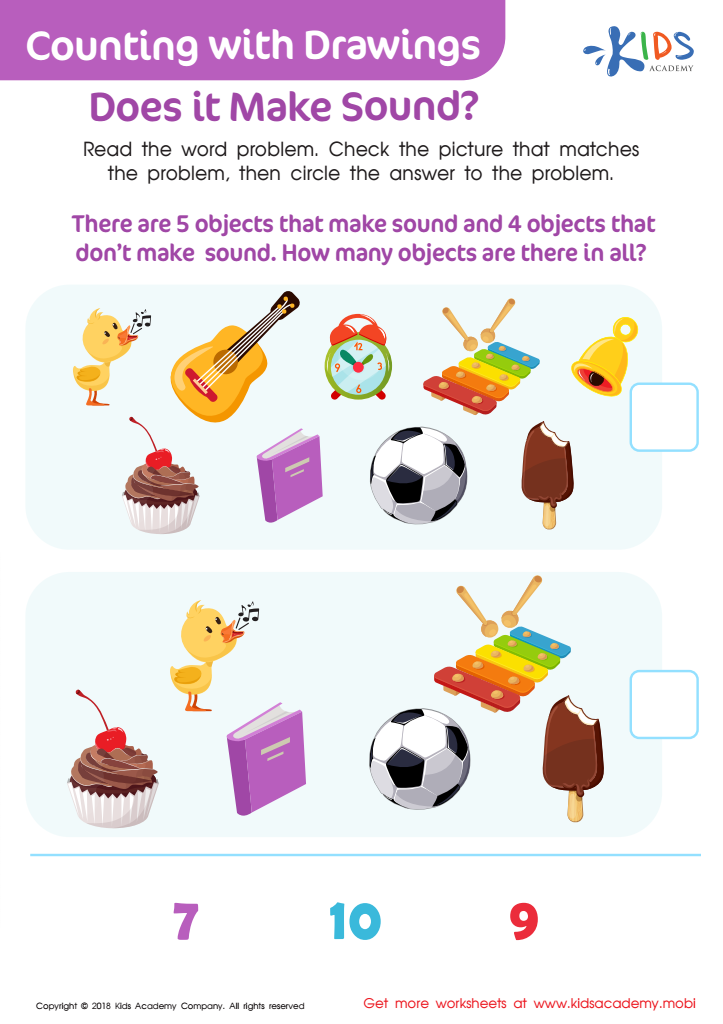
Counting With Drawings. Does It Make Sound? Worksheet
 Assign to My Students
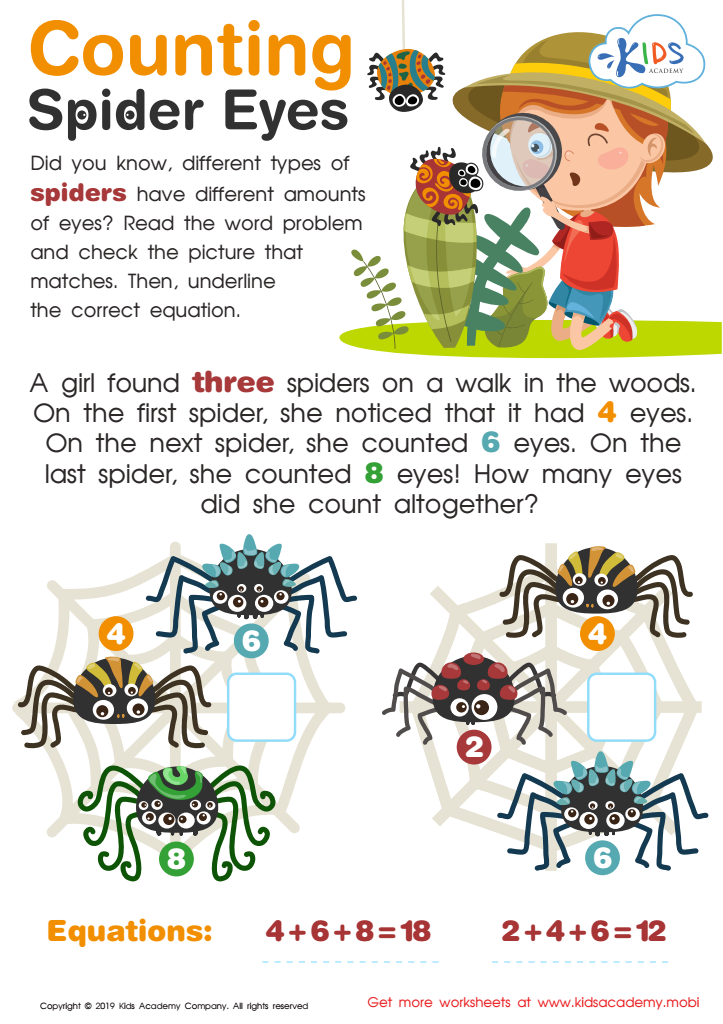
Counting Spider Eyes Worksheet
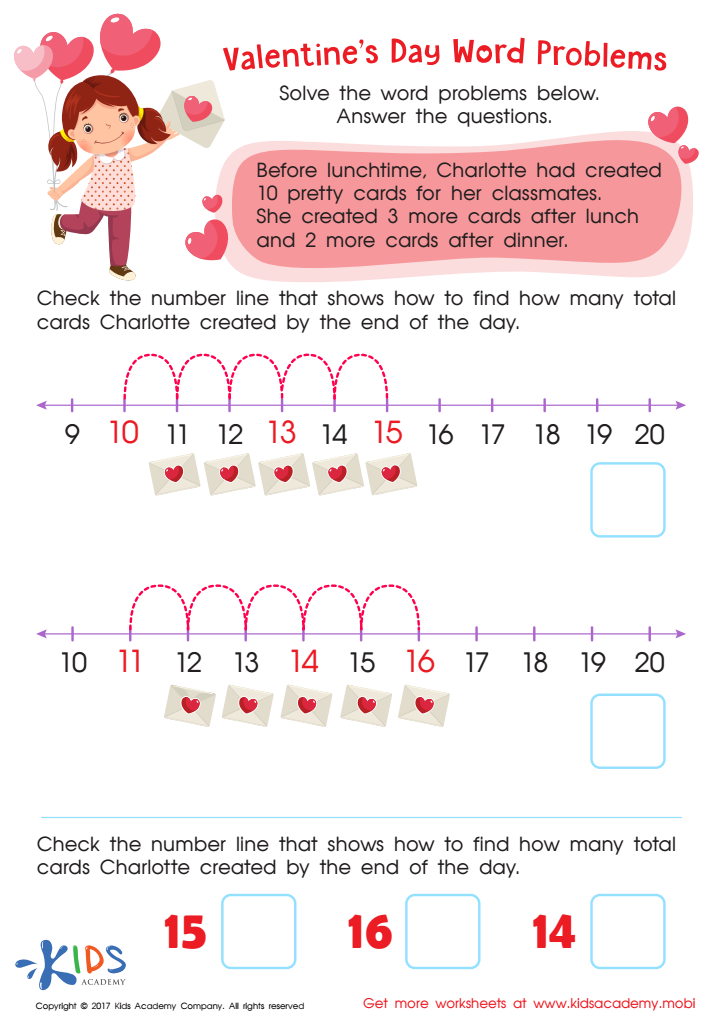
Valentines Day Word Problem Worksheet
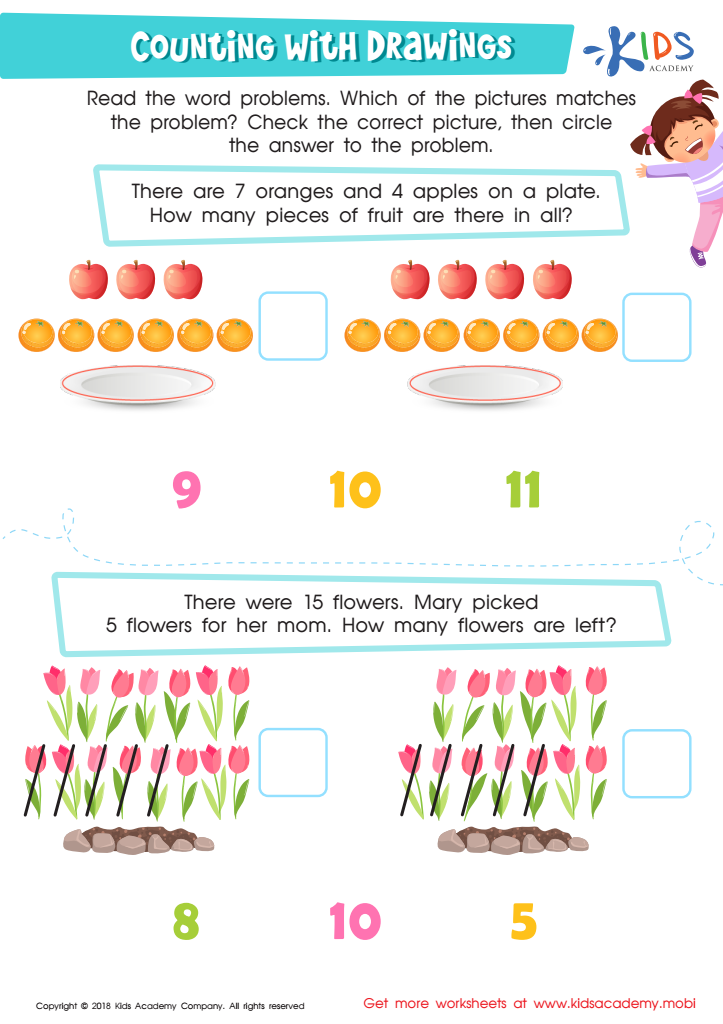
Counting with Drawings: Fruits & Chocolates Worksheet
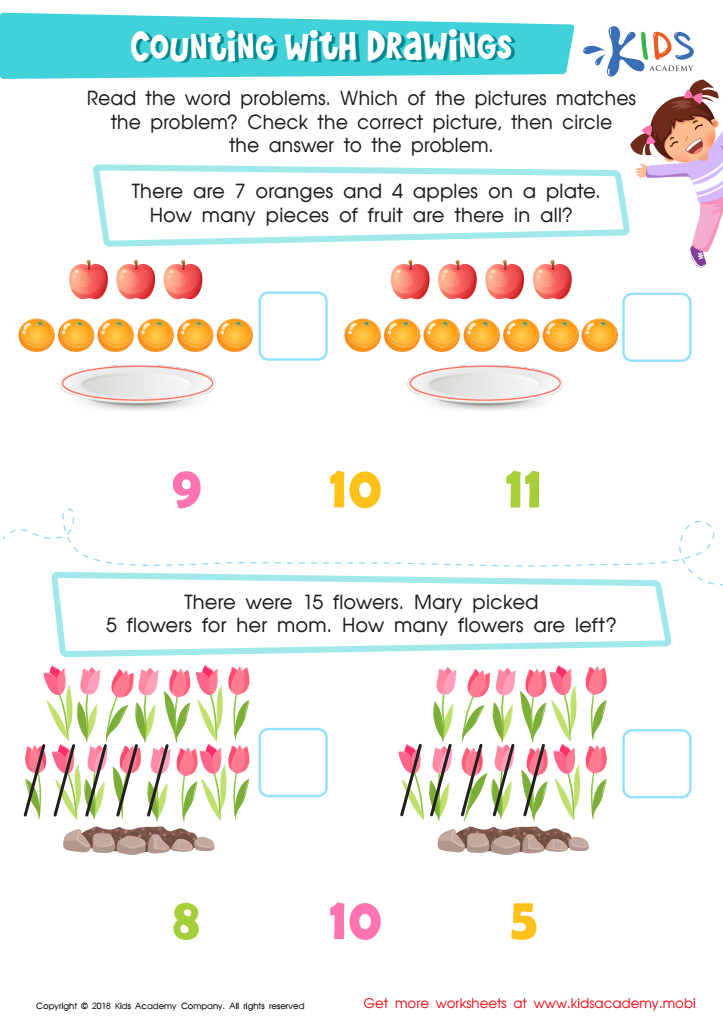
Counting with Drawings:Fruits & Flowers Worksheet








Number recognition and proficiency in normal addition and subtraction word problems are crucial skills for children aged 7-8. At this stage, children are transitioning from basic arithmetic to more complex mathematical reasoning. Mastering number recognition ensures that students can identify and work with numerals confidently, facilitating easier engagement with larger concepts like place value and numerical operations.
In particular, normal addition and subtraction word problems enhance critical thinking and problem-solving skills. These tasks encourage children to interpret verbal contexts and translate them into mathematical expressions, which is a vital skill not just in math, but also in real-life situations. This foundational ability prepares them for more advanced topics, including fractions, decimals, and multi-step problems.
Furthermore, parents and teachers should prioritize these skills to build a strong mathematical foundation. Children tend to develop confidence when they regularly solve word problems, ultimately fostering a positive attitude toward math. Encouraging practice in this area can also promote improved academic performance, instilling a lifelong appreciation for mathematics. By emphasizing the importance of number recognition and problem-solving, parents and teachers play a pivotal role in cultivating competent, confident learners ready for future challenges in math and beyond.