Multiplication practice Normal Arrays Worksheets for Ages 7-8
3 filtered results
-
From - To
Boost your child's multiplication skills with our engaging "Multiplication Practice Normal Arrays Worksheets" designed for ages 7-8! These educational worksheets offer a fun yet effective way to master multiplication through the use of visual arrays. Each activity is crafted to help young learners understand the concept of grouping and repeated addition, forming a strong foundation for future math success. Ideal for both classroom settings and at-home practice, our worksheets transform learning into an enjoyable experience, ensuring children grasp essential multiplication concepts while having fun. Designed by math experts, these worksheets make multiplication simple and engaging!
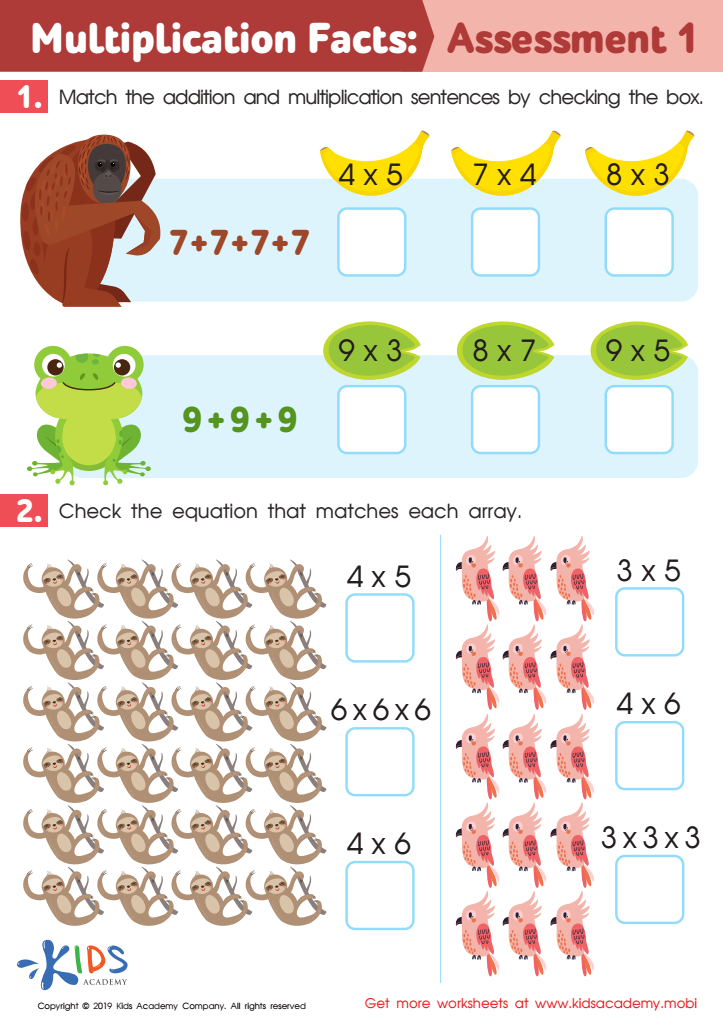
Multiplication Facts: Assessment 1 Worksheet
 Assign to My Students
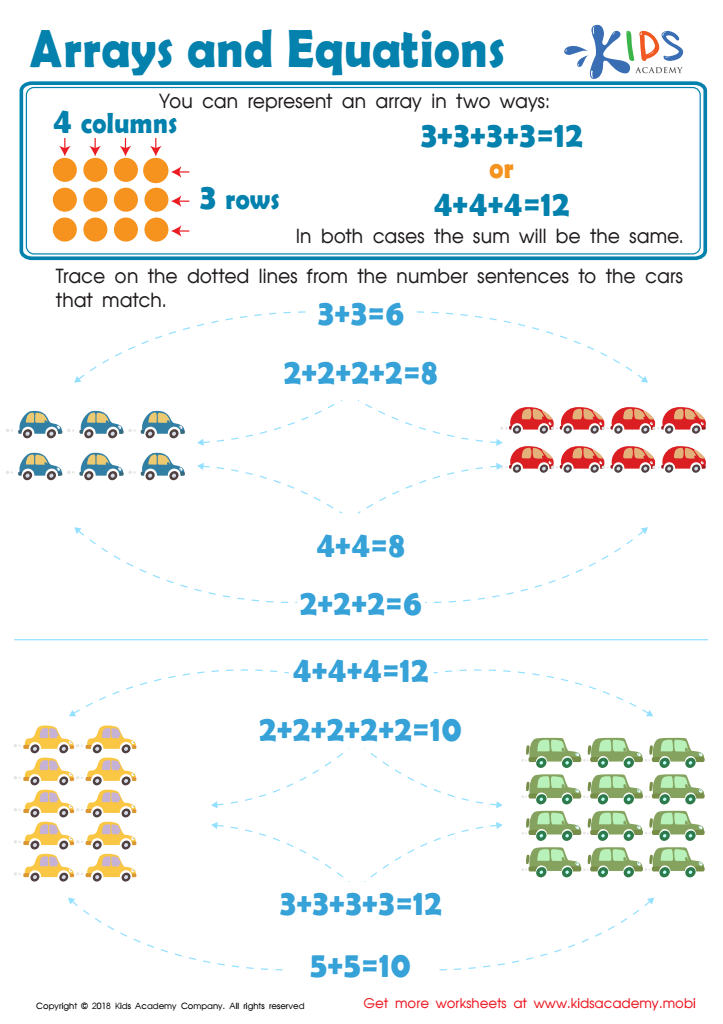
Arrays and Equations Worksheet
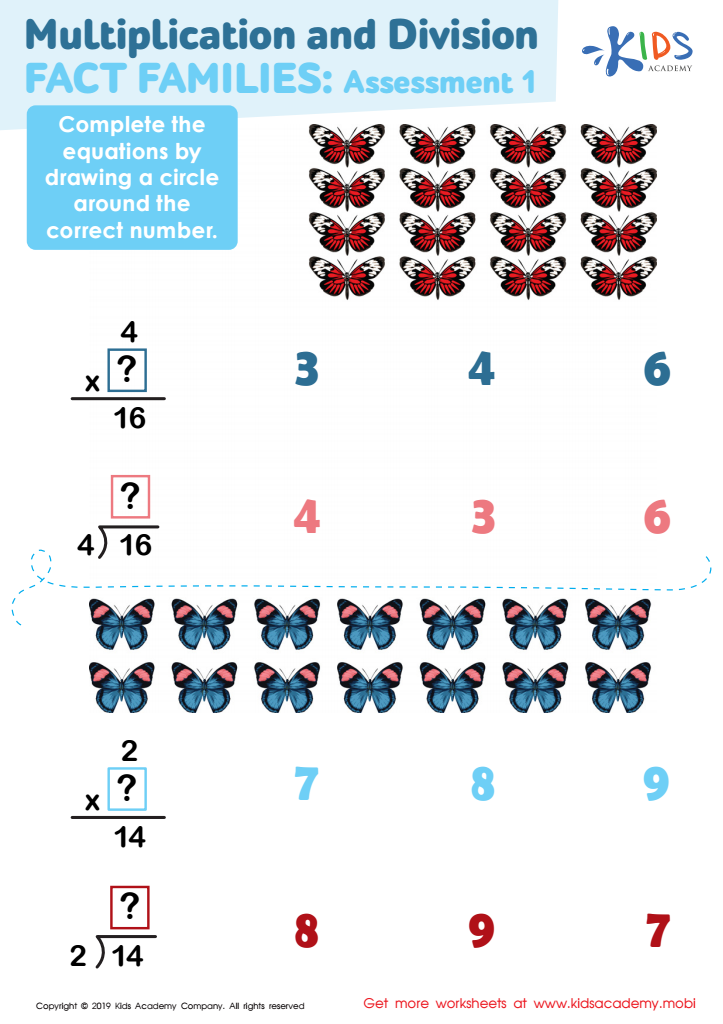
Multiplication and Division Fact Families Assessment 1 Worksheet








Multiplication practice using normal arrays for children aged 7-8 is a crucial educational tool that lays a solid foundation for their future math learning. Arrays, which are visual representations of multiplication concepts, help children understand the idea of grouping and repeated addition. For instance, seeing 3 rows of 4 apples each (3 * 4 = 12) helps a young learner concrete the abstract concept of multiplication into something tangible and easier to grasp.
Moreover, early and consistent practice with arrays enhances children's number sense and their ability to recognize patterns, both of which are essential skills not only for mastering multiplication but also for more advanced mathematical concepts later on. Continued interaction with arrays also promotes problem-solving skills and logical thinking since children learn to break down bigger problems into smaller, more manageable pieces.
Parents and teachers should care because using arrays makes the learning process more interactive and engaging. This method accommodates various learning styles and rates, ensuring that all children, regardless of their skill levels, can build confidence and proficiency in math. Encouraging exercises with arrays fosters a positive attitude towards math, mitigates math anxiety by providing a clear and systematic learning path, and ultimately sets up young learners for academic success.








