Understanding base ten Normal Numbers Worksheets for Ages 7-8
3 filtered results
-
From - To
Discover our engaging base ten normal numbers worksheets designed specifically for kids aged 7-8! These interactive resources aim to enhance students' understanding of the base ten number system through fun exercises and practical applications. Each worksheet encourages children to identify, read, and write numbers using place value concepts, making math both enjoyable and educational. Perfect for reinforcing classroom learning or for use at home, our worksheets help develop critical thinking skills while building a strong numerical foundation. Explore the wonders of base ten and watch your child gain confidence in their math abilities through colorful, age-appropriate activities!
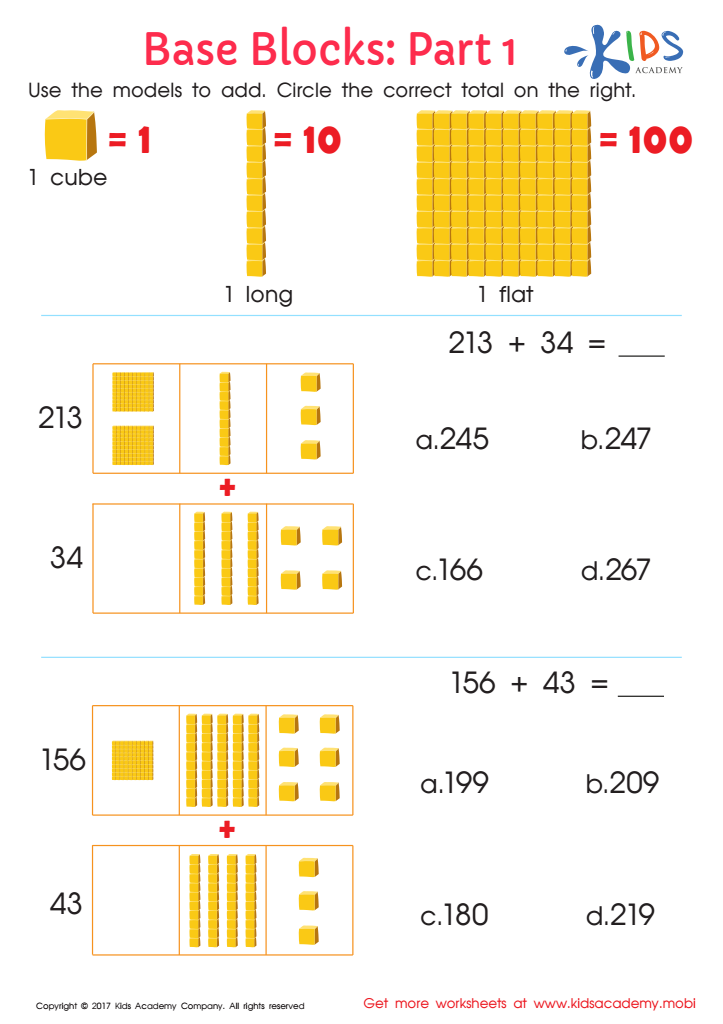
Base Ten Blocks Worksheet: Part 1
 Assign to My Students
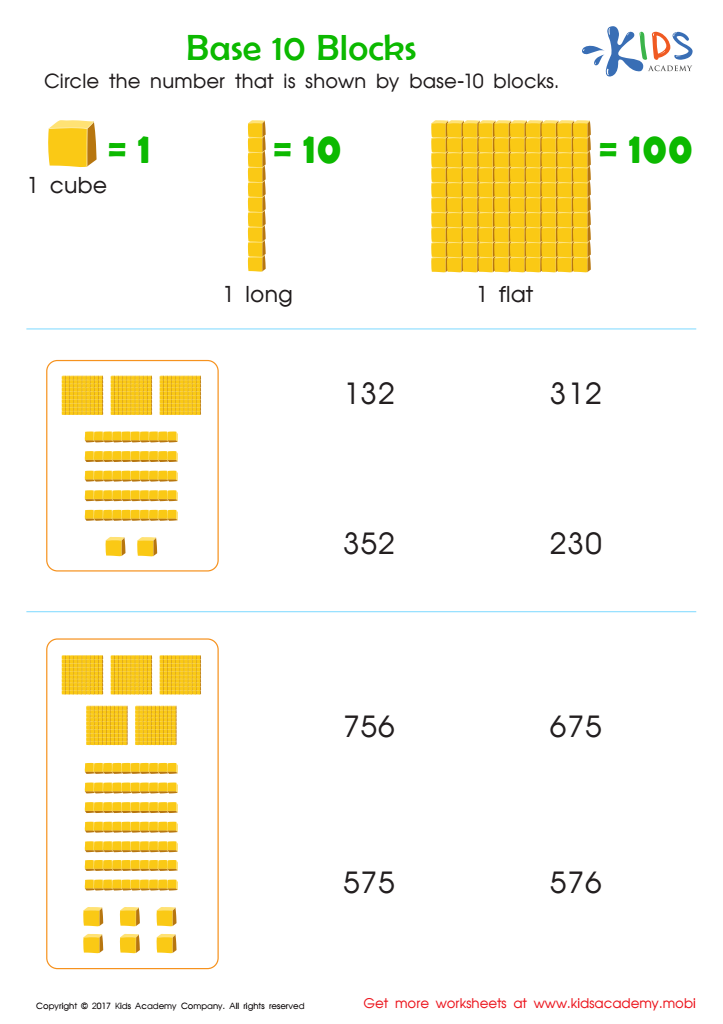
Base Ten Blocks Worksheet
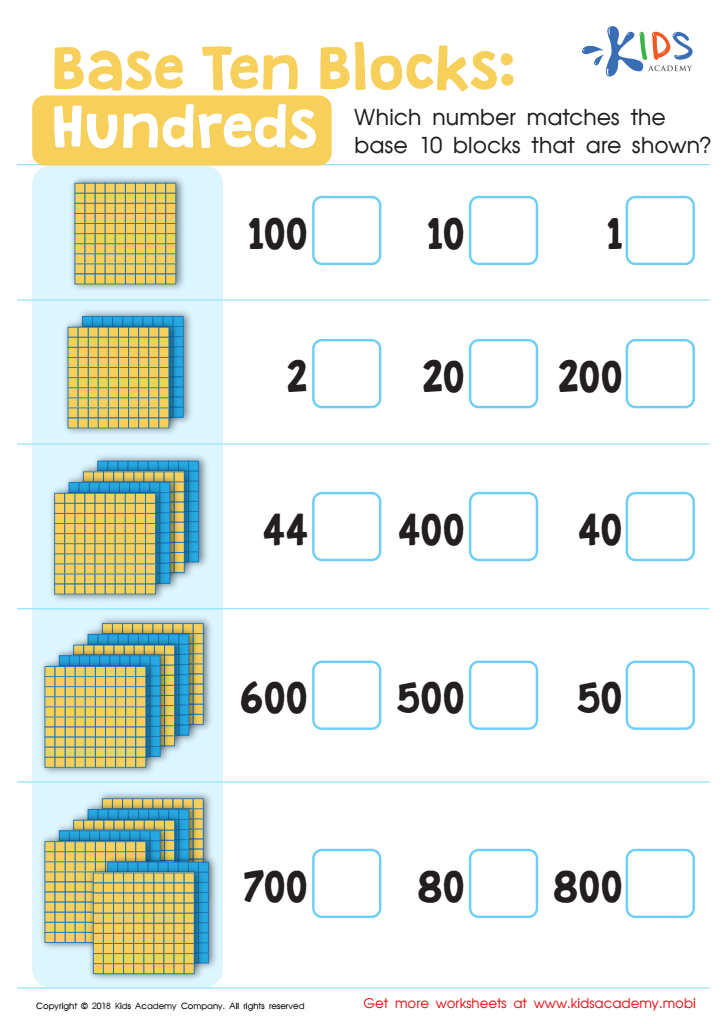
Base Ten Blocks: Hundreds Worksheet








Understanding base ten normal numbers is crucial for children aged 7-8 because it forms the foundation for their mathematical growth. At this age, students begin to explore more complex concepts in mathematics, and a solid grasp of base ten can enhance their ability to perform arithmetic operations like addition, subtraction, multiplication, and division.
Base ten understanding helps children comprehend the place value system, where the position of a digit determines its value. For example, in the number 254, the '2' represents 200 because it is in the hundreds place. This conceptual knowledge enables students to intuitively manipulate numbers and recognize patterns, which are essential skills for problem-solving.
Furthermore, teaching base ten strategies equips children with the tools to tackle more advanced topics, such as fractions and decimals, in future grades. By mastering normal numbers in base ten, students gain confidence in their numerical abilities and develop a lasting interest in mathematics. Parents and teachers should prioritize fostering this understanding, as it not only supports academic achievement but also prepares students for real-life situations that require numeracy skills, from budgeting to measuring. Ultimately, a strong foundation in base ten lays the groundwork for lifelong mathematical literacy.








