Enhancing critical thinking Normal Math Worksheets for Ages 7-8
5 filtered results
-
From - To
Boost your child’s critical thinking skills with our specially designed Normal Math Worksheets for ages 7-8. These engaging worksheets incorporate fun and practical problems that foster analytical reasoning, problem-solving, and creativity in mathematics. Tailored to suit young learners, our resources challenge students to think critically while enjoying a variety of exercises, from puzzles to word problems. Parents and educators will find these worksheets an excellent tool to support classroom learning or home study. Equip your child with the essential skills they need to excel in math and beyond with our printable worksheets that make learning enjoyable and effective!
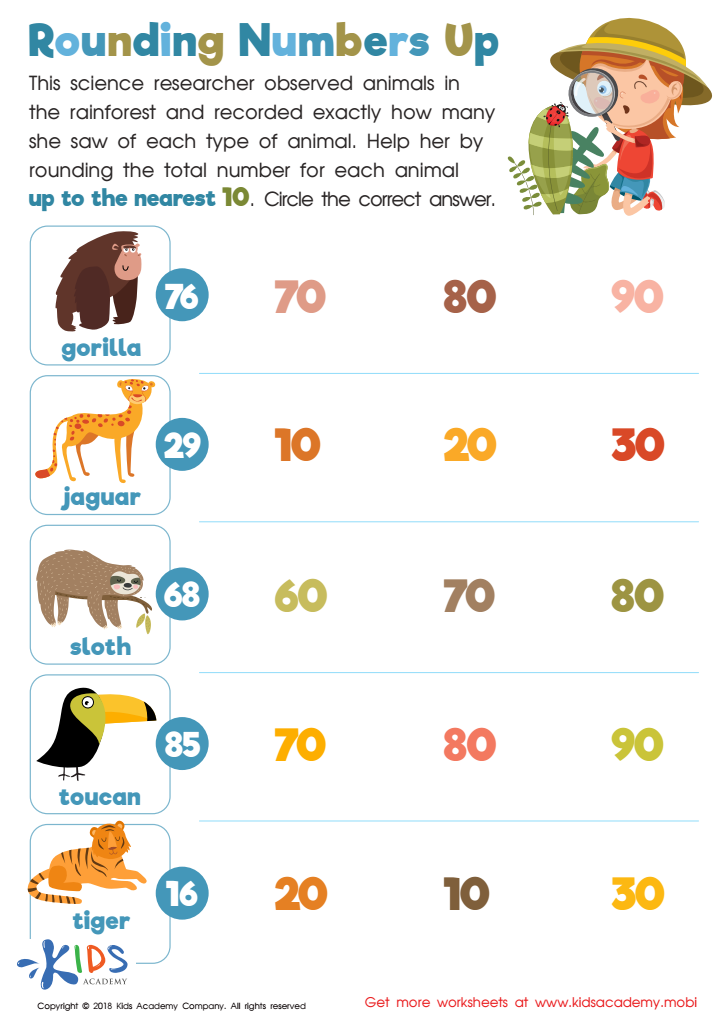
Rounding Numbers Up Worksheet
 Assign to My Students
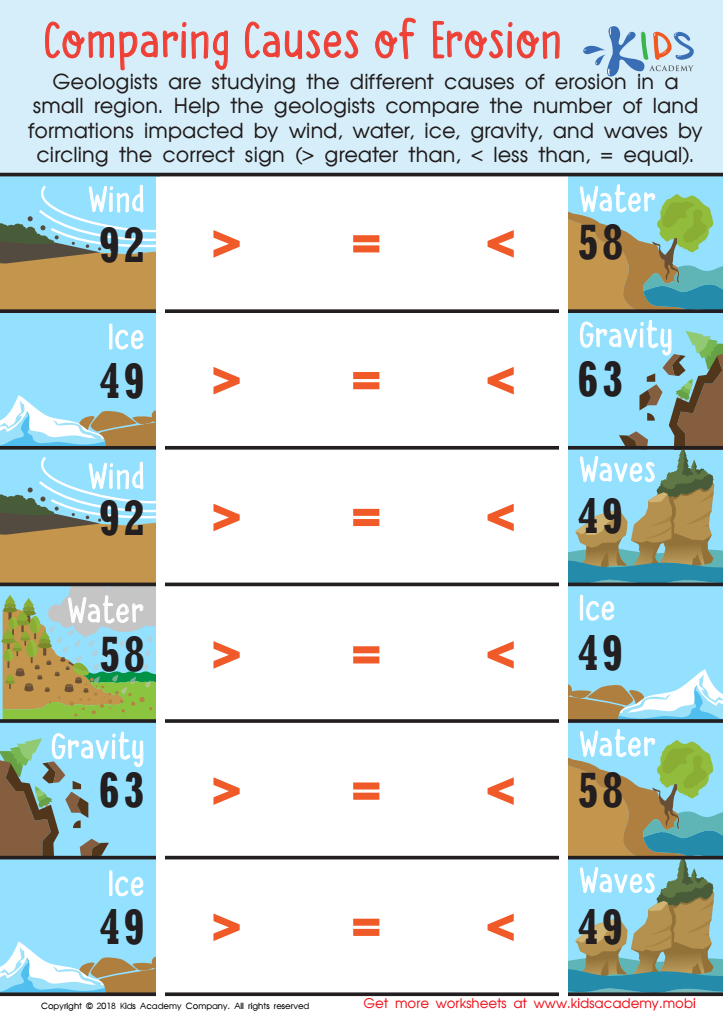
Comparing Causes of Erosion Worksheet
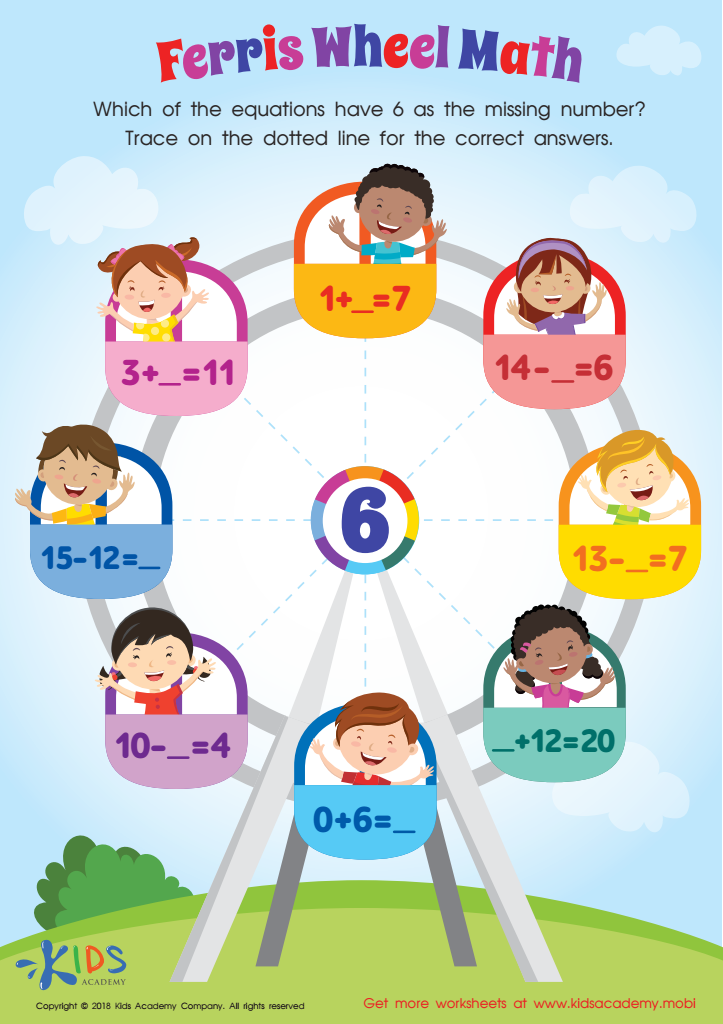
Missing Number: Ferris Wheel Math Worksheet
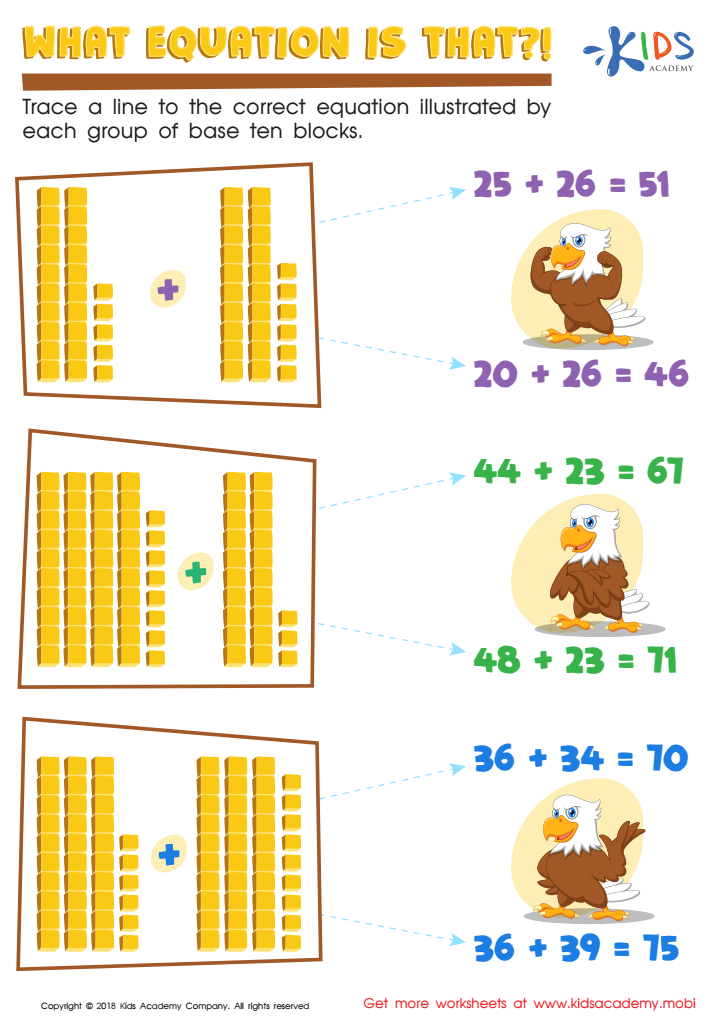
What Equation Is That? Worksheet
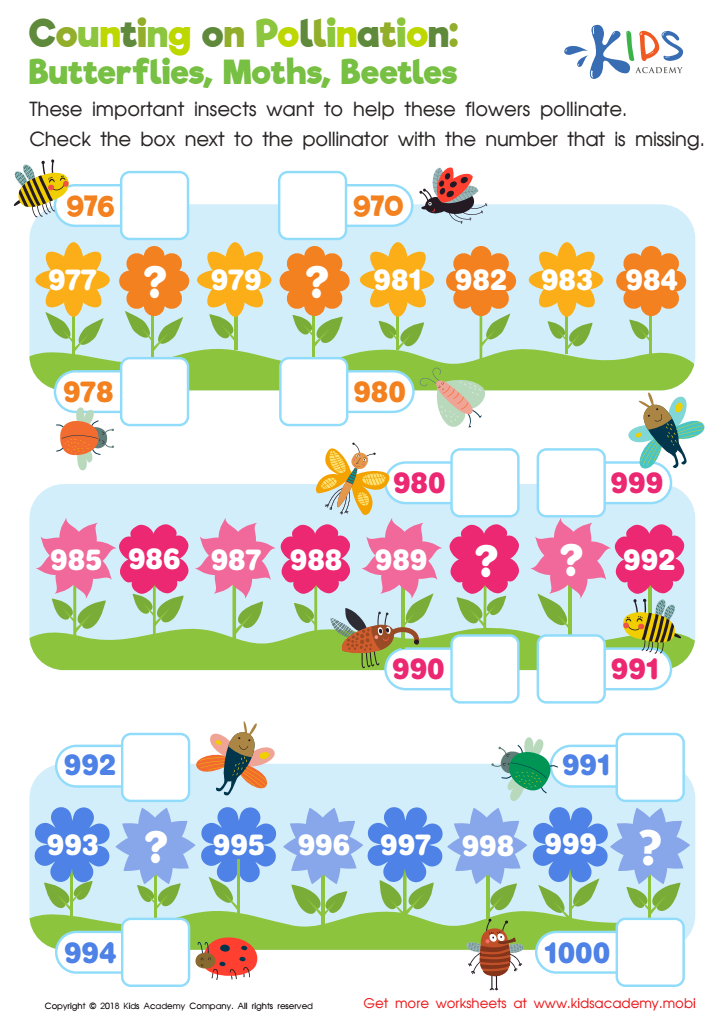
Counting on Pollination: Butterflies, Moths, Beetles Worksheet







Enhancing critical thinking in Normal Math for ages 7-8 is vital for several reasons. At this developmental stage, children are naturally curious and eager to make sense of the world around them. Integrating critical thinking into math helps them learn not just to compute but to understand concepts, recognize patterns, and solve problems systematically. This skill set lays the foundation for future academic success across disciplines.
Furthermore, critical thinking enables children to engage actively in their learning. Instead of passively absorbing information, they learn to question, analyze, and evaluate their mathematical understanding. This leads to a deeper comprehension of mathematical concepts, promoting retention and application in real-world scenarios, such as budgeting, measuring, or even simple cooking tasks.
In addition, fostering critical thinking nurtures essential life skills like decision-making, creativity, and resilience. Children learn to approach problems methodically and develop solutions, preparing them for future challenges beyond the classroom. For parents and teachers, prioritizing critical thinking in Normal Math not only enhances students' math skills but also equips them with a broad skill set that supports lifelong learning and adaptability in an ever-evolving world. By investing in these capabilities now, adults contribute significantly to a child's holistic development.








