
Shape identification Normal Math Worksheets for Ages 7-8
3 filtered results
Difficulty Level
Grade
Age
-
From - To
Subject
Activity
Standards
Help your child enhance their geometry skills with our engaging Shape Identification Math Worksheets designed for ages 7-8. These carefully crafted worksheets make learning shapes both fun and educational by offering a variety of exciting tasks. From recognizing and naming common shapes to identifying their attributes, kids will build a strong foundation in geometry through practice. Perfect for young learners, this collection fosters critical thinking and spatial awareness. Give your child the tools to succeed in math with our easy-to-use, printable worksheets, available for instant download. Start shaping your child's future in math today!
Favorites
With answer key
Interactive
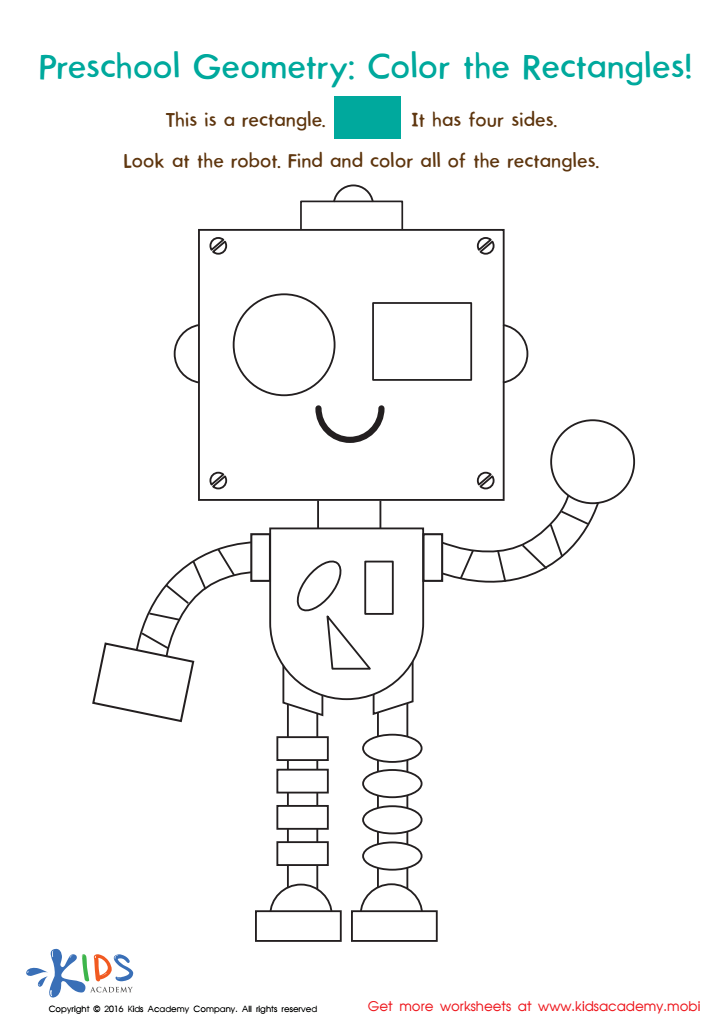
Geometry Worksheet
Geometry can be fun for kids! They explore shapes that create their favorite pics and objects. This preschool worksheet explains that rectangles have four sides, then kids color rectangles on a funny robot!
 Assign to My Students
Geometry Worksheet
Worksheet
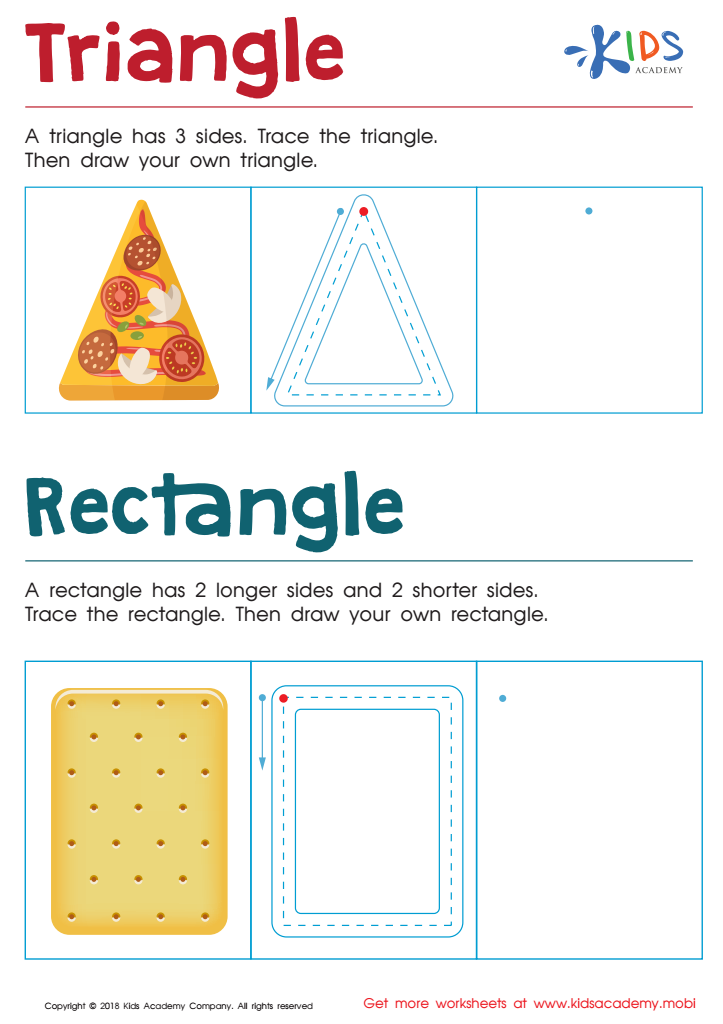
Triangle Rectangle Worksheet
This printable worksheet helps kids draw rectangles and triangles. Have your child trace the pizza and cracker shapes to become familiar, then try their own. Perfect for second graders! Coloring and creativity make this fun and educational.
Triangle Rectangle Worksheet
Worksheet
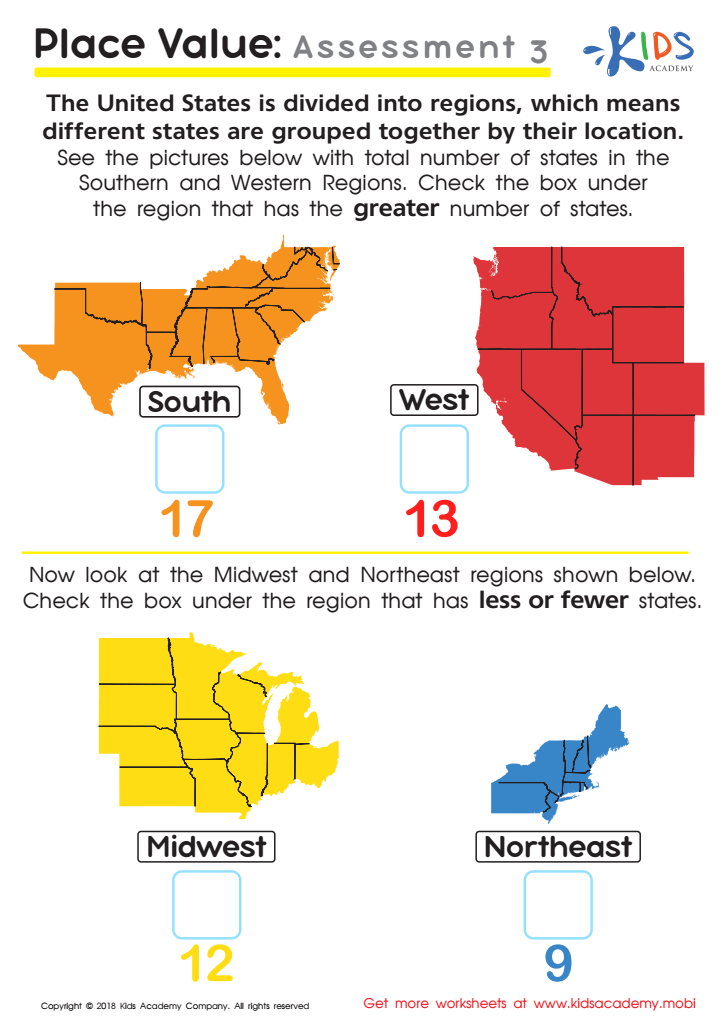
Place Value: Assessment 3 Worksheet
Test your child's math skills without them realizing it! This fun worksheet looks at the states and regions of the U.S. and your child can compare numbers greater or lesser than the other. It's the perfect way to assess your child's number sense without them knowing.
Place Value: Assessment 3 Worksheet
Worksheet
Join Kids Academy for Free
Who is primarily going to use this learning content?








Shape identification at ages 7 to 8 is more than just recognizing circles and squares; it plays a foundational role in a child's development. Firstly, understanding shapes enhances spatial reasoning. When children can distinguish between different shapes, they better understand how objects fit together and relate to each other in space, aiding in activities like puzzle-solving and building blocks.
Secondly, shape identification is closely tied to math skills. Recognizing and naming shapes is an early step in geometry. It lays the groundwork for more complex topics like symmetry, fractions, and area computations. For instance, understanding that two triangles can form a square helps in grasping the concept of abstract properties like halves and wholes.
Moreover, identifying shapes is intellectually stimulating. It promotes problem-solving and critical thinking abilities. Encouraging children to recognize and categorize shapes helps develop their attention to detail, categorization skills, and organization of thought processes.
Furthermore, shape recognition has a link to literacy. Recognizing shapes helps children differentiate between letters and numbers, which is crucial for reading and writing. A 'D' and an 'O' may look similar at first glance, but understanding their distinct shapes helps reduce reading errors.
In summary, shape identification is essential in nurturing a child's cognitive abilities, mathematical foundations, and overall learning readiness. Both parents and teachers should prioritize it to support the child's comprehensive development.








