Identifying story elements Normal Reading Worksheets for Ages 7-8
3 filtered results
-
From - To
Discover the magical world of reading with our "Identifying Story Elements" worksheets designed specifically for ages 7-8. These engaging activities help young readers enhance their comprehension skills by identifying key story elements such as characters, settings, problems, and solutions. Each worksheet is crafted to captivate children's imaginations while reinforcing essential reading skills, making learning both effective and enjoyable. Perfect for home or classroom use, these worksheets will boost your child's confidence and pave the way for a lifelong love of reading. Explore our collection and watch your child become a skilled story detective!
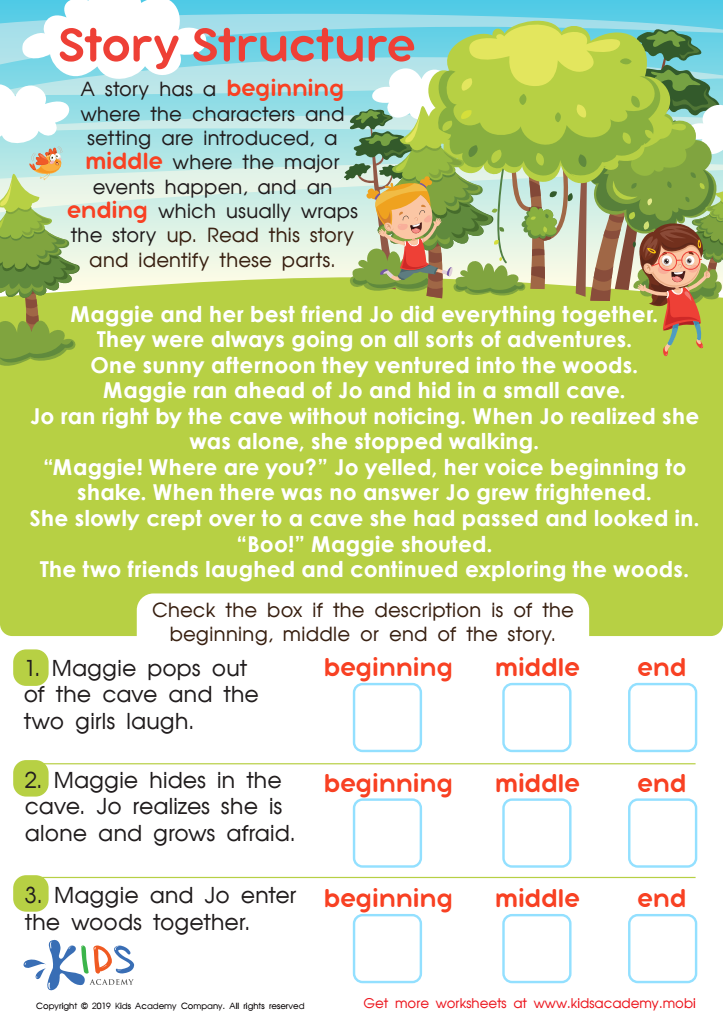
Story Structure Worksheet
 Assign to My Students
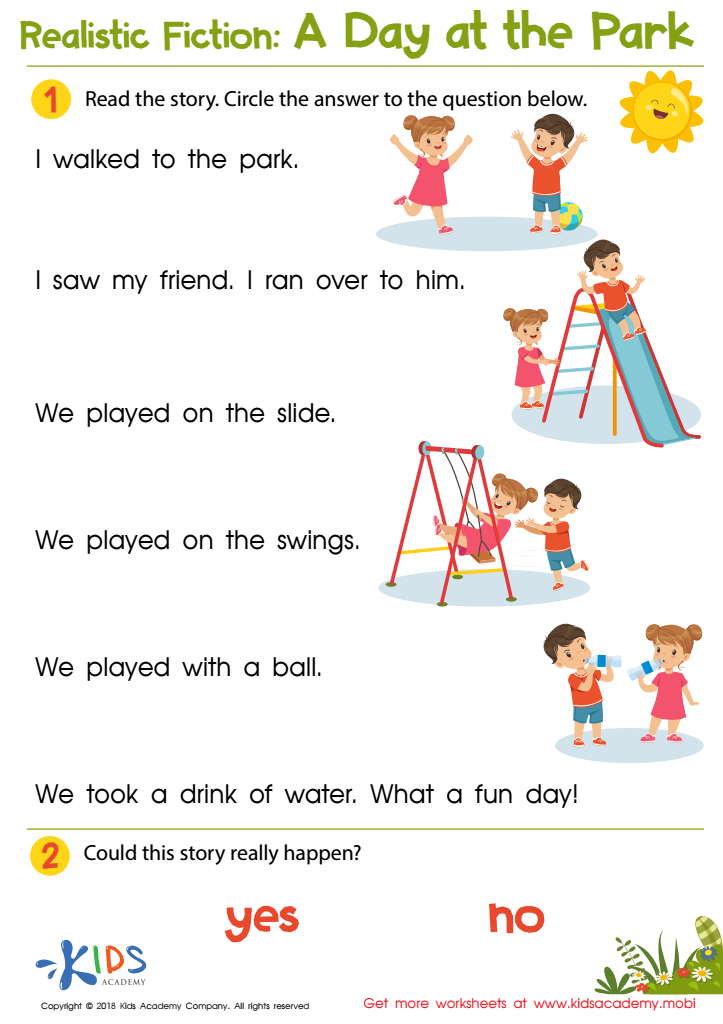
A Day at the Park Worksheet
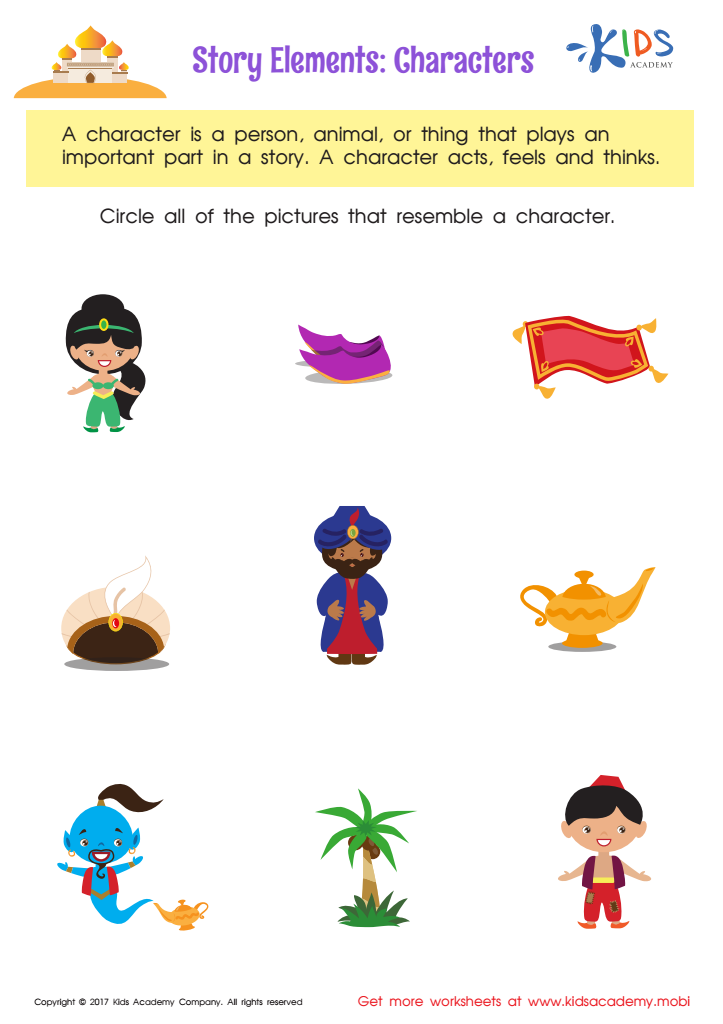
Story Elements Printable







Identifying story elements is crucial for children aged 7-8, as it is foundational to their reading comprehension and overall literacy development. At this age, children transition from reading simple text to more complex stories, making the understanding of elements like characters, setting, plot, problem, and resolution vital.
Firstly, recognizing these elements helps children comprehend and remember what they read. For example, understanding the setting allows them to visualize the story, while identifying the main characters and their traits helps them empathize and engage more deeply. Recognizing the plot helps them anticipate and understand the story's progression and resolution.
Moreover, identifying story elements enhances critical thinking and analytical skills. Children learn to compare and contrast different characters and events, make inferences, and predict outcomes. This not only boosts cognitive skills but also promotes creativity and imagination as children discuss and create their own stories.
Furthermore, developing this skill fosters effective communication and discussion. When children can articulate their understanding of story elements, they improve their vocabulary and narrative skills, which are essential for writing and oral communication.
Parents and teachers should emphasize these skills to support holistic academic growth, ensure a love for reading, and provide kids with tools to explore the deeper meanings and lessons within stories.








