
Improve reading comprehension Normal Reading Worksheets for Ages 7-8
6 filtered results
Difficulty Level
Grade
Age
-
From - To
Subject
Activity
Standards
Enhance your child's reading abilities with our specially designed Normal Reading Worksheets for ages 7-8, focusing on improving reading comprehension. Tailored for young learners, these worksheets offer engaging texts and interactive exercises that foster critical thinking and comprehension skills. Students will find fun activities to help them grasp main ideas, make inferences, and answer questions about the material. Our user-friendly worksheets promote independent learning and can be easily incorporated into your child's home study routine. Help your child build confidence in their reading skills while ensuring they enjoy the process—explore our thoughtfully crafted resources today!
Favorites
With answer key
Interactive
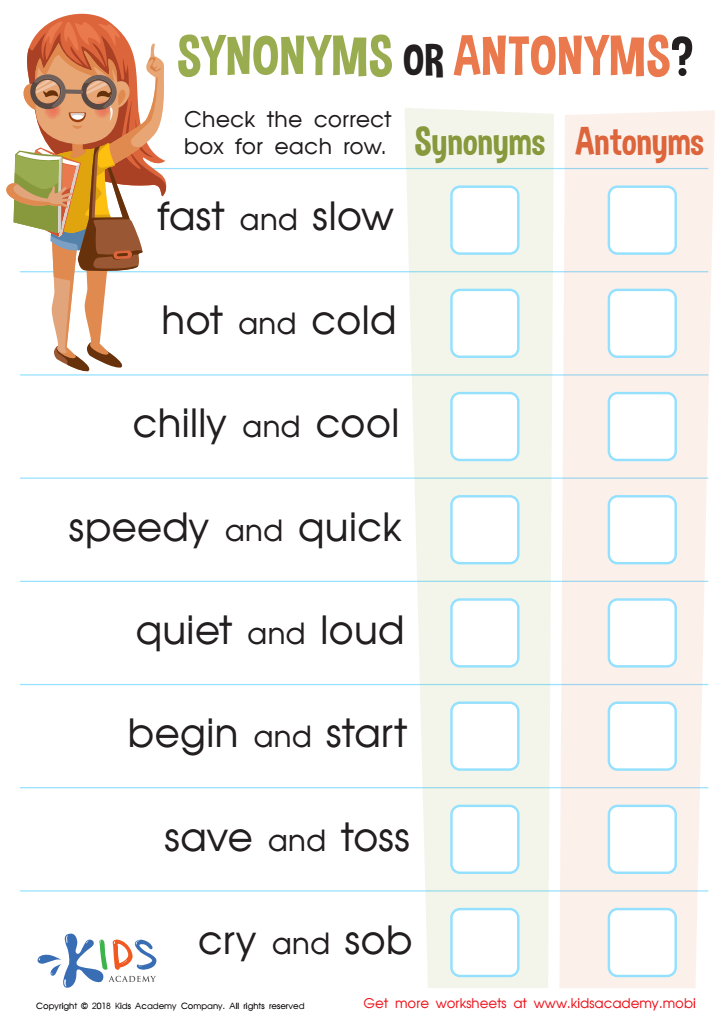
Synonyms or Antonyms: Assessment Worksheet
Test your child's knowledge with this fun worksheet! Ask them to read the words and select if they are synonyms or antonyms - e.g. 'happy' is a synonym and 'bad' is an antonym. For an extra challenge, ask them to provide two synonyms and two antonyms for each word.
 Assign to My Students
Synonyms or Antonyms: Assessment Worksheet
Worksheet
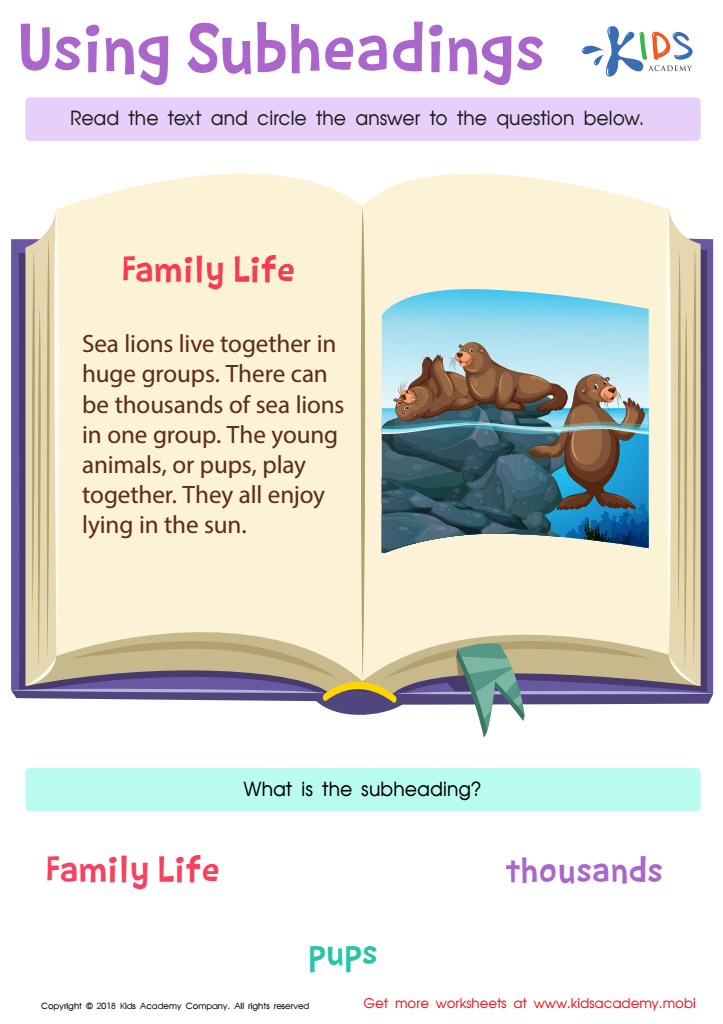
Using Subheadings Worksheet
Writers must follow many rules to make their work organized and easier to read. Subheadings are usually in bold font and centered at the top of the page. Read the text to your kids and have them circle the correct answer.
Using Subheadings Worksheet
Worksheet
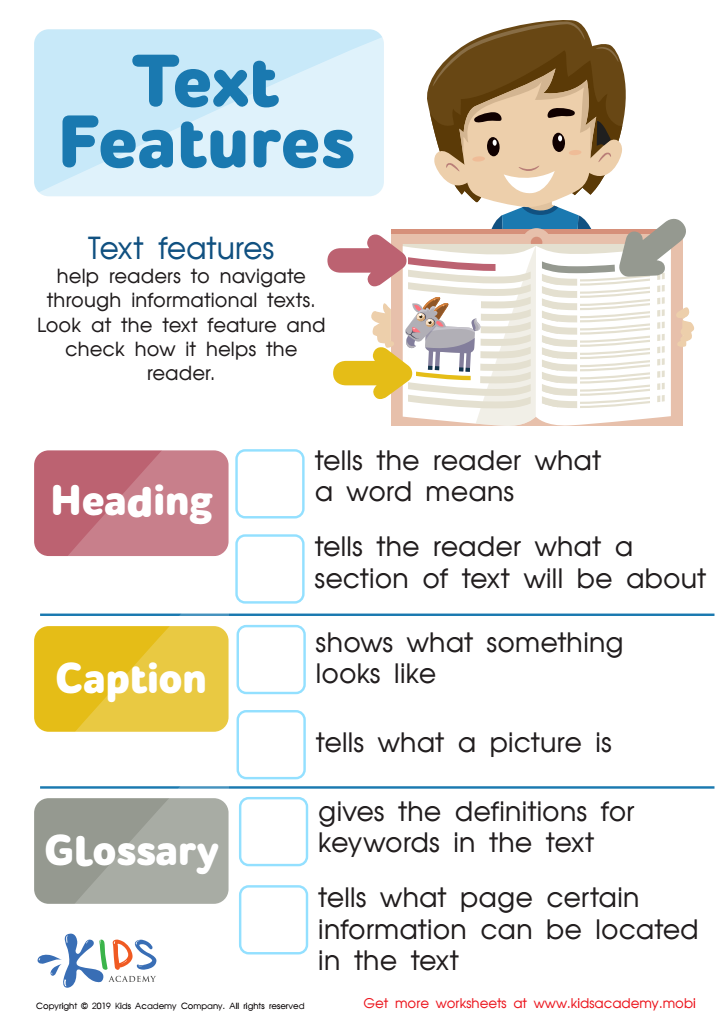
Text Features Worksheet
Help your kids get better at processing and analyzing texts by getting them to practice. Our worksheet with text features will help them find their way. This will help them understand how the features assist in finding information. Encourage practice, and they'll be able to improve quickly.
Text Features Worksheet
Worksheet
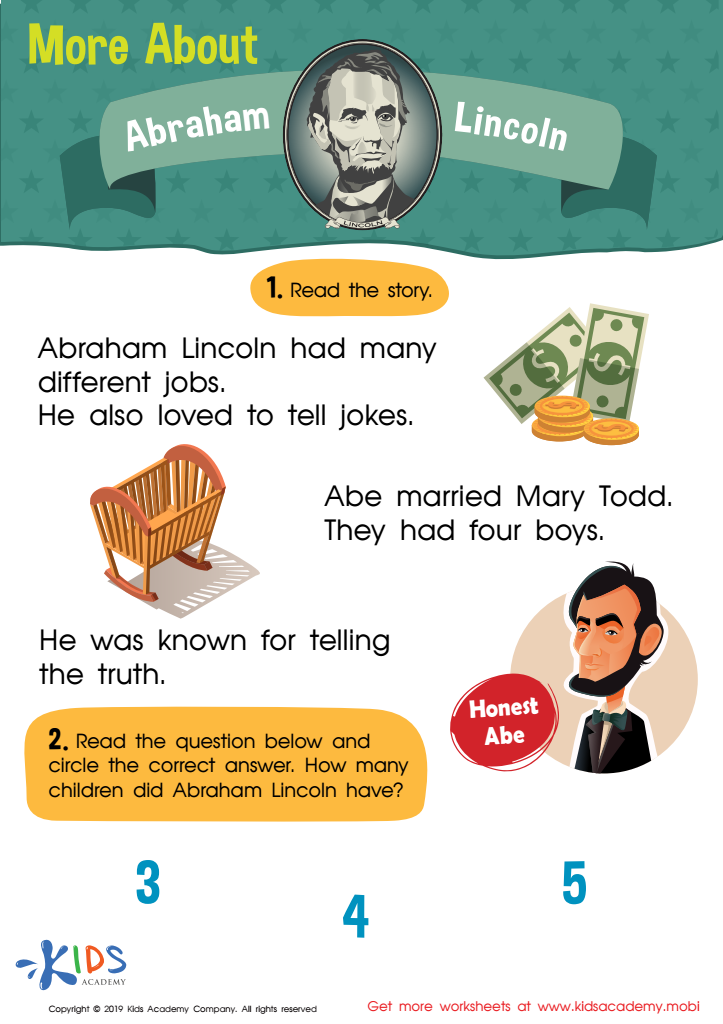
More About Abraham Lincoln Worksheet
Read the short story in the worksheet with your kids. Show them the pictures representing the sentences, then ask the questions and help them circle the correct answer. Make sure they are actually paying attention and learning from the stories.
More About Abraham Lincoln Worksheet
Worksheet
First Person Worksheet
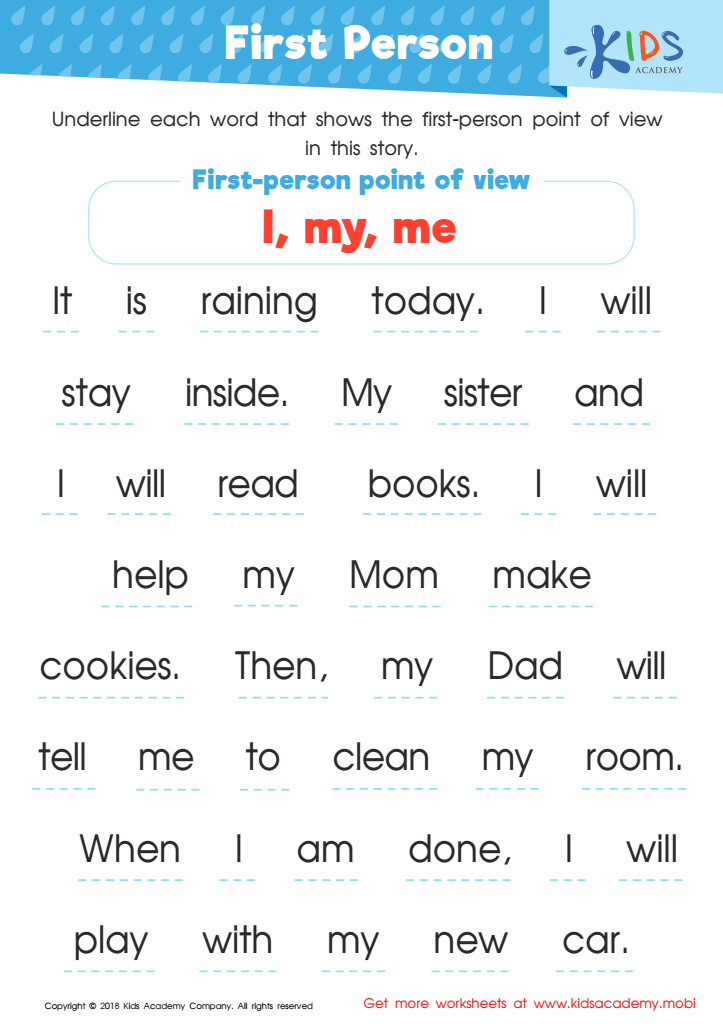
Teachers help students understand and recognize why authors choose different points of view. This worksheet focuses on first person point of view and its pronouns (I, me and my). Students will read a story, then circle each first-person pronoun. Through this activity, they'll practice identifying the POV in a text.
First Person Worksheet
Worksheet
Text Features Worksheet
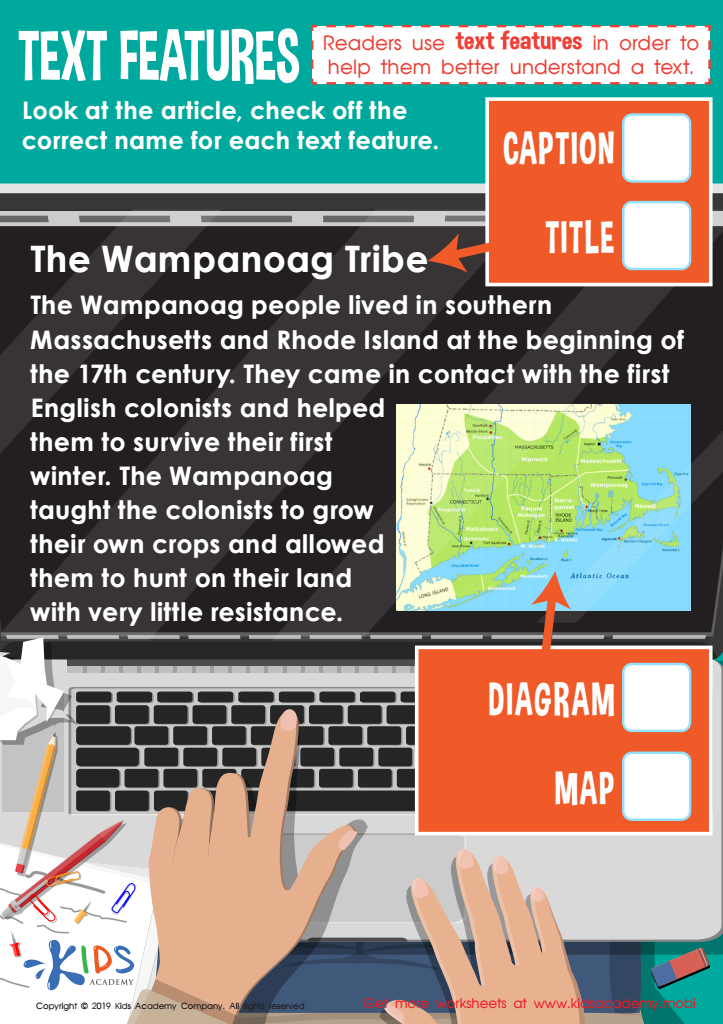
Encourage your child to read- it'll pay off! Reading teaches us new words, spelling, and information on various topics. Plus, readers use text features- such as tables, indexes, and diagrams- to help comprehend. Read the worksheet with your child and help them identify and understand the different features.
Text Features Worksheet
Worksheet
Join Kids Academy for Free
Who is primarily going to use this learning content?








Parents and teachers should prioritize improving reading comprehension for children aged 7-8 because this developmental stage is crucial for laying a strong foundation in literacy. At this age, children transition from learning to read to reading to learn, making comprehension essential for academic success.
Firstly, effective reading comprehension skills enable children to understand and engage with texts across various subjects. This understanding fosters critical thinking and the ability to analyze information, which is vital for future learning. When children can grasp the meaning of what they read, they are more likely to develop a love for reading, leading to a lifelong habit that can broaden their horizons and enrich their lives.
Secondly, strong comprehension skills promote confidence in children. When they can comprehend texts, they feel empowered to participate in discussions and express their ideas, which boosts their overall academic performance.
Finally, investing in reading comprehension at this crucial age nurtures emotional and social development. Stories and narratives equip children with the ability to empathize, relate to others, and develop values. By fostering comprehension skills, parents and teachers play a pivotal role in shaping well-rounded, engaged learners who are prepared for future challenges.








