Logical thinking Normal Reading Worksheets for Ages 7-8
3 filtered results
-
From - To
Enhance your child’s reading and logical thinking skills with our engaging worksheets designed specifically for ages 7 to 8. These logical thinking normal reading worksheets promote critical thinking and comprehension as kids explore captivating stories and solve intriguing puzzles. Each worksheet features appealing illustrations and age-appropriate texts that encourage young learners to connect ideas and reason through challenges. Our resources are perfect for classroom use or at-home learning, making them an excellent addition to your teaching toolkit. Help your child build a strong foundation in reading and logical reasoning while having fun with our interactive and educational materials!
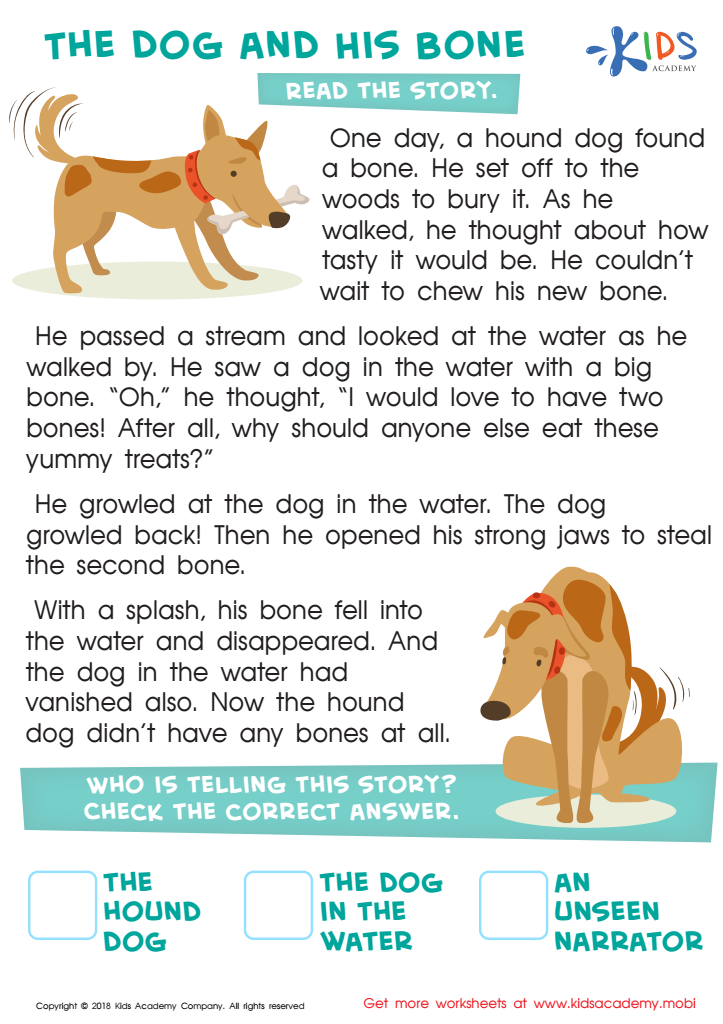
The Dog and His Bone Worksheet
 Assign to My Students
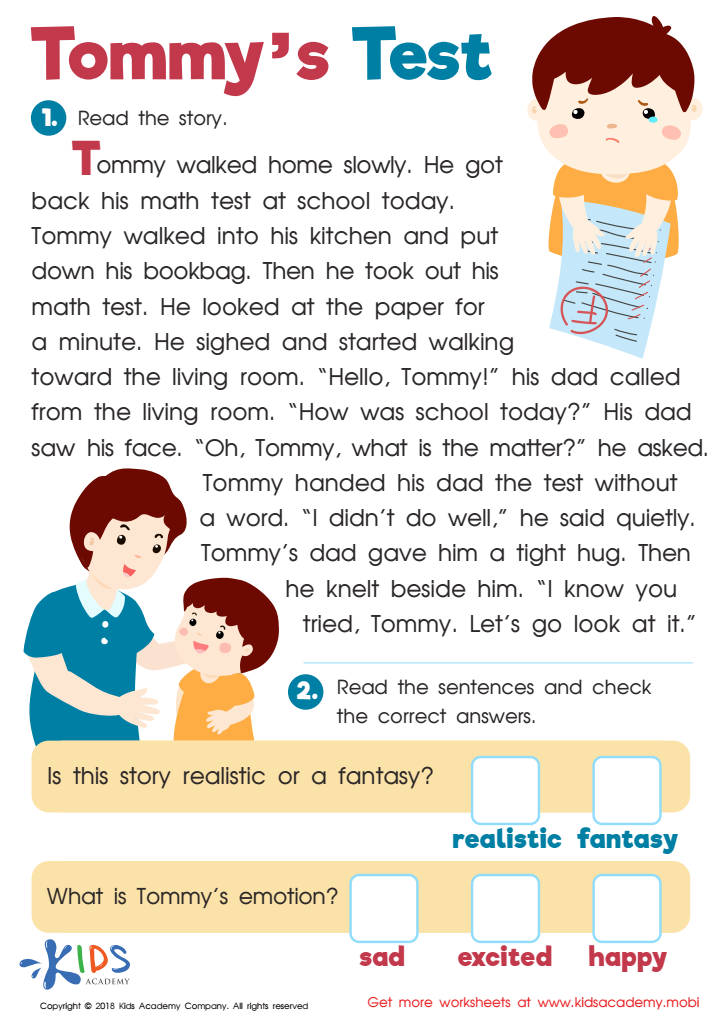
Tommys Test Worksheet
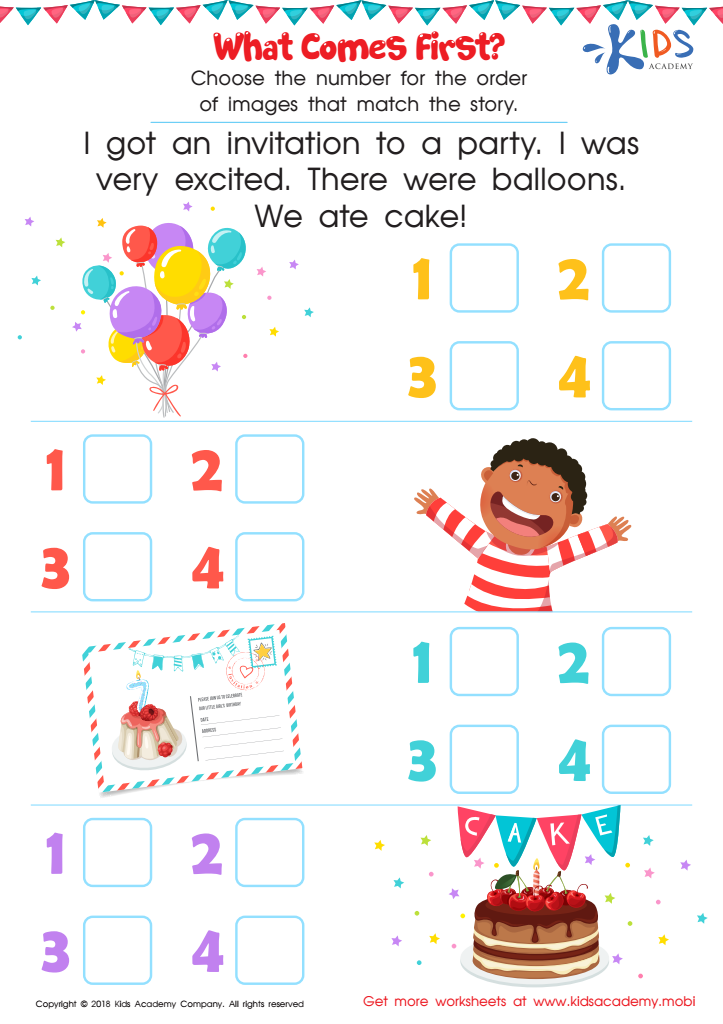
What Comes First Worksheet








Parents and teachers should prioritize logical thinking and normal reading for children ages 7-8 because these skills are foundational for their overall cognitive development and academic success. At this age, children are increasingly required to analyze information, solve problems, and form logical conclusions. Engaging in logical thinking activities, such as puzzles, games, and critical discussions, enhances their ability to reason, understand cause-and-effect relationships, and approach challenges methodically.
Simultaneously, normal reading skills play a vital role in facilitating comprehension, vocabulary acquisition, and communication. Readers at this stage not only absorb stories but also learn to think critically about characters, plot structures, and thematic elements. Nurturing quality reading habits enriches their imagination and stimulates their cognitive functions, leading to improved focus and discipline.
Moreover, fostering these abilities promotes confidence in academic environments, laying the groundwork for effective learning practices throughout their educational journeys. Together, logical thinking and strong reading proficiency contribute to developing independent, analytical thinkers who can adapt to various situations both in academic settings and life challenges. Thus, parents and teachers should actively support and cultivate these interconnected skills to equip children with tools for lifelong learning and success.








