Moral understanding Normal Reading Worksheets for Ages 7-8
5 filtered results
-
From - To
Enhance your children's reading skills with our Moral Understanding Normal Reading Worksheets designed specifically for ages 7-8. These engaging worksheets encourage young learners to explore fundamental moral concepts and values through captivating stories and scenarios. As students read and reflect, they develop critical thinking abilities and a sense of empathy. Our thoughtfully crafted materials align with educational standards while providing a fun, interactive approach to moral education. Foster a love for reading and deepen understanding of right and wrong with these essential resources. Ideal for home or classroom use, these worksheets make learning about morals enjoyable and meaningful for young readers.
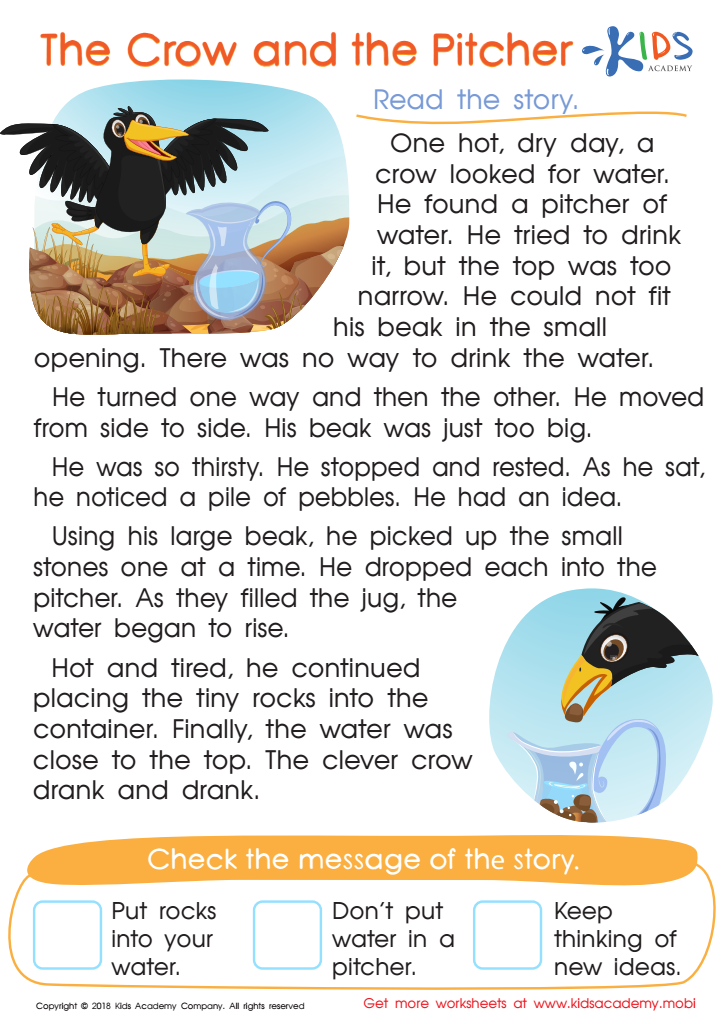
The Crow and the Pitcher Worksheet
 Assign to My Students
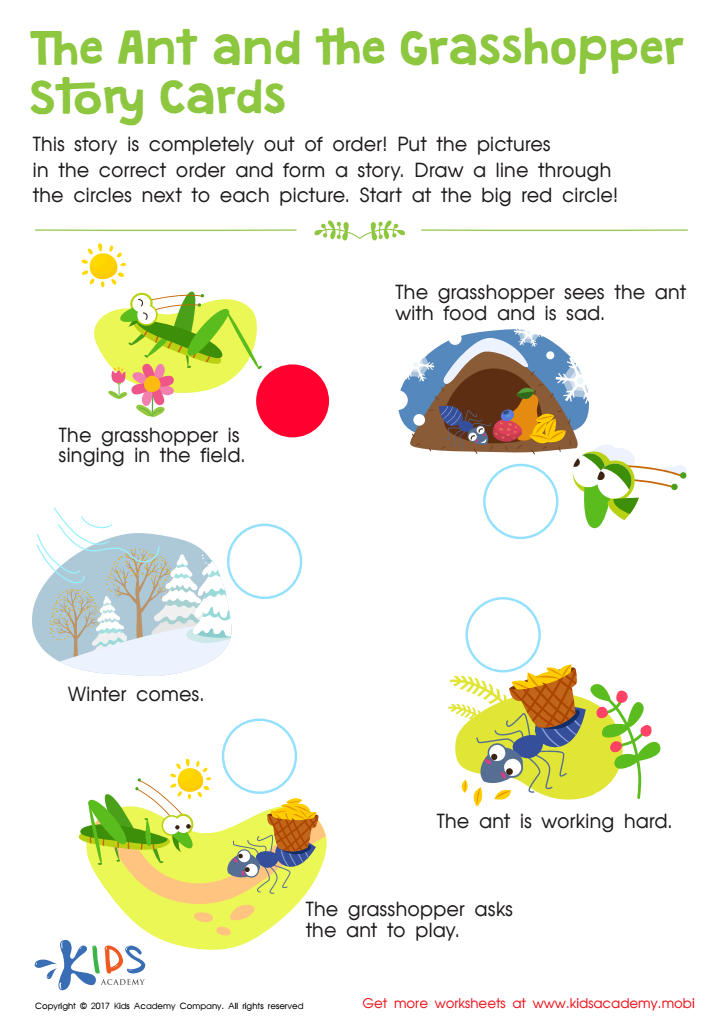
The Ant and The Grasshopper Worksheet
True or False? The Boy Who Cried Wolf Worksheet
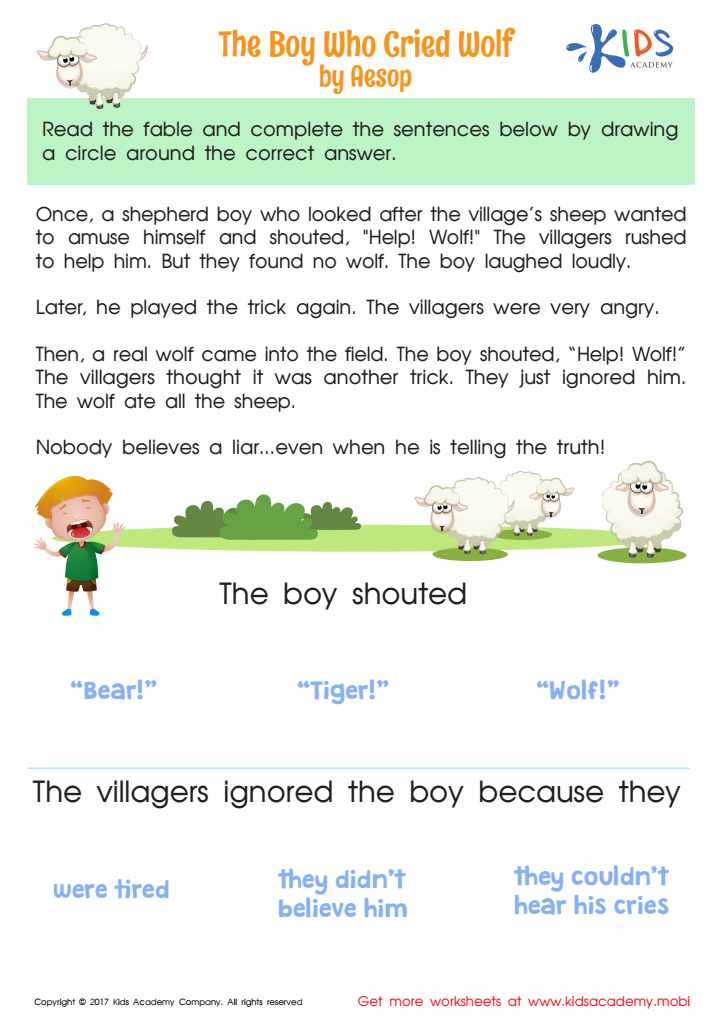
The Boy Who Cried Wolf Worksheet
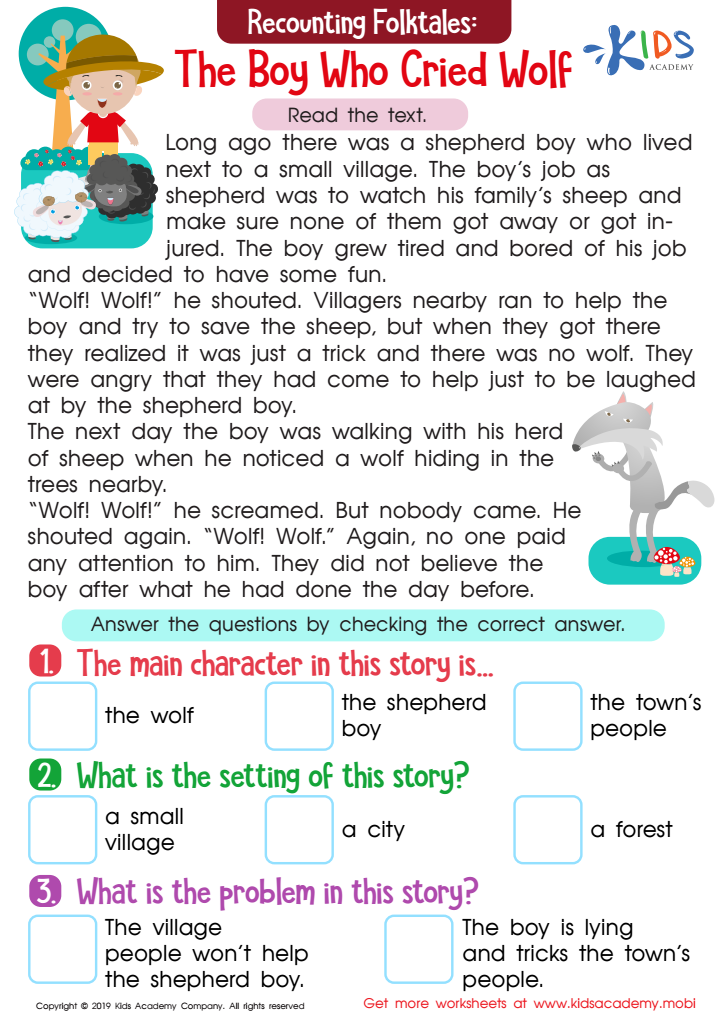
The Boy Who Cried Wolf Part 1 Worksheet




.jpg)


Moral understanding is crucial for children aged 7-8, as this is a key developmental stage where they begin to grasp complex social concepts like fairness, empathy, and responsibility. Parents and teachers should prioritize fostering this moral understanding to help shape children's character and decision-making skills.
At this age, children become more aware of the impact of their actions on others, and they start to differentiate between right and wrong. Engaging children in discussions about moral dilemmas, reading stories that explore ethical challenges, and encouraging them to reflect on their feelings and behavior can promote critical thinking and compassion. This nurtures a sense of empathy and helps children learn to navigate social interactions and relationships effectively.
Furthermore, a solid moral understanding can enhance children's emotional intelligence, leading to better conflict resolution skills and more positive peer relationships. As they internalize these values, they are better equipped to resist negative influences and make informed choices. Thus, teachers and parents play a vital role in guiding children through this crucial phase of their personal development, setting the foundation for them to become responsible, caring individuals in society. Engaging with moral concepts enriches both their academic and personal growth, ultimately shaping well-rounded individuals.








