Word identification Normal Reading Worksheets for Ages 7-8
4 filtered results
-
From - To
Enhance your child's reading skills with our "Word Identification Normal Reading Worksheets" designed specifically for ages 7-8. These engaging worksheets focus on helping young learners recognize, understand, and correctly use words in various contexts. Packed with fun activities, they promote vocabulary development and improve reading fluency through structured practice. Designed to complement classroom learning, our worksheets encourage independent work while boosting confidence in early readers. Explore a variety of themes and challenges that keep students motivated and excited about reading. Perfect for both home and school use, these resources support key literacy skills essential for your child’s academic success.
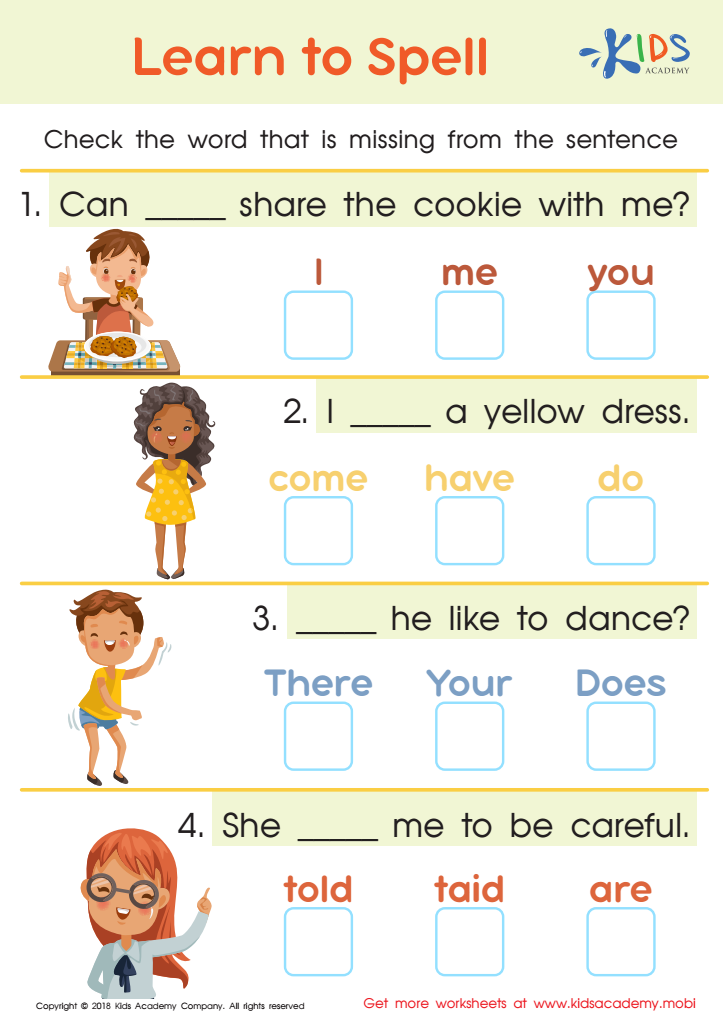
Learn to Spell Worksheet
 Assign to My Students
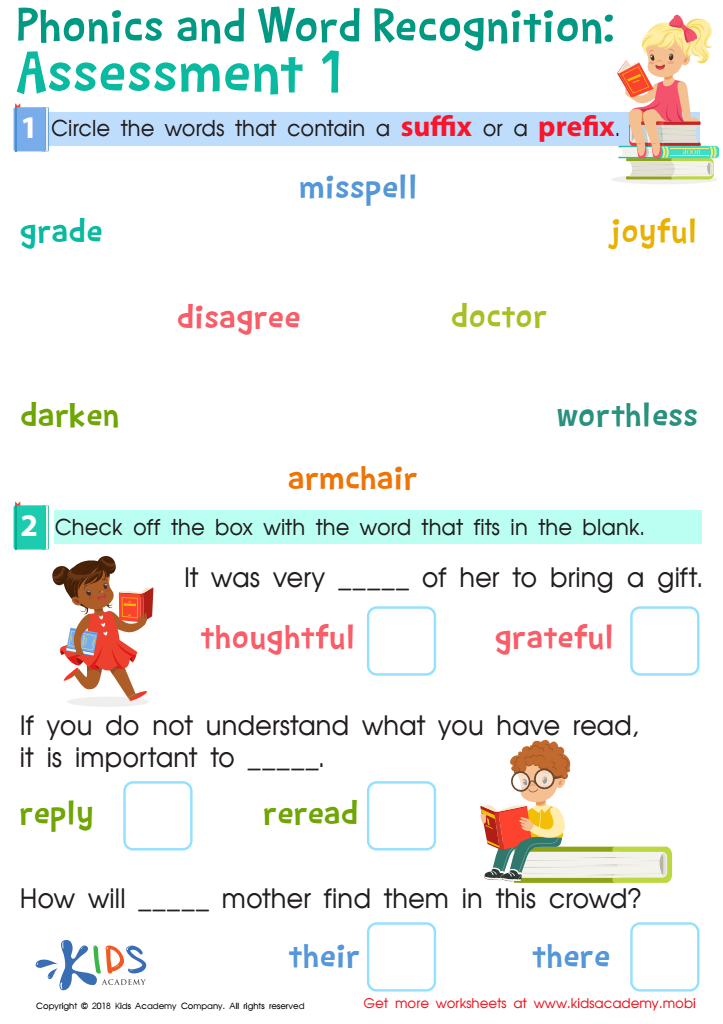
Phonics and Word Recognition: Assessment 1 Worksheet
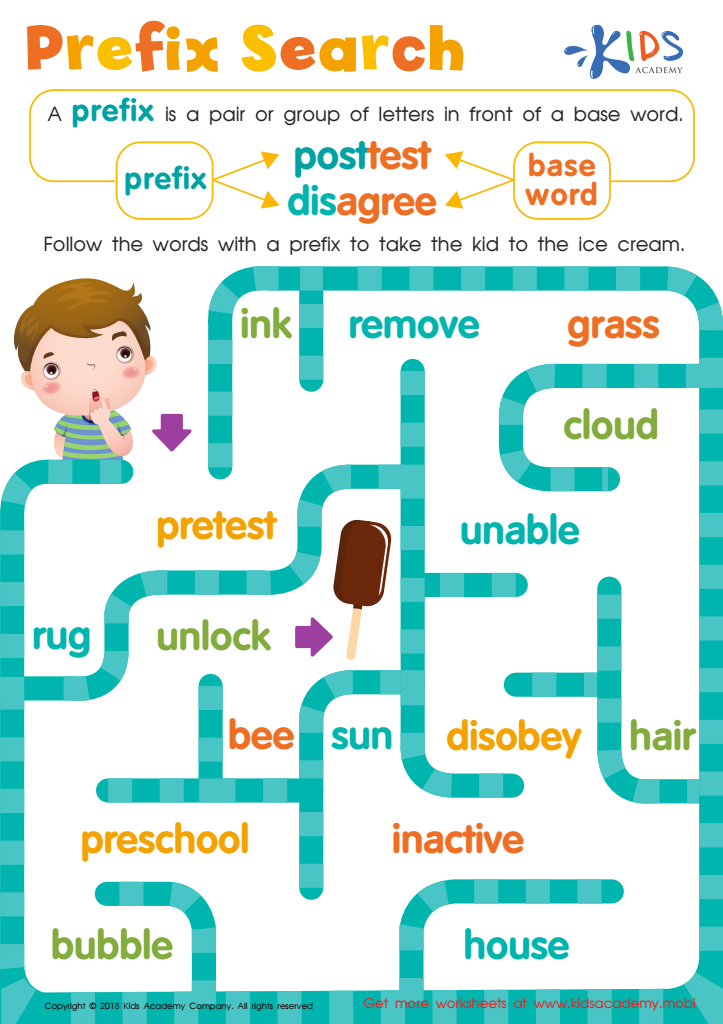
Reading: Prefix Search Worksheet
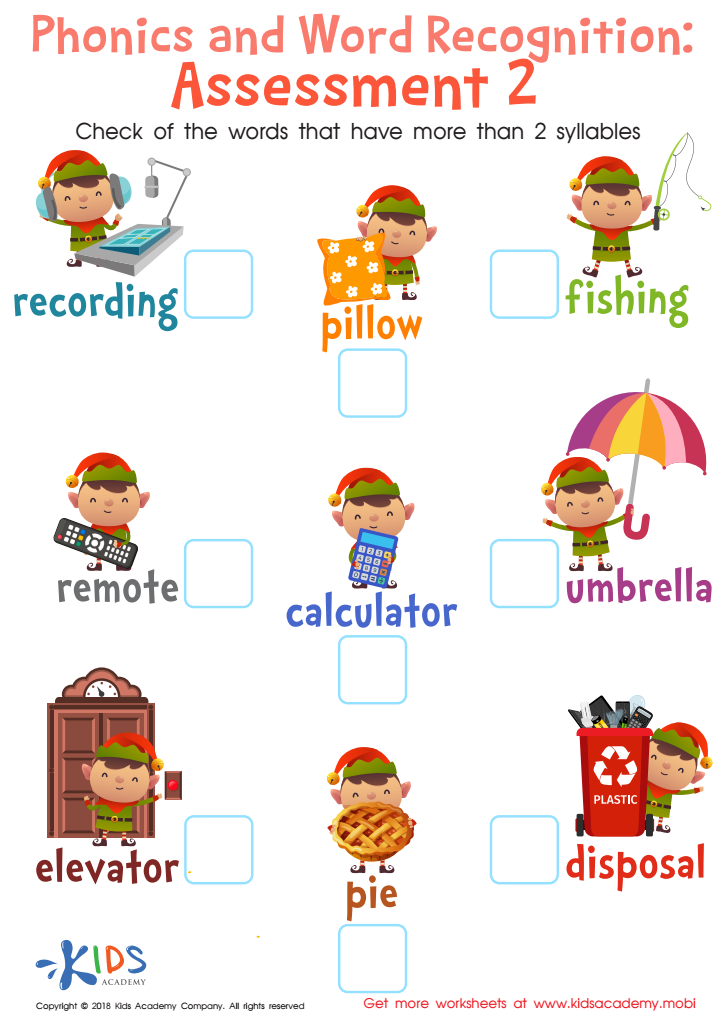
Phonics and Word Recognition: Assessment 2 Worksheet






Word identification is a crucial skill for children aged 7-8, as it serves as the foundation for reading comprehension and overall academic success. At this age, children begin to transition from learning to read to reading to learn. Effective word identification allows them to decode text fluently, which is essential for understanding and engaging with more complex material across subjects.
Parents and teachers should care about this process because strong word identification abilities help foster a positive attitude towards reading, enhancing children’s motivation to explore books independently. When children are confident in their reading skills, they are more likely to delve into diverse topics, improving their vocabulary and critical thinking skills.
Moreover, early intervention in developing word identification can help identify and address reading difficulties before they escalate. This proactive approach can prevent long-term academic struggles, ensuring that children are not left behind. Collaborative efforts between parents and teachers, such as engaging in reading activities that enhance word identification, create a supportive learning environment. Ultimately, prioritizing word identification at this stage sets children on a path toward lifelong reading enjoyment and success, reinforcing the importance of literacy skills in their overall development.








